







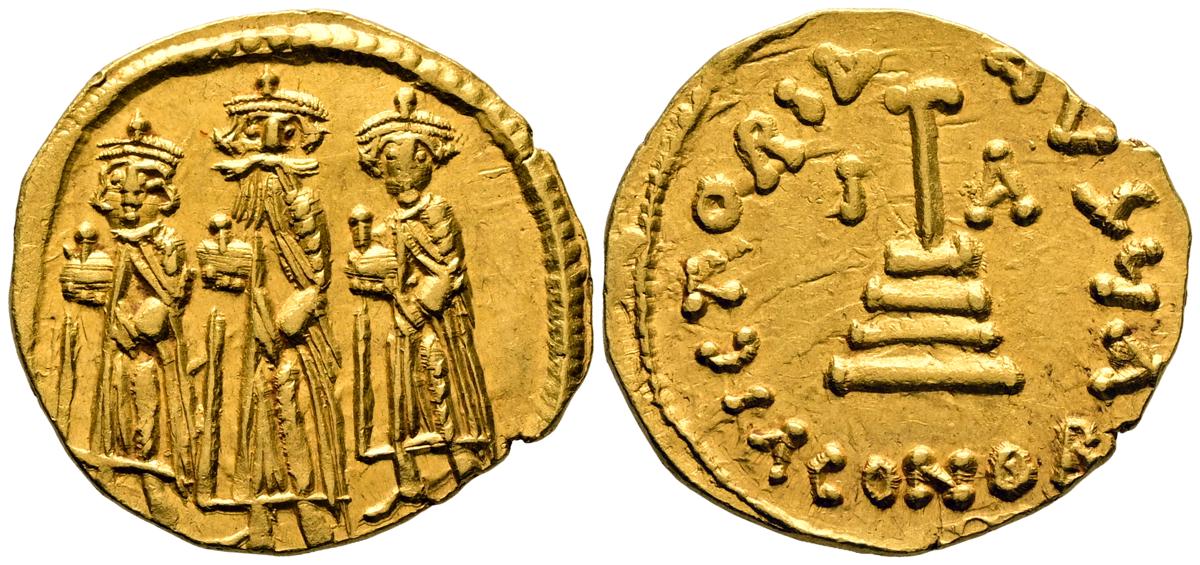
Estimate: 20.000 EuroBrandenburg.
Friedrich Wilhelm, the Great Elector.
Ducat 1686 LCS, Berlin.
Extremely rare.
Attractive piece.
36
Estimate: 50.000 EuroBavaria.
Maximilian II.
Ducat 1855.
Only a few pieces are known.
Extremely fine-uncirculated.
105
Estimate: 125.000 EuroBrunswick-Bevern.
Ferdinand Albrecht I.
Löser in the weight of 4 Reichstalers 1670, Clausthal.
Extremely rare.
Attractive piece.
135
Estimate: 100.000 EuroLippe.
Friedrich Adolf.
5 Ducats 1711, Detmold.
Only known piece.
Extremely fine-uncirculated.
184
Estimate: 50.000 EuroCity of Nuremberg.
10 Ducats 1630.
Extremely rare.
Extremely fine.
198
Estimate: 40.000 EuroCity of Regensburg.
6 Ducats, n. d. (1765-1790), with the title of Joseph II.
NGC MS 62 PL.
Extremely rare.
Attractive piece from polished dies.
Almost uncirculaed.
251
Estimate: 125.000 EuroHolstein-Gottorp.
Johann Adolf, 1590-1616.
Portugalöser (10 ducats) n.d., Eutin.
Extremely rare and of particular
significance in monetary history.
Attractive piece.
295
Estimate: 200.000 EuroRDR.
Leopold I, 1657-1705.
20 Ducats, n. d. (after 1666), Hall,
by M. König.
Extremely rare.
Almost extremely fine.
376
Estimate: 125.000 EuroArchbishopric of Salzburg.
20 Ducats 1687.
NGC AU 58.
Extremely rare.
Extremely fine.
423
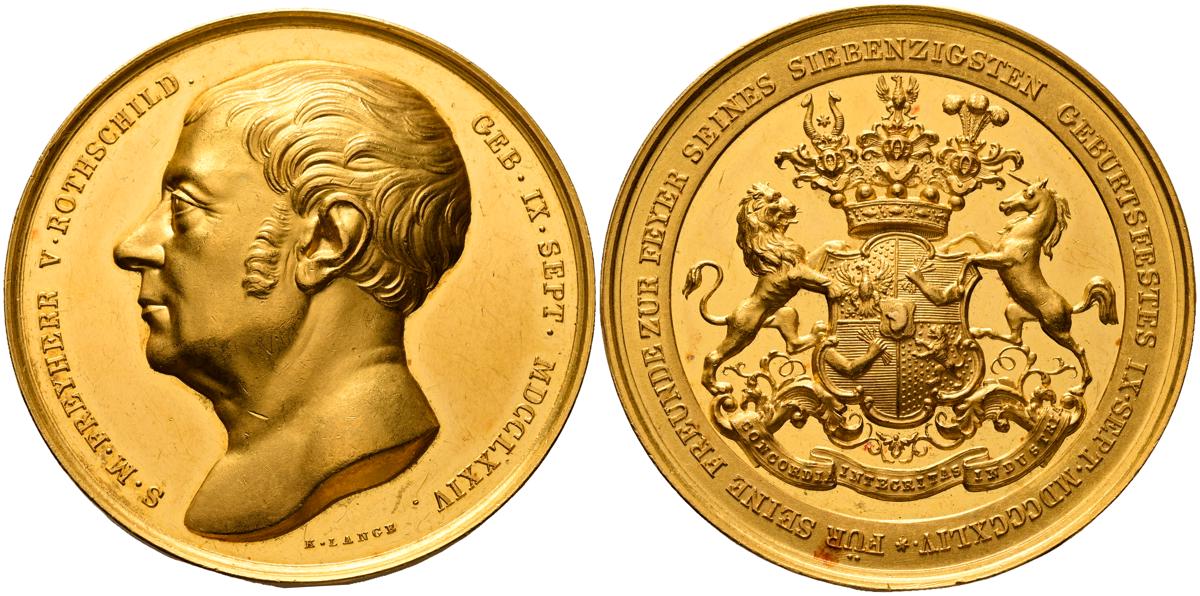
Estimate: 40.000 EuroVienna.
Salvator medal in the weight of 24 Ducats,
n. d. (after 1843), by K. Lange.
NGC PF 61.
Extremely rare.
Proof.
431
Archive: People and Markets

Call for Papers: AIA Annual Meeting 2025

Coins provide a wealth of knowledge on social, economic, political, and cultural aspects of ancient societies and are among the most common objects recovered from the ancient world. Field archaeologists have often regarded them simply as handy tools for dating strata, although a growing number of trained archaeologists who specialize in numismatics has driven the field of numismatics and archaeology forward in significant ways over the last few decades.

The 2025 AIA Annual Meeting 2025 will take place in Philadelphia. Image: 12019 via Pixabay.

The 2025 AIA Annual Meeting will take place in Philadelphia. Image: 12019 via Pixabay.

The Numismatics Interest Group of the Archaeological Institute of America (AIA) invites abstracts on any aspect of ancient coins and archaeology that seeks to place value on coins as archaeological objects in their own right.

Papers may wish to consider (but are not limited to): the role of databases in post-excavation analysis, coins as cultural heritage, what coins recorded in their special contexts tell us (e.g. coins in ritual contexts, how coin finds speak to the movement of populations, informs about local and regional economies, audience targeting), and so on.

The 2025 AIA Annual Meeting will take place from 2nd to 5th January 2025 in Philadelphia, PA. Papers will be 15 or 20 minutes (please specify preferred time) and all presenters must be AIA members in good standing at the time of the meeting.

Nothing more to miss!

subscribe our newsletter here