







Croatia’s New “Lace-Making in Croatia” Gold Coins
On 17 October 2023, the Croatian National Bank issued three new collector coins in collaboration with the Croatian Mint. The three gold coins depict the same motif and come in three different denominations: €100, €25 and €10. They commemorate an Intangible Cultural Heritage of Croatia, lace-making in Pag, Lepoglava, and Hvar.
Content
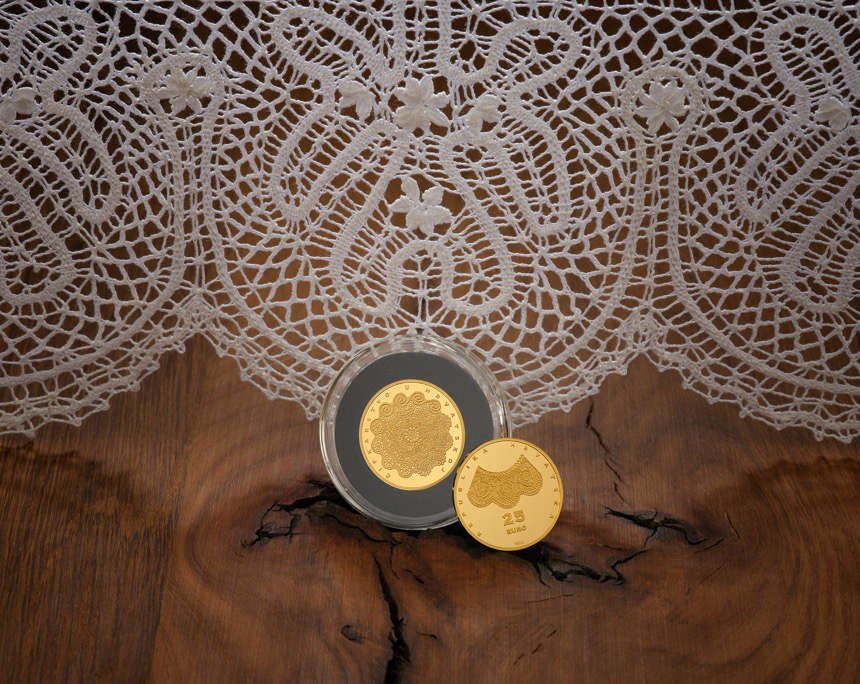
Top-Notch: Croatian lace and the coin issued in its honour. Image: © Branimir Kralj / Croatian Mint.
Three Centres of Croatian Lace-Making
The tradition of Pag lace dates back to the 15th century when Benedictine nuns traded their products on the markets of Venice and Vienna. At the time, lace was an essential accessory for the clothes of Europe’s nobility. To give the women of the often impoverished fishermen from the island of Pag an opportunity to earn extra income, the nuns trained them in the art of making this lucrative garment embellishment.
The tradition was resumed in 1906, with the mayor of Pag founding a lace-making school. Around the same period, Lepoglava on the Croatian mainland established itself as a centre for lace manufacture. Whereas Pag lace is still created using needles today, the women of Lepoglava utilise bobbins. The products from both communities were showcased at various international expos and received numerous accolades, including the gold medal of the 1937 Paris exposition.
The third centre of Croatian lace-making is the Benedictine convent of Hvar. These nuns also use needles to produce lace. But instead of yarn, they use very fine threads taken from fresh agave leaves.
All three cities ensure that the art of lace-making is passed down from one generation to the next. In 2009, UNESCO recognised lace-making in Croatia as part of the Intangible Cultural Heritage of Humanity. And even today, tourists from all over the world like to take these delicate works of art home with them.
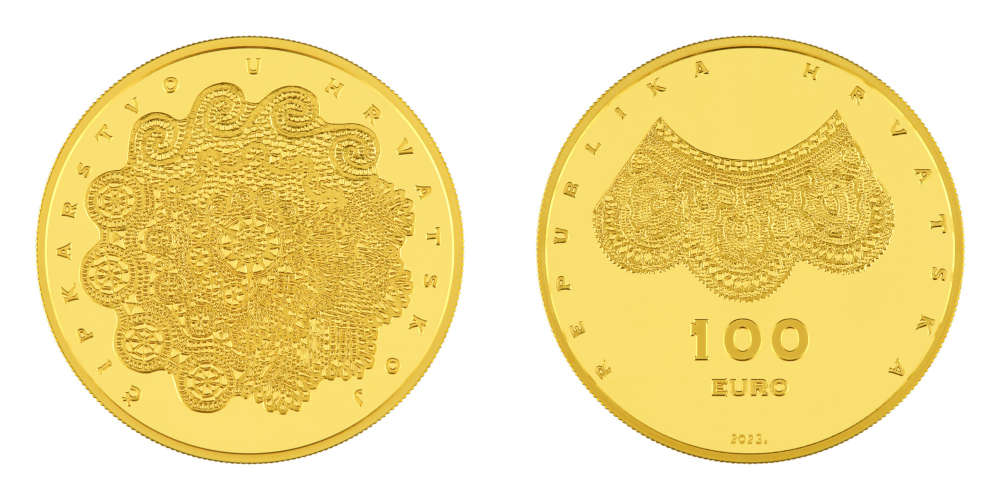
100-euro “Lace-making in Croatia” gold coin. Image: © Branimir Kralj / Croatian Mint.

25-euro “Lace-making in Croatia” gold coin. Image: © Branimir Kralj / Croatian Mint.
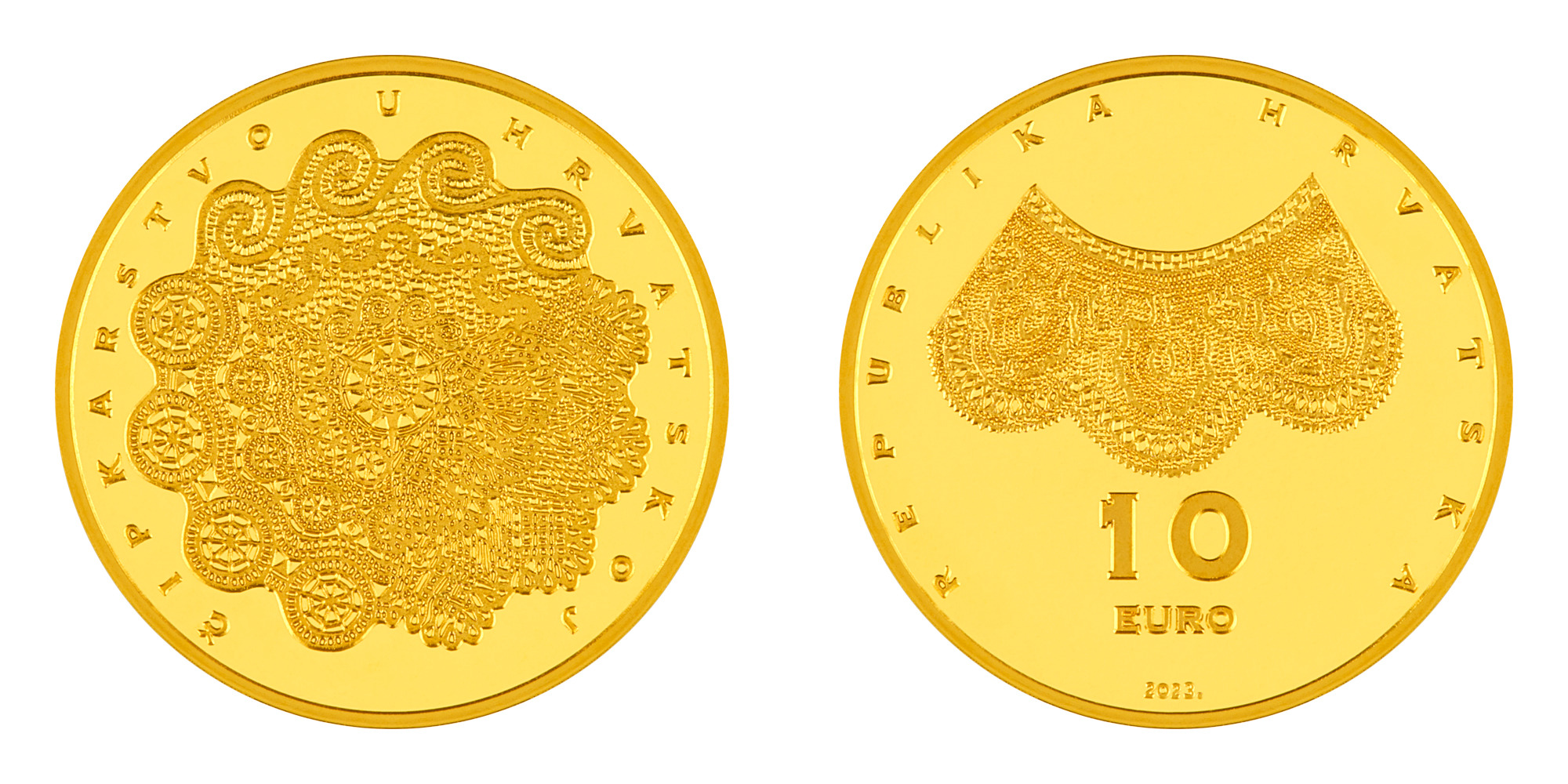
10-euro “Lace-making in Croatia” gold coin. Image: © Branimir Kralj / Croatian Mint.
The Design
All three commemorative coins feature the same design. The obverse shows a small piece of lace that combines and fuses the traditional patterns of the three lace-making centres. The circumscription reads čIPKARSTVO O HRVATSKOJ (= Lace from Croatia).
The reverse depicts curved lace and an inscription with the name of the issuing country, the Republic of Croatia, the denomination and the year of issue, 2023.
The design was created by Stjepan Divković.
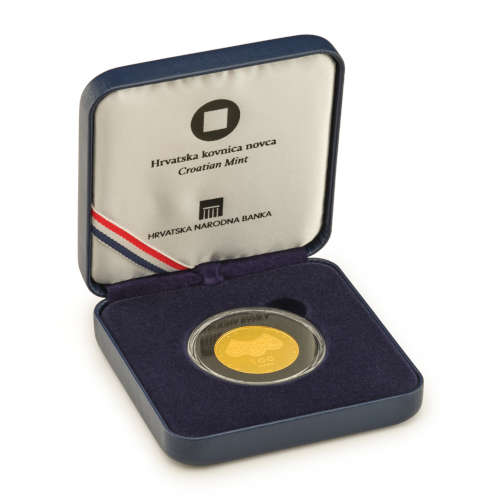
The commemorative coin in its case. Image: © Branimir Kralj / Croatian Mint.
| 100 euros | 2023 | Lace-making in Croatia | 31.103 g – 1 ounce | 32 mm | Gold .9999 | BU | 1000 |
| 25 euros | 2023 | Lace-making in Croatia | 7.78 g – 1/4 ounce | 22 mm | Gold .9999 | BU | 1000 |
| 10 euros | 2023 | Lace-making in Croatia | 1.94 g – 1/16 ounce | 15 mm | Gold .9999 | BU | 3000 |
Issue Date and Price
As of 17 October 2023, the coins can be purchased directly from the shop of the Croatian Mint. Their price is adjusted on a daily basis, depending on the current gold price.
