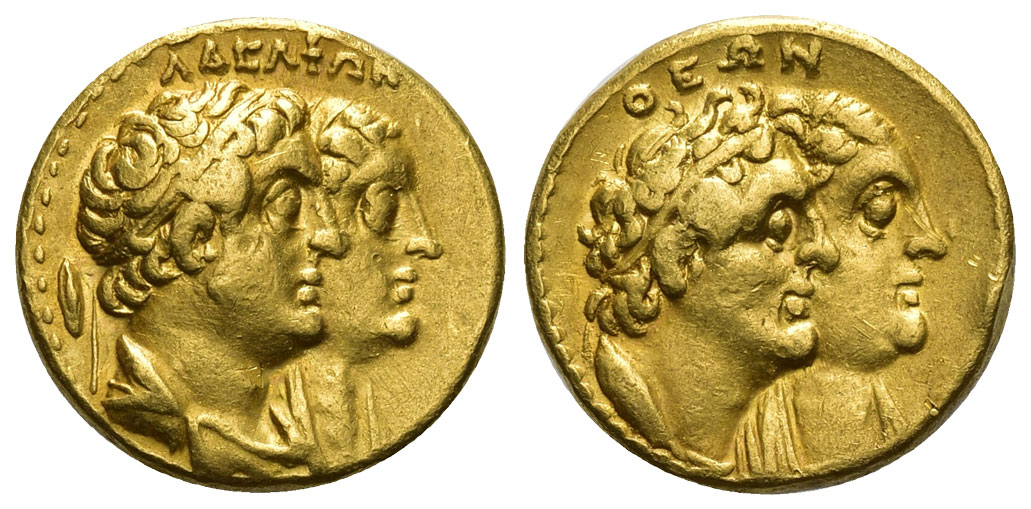
AV Tetradrachme (282-272 v. Chr.),
König Ptolemaios II. und Königin Arsinoe II.
Aus der großen Sammlung der Münzstätte Alexandria.
Erhaltung: ss+
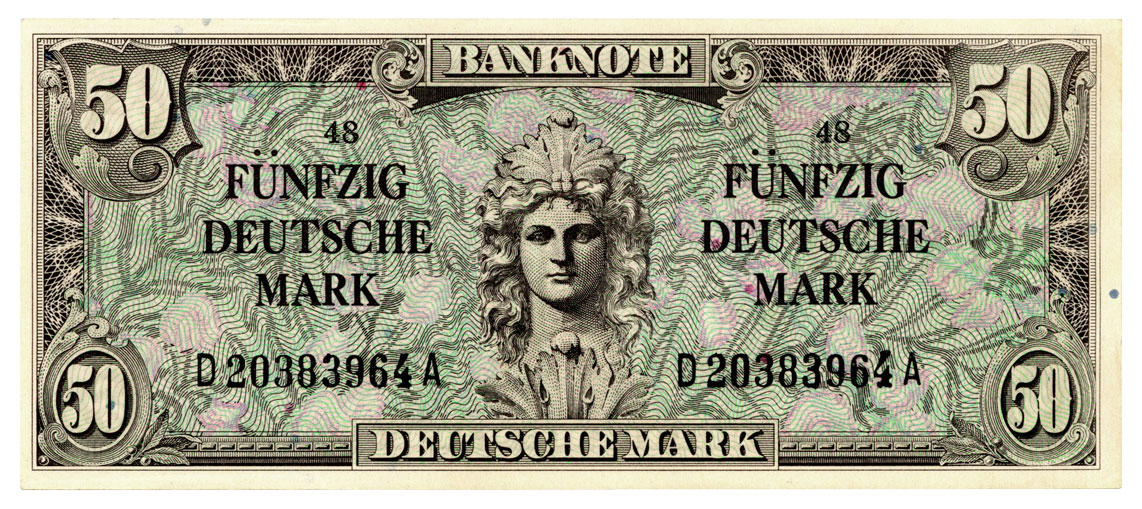
50 Deutsche Mark o.D. ( 1948-1949) "Liberty".
Erhaltung: extrem selten, I
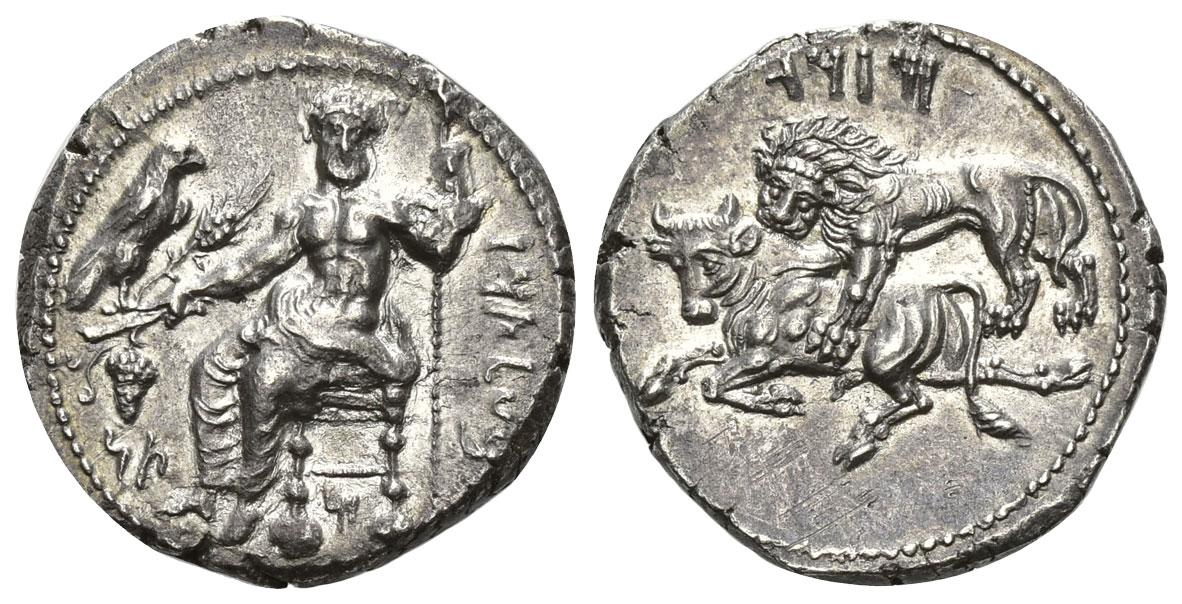
AR Stater (361-334 v. Chr.).
Vs. Baal von Tarsos.
Erhaltung: vz
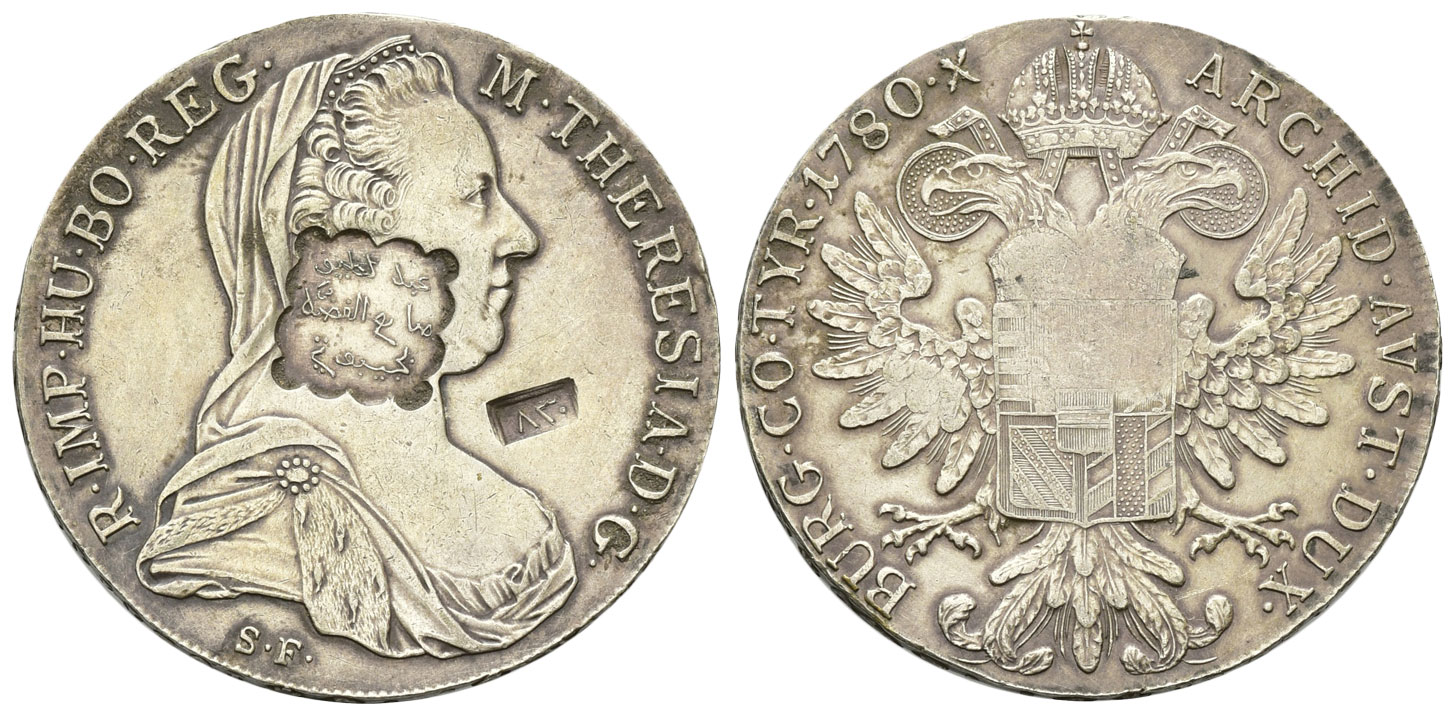
Taler 1780 SF
mit Gegenstempel Dschibuti (1870-1900).
Erhaltung: ss
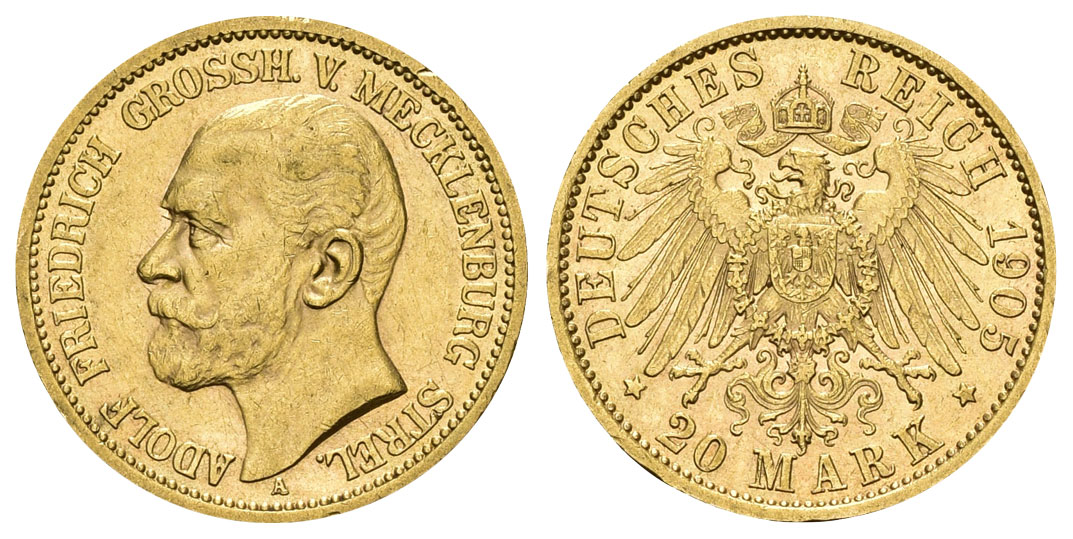
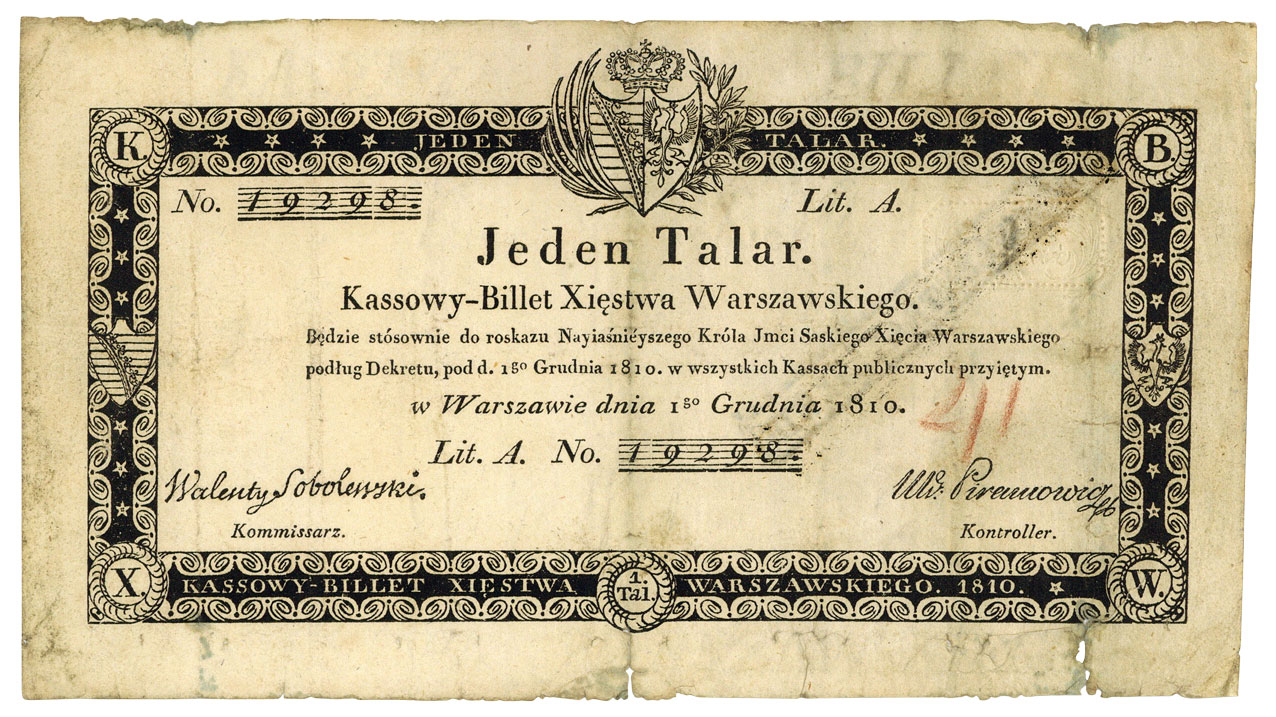
1 Talar 1. Dezember 1810.
Erhaltung: III-IV
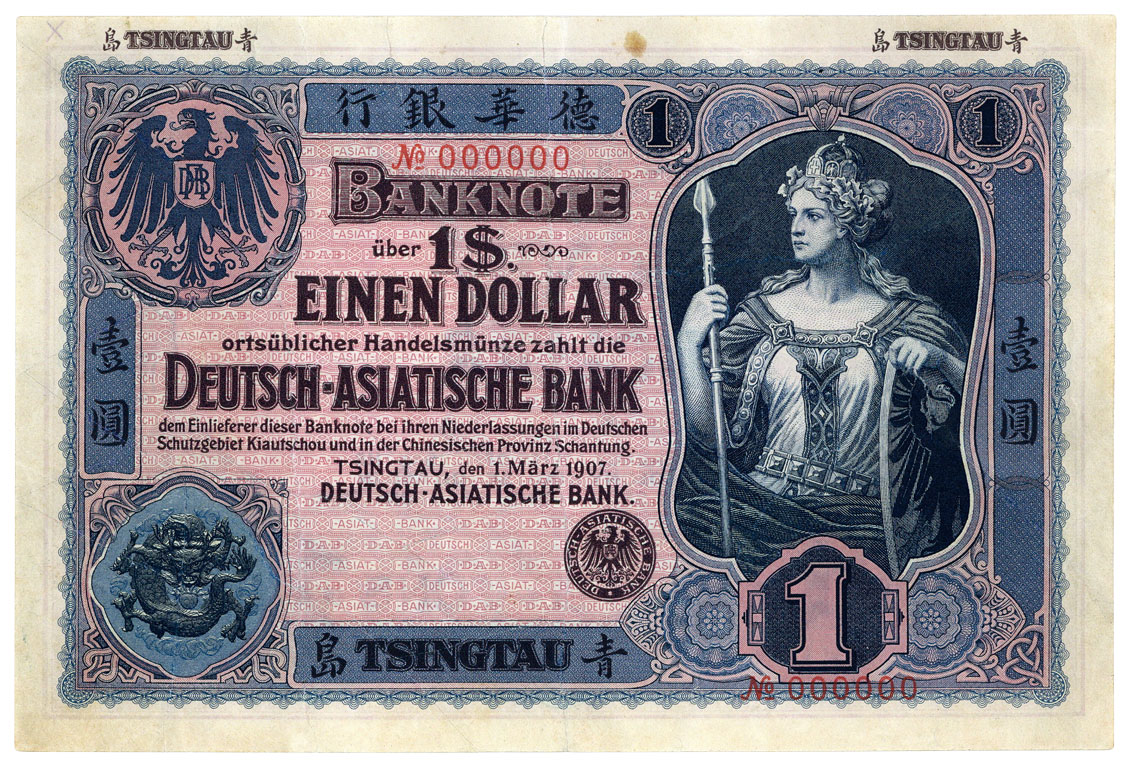
1 Dollar 1.3.1907, Tsingtau.
Erhaltung: sehr selten, restauriert
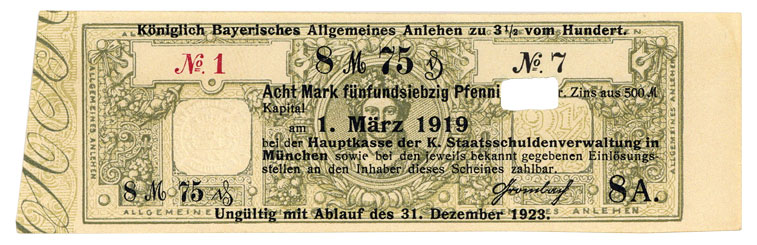
Königlich Bayerisches Allgemeines Anlehen.
8,75 Mark 1.3.1919.
Erhaltung: selten, I
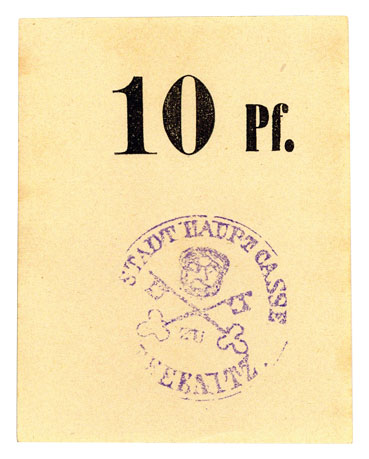
Benedetto Pistrucci, the Parthenon frieze, and St. George
Few numismatic designs have achieved a comparable cult status to Benedetto Pistrucci’s St. George, which he designed for British coins. He was inspired by one of the greatest works of art in history: the Elgin Marbles. NAC is auctioning a pattern of one of the most successful coin series in history as part of the Traveller Collection.
by Ursula Kampmann
Content
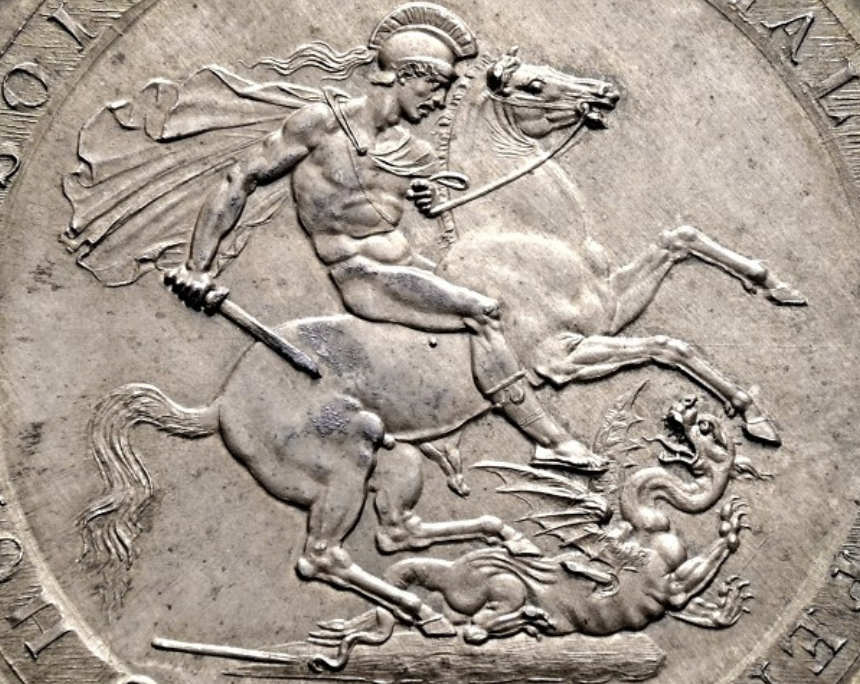
On May 27, 2026, Numismatica Ars Classica (NAC) will auction two further parts of the spectacular Traveller Collection in Zurich. Auction 167 is dedicated to British coins, and Auction 168 to Italian coins. From this wealth of exceptional coins, we would like to present an icon of numismatics: a trial strike of the Crown featuring St. George, designed by Benedetto Pistrucci. What model inspired Pistrucci?
https://thetravellercollection.com/
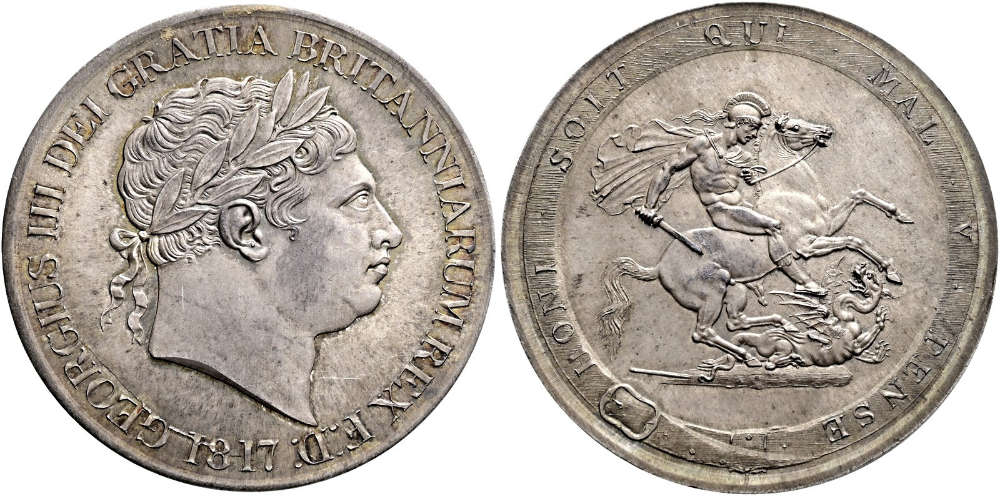
George III, 1760-1820. Pattern for the Crown of 1817. NGC MS64+. Estimate: 75,000 CHF. From auction Numismatica Ars Classica 167 (May 27, 2026), No. 1582.
What can be seen at the pattern for the Crown of 1817?
Let us first look at the coin for which the famous medalist Benedetto Pistrucci created the dies. On the obverse we see a portrait of laureate George III, around which is the inscription (in translation) George III, by the Grace of God King of Britain, Defender of the Faith.
The reverse depicts a naked man with an Attic helmet, billowing coat, and short sword, mounted on horseback facing right. He holds the rearing horse by a short rein. A winged dragon appears below. The scene is surrounded by a kind of belt, the famous Order of the Garter, on which its well-known motto is inscribed: Honi. soit qui mal y pense – a scoundrel who thinks evil of it.
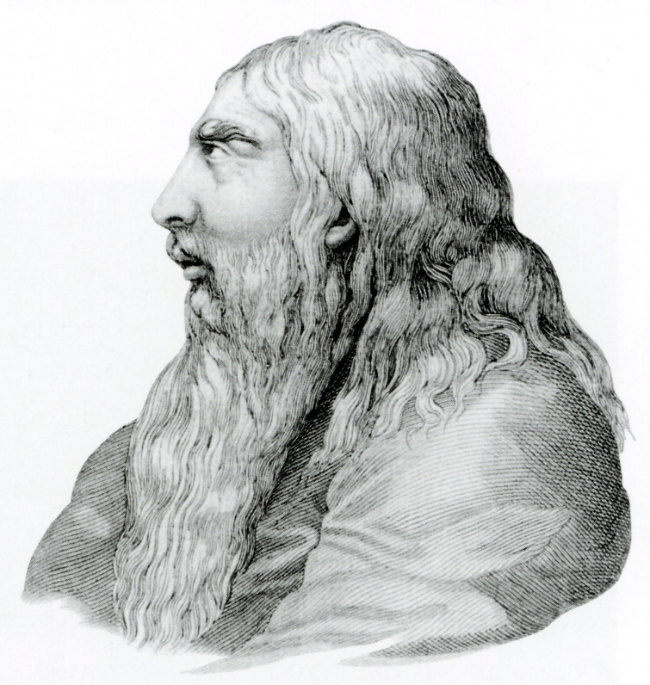
Contemporary portrait of George III from 1817, painted by Henry Hoppner Meyer. National Portrait Gallery NPG D10680
The portrait of George III.
Anyone who dares to do a reality check will quickly discover that the portrait Pistrucci created of George III bears no resemblance whatsoever to reality. How could it? George III was what was considered insane at the end of 1811. That year, the Prince of Wales assumed the regency for his father, who had been rendered unfit to rule by a combination of chronic rheumatic pain, total deafness, severely impaired eyesight, depression, and dementia. Depicting the king on his coins as the tormented 79-year-old actually looked in the summer of 1817 would have been utterly inappropriate.
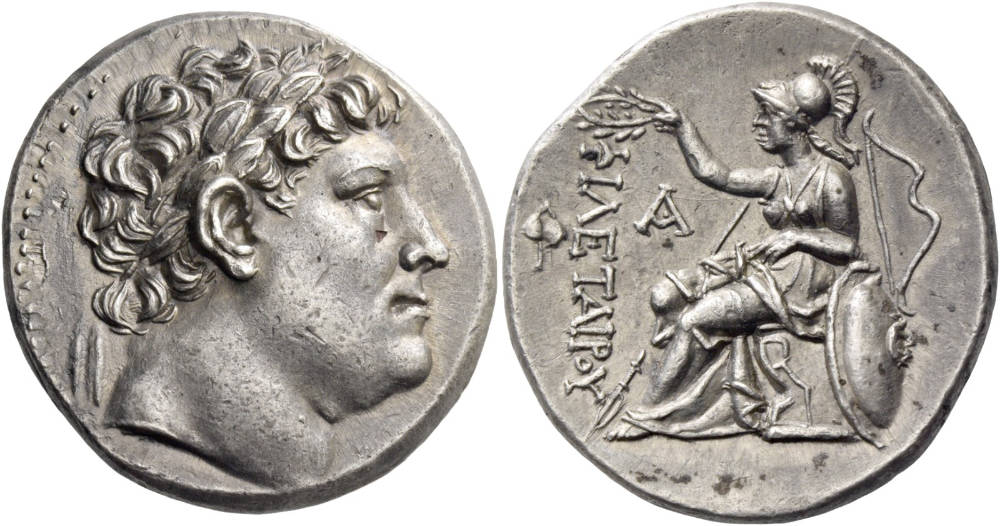
Eumenes I Tetradrachm , c. 255-241 BC. Good to extremely fine. Estimate: CHF 3,500. Hammer price: CHF 3,750. From Auction NAC 114 (May 6, 2019), no. 1185.
Pistrucci was not bound by any reality when he created his coin portrait. He sought his inspiration according to his motto “Study the Greek originals by day and by night” on the ancient coins. The portrait of George III became a modernized version with allusions to Philhetairos, whose portrait his descendants, the Attalids of Pergamon, placed on magnificent Hellenistic tetradrachms.
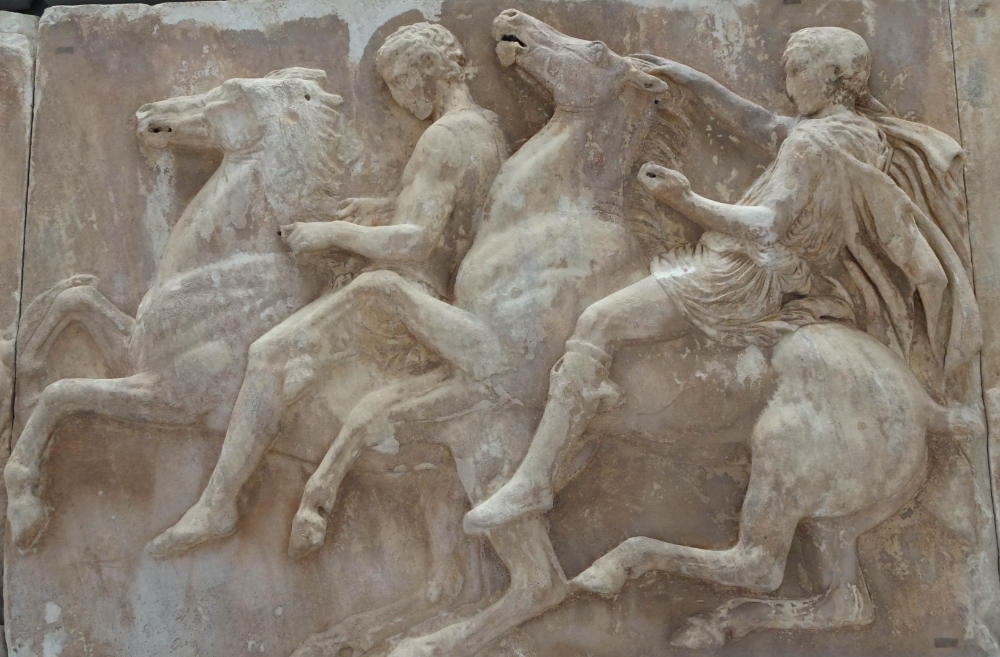
Group of figures from the procession of young riders from the Parthenon frieze, not from London, but from the Parthenon Museum in Athens. Photo: KW
The Elgin Marbles are changing the British perception of art
Can we even begin to imagine what it meant for British society at the beginning of the 19th century when the Elgin Marbles, the first significant original work of Greek art, arrived in London? Nothing comparable had ever been seen before.
Because Lord Elgin was desperately seeking a buyer for his marble blocks, he put them on public display. Initially in a gloomy shed, then from 1811 onwards in a temporary structure built specifically for this purpose on the grounds of Burlington House. Anyone who was anyone in London came to see the frieze and was captivated. It fostered the British public’s admiration for ancient Greece and, consequently, for their modern descendants.
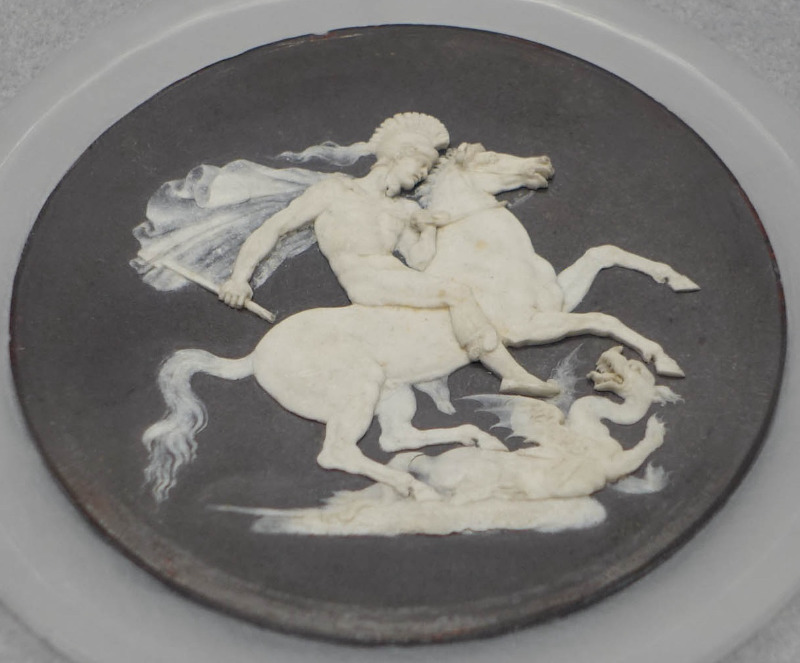
Wax model of St. George by Pistrucci, as he would later appear on sovereigns and crowns. Museo Zecca di Roma. Photo: UK
Pistrucci draws inspiration from this
Naturally, the antiquities enthusiast Pistrucci couldn’t resist admiring the artwork in detail, sketching it, and using it for his own work. Lady Spencer had commissioned him in 1815 to create a cameo depicting St. George in the fashionable “Greek” style. Pistrucci later recalled: “Her ladyship … showed me a large model in wax of a St. George, done by Marchant , and said to me: My husband would like you to make a wax model of the same size and subject: but I should like it in the Greek style as that was the style in which naked figures were done; and the mantle in this beautiful white, would have a superb effect.”
The commission was prestigious, well-paid, and appealing. Naturally, Pistrucci accepted. But he was too good an artist to simply copy the Elgin Marbles. He adopted their formal language and created his Saint George in the same style.
We, who are familiar with this image, can hardly imagine today the break with conventional perception this motif represented: Pistrucci’s Saint George was naked. A naked saint! That society barely addressed this taboo can probably be attributed to the new aesthetic ideal that had spread through the Parthenon frieze. The holy knight wears no armor, but merely an Attic helmet and a chlamys, that short riding cloak of antiquity that swishes so elegantly behind its wearer when galloping. The lance has become a short sword (though one might wonder how Saint George intends to slay the dragon with it from horseback!).
The horse and its posture are based on the Frieze, without directly copying a single figure. It is said that Pistrucci asked an Italian waiter to model for his St. George.
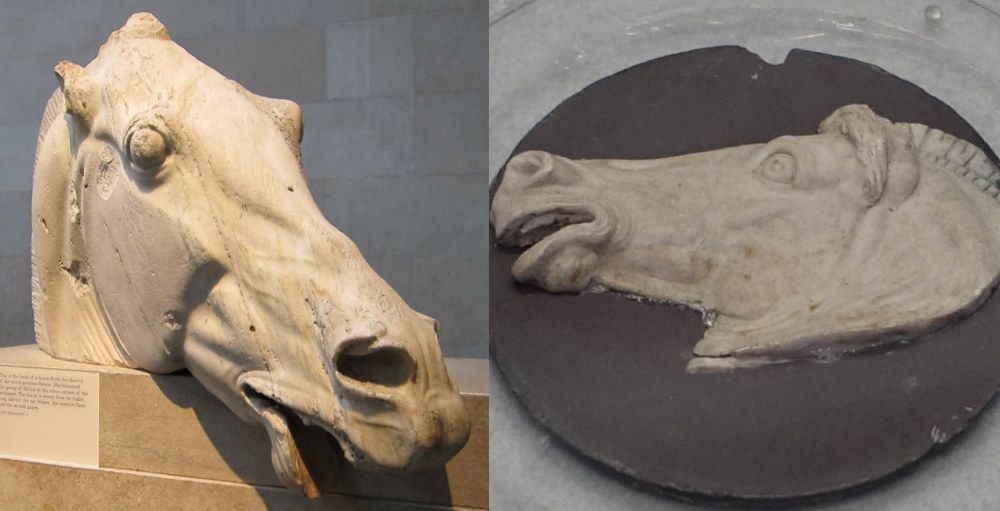
Wax model by Pistrucci and horse’s head from the Parthenon frieze. Museo Zecca di Roma // British Museum. Both photos: UK
The wax model of a horse’s head – preserved in the Museo Zecca di Roma from his estate – demonstrates the intensity with which Pistrucci engaged with the forms of the Parthenon Frieze.
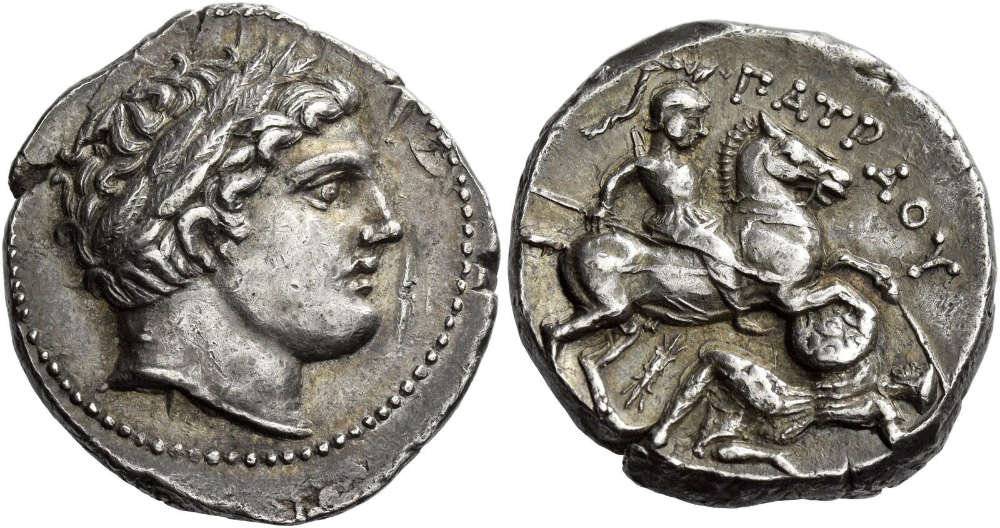
Patraos. Tetradrachm, c. 340-315. Estimate: CHF 6,000. Hammer price: CHF 22,000. From auction Numismatica Ars Classica 140 (2023), no. 60
Ancient coins as a model for Pistrucci?
Occasionally, ancient coins have been suggested as models for Pistrucci’s St. George. The bronze coins of Magnentius and the tetradrachms of Patraos have been cited as examples. However, even if Pistrucci had been familiar with them, this seems unlikely. Comparing the stylistically best example of Patraos ‘s coins, one can clearly see how far removed the depiction of the rider is from the muscular tension that Pistrucci gives his St. George.
Pistrucci was an artist. He didn’t need any inspiration regarding the subject matter; his client provided that. He was interested in the manner of representation. He gave a familiar theme a new, modern, Greek form. And he found it in the horsemen of the Parthenon frieze.
Similarly, he did not slavishly copy the front of the Pergamene tetradrachms with the portrait of Philhetairos, but used the image as inspiration to conceive his own version of a worthy ruler.
What is the value of the sample relating to the British Crowns of 1817 today?
Numismatica Ars Classica estimates the value of this specimen at CHF 75,000. This is due not only to its great numismatic significance but also to the coin’s rarity. Only four examples appear to exist in private hands. One of these was auctioned by Heritage on August 15, 2019, under lot number 32221. This piece, graded AU55 by NGC, fetched $70,000, equivalent to CHF 68,313 at the exchange rate at the time.
Since the pandemic, prices for British coins have risen significantly. Furthermore, the coin offered by NAC has a grade of MS64+, meaning it is in much better condition.
We are eager to see the result and will add an update after the auction.
A brief comment on the debate about the Elgin Marbles
It is worth briefly mentioning the political repercussions of the now controversial relocation of the Parthenon frieze to London. Its immense visual impact made it an ambassador for both ancient and, consequently, modern Greece, which at that time was demanding its independence from the Ottoman Empire. The widespread enthusiasm sparked by the frieze compelled the British government to support the Greek independence movement. Private and public funds were invested in the rather amateurish and therefore ultimately hopeless struggle for freedom. London, its warships, and its diplomats played a pivotal role in Greece’s independence.
A unique work of art had convinced the British that the Greek people were a nation that deserved their own country.
In other words, without the journey of the Elgin Marbles to London, Greek freedom would not have existed in its current form, or if it had, it would have occurred at a much later date.
The Result
June 1, 2026
The specimen presented here – the Crown depicting St. George slaying the dragon – opened at CHF 60,000. It was hammered down at CHF 180,000, three times its starting price. An impressive result! And not the only six-figure result achieved by Numismatica Ars Classica for coins of George III from the Traveller Collection.
Here you will find two additional six-figure results.
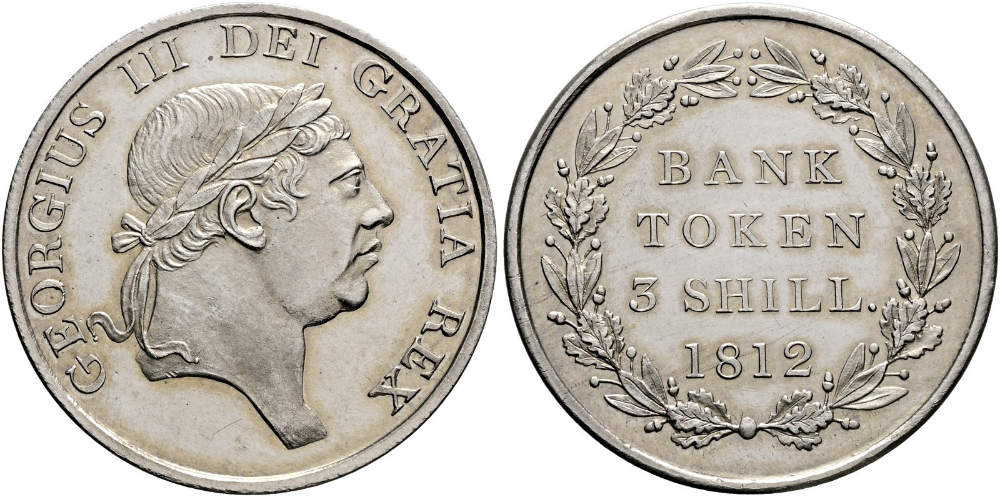
George III. PT Proof 3 Shillings 1812 in PLATIN. NGC PF65+. Estimate: 15.000 CHF. Hammer Price: 110.000 CHF. From Numismatica Ars Classica 167 (27. Mai 2026), No. 1564
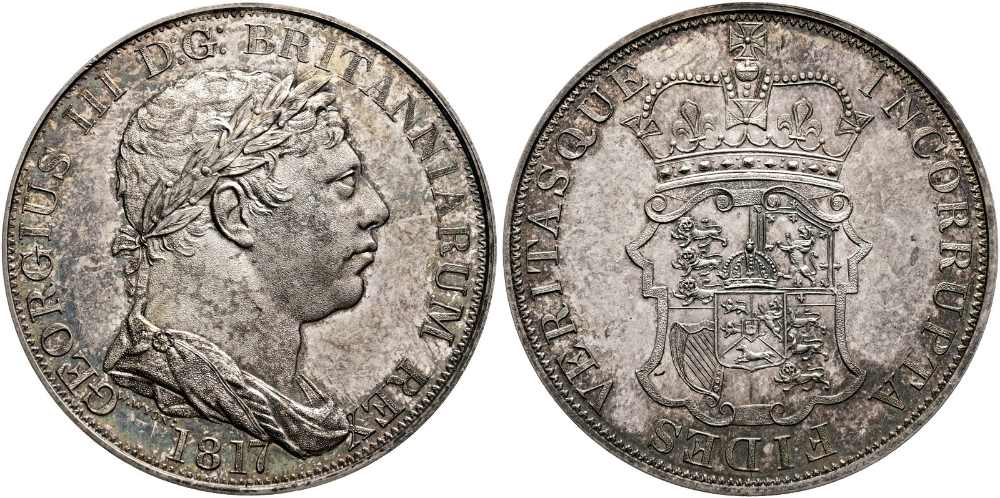
George III. Pattern “Incorrupta Crown” 1817. NGC PF66+ CAMEO. Estimate: 75.000 CHF. Hammer Price: 170.000 CHF. From Numismatica Ars Classica 167 (27. Mai 2026), No. 1582