



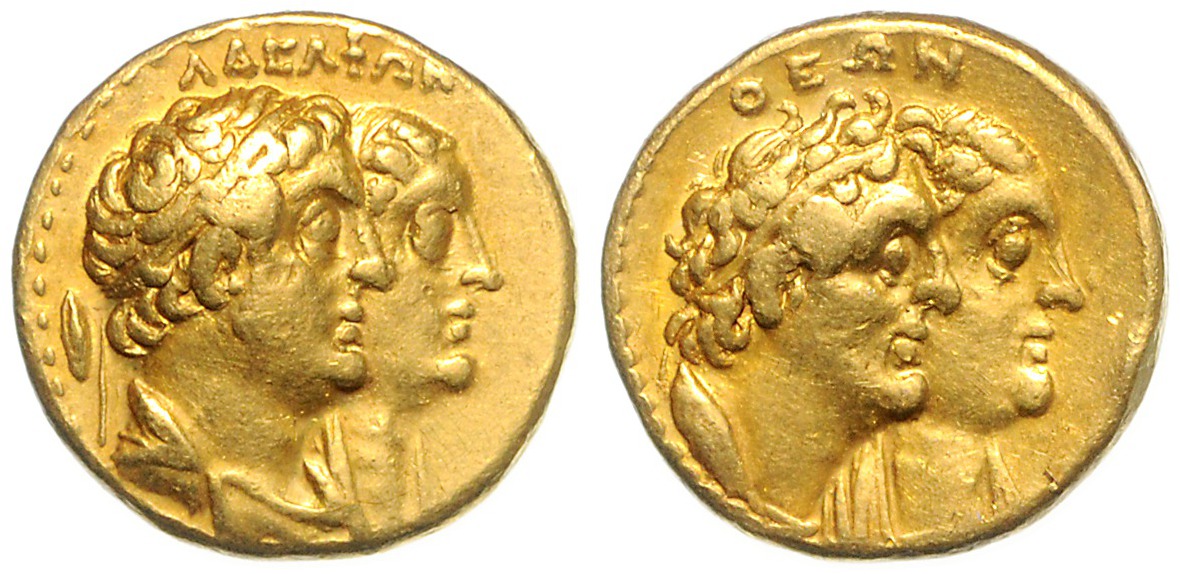
AV tetradrachm (282–272 BC),
King Ptolemy II and Queen Arsinoe II.
Condition: ef+.
Video highlight: Watch now!
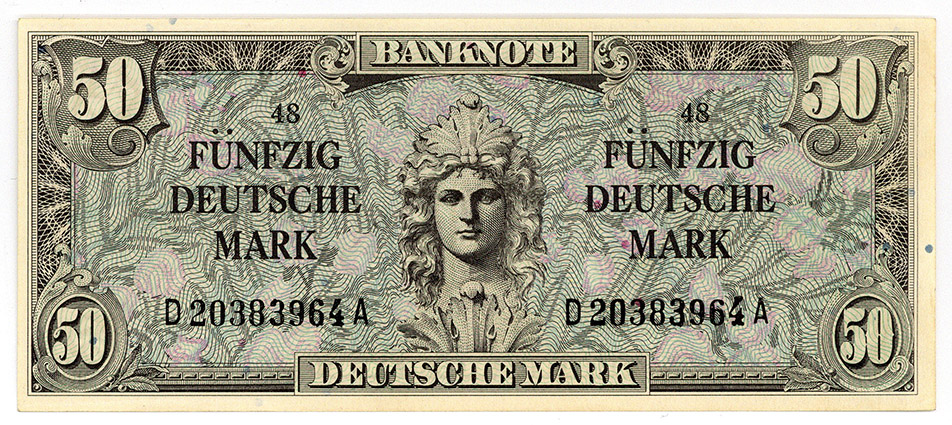
50 Deutsche Mark n. d. (1948-1949) "Liberty".
Condition: extremely rare, I.
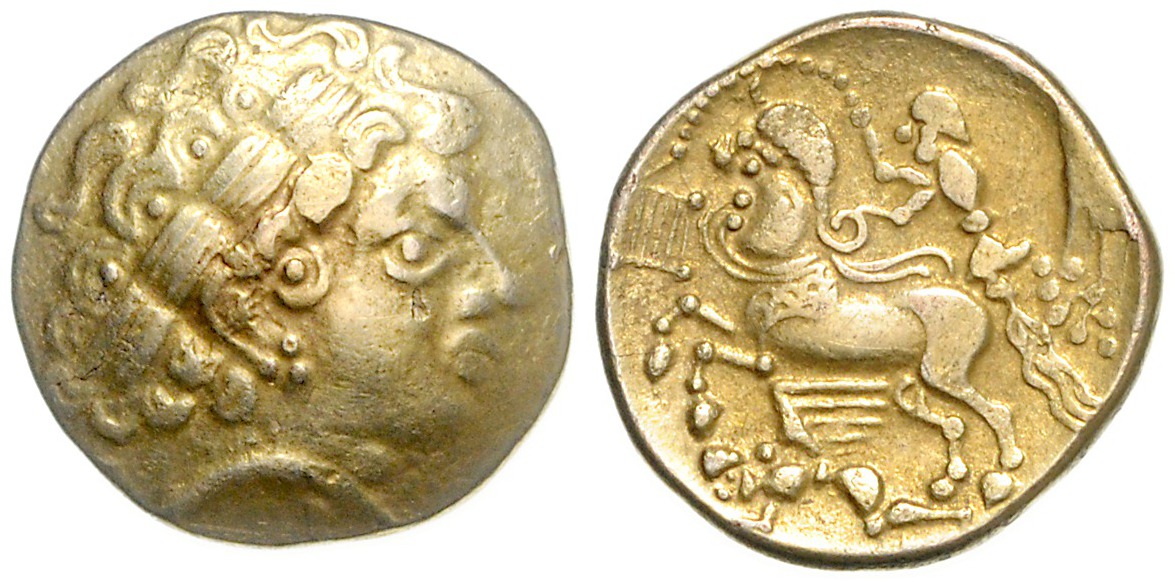
AV Stater (1st century BC).
Treveri, so-called "eye stater."
Condition: vf-ef.
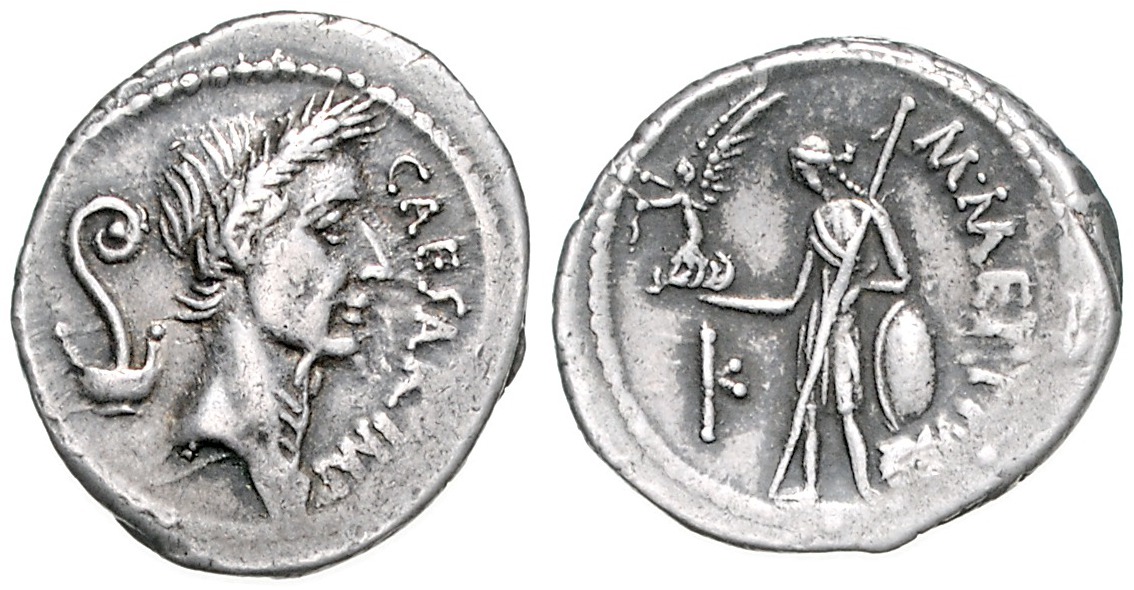
Julius Caesar.
AR Denarius (44 BC), Rome.
Condition: very rare, beautiful patina, vf.
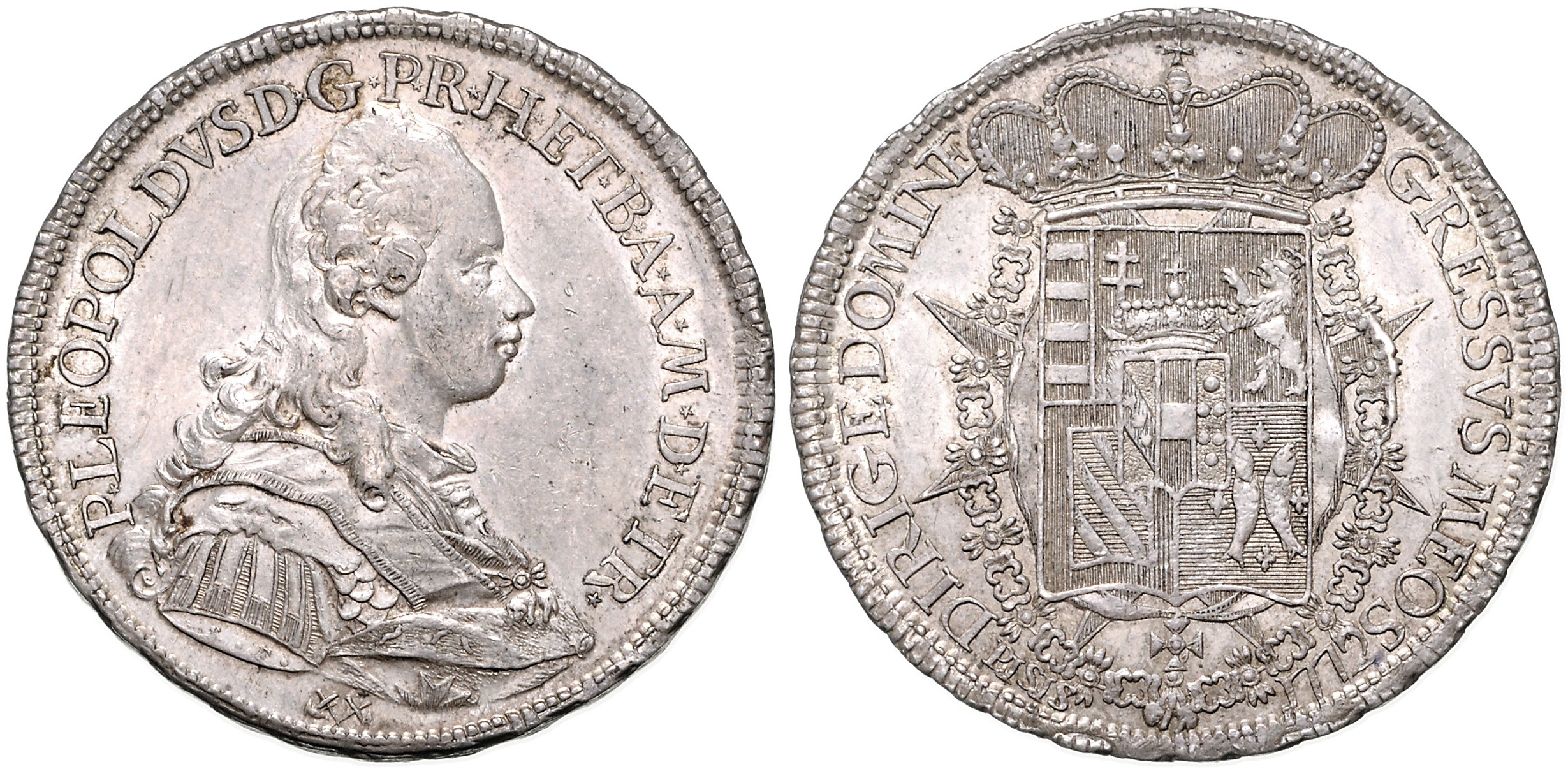
Leopold I of Habsburg-Lorraine (1765–1790).
Francescone (10 Paoli) 1772, Florence.
Condition: magnificent specimen, rare, vf/ef.
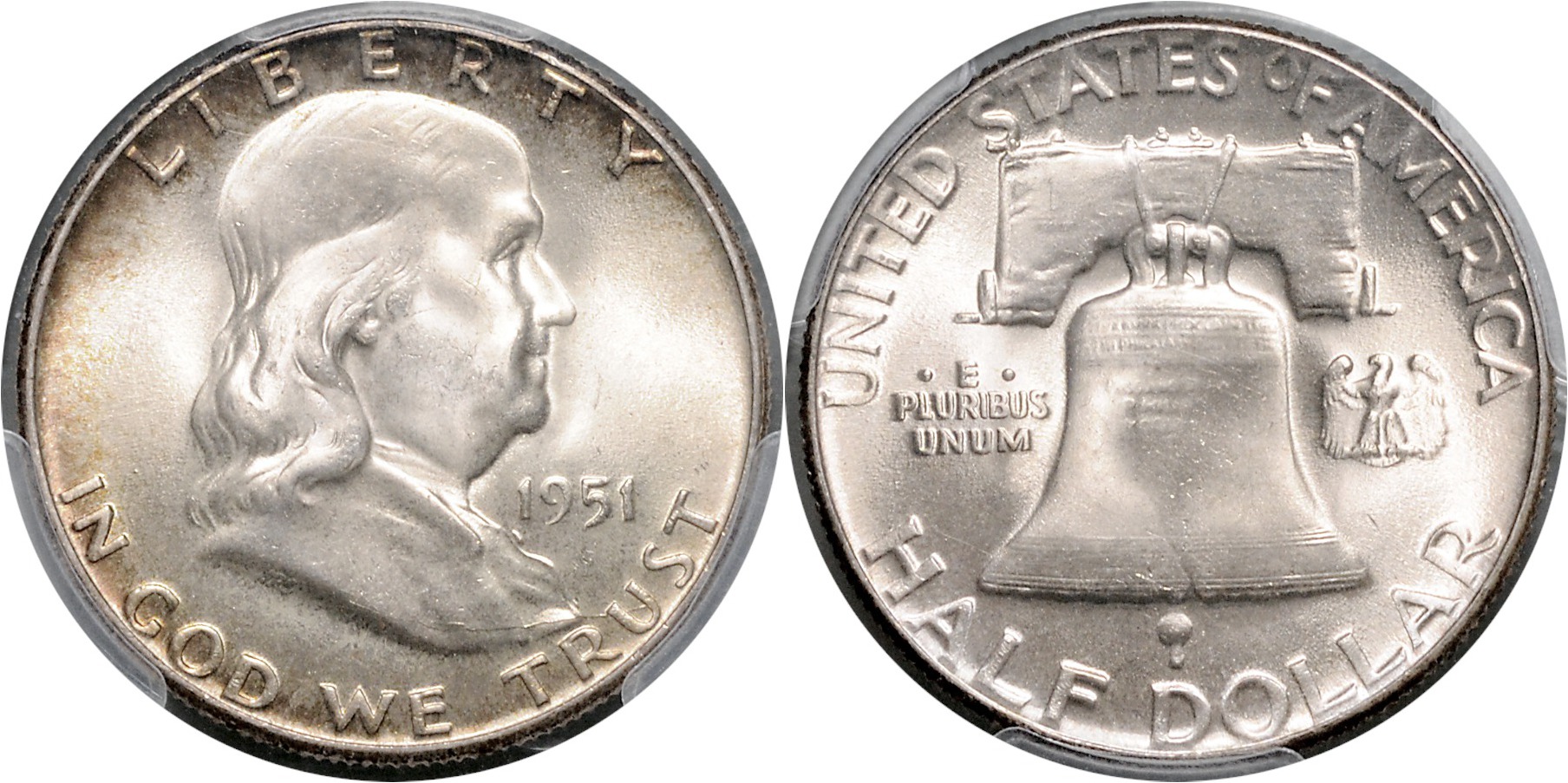
50 Cents 1951, Philadelphia.
Condition: PCGS MS 67 FBL.
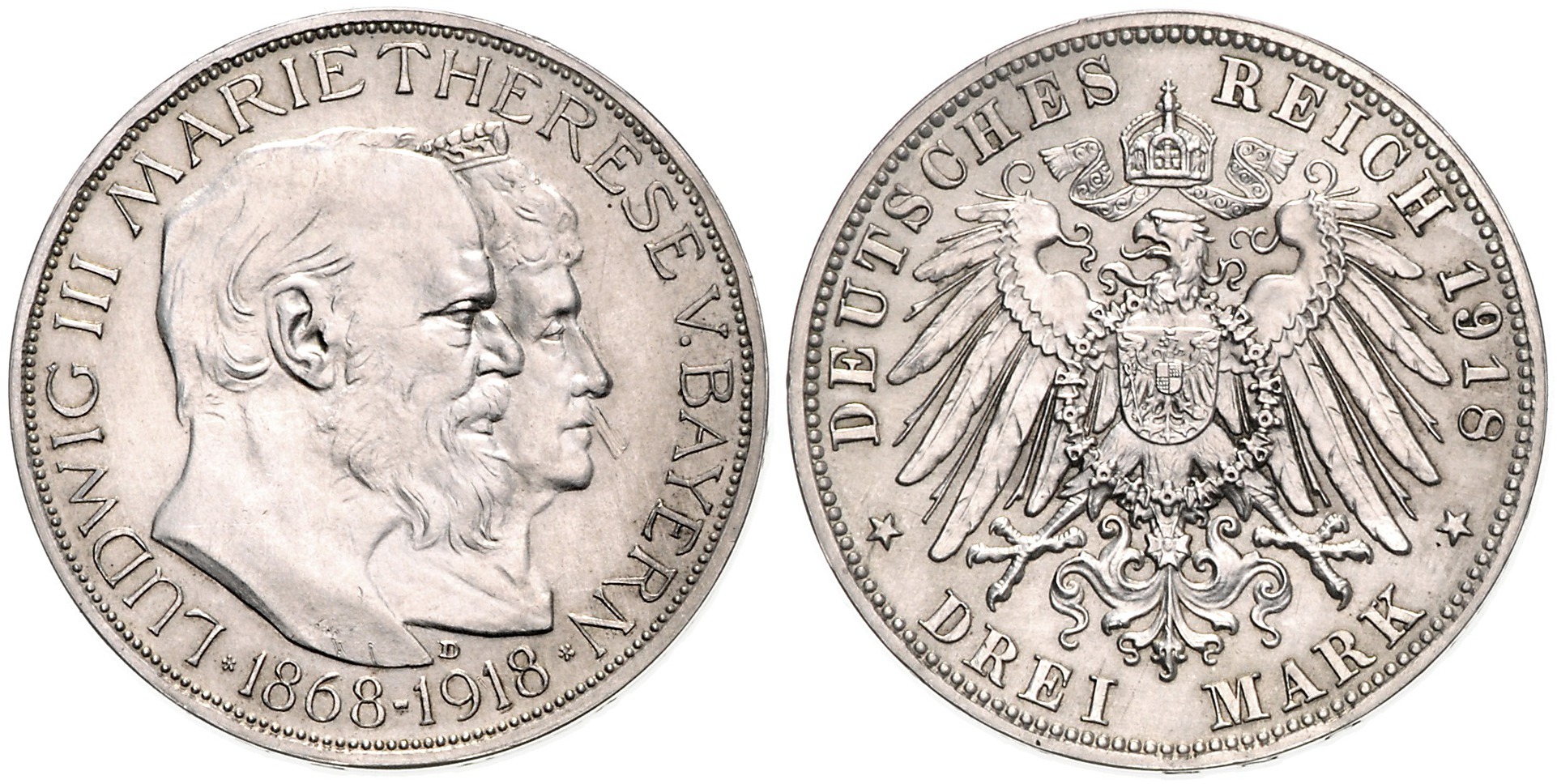
3 Marks 1918
"Royal Wedding in Bavaria".
Condition: unc.
Video highlight: Watch it now!
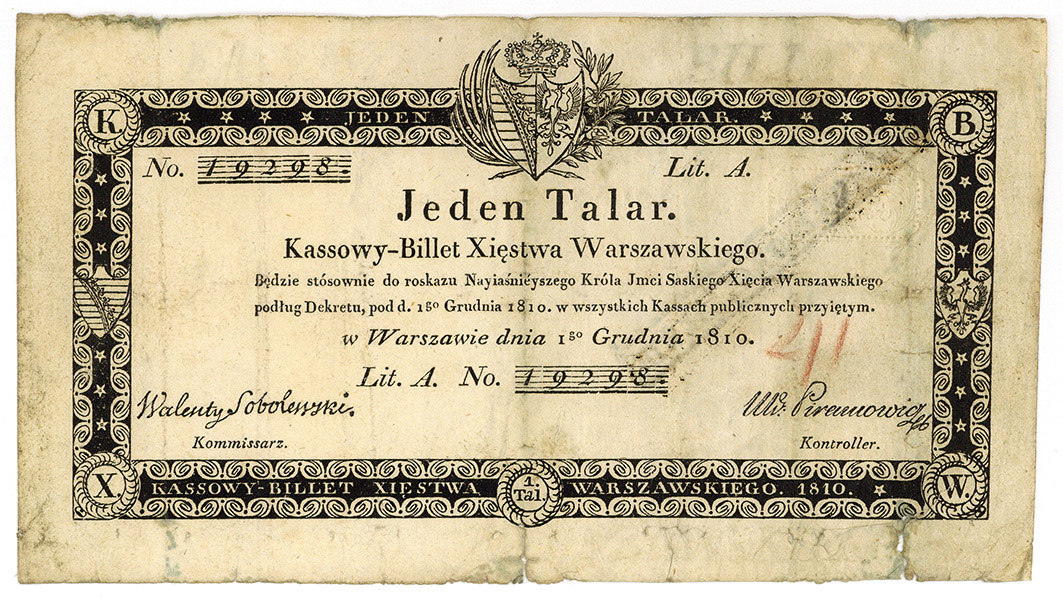
1 Thaler, December 1, 1810.
Condition: III–IV.
A Medal Made by Dürer as the Official Gift of the City of Nuremberg for Charles V
by Ursula Kampmann, on behalf of Künker
Since ancient times, the entry of a ruler has been a major event in the history of a city. Such an official visit had to be prepared for months. And when Charles V was crowned King of Germany in Aachen on 23 October 1520, Nuremberg immediately started planning his visit. After all, it was customary that the first Imperial Diet of each new king took place in the free imperial city of Nuremberg. Back then, Nuremberg was considered – together with Cologne and Prague – to be the largest and richest city of the Holy Roman Empire of the German Nation. The city was closely connected to the imperial rule because the imperial regalia were kept here.
Content

Woodcut with Nuremberg city view from the Nuremberg Chronicle. In front: Nuremberg. Silver medal for Charles V (1519–1558). Design by Albrecht Dürer. Technical execution by Hans Krafft. From Künker auction 418 (29 January 2025), No. 305.
Preparations for the Visit of the Young King
A busy and cost-intensive time began for the city fathers. First, the building in which the Imperial Diet was to meet had to be prepared. The façade of the town hall was decorated with wall paintings, and the city of Nuremberg’s then most renowned artist was hired to decorate the interior: Albrecht Dürer. For the ballroom, the latter created the largest wall and ceiling painting of Europe at that time.

A decade later, in 1530, Charles V enters Augsburg on the occasion of the Imperial Diet, to his right his brother Archduke Ferdinand, the future emperor; to his left the Count Palatine Friedrich and the papal legate Campeggi. Woodcut by Jörg Breu the Elder.
But there were also other things the city fathers had to take care of. For example, the emperor’s entry always had to follow the same ceremonial protocol: The dignitaries of Nuremberg carried the city’s most important sanctuaries and led a group of extravagantly dressed young men waving flags towards Charles V. They carried the precious canopy which was then placed over the king so that his entry into the city could not be disturbed by the weather. Before the king entered the city, the city fathers handed him the keys to the castle. And that is not everything. Every entry required a gift. Therefore, the councillors speculated intensely about a gift that could impress the young king Charles V.

Nuremberg. Silver medal for Charles V (1519–1558). Design by Albrecht Dürer. Technical execution by Hans Krafft. From Künker auction 418 (29 January 2025), No. 305.
A Bowl Full of Medals
As mentioned, Albrecht Dürer was the most famous artist of Nuremberg. In 1518, he had already been commissioned to create a portrait of Maximilian I. Thus, it was only logical to commission Albrecht Dürer with a portrait of the grandson of Maximilian I. Of course, not a portrait made of wood and colours. Everyone knew about the high debts the emperor had after his election as King of Germany. Charles V had paid the electors a gift amounting to 851,918 guldens!
Therefore, the city council decided to present him with 100 heavy silver medals when he entered the city. Each of them weighed about 200 grams, thus the city’s gift added up to 20 kilograms of silver! An impressive gift of honour!
In order to create these silver medals, the artist Albrecht Dürer collaborated with the most famous humanists of Nuremberg. Johannes Stabius, Willibald Pirckheimer and Albrecht Dürer had already worked together when they created the motifs for the triumphal arch and the triumphal buildings, which had been manufactured on the occasion of the entry of Emperor Maximilian I. Now, the collaboration was revived in order to create the elaborate medal that was to feature the emperor’s lifelike portrait on the obverse, and on the reverse the imperial eagle surrounded by the coats of arms of all the the parts of the empire where the sun never set.
The medals were minted by Hans Krafft. It was a technical masterpiece, and so far, no comparable examples exist due to the size and the thickness of the planchets. This was also reflected by the payment. Hans Krafft received 150 guldens for producing the die. This was a huge amount of money. Usually, 2 to 5 guldens were paid for one die!
The city council commissioned the production of 167 pieces – 100 for the emperor and the other specimens were to be used as additional gifts needed in the context of the Imperial Diet.

An Imperial Diet, like the one in Augsburg in 1530, at which the Augsburg Confession was read out, never took place in Nuremberg. Contemporary woodcut.)
The Huge Disappointment
Then, Nuremberg fell victim to the plague. The emperor decided that the Imperial Diet would take place in Worms, and Luther did not say his famous words “Here I stand. I cannot do otherwise” in Nuremberg but in Worms.
Of course, the entire city of Nuremberg was disappointed. At first, the city council discussed whether the elaborately produced medals should be handed to the emperor in Worms. But that did never happen. We do not know why. In 1537, most of the medals were melted down – after all, there material value was immense. A list from 1613 documents the existence of 24 pieces, this number was later corrected into 16.
One of Four Specimens on the Market
Today, only thirteen original specimens of these precious pieces are known. Nine of them are kept in the world’s most important coin cabinets, only four are in private possession and therefore accessible to collectors. One of them is damaged in such a way that its aesthetic effect is reduced. The last time such a piece was auctioned – 2009 – an expert bid 260,000 euros for it.

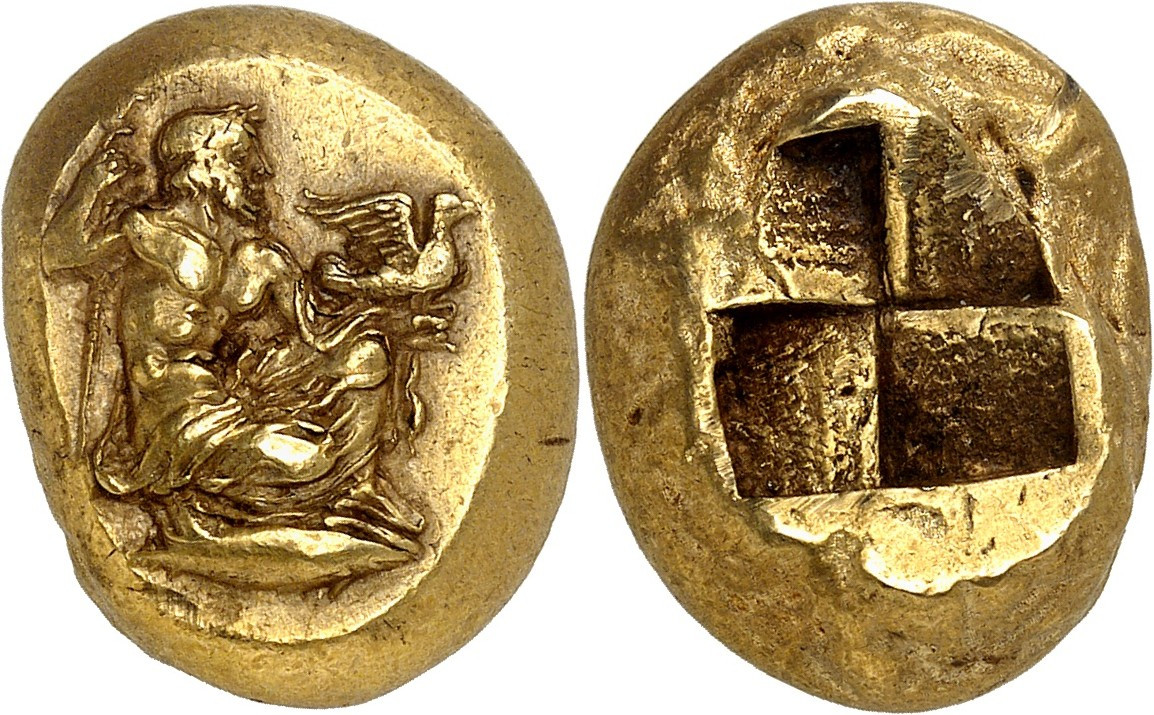
Electrum Stater circa 375-350 BC.
Baron Lorne Thyssen-Bornemisza Collection.
An exceptional specimen.
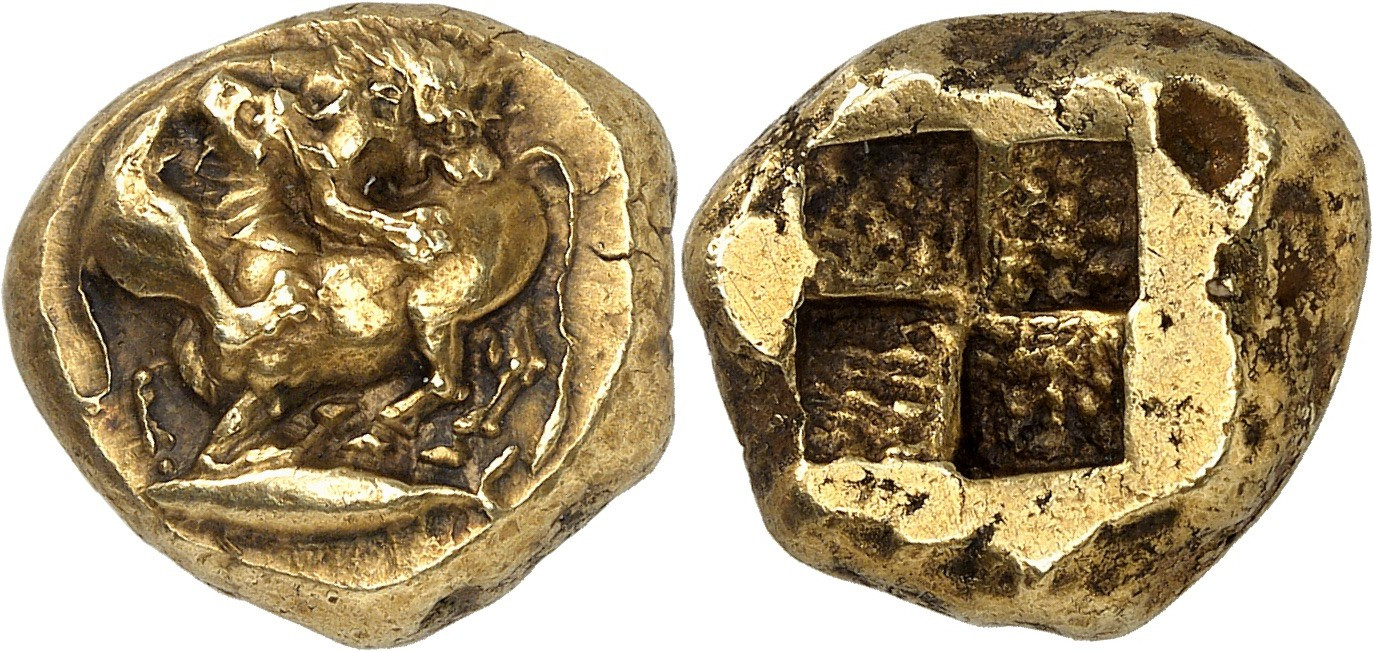
Electrum Stater circa 360-340 BC.
Baron Lorne Thyssen-Bornemisza Collection.
The finest specimen known.
An extraordinary piece.
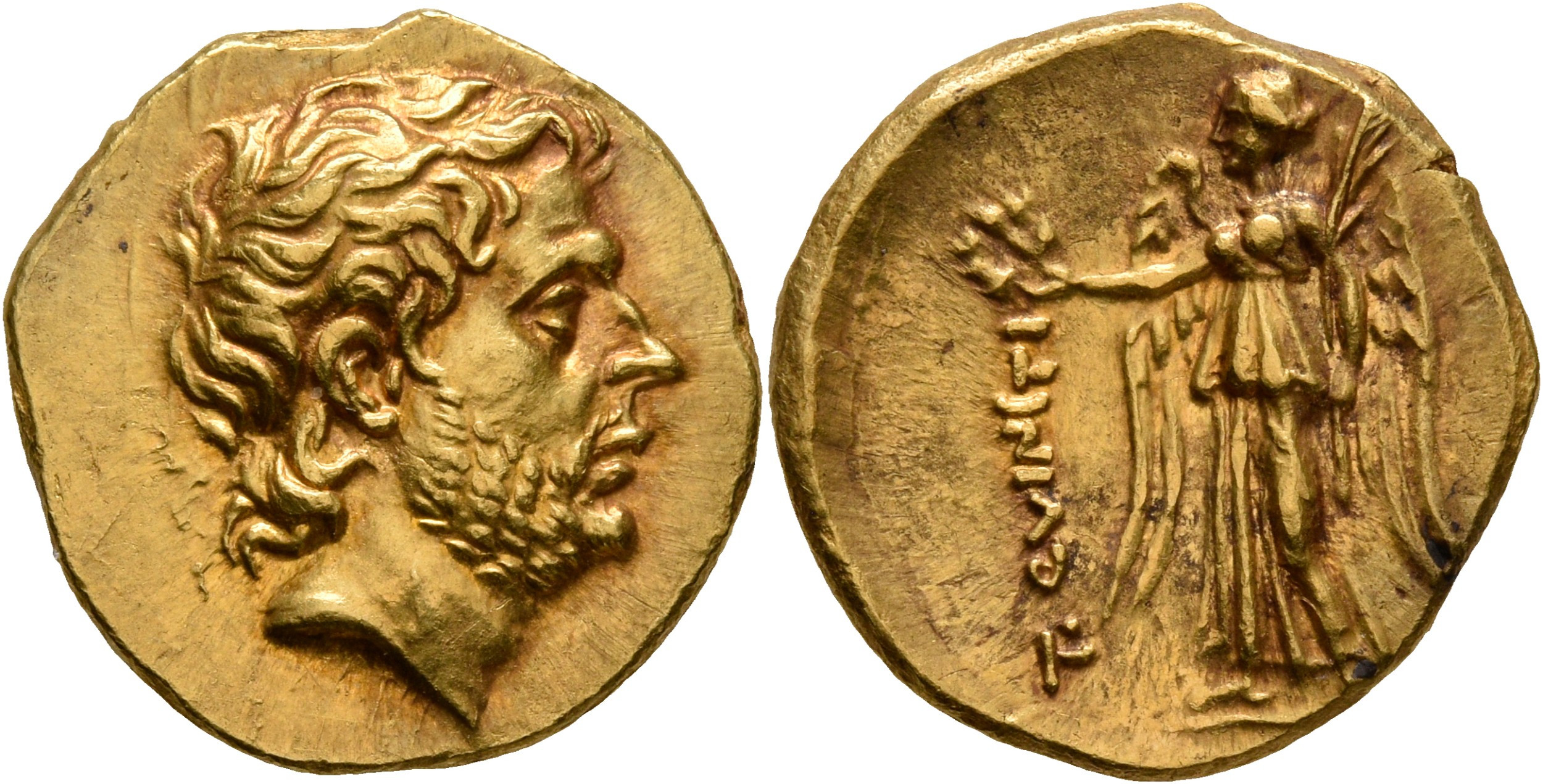
Titus Quinctius Flamininus.
Gold stater circa 196 BC, Chalcis (?).
Baron Lorne Thyssen-Bornemisza Collection.
The first coin to portray a Roman during his lifetime.
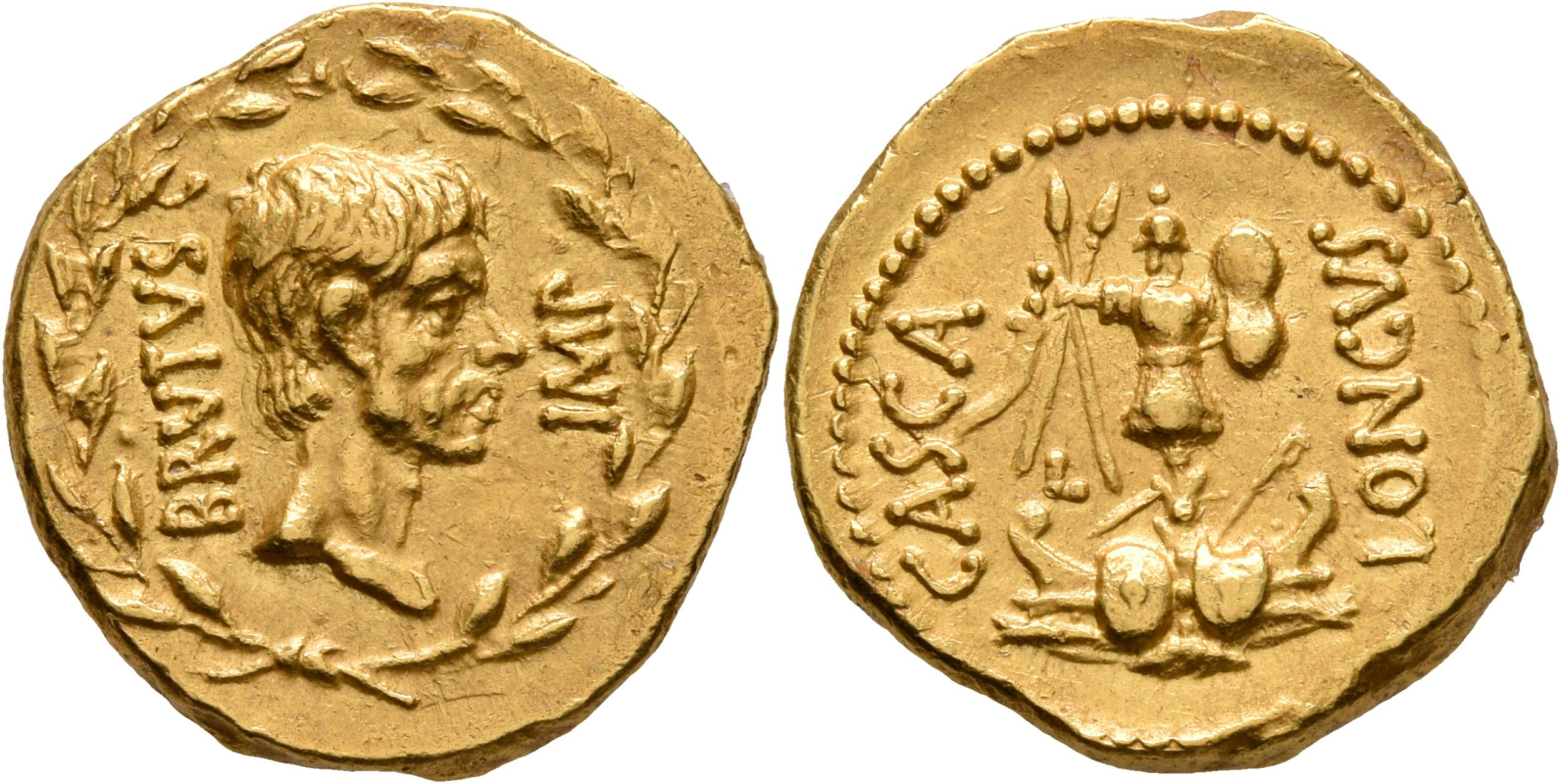
Aureus 43-42 BC, moving mint in
Northern Greece or Asia Minor.
Baron Lorne Thyssen-Bornemisza Collection.
One of the most important and
infamous coins in Roman numismatics.
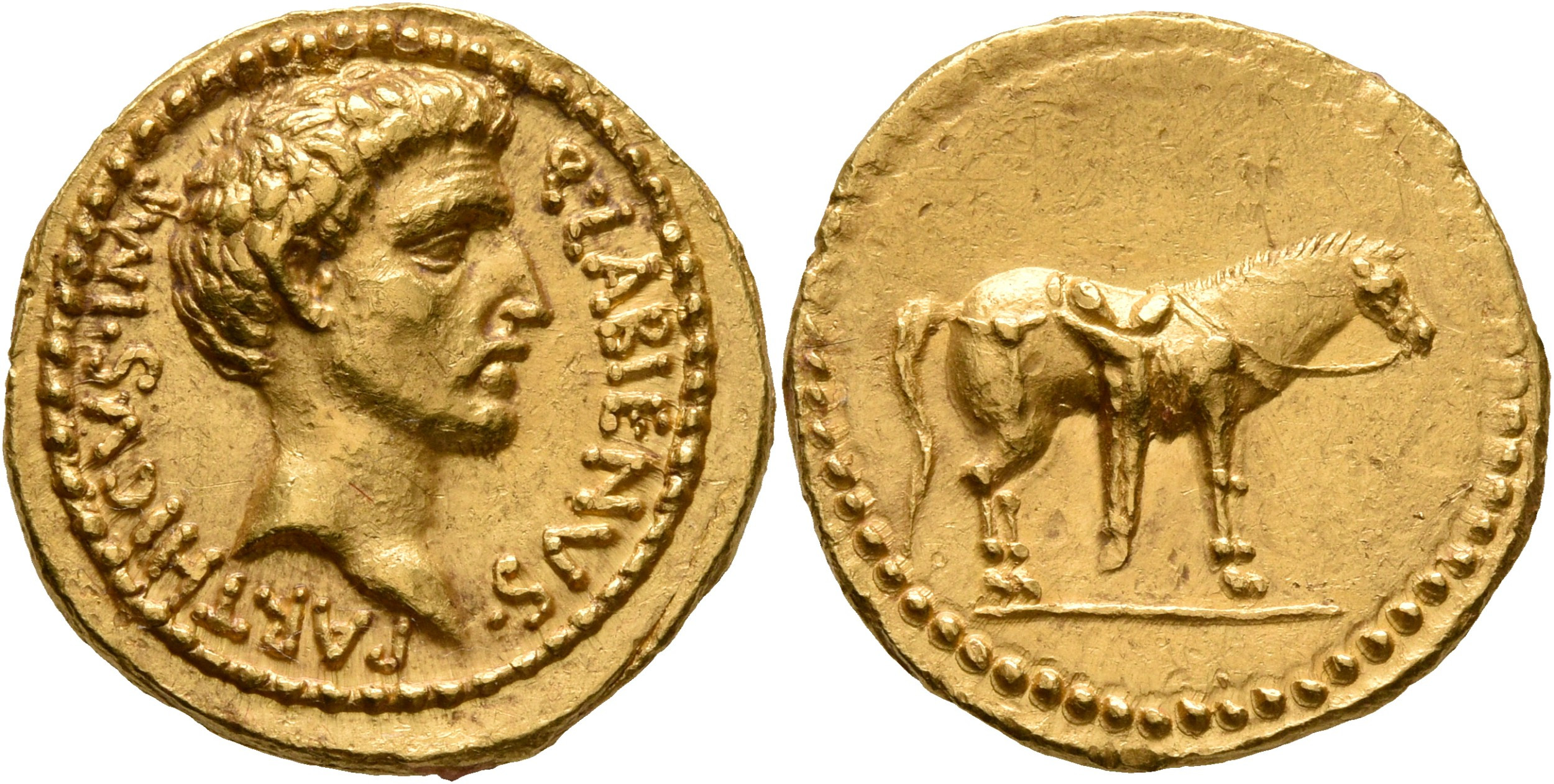
Aureus 40-39 BC, mint moving in Asia Minor.
Baron Lorne Thyssen-Bornemisza Collection.
Of the highest rarity,
apparently only five specimens known.
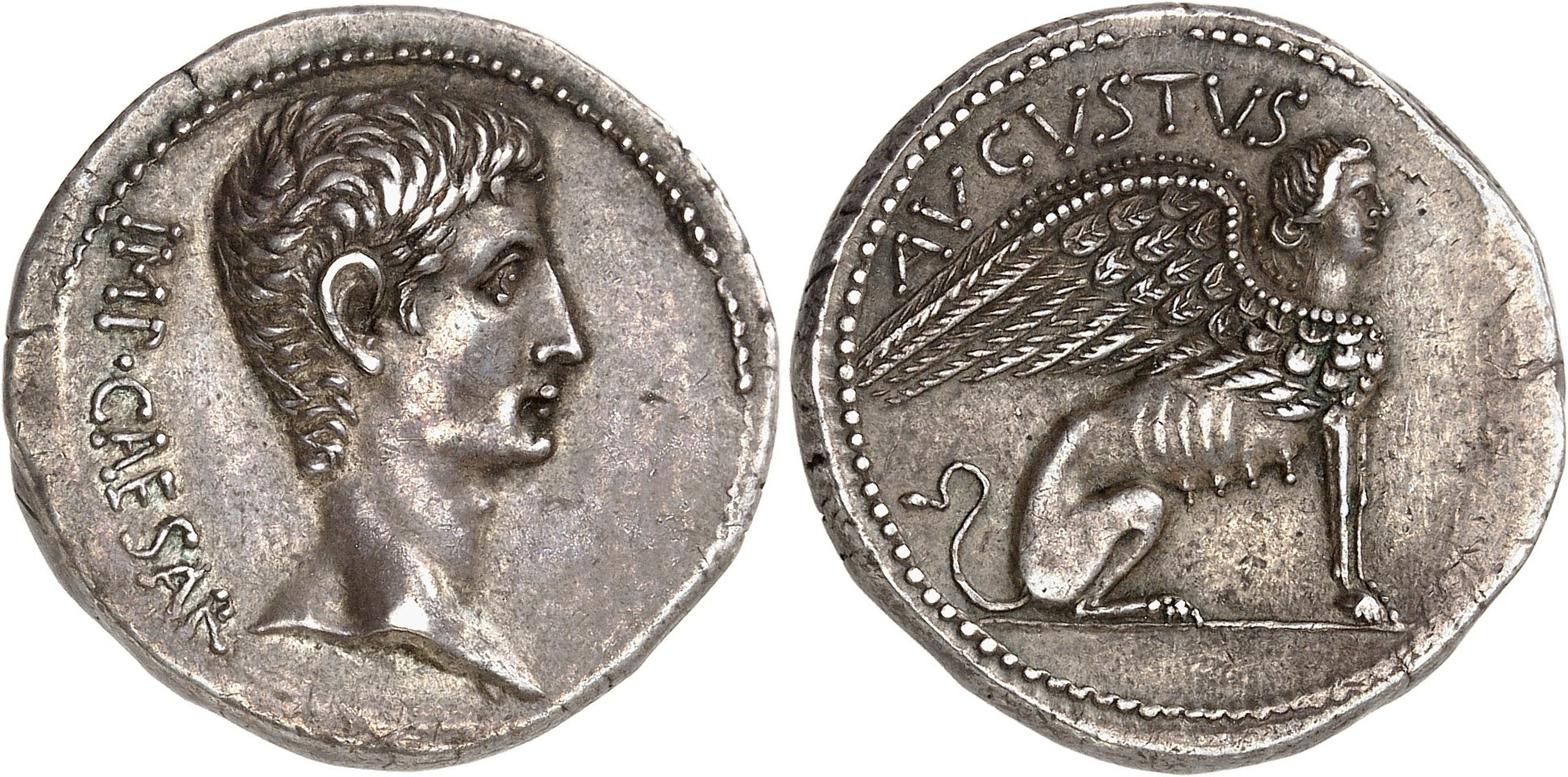
Cistophorus 27-26 BC, Ephesus or Pergamon.
Baron Lorne Thyssen-Bornemisza Collection.
An extraordinary specimen in
perfect state of conservation.
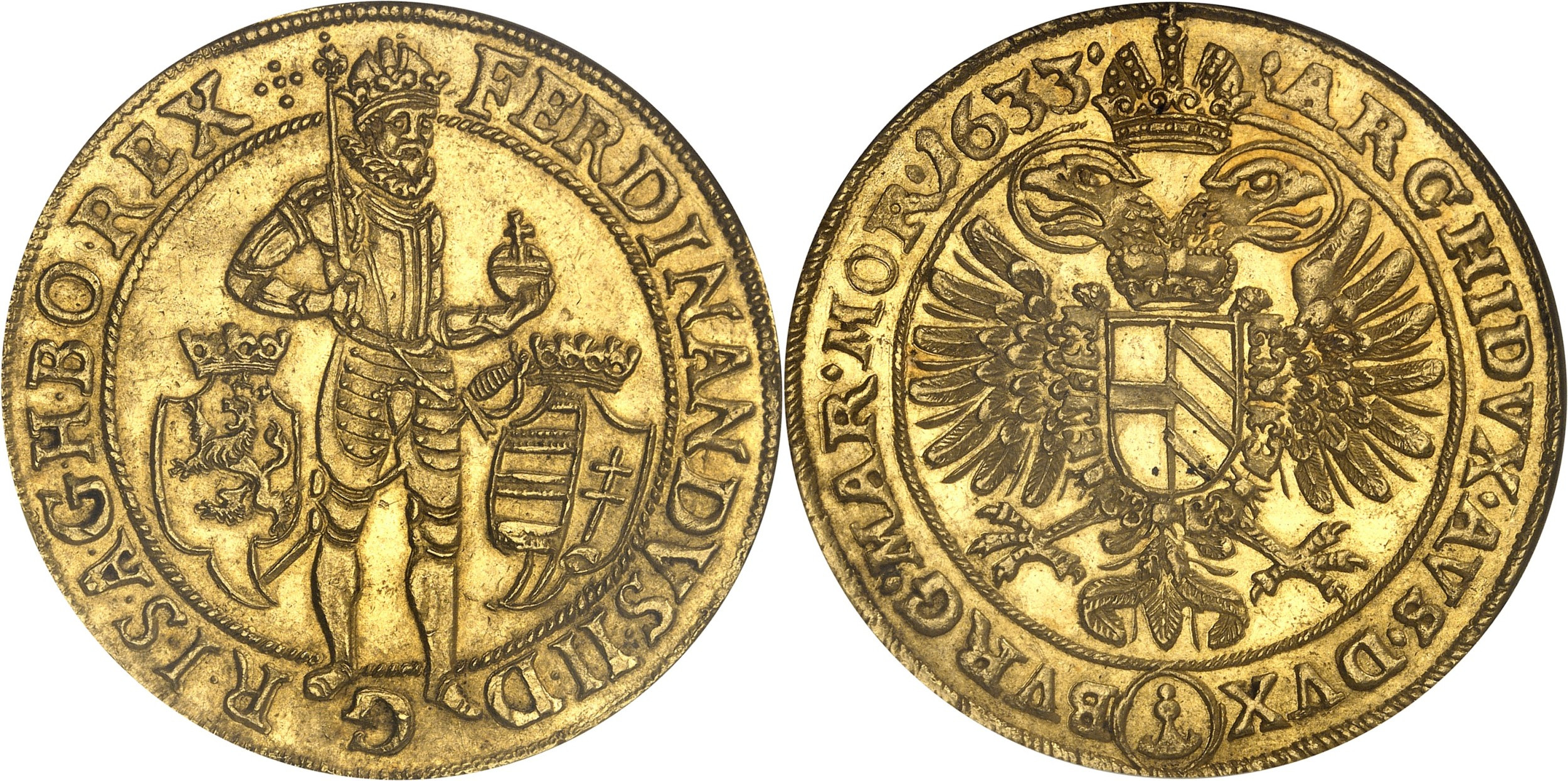
10 Ducats 1633, Prague.
NGC MS65 (Top pop).
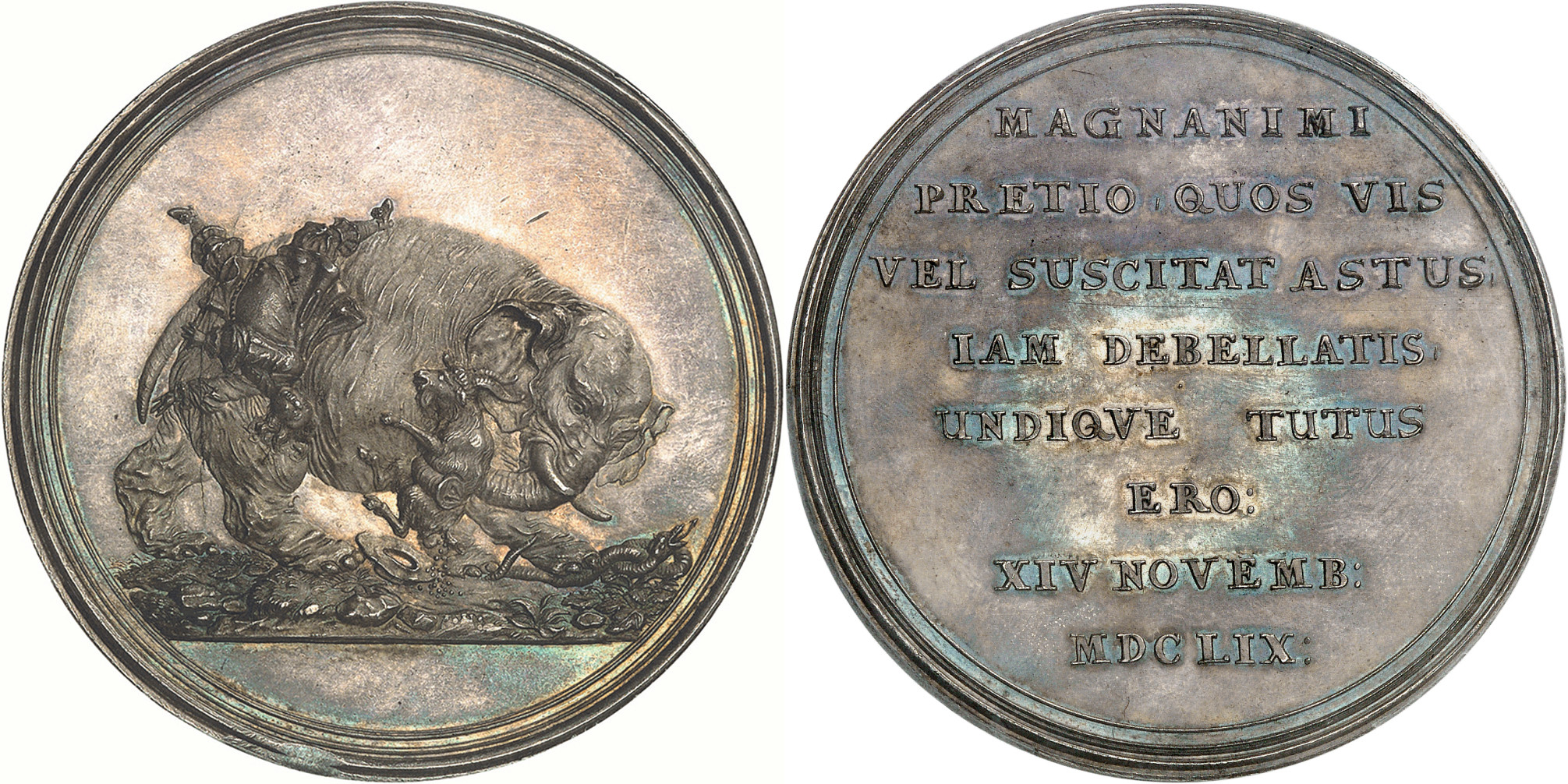
Silver Medal 1659, commemorating the battle of
Nyborg in 1659, by J. Hercules.
An extremely rare original striking of
this extraordinary medal.