






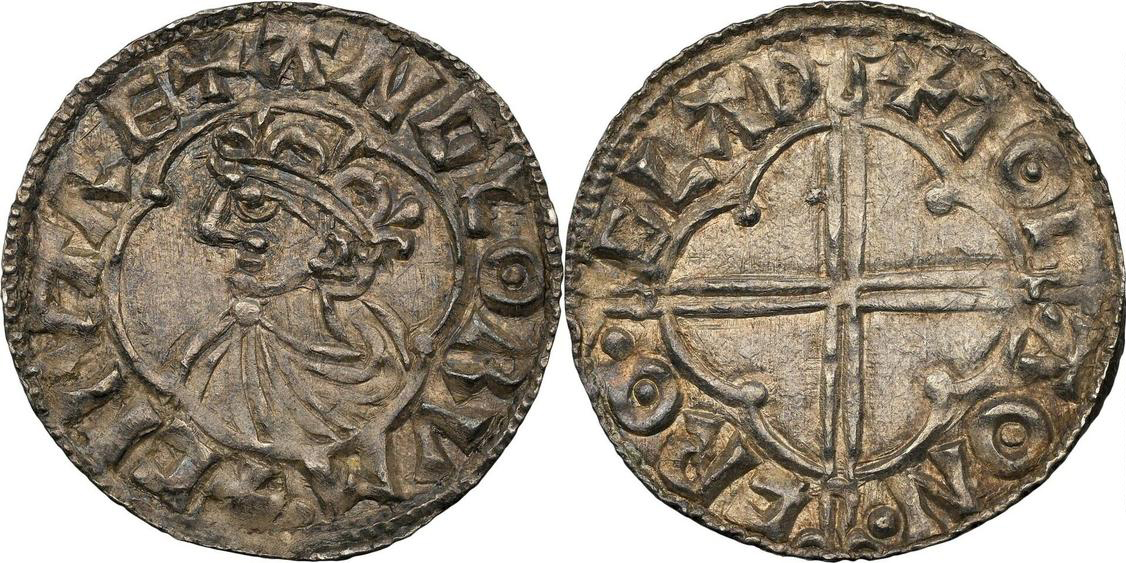
Penny, ND (1016-23).
Cricklade Mint. Cnut.
NGC MS-64.

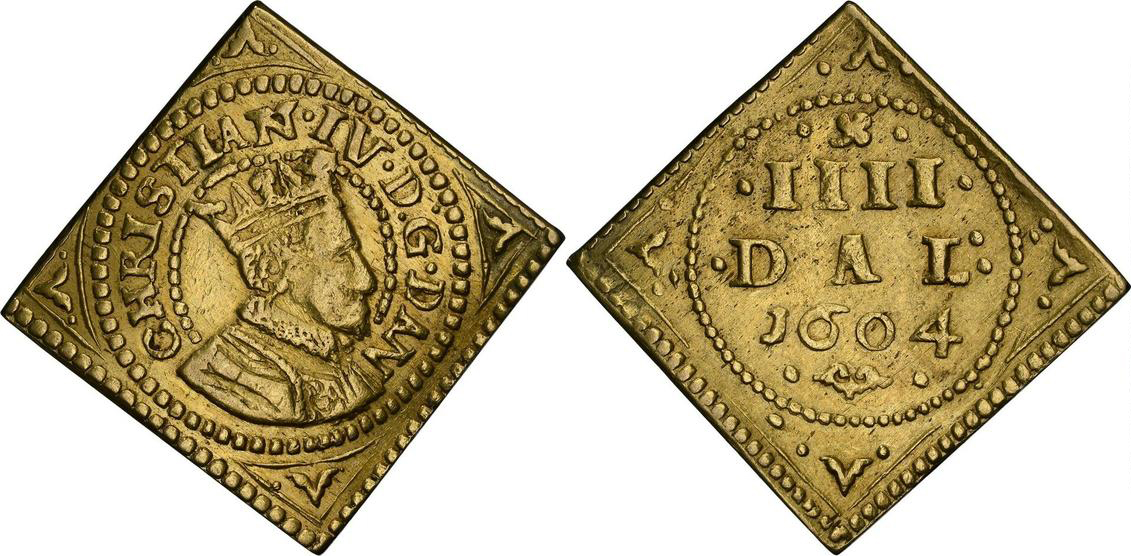
4 Daler Klippe, 1604.
Copenhagen Mint. Christian IV.
NGC AU Details.
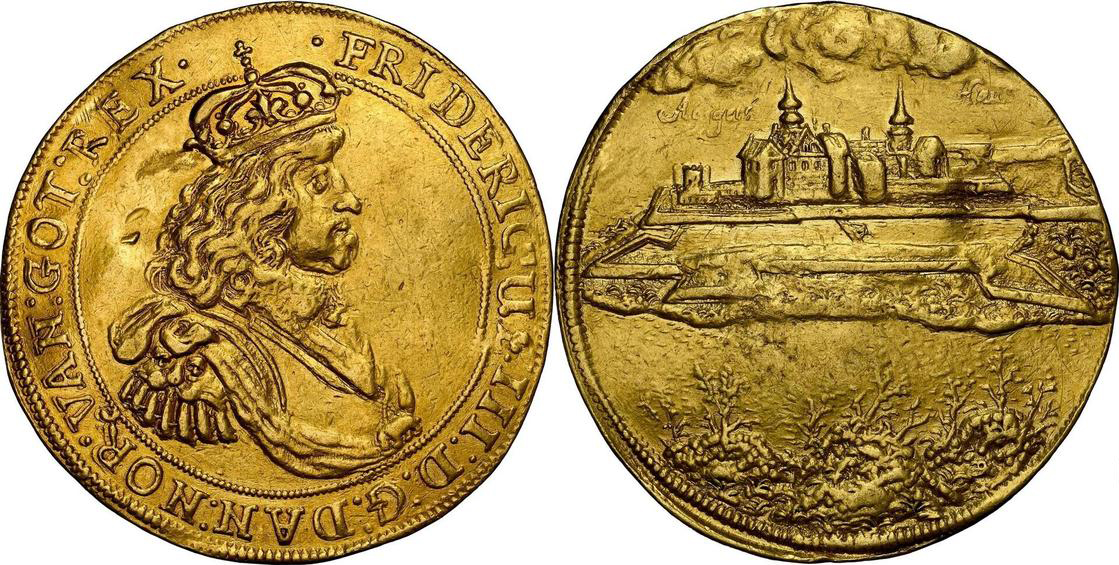
10 Ducat (Portugaloser),
ND (1661). Christiania Mint. Frederik III.
NGC AU Details.
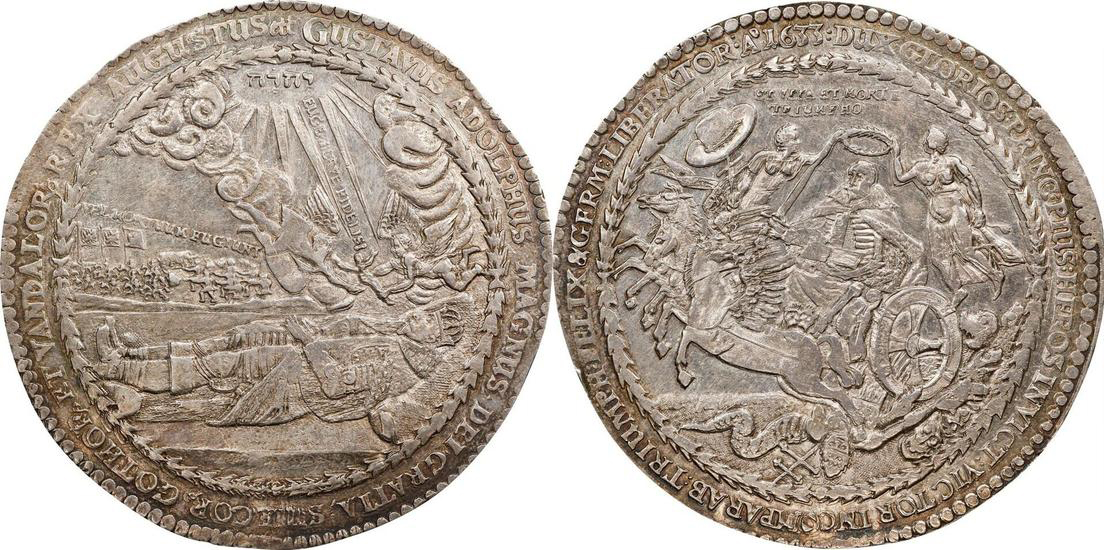
Wolgast. 4 Talers, 1633.
Wolgast Mint. Gustav II Adolf.
NGC AU-58.
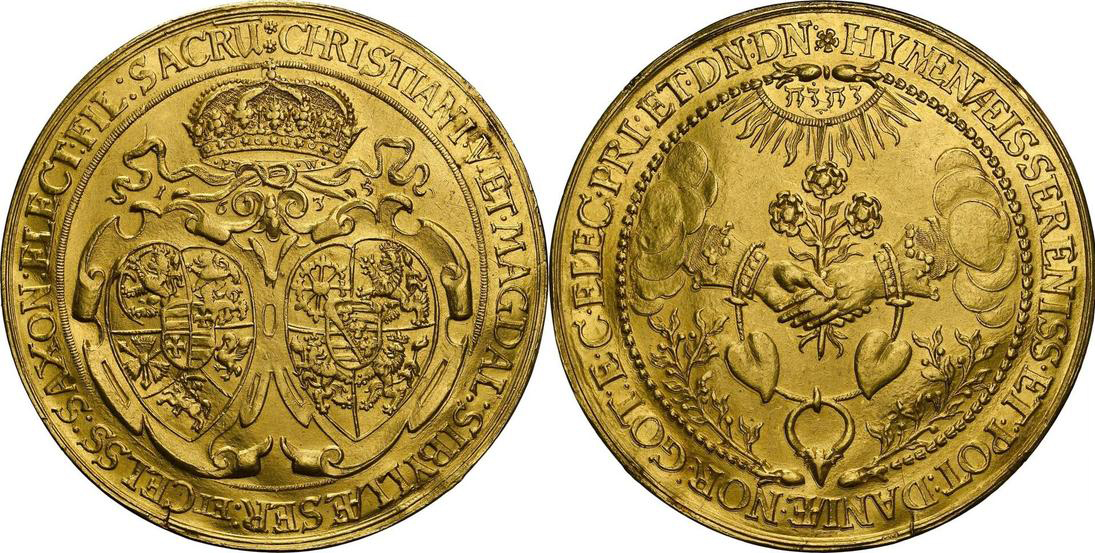
Saxony. Gold Medal /
10 Ducats, 1635. Johann Georg I.
NGC MS-62.
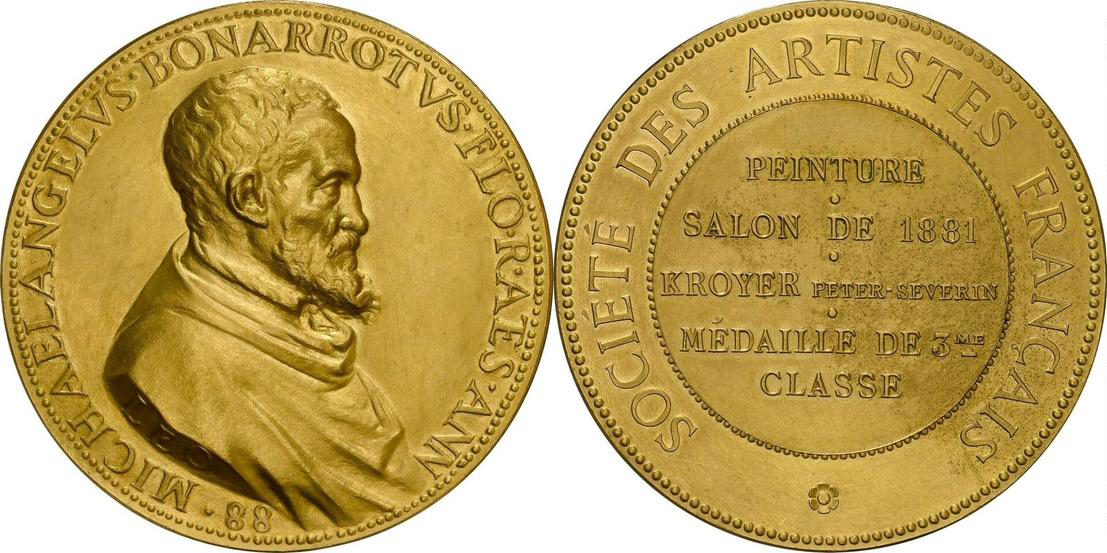
Art Exhibition Gold Medal,
1881. Société des Artistes Français.
NGC MS-61.
Pattern of the First-Class Warrior Medal – A previously Unknown Relic of German Colonial History
by Helmut Caspar, on behalf of Leu Numismatik AG
Those who didn’t receive glittering stars of honor or colorful neck crosses for their supposed service to God, Kaiser, and Fatherland during the age of monarchy were – if they were lucky – awarded medals of gold or silver. But not every planned decoration ever made it into circulation. Some remained patterns, like the “Warrior Merit Medal” of 1893, created by Berlin medalist Emil Weigand (1837–1907). This piece stands as a striking example of an honors system that sought to reward loyalty and bravery, yet was inextricably tied to the violent machinery of German colonialism. A recent inquiry to the Berlin Coin Cabinet revealed that the medal is missing from their collection, and little is known about its origin or intended purpose.
On 11 May 1892, Kaiser Wilhelm II founded the Warrior Merit Medal First-Class for German Protectorates, meant to honor acts of bravery by indigenous troops – known as Askari – who served in the feared Schutztruppe of German East Africa. These men bore the brunt of colonial warfare, especially during World War I. Beginning 25 March 1893, the medal was also awarded to troops stationed in German New Guinea, Tientsin, Kiautschou, and other colonial outposts.
The medal was issued in two grades: one in gilded silver, the other in plain silver. The Second-Class medal followed the 1873 design featuring Kaiser Wilhelm’s cipher on the obverse (OEK 1894). The First-Class version was newly designed by Weigand, who depicted Wilhelm II in the plumed helmet and cuirass of the elite Garde du Corps regiment. Both grades shared the reverse inscription: “KRIEGER / VERDIENST” (Warrior / Merit).
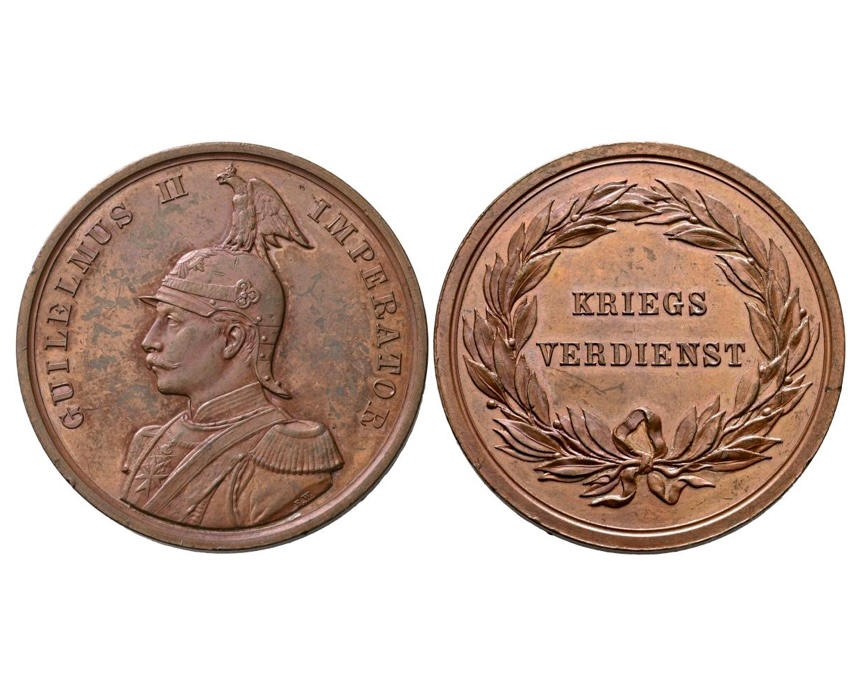
The piece coming up in Leu Numismatik AG’s Auction 18, to be held in Zurich on 2 June 2025 (lot 1126), is the only known specimen of its kind (38 mm, 24.46 g).
The specimen under discussion, however, is a bronze prototype – and an extraordinary one at that. It provides rare insight into the early development of this obscure decoration. The reverse bears the inscription “KRIEGS / VERDIENST” (War / Merit), a throwback to mid-19th-century Prussian military medals (OEK 1892). This wording was later replaced with “KRIEGER / VERDIENST” in the final version. A sample of the Second-Class medal in silver, with an identical reverse, was documented by Hermann von Heyden in his 1897 work Ehren-Zeichen der erloschenen und blühenden Staaten Deutschlands und Österreich-Ungarns. Frankfurt am Main, p. 49. However, no First-Class prototype has ever been recorded in the literature. The existence of this bronze example strongly suggests that a First-Class version in bronze was at one point under serious consideration.
The die work of both the final medals and this pattern reflects the highest craftsmanship of its era. The actual issued medals were awarded only on rare occasions, making them among the most elusive and coveted artifacts of Germany’s colonial legacy.
Interestingly, the obverse of this medal – featuring the Kaiser in full regalia, complete with eagle-topped helmet – was already used in 1890 for coinage in the newly established colony of German East Africa (DOA), founded in 1885 (Jaeger 711–714). Emil Weigand, a favored artist at the imperial court in Berlin, had originally proposed portraying Wilhelm II with the imperial crown. The Kaiser, however, insisted on the Garde helmet instead.
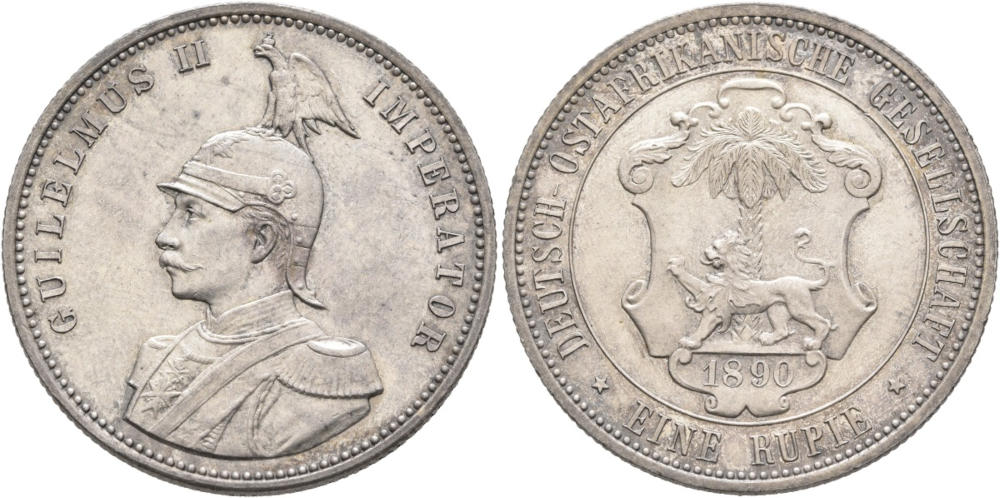
German East Africa, 1 Rupie 1890, Jaeger 713, from the Collection of Dr. Max Blaschegg (1930–2021), Leu Web Auction 22, 20–21 August 2022, 808, previously privately acquired from Dorotheum on 22 October 1947.
Weigand was a master engraver who rose through the ranks, having learned his craft from the ground up. Appointed First Medalist at the Mint in Berlin in 1887, he created countless dies for circulating coinage of the German Empire and several of its constituent states. He was no longer active when commemorative coinage resumed in 1901, having retired to private life in 1905 and passing away with honors a year later. His oeuvre is vast and includes portrait dies for the Victory Thalers of King Wilhelm I of Prussia, the gold 10- and 5-Mark coins, and silver 2- and 5-Mark coins of Emperors Wilhelm I, Friedrich III, and Wilhelm II. He also produced coinage for Hamburg, Lübeck, Oldenburg, Saxe-Altenburg, and Waldeck, as well as colonial commissions.
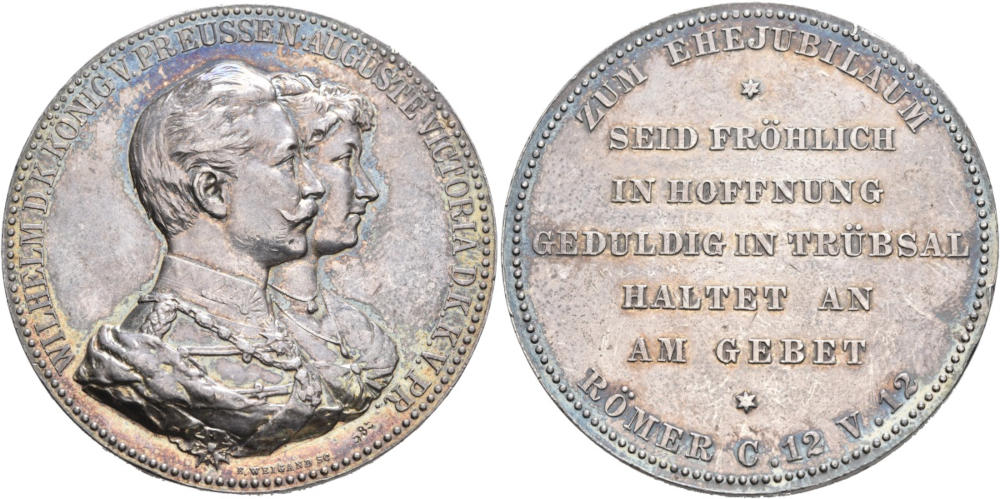
Official Wedding Anniversary Medal of the German Empire, designed by Emil Weigand in 1889. Leu Web Auction 25, 11–14 March 2023, 3823.
Beyond its numismatic and phaleristic rarity, this prototype offers a powerful window into Germany’s colonial past and the symbolic functions of military awards in the Empire. On the medal, Wilhelm II appears not as a ruler in repose but as an armored imperial commander – helmeted, steely, resolute. These medals were never meant to elevate indigenous soldiers to equal status with their white counterparts. Rather, they served to integrate them into the colonial machinery while maintaining strict social hierarchies. In fact, these medals were exclusively awarded to indigenous soldiers; white troops were recognized through entirely different honors.
