







Double Beginner’s Luck: Man Wins Metal Detector and Finds Hundreds of Coins
Some detectorists go for years without finding anything valuable. Others get lucky every now and then. But few get as lucky as the 63-year-old man from Bournemouth, Dorset, who is the subject of this story.
Content
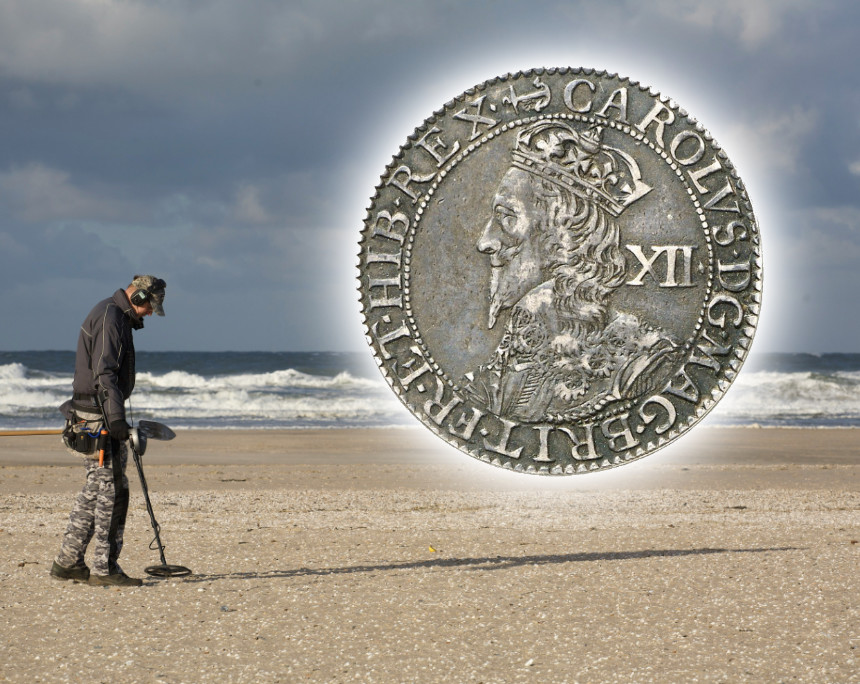
Symbolic image. Background by Fer Troulik via unsplash, Coin: Charles I shilling, n.d., from Künker Summer Auction Sales 2014, No. 126.
The First Windfall
The man had only recently taken up the hobby and had previously only tried to find something with a cheap detector on the beach. Then he experienced a first windfall: he won first prize in a Facebook group raffle and received a top-of-the-range metal detector! With the expensive tool, he began to search more seriously.
The Second Windfall
It did not take long for him to experience his second windfall. He received a signal from the detector on a field. The man is quoted in the Bournemouth Daily Echo as follows: “I was just about to call it a day when I got a strong signal and found a Charles I shilling. Then I swept the area again and got another signal and then another signal and another. I just couldn’t believe it. I dug up 74 silver coins on the first day and was shattered afterwards.”
And this was not the end of the story: “I went back the next morning thinking it would be nice to round it up to 100 but found a total of 234 coins spread over a radius.”
The Find
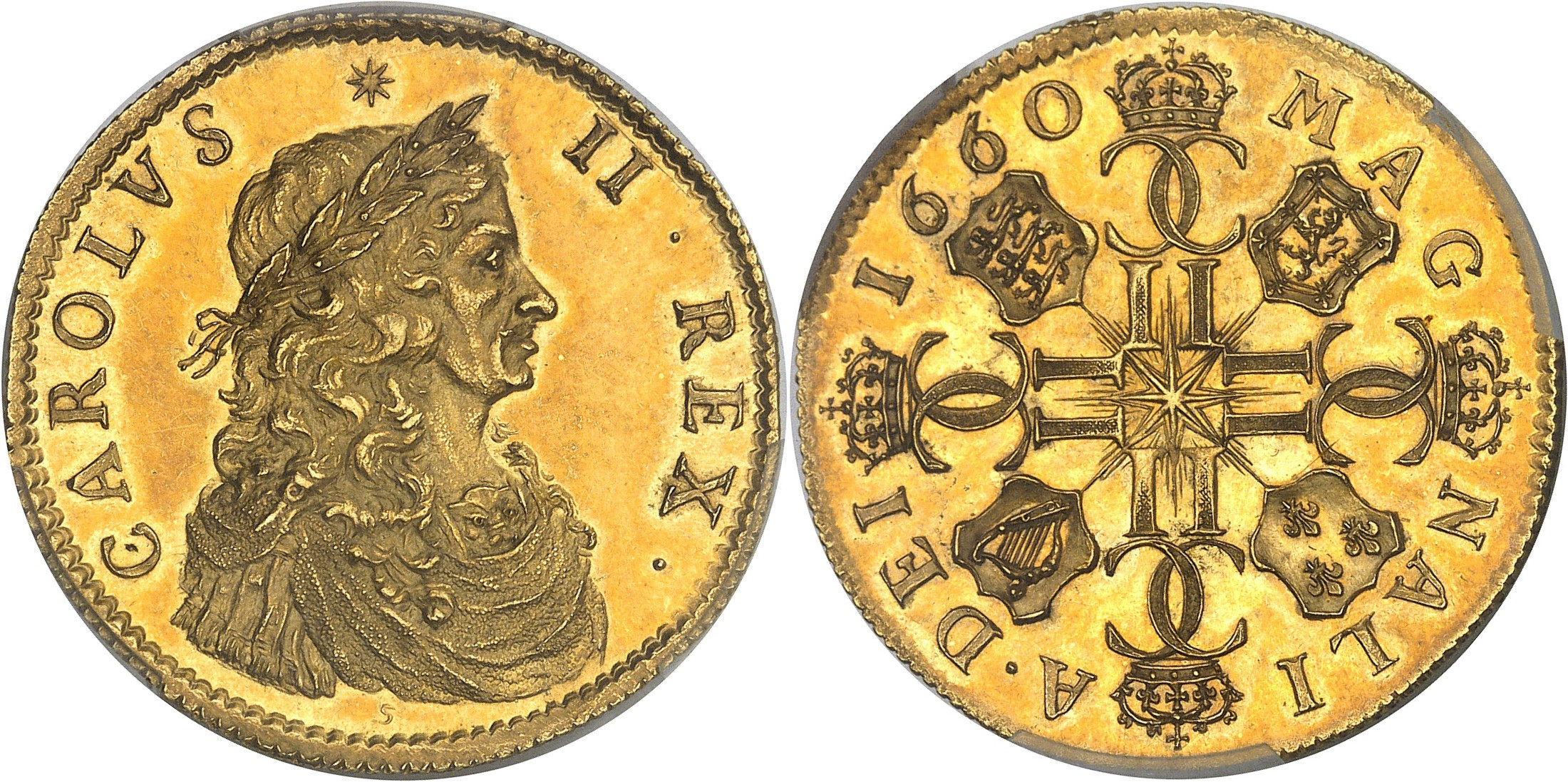
The 234 coins are made of silver and were struck under Edward VI, Elizabeth I, James I and Charles I, so they date from around 1550 to 1650. It is assumed that the coins were buried in 1644 by a farmer who wanted to protect his savings from the English Civil War, which was raging in the region at the time. The fact that he never got round to digging up his savings suggests that he was a casualty of the war.
Just Luck?
Of course, it was not pure luck that led the man to the 234 silver coins. For one thing, he had done his homework and knew that there had once been a small settlement of mud huts in the field. He had also been persistent, having searched the field several times without success, he did not give up. The finder was also exemplary in following the British rules as laid down in the Treasure Act. He had obtained permission from the landowner beforehand, and when he had recovered the find, he handed it in to the local Finds Liaison Officer – exemplary behaviour that, unfortunately, cannot be taken for granted.
The coins were then analysed by experts at the British Museum. And again, there was good news for our finder: the experts concluded that the find should not be declared a treasure and therefore was not state property. This meant that an old and wonderful rule came into force: if you find it, you can keep it!
The Profit
The coins were then handed over to a British auction house and went under the hammer. After the auction, which the finder followed jumping and cheering according to media reports, the total hammer price was announced: the estimate of 10,000 pounds had jumped to 23,000 pounds, the equivalent of 28,000 euros. This sum was split between the finder and the owner of the property. The lucky finder had a clear idea of what he wanted to do with this windfall: treat himself and his wife to a long holiday.
