







Gold Coins With Altered Years: Also a Known Problem in Switzerland
In one of our last issues, we published an article by NGC about a Prussian gold coin with an altered date. The coins themselves were genuine, but the year was deliberately falsified in order to imitate rare issues and achieve higher prices.
Content
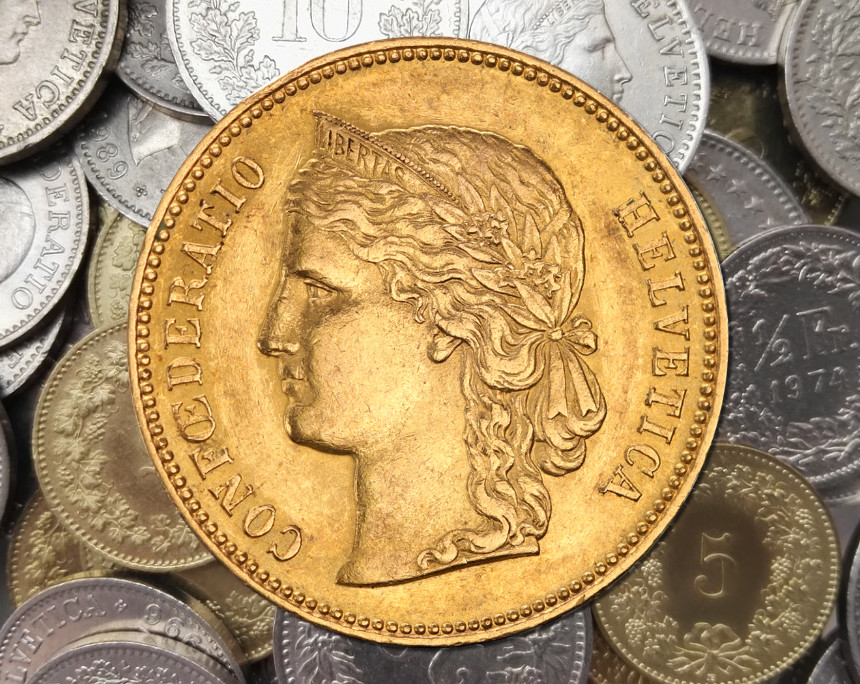
Background: Softcodex via Pixarbay, Helvetia: CoinInvest GmbH via Wikicommons – CC BY-SA 4.0
Following this article, Patrick Huber, who runs the Münzen Huber coin shop in Aarau, has informed us that an increasing amount of such counterfeits were found in Switzerland in recent months, too. These coins also include Prussian imperial gold coins, but mainly the rare 1888 20-franc pieces from Switzerland.
A Warning
At this point, we would like to share the warning he sent to the Association of Swiss Professional Numismatists in February 2024:
Dear colleagues
Fake 1888 20-franc gold coins have been offered in several coin shops in Switzerland. The sellers also had an array of rare years of Russian and Prussian imperial gold coins and an error coin of the 1915 Austrian ducat restrike with the year 1951. It is possible that the perpetrators have generally specialized in altering coins from common minting years to create fake rarities. I assume that these goods are offered throughout Europe.
In at least one case, the sellers were successful in selling the rare 1888 Helvetia. This piece is actually a counterfeit of a piece with the year 1889, but since the genuine 1888 has a different arrangement of the edge inscription, the manipulated pieces can (also) be recognized by this. In addition, the last 8 in the year is slightly raised and positioned slightly too low in relation to the other numbers.
According to the victim of the fraud, criminal charges are being prepared against the perpetrators.
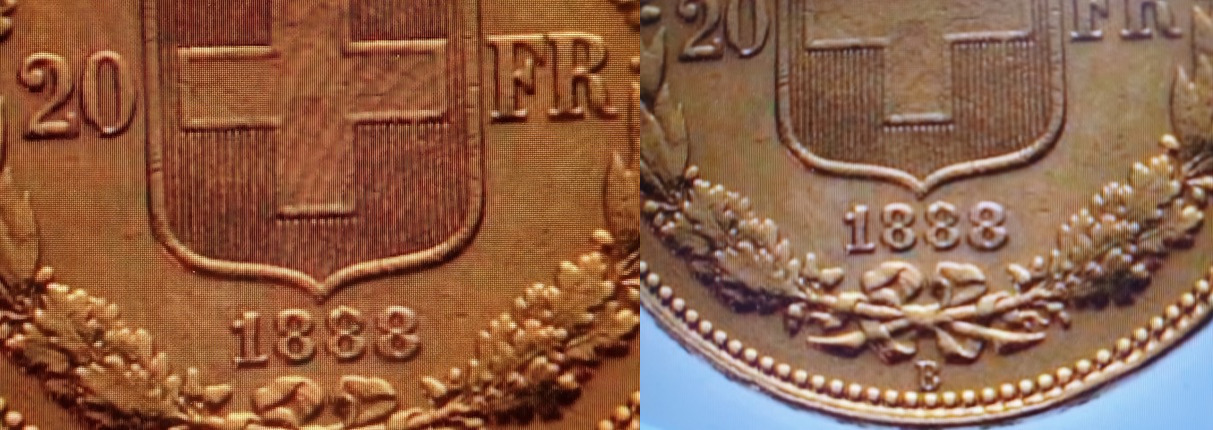
These screenshots were provided to us by Patrick Huber and show a manipulated 20-franc piece from 1888, actually 1889.
Further Information
Additionally, Patrick Huber has provided the following information:
- The forgeries of the Swiss 1888 coin can also be recognized by the positioning of the lettering on the edge of the coin: The genuine 1888 has a different positioning than the 1889 coins from which such pieces have been reworked.
- In Switzerland, 4 pieces of the rare 20-franc coin 1888 (made from a 1889 piece) have entered the trade (as far as he is currently aware).
- At least 2 criminal proceedings are underway against the perpetrators, who were recently arrested during one of the many sales attempts.
- Such products are probably being offered throughout Europe or have already entered the market.
- At least one of the perpetrators has a Romanian passport.
