







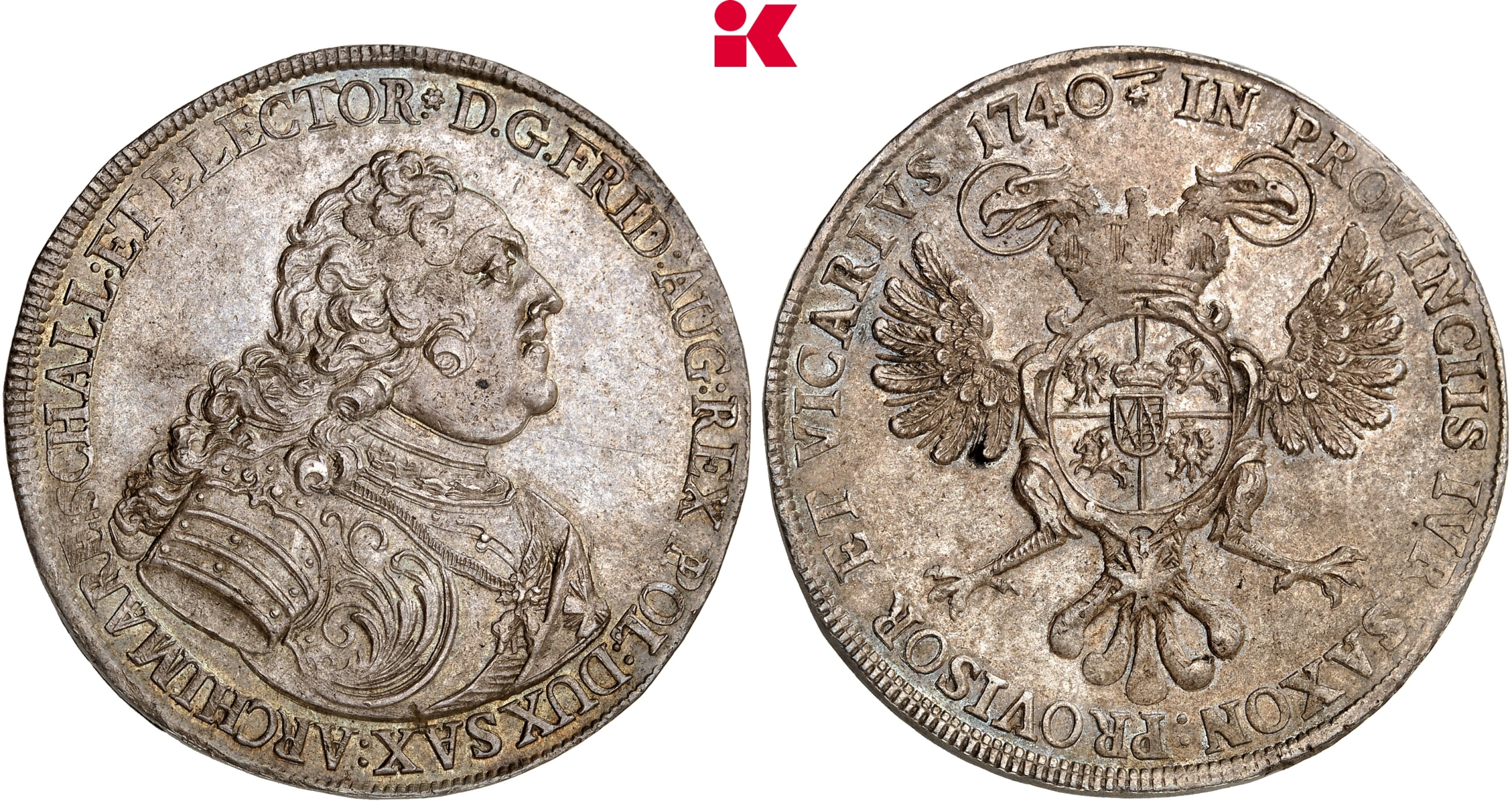
Reichstaler 1740, Dresden.
Selten, besonders in dieser Erhaltung.
Sehr attraktives Exemplar.
Vorzüglich.
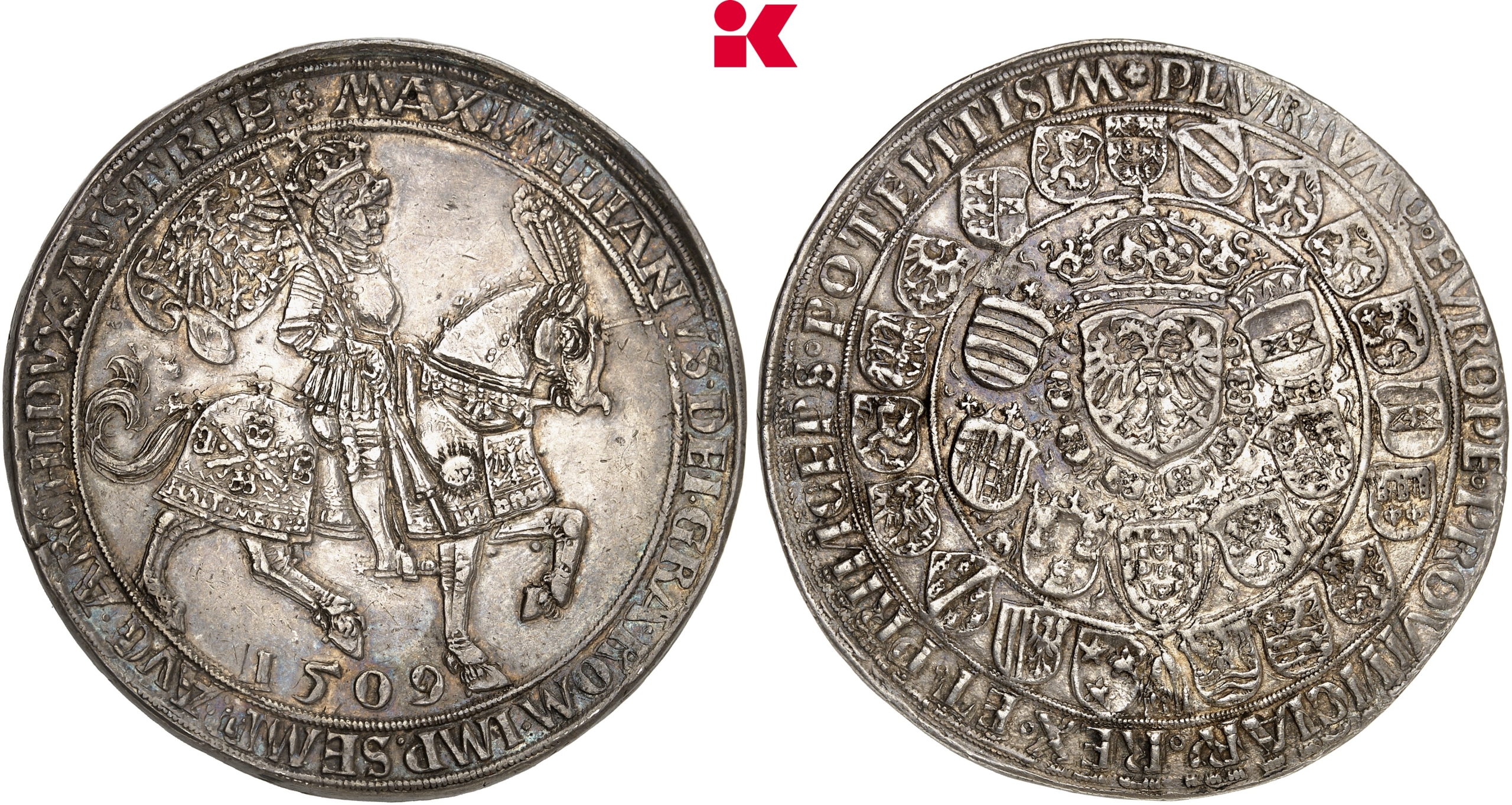
Doppelter Schauguldiner 1509, Hall.
Sehr selten, besonders in dieser Erhaltung.
Vorzüglich.
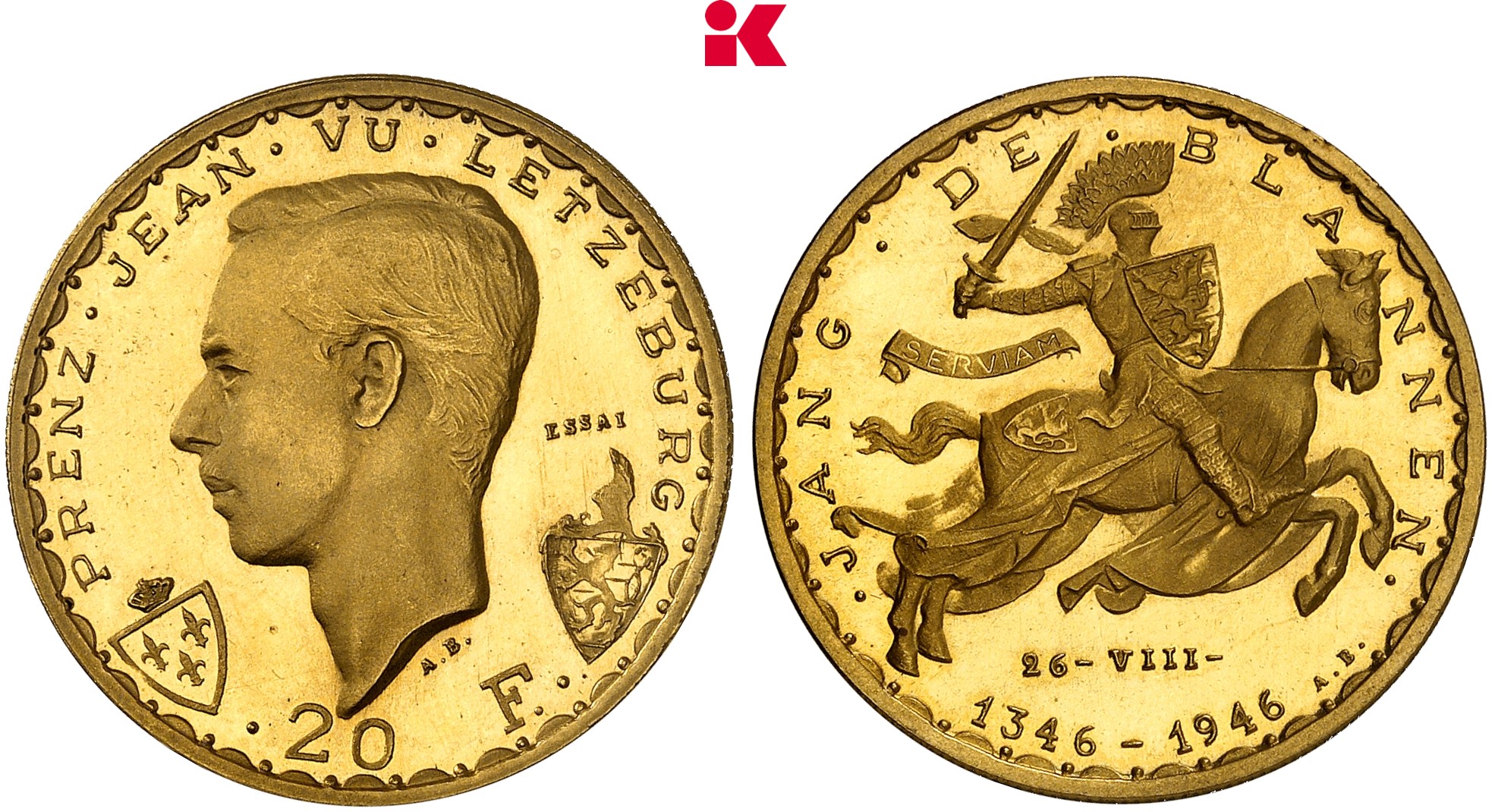
20 Francs 1946, Brüssel.
Nur 25 Exemplare geprägt.
Polierte Platte. Probe in Gold.
NGC PF 63 Ultra Cameo (Top Pop).
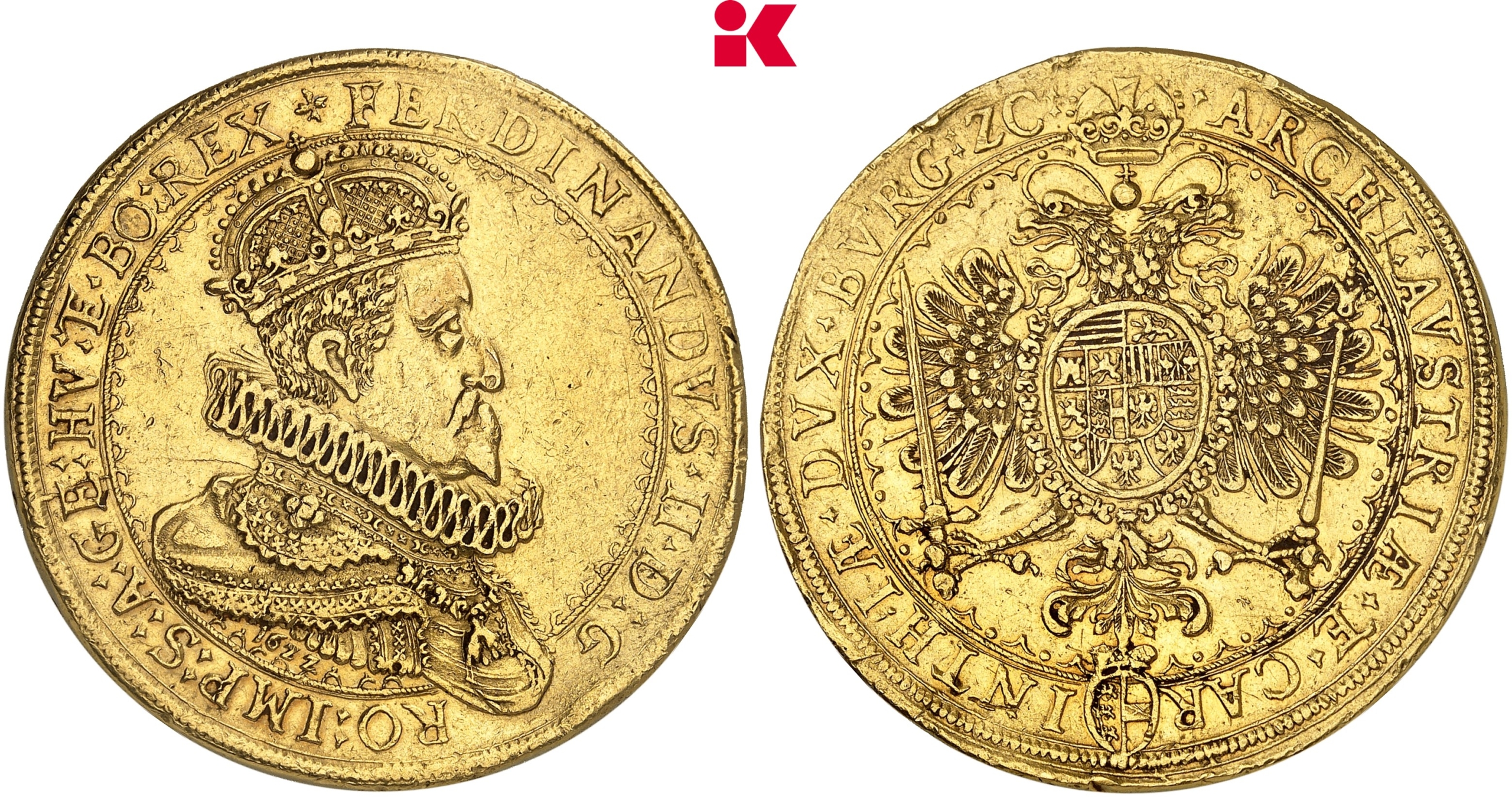
20 Dukaten 1622, Klagenfurt.
Von allergrößter Seltenheit und
großer numismatischer Bedeutung.
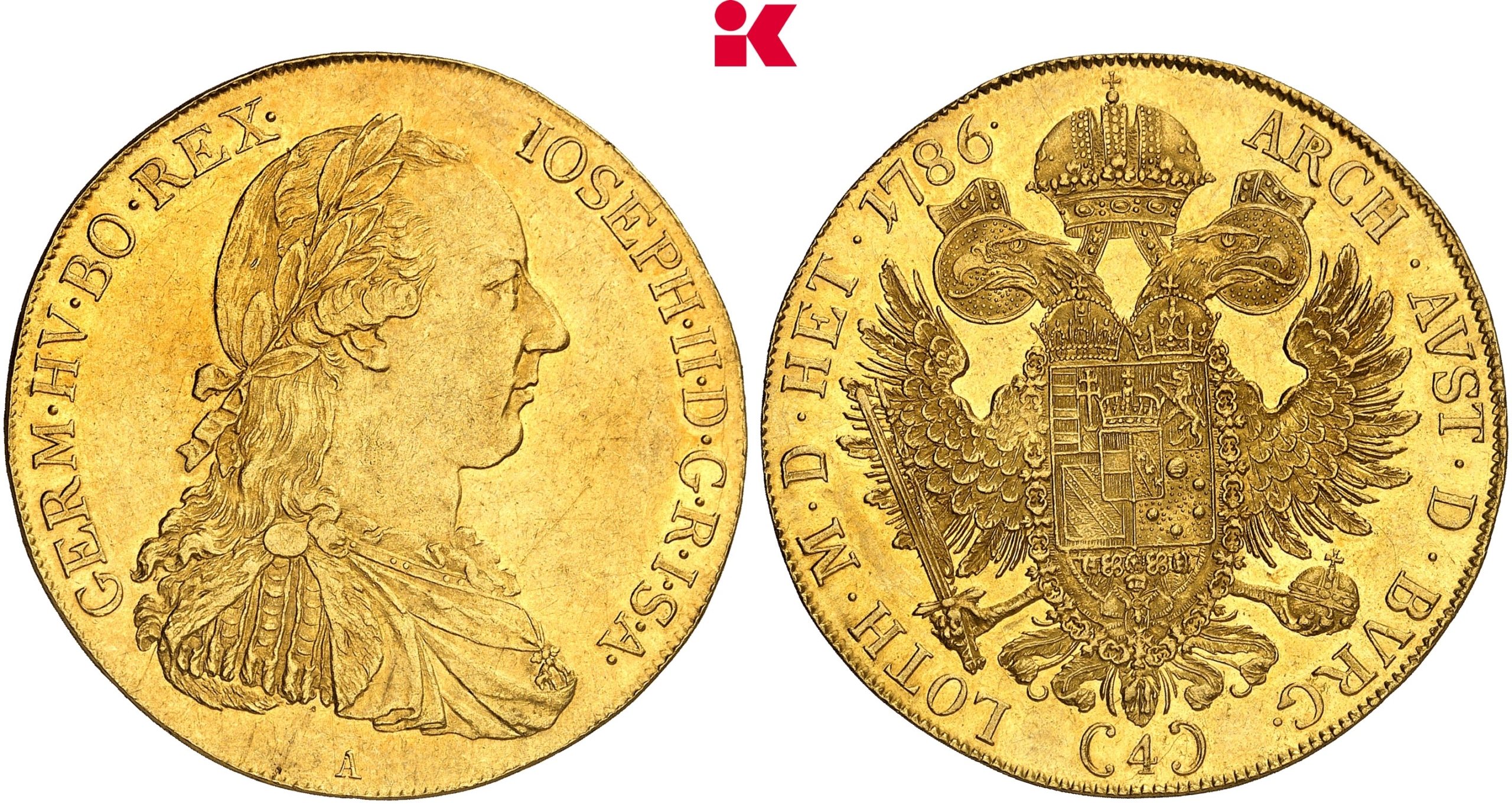
4 Dukaten 1786 A, Wien.
Von großer Seltenheit.
Feine Goldtönung, vorzüglich.
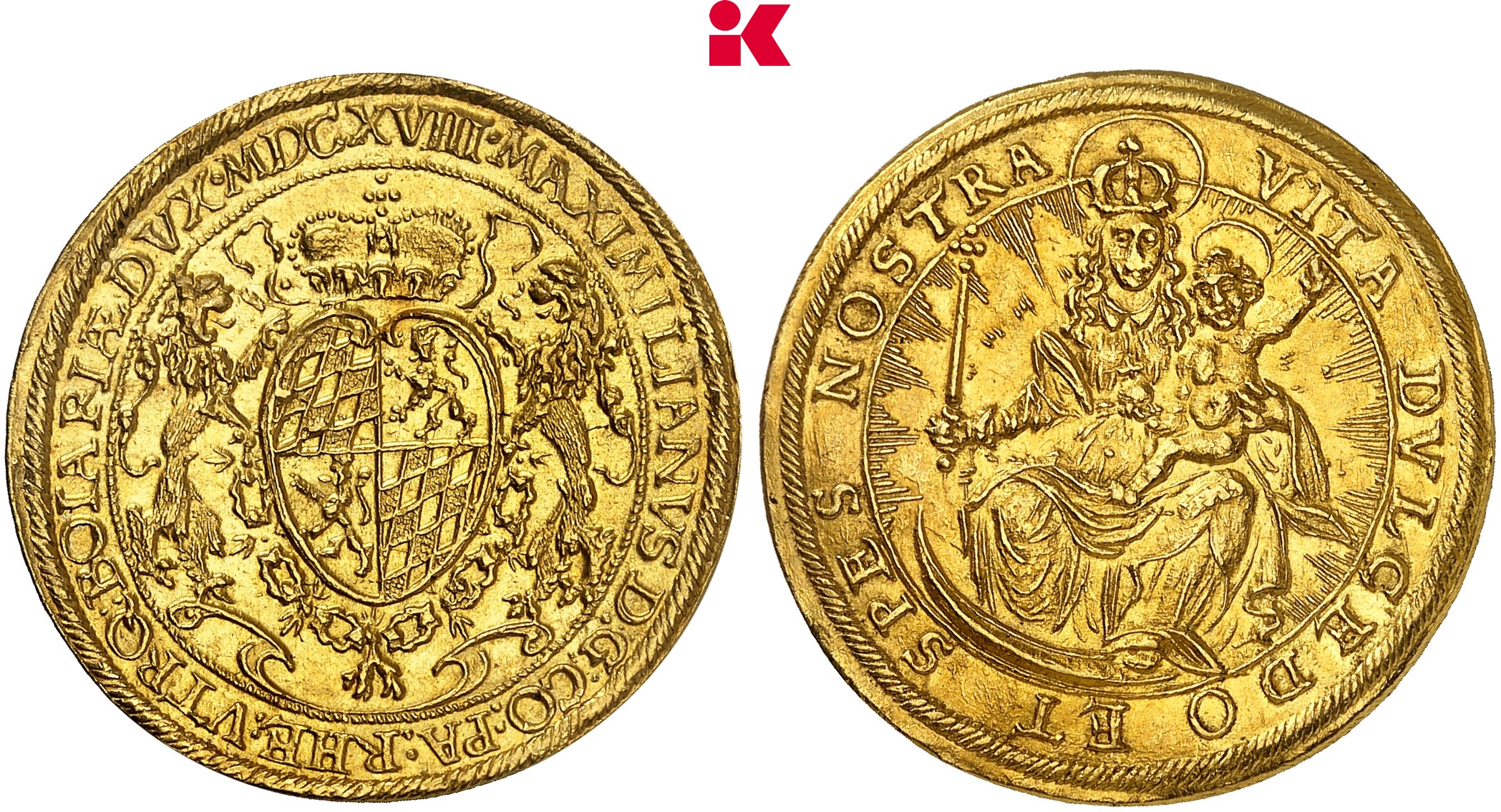
2 Dukaten 1618 München.
Attraktives Exemplar mit feiner Goldtönung.
Vorzüglich.
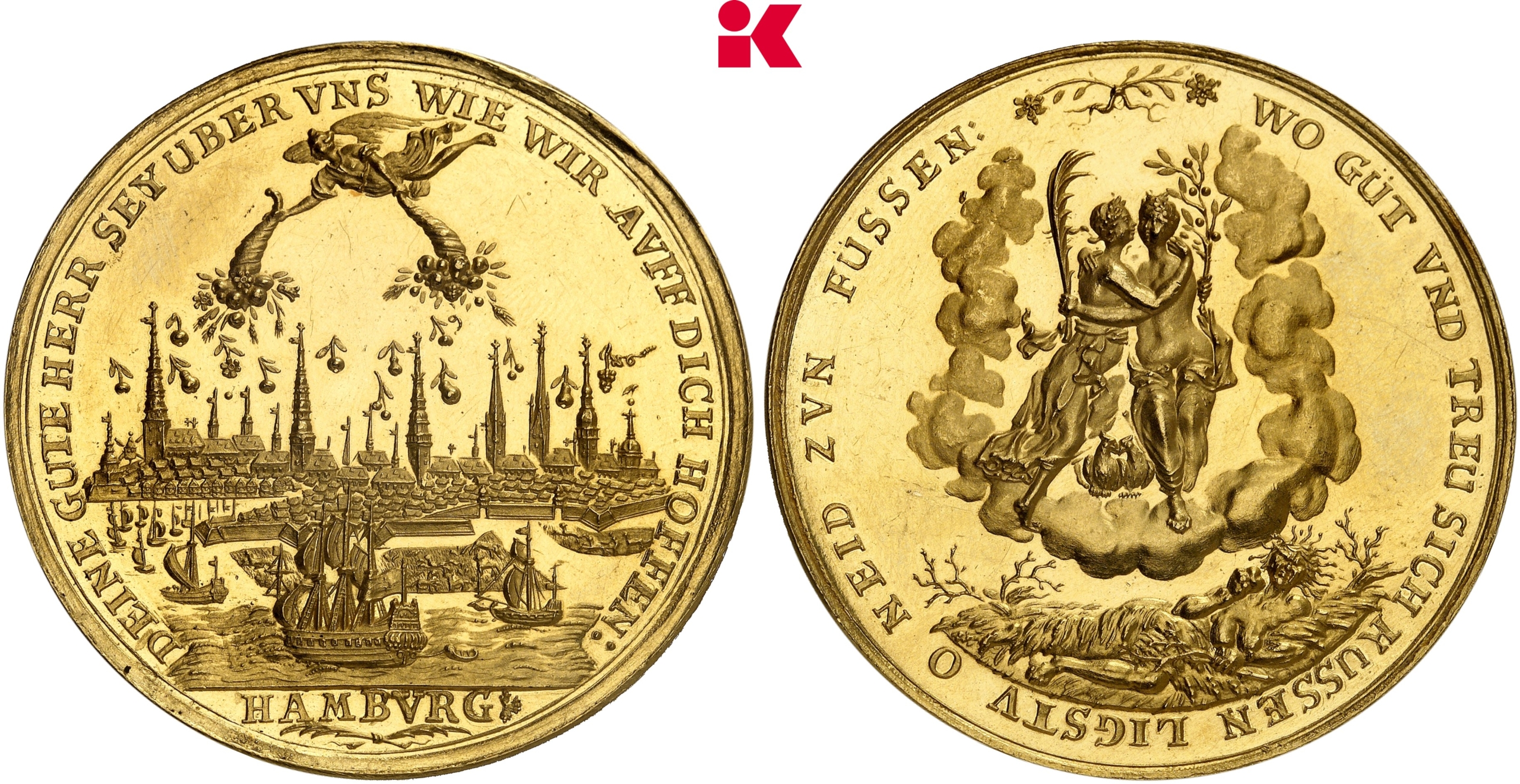
Privatportugalöser zu 10 Dukaten o. J. (1679).
Sehr selten. Prachtexemplar von polierten Stempeln.
Vorzüglich-Stempelglanz.
NGC MS 61 PL.
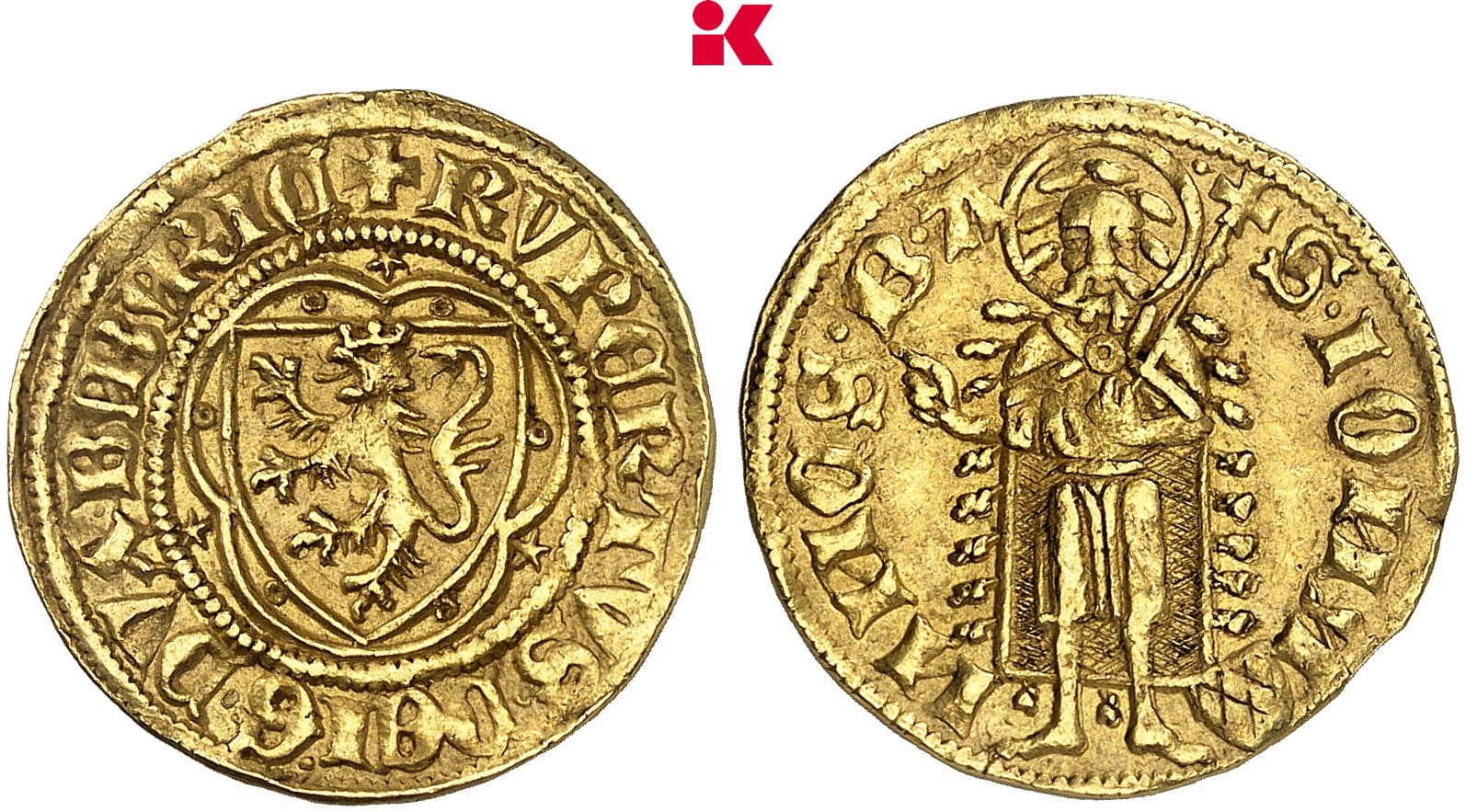
Goldgulden o. J. (1395-1397), Amberg.
Von allergrößter Seltenheit.
2. bekanntes Exemplar.
Sehr schön-vorzüglich/sehr schön.
New CIT Issue: The Great Wall of China
No structure in China fires our imagination more than the 21,196-kilometer-long Great Wall of China. It represents both the efficient organization of the Chinese Empire and its isolation. For many years, foreign travelers were only allowed to enter the Middle Kingdom in exceptional circumstances.
The latest CIT coin celebrates this monument using the special technique of smartminting® (Ultra High Relief) as well as partial color application and partial gilding. It is minted at B. H. Mayer’s Kunstprägeanstalt in Munich.
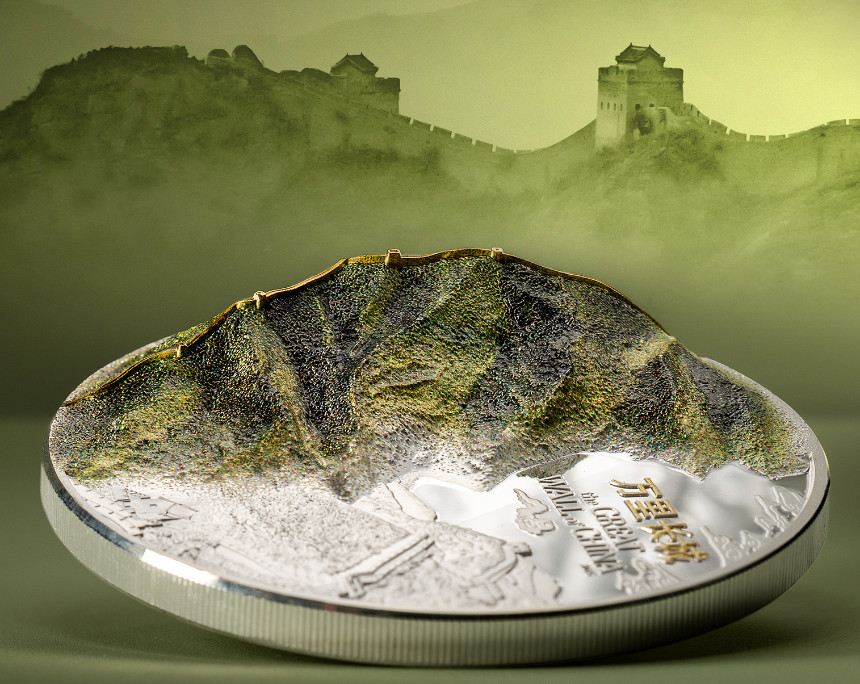
The Great Wall of China has fascinated people for centuries.
Description of the Coin
One side is a true-to-scale, three-dimensional, colored representation of the Great Wall of China, to its right a depiction of the same section of the Wall in low relief; above 万里长城 / the GREAT WALL of CHINA 2025.
The other side shows the Chinese “Lù” symbol, with the circumscription 20 DOLLARS CHARLES III COOK ISLANDS and a Cash with two dragons on it; in the right field the portrait of Charles III, below DT (= Dan Thorne).
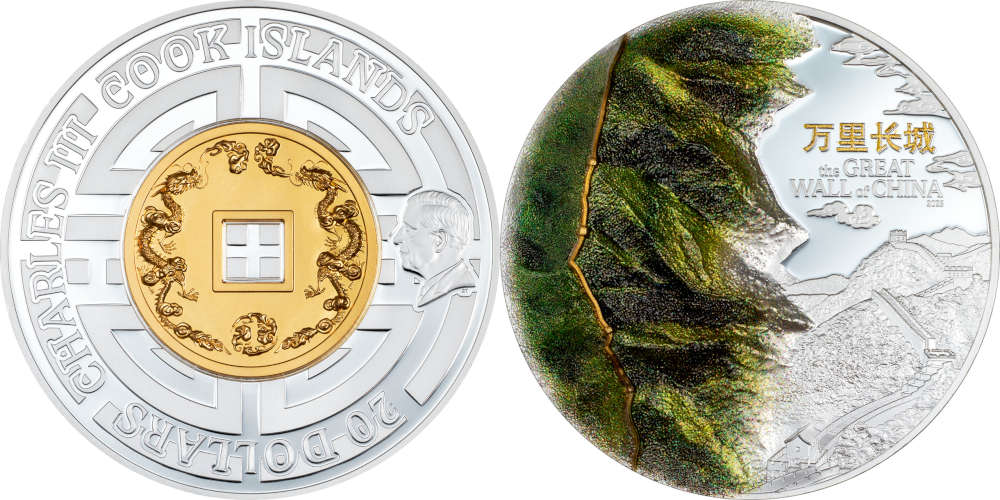
Cook Islands / 20 Dollars / Silver .9999 / 3 oz /50 mm / Mintage: 888.
Background
And the Great Wall was not just a military fortification. Most importantly, it was a customs barrier. Anyone passing through had to pay taxes on their goods as they entered and left the empire. The imperial administration had understood early on how to harness the wealth of the merchants for state purposes.
And that is no surprise: while wealth was long considered problematic from a moral point of view in the West, Confucianism considered wealth to be one of the great goals in life. The “Lù” symbol for wealth, depicted on the other side of the coin, is a reminder of this. Embedded in the symbol is a Cash coin, a Chinese bronze. Unlike its classical predecessors, it has no characters but is decorated with two Chinese dragons. As the ruler of weather and water, the dragon brought bountiful harvests and thus the wealth everyone craved.
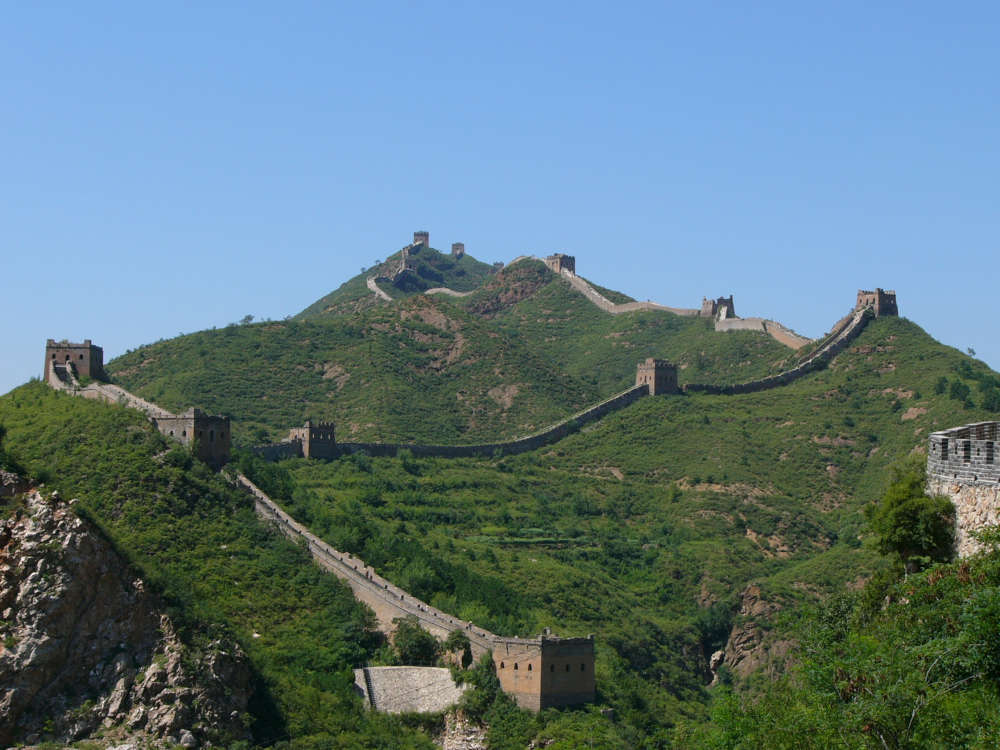
The Great Wall of China near Simatai. Photo: Namiac via Wikimedia Commons / CC BY-SA 3.0.
The Great Wall of China is a tribute to Chinese culture that combines state-of-the-art minting technologies. Thanks to smartminting®, the mountainous relief on which the Great Wall was built is reproduced in ultra-high relief down to the very last detail. Only experts know how difficult it is to achieve perfect coloring on such an ultra-high relief. And it is just as difficult to produce an ultra-high relief issue in proof quality. That is why this combination is currently only used by CIT. The addition of partial gilding, not only on the surface but on the highest part of the relief – the Wall – is a masterpiece that the Chinese artisans of the past would certainly have appreciated.
If you want to experience all three dimensions of this coin, you have to watch the corresponding film:
You are currently viewing a placeholder content from YouTube. To access the actual content, click the button below. Please note that doing so will share data with third-party providers.
