







Archive: People and Markets
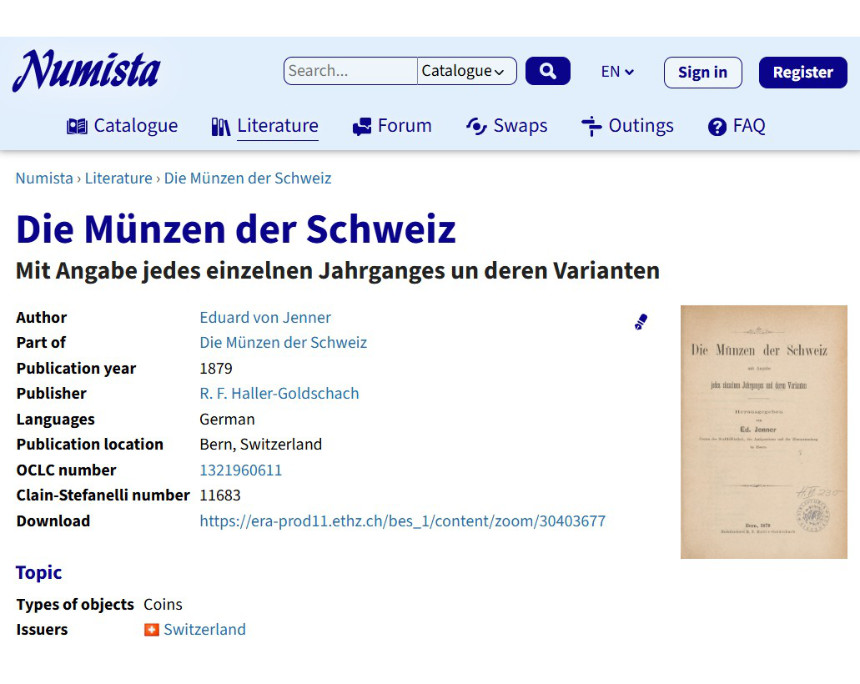
Numista Now Has a New Literature Section
Numista has recently expanded its offerings with a dedicated section for numismatic literature, providing a valuable resource for researchers and enthusiasts alike. A particularly innovative feature of this section is its integration with Numista’s existing coin catalogue, which allows users to seamlessly navigate from a reference number of a coin to the corresponding literary reference, and from that catalogue back to the numismatic objects listed within.
Numisma – Zoom Seminars of the Australian Centre for Ancient Numismatic Studies
Registration is now open to attend the upcoming zoom seminar series of the Australian Centre for Ancient Numismatic Studies (ACANS). Everyone interested in the study of ancient coins is welcome and encouraged to join the online lecture series. Find the upcoming lectures here.
Archive: Coins, Medals and more
 https://new.coinsweekly.com/wp-content/uploads/2025/06/00IMG_0657.jpg
684
860
Ursula Kampmann
https://new.coinsweekly.com/wp-content/uploads/2023/01/logo-coinsweekly_590x204.png
Ursula Kampmann2025-06-12 09:24:042025-06-12 09:38:54In Search of the Big Five
https://new.coinsweekly.com/wp-content/uploads/2025/06/00IMG_0657.jpg
684
860
Ursula Kampmann
https://new.coinsweekly.com/wp-content/uploads/2023/01/logo-coinsweekly_590x204.png
Ursula Kampmann2025-06-12 09:24:042025-06-12 09:38:54In Search of the Big Five https://new.coinsweekly.com/wp-content/uploads/2025/01/2025KW05HA01_00.jpg
684
860
Lucie Loechel
https://new.coinsweekly.com/wp-content/uploads/2023/01/logo-coinsweekly_590x204.png
Lucie Loechel2025-01-29 10:30:092025-01-30 07:13:21Record! South African Rarity Leaves All Previous Top Prices Far Behind
https://new.coinsweekly.com/wp-content/uploads/2025/01/2025KW05HA01_00.jpg
684
860
Lucie Loechel
https://new.coinsweekly.com/wp-content/uploads/2023/01/logo-coinsweekly_590x204.png
Lucie Loechel2025-01-29 10:30:092025-01-30 07:13:21Record! South African Rarity Leaves All Previous Top Prices Far Behind
Submission to the NLG Awards 2024
The Numismatic Literary Guild (NLG) has announced its annual awards competition for 2024. All entries must be received no later than Monday, June 17, 2024. Participation is restricted to NLG members only.
A Visit to the MIF International Money Fair
Not too long ago, the MIF International Money Fair was a banknote collector’s best kept secret. Today this banknote fair is a compulsory event on the calendar for dealers and collectors alike! Sebastian Wieschowski was there as Maastricht once again claims the title as the world’s Banknote trading capital – thanks to the MIF.