






Archive: People and Markets
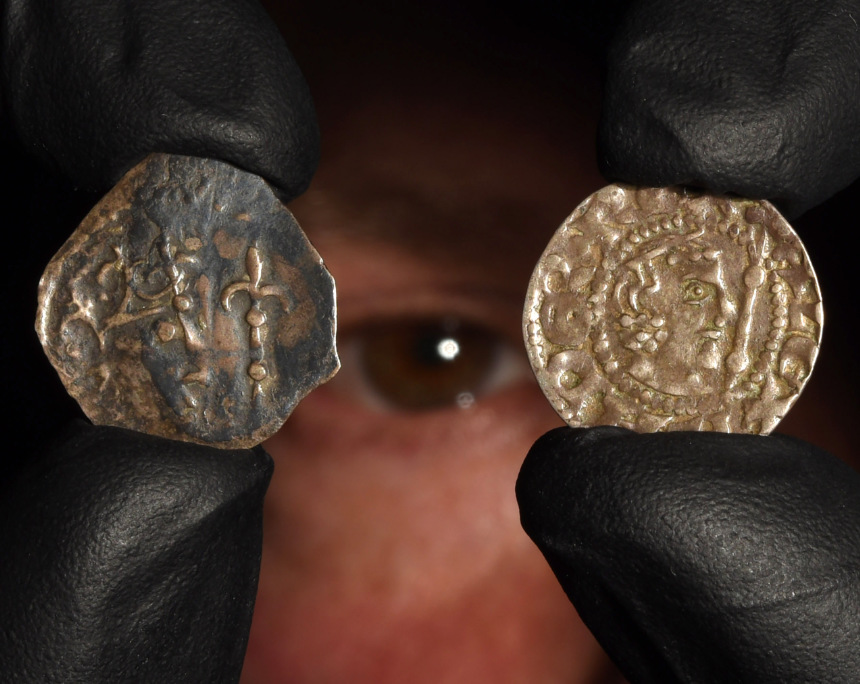
£50,000 Reward for Clues on Stolen Scottish Coin Collection
Until today, the 2007 theft of the Lord Stewartby Collection, one of the finest private collections of Scottish coins, remains unsolved. Crimestoppers and the Hunterian Museum in Glasgow are now offering up to £50,000 for information leading to the conviction of those involved.

In Love With Japan
This year, Andrea Pancheri attended the Tokyo International Coin Convention for the first time on our behalf – and was absolutely thrilled by both the country and the event! Find out why here.
Archive: Coins, Medals and more
 https://new.coinsweekly.com/wp-content/uploads/2023/06/00_CH-1883-20Fr.jpg
502
1000
Bruno
https://new.coinsweekly.com/wp-content/uploads/2023/01/logo-coinsweekly_590x204.png
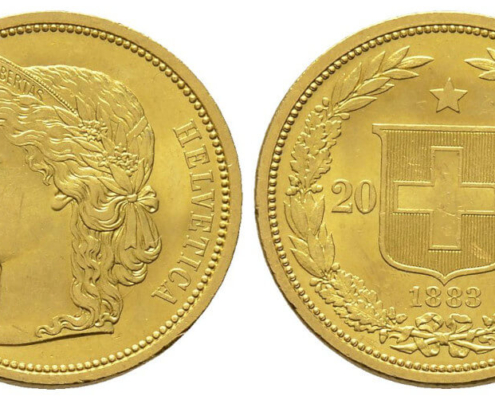
Bruno2022-06-13 14:16:552023-06-29 11:02:58The Vreneli – A Swiss Icon
https://new.coinsweekly.com/wp-content/uploads/2023/06/00_CH-1883-20Fr.jpg
502
1000
Bruno
https://new.coinsweekly.com/wp-content/uploads/2023/01/logo-coinsweekly_590x204.png
Bruno2022-06-13 14:16:552023-06-29 11:02:58The Vreneli – A Swiss Icon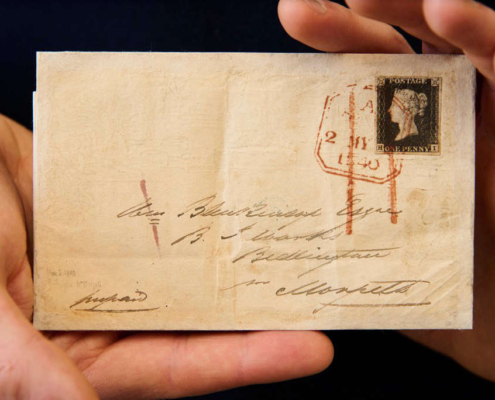 https://new.coinsweekly.com/wp-content/uploads/2024/01/2024KW05HA_00.jpg
684
860
Ursula Kampmann
https://new.coinsweekly.com/wp-content/uploads/2023/01/logo-coinsweekly_590x204.png
Ursula Kampmann2024-01-31 13:34:492024-01-31 13:34:49The First Piece of Mail Sent Using a Stamp to Be Offered at Sotheby’s
https://new.coinsweekly.com/wp-content/uploads/2024/01/2024KW05HA_00.jpg
684
860
Ursula Kampmann
https://new.coinsweekly.com/wp-content/uploads/2023/01/logo-coinsweekly_590x204.png
Ursula Kampmann2024-01-31 13:34:492024-01-31 13:34:49The First Piece of Mail Sent Using a Stamp to Be Offered at Sotheby’s
Following Last Year’s Success: Münze Deutschland Again Sells Show Rarity at the World Money Fair
The World Money Fair is a haven for collectors hunting for limited-edition rarities. In 2024, a German coin card featuring the €2 coin “Mecklenburg-Vorpommern / Königsstuhl” caught everyone’s eye—and its market value skyrocketed to over €200. Münze Deutschland is now building on this success.
From a Collector’s Market to an Investor’s Market: Reasons, Consequences, Opportunities, Part 1
Complaining is of no use: change is coming, or may already be here. The question is how to deal with it. In order to develop smart strategies, one must be aware of what is actually happening and why. Ursula Kampmann summarizes the most important changes in the coin world in a loose series. Today: the shift from a collector to an investor market.