







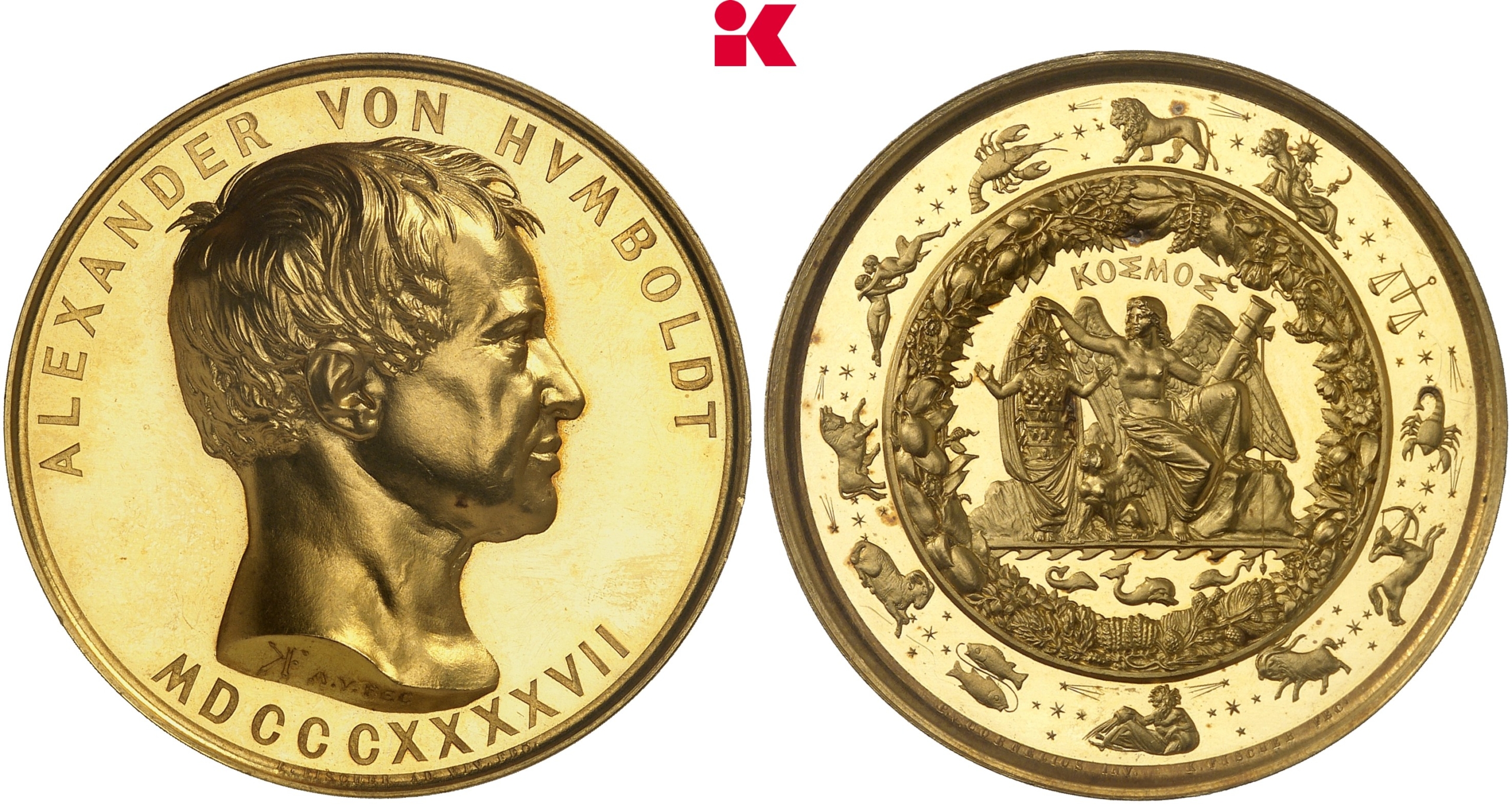
Gold medal in the weight of 50 ducats
commemorating the publication of the second volume
of Alexander von Humboldt’s *Kosmos*.
NGC MS 65 PL.
From the estate of Emperor William I.
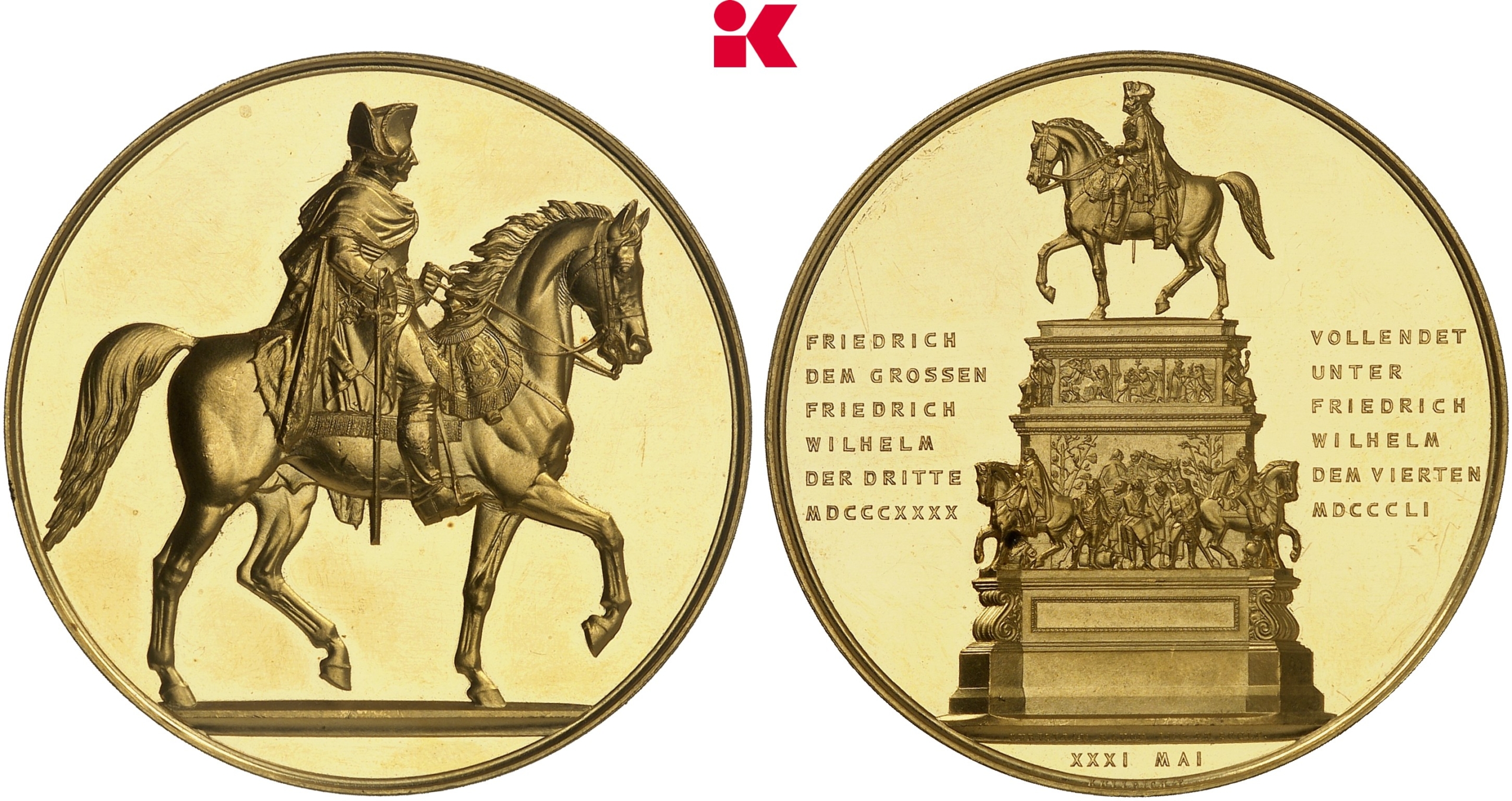
Gold medal in the weight of 50 ducats commemorating
the unveiling of the equestrian statue of
Frederick the Great on Unter den Linden in Berlin in 1851.
NGC MS 63 PL.
From the estate of Emperor William I.
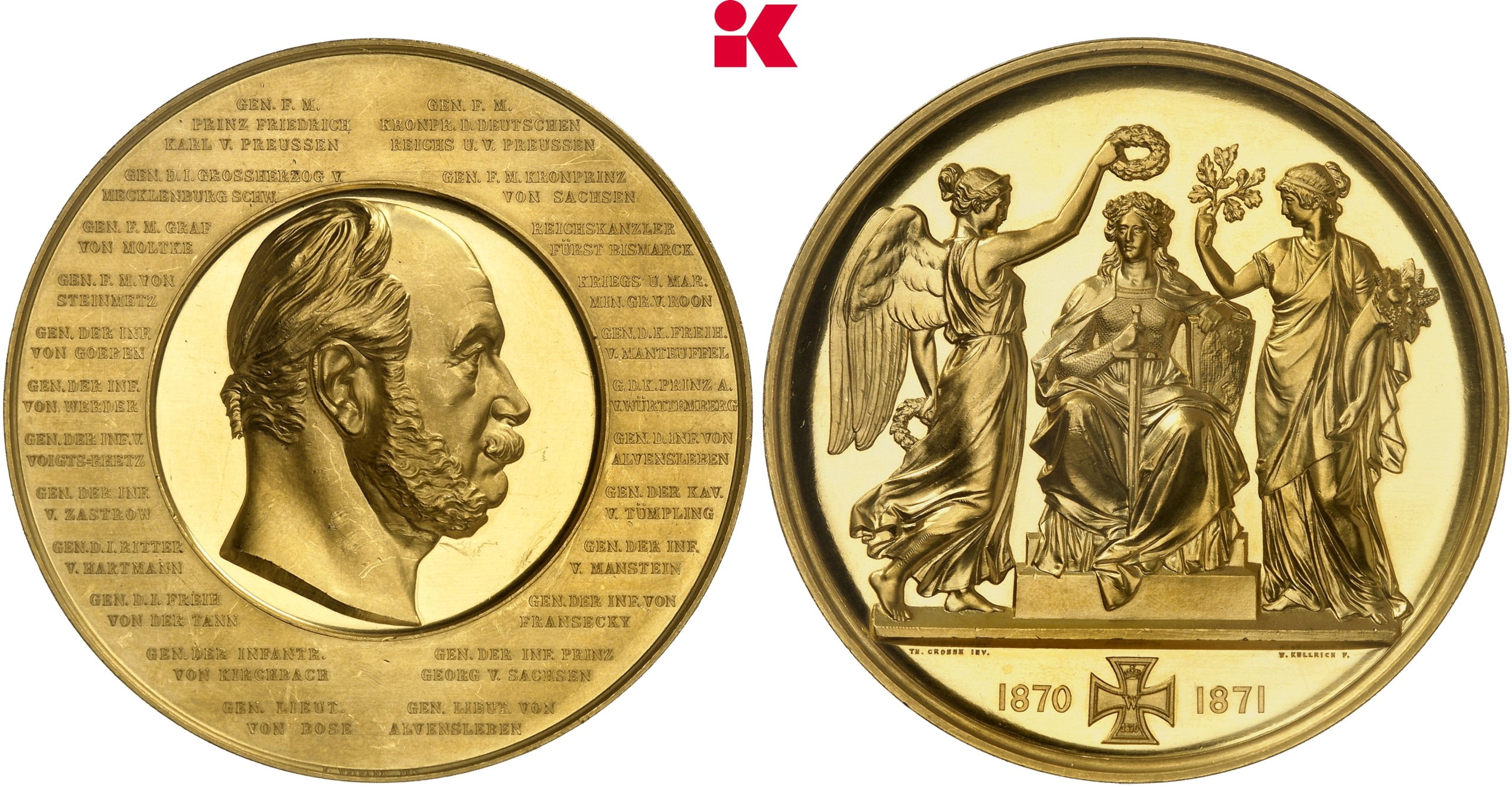
General’s Medal in the weight of 120 ducats, 1871,
commemorating the victory over France.
A magnificent specimen.
From the estate of Emperor William I.
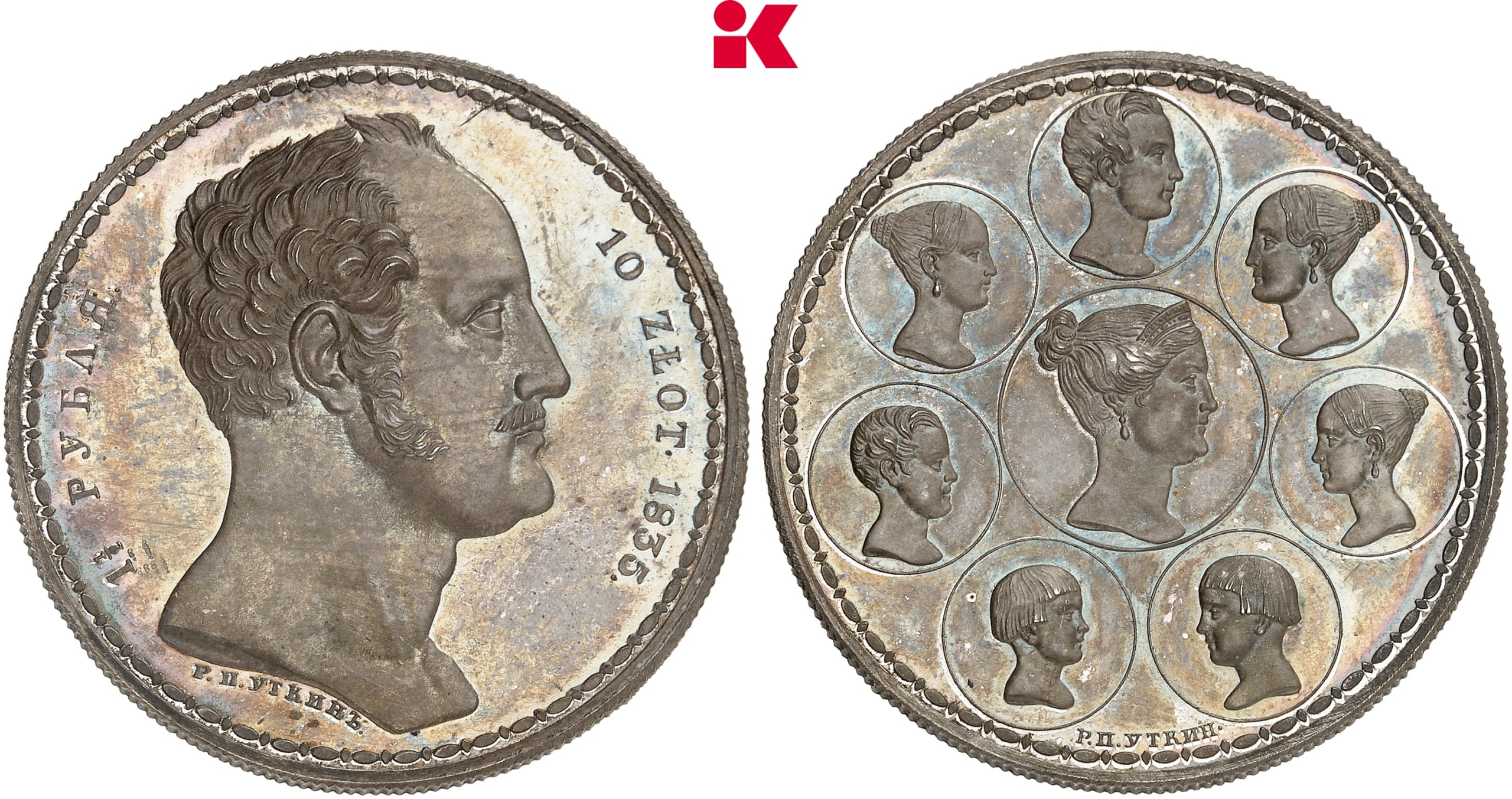
1 1/2 rubles (10 zlotys), 1835, St. Petersburg.
NGC MS 64 (Top Pop).
Only 36 examples struck.
A cabinet piece from polished dies.
From the estate of King Frederick William IV.
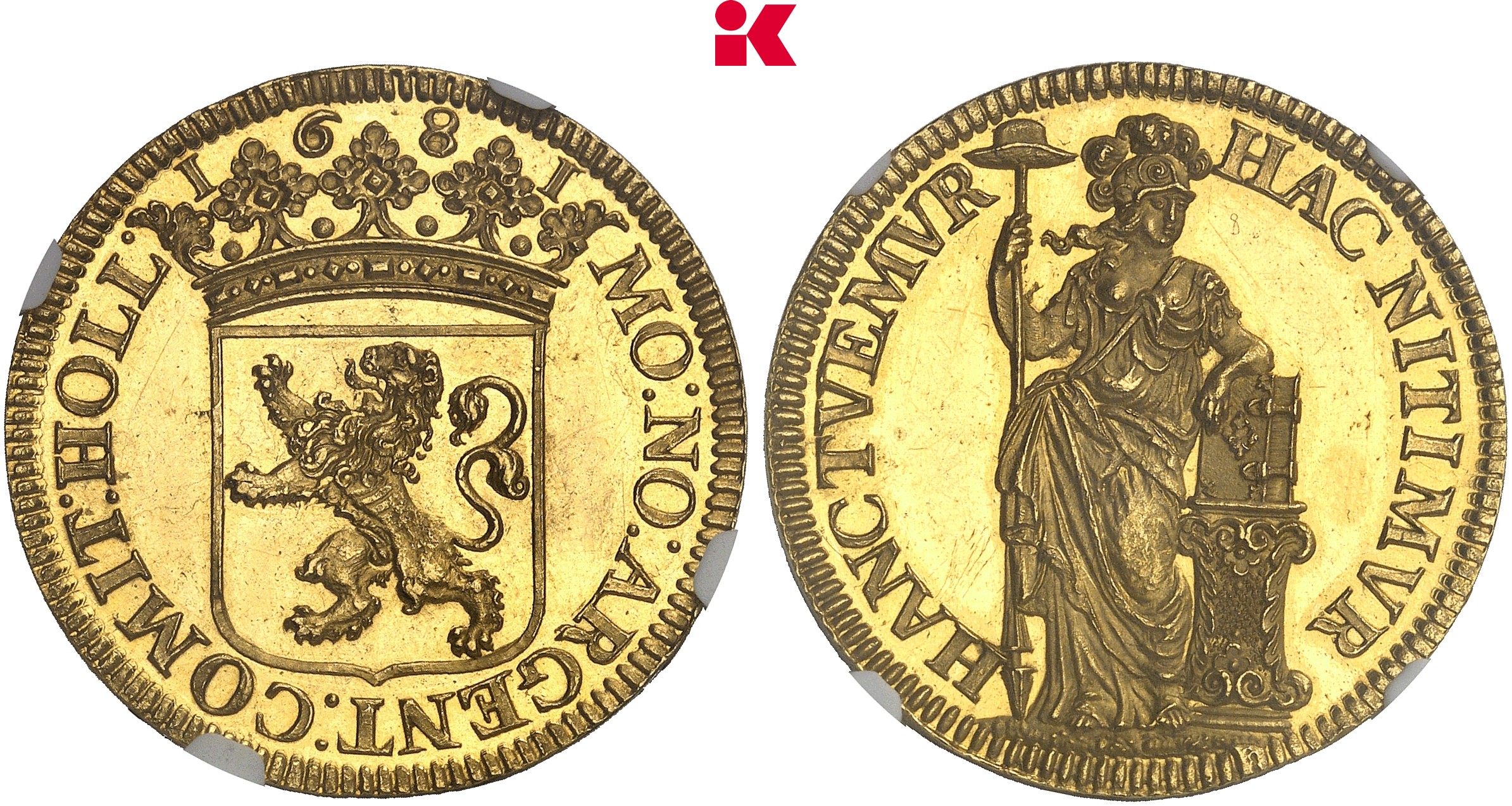
5 ducats, 1681.
Struck with the dies of a guilder.
NGC PF 64 Cameo.
Proof.
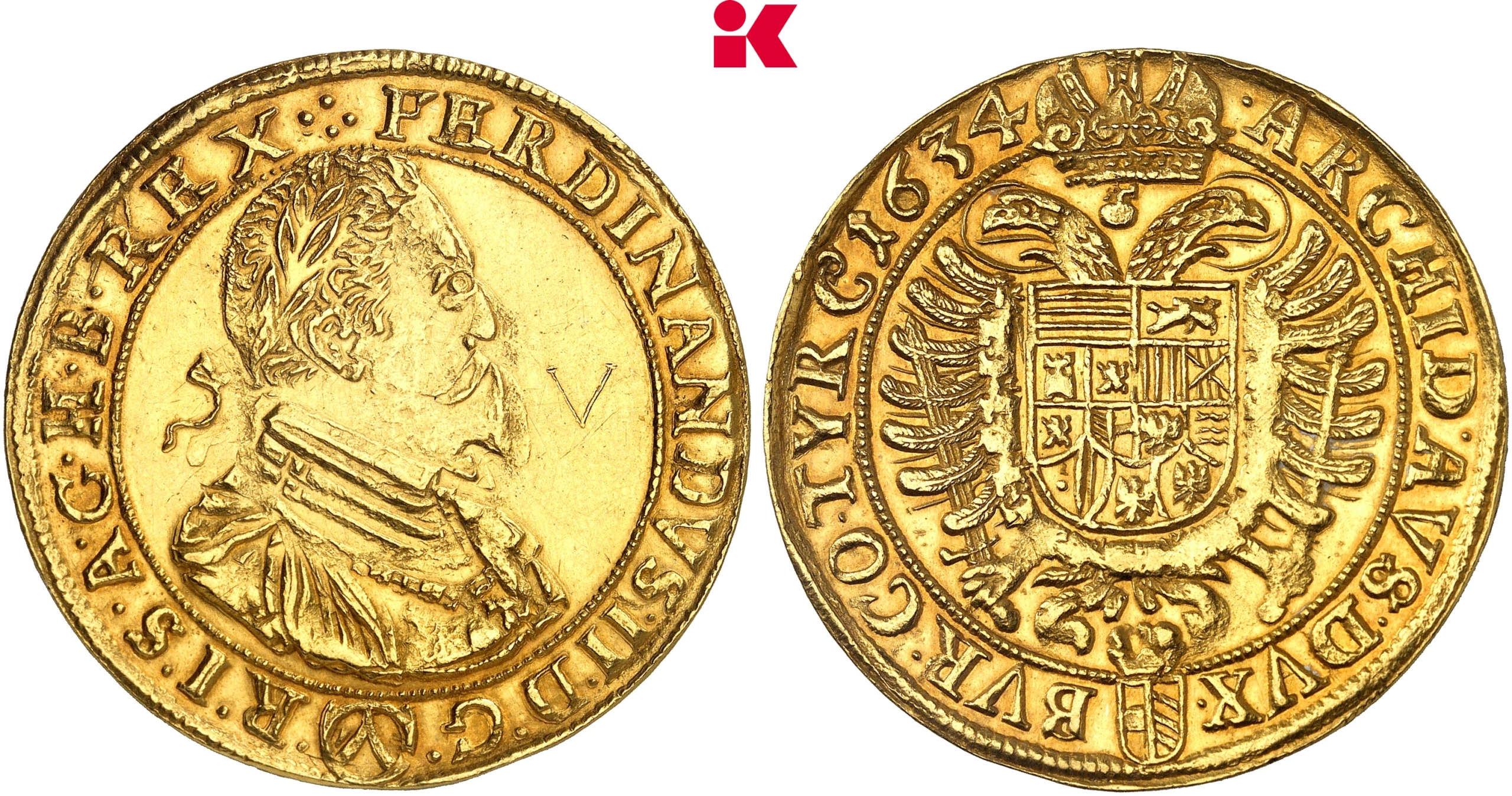
5 ducats, 1634, Vienna.
Extremely rare.
Extremely fine-uncirculated.
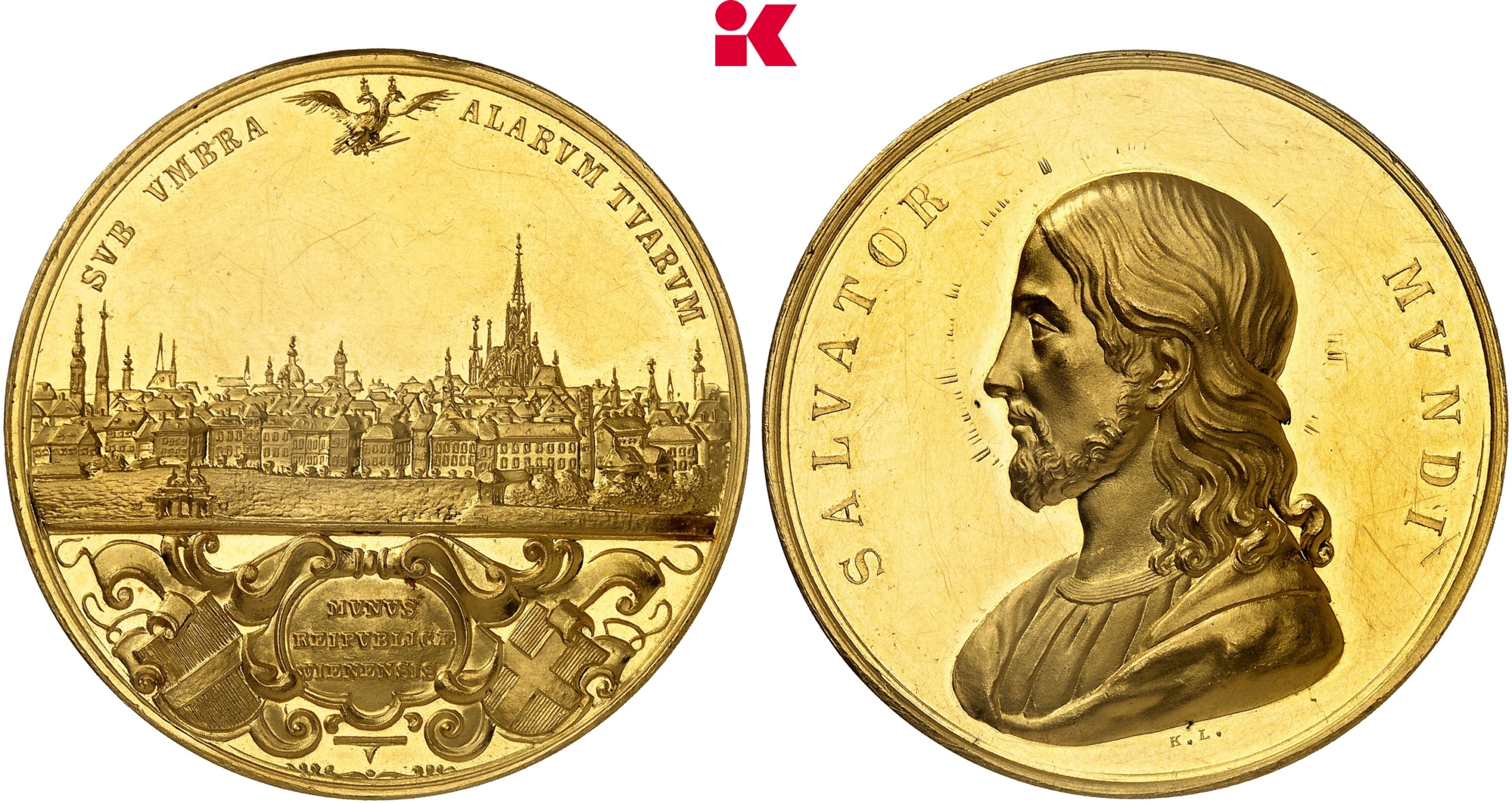
Salvator Medal in the weight of 12 ducats,
n. d.(around 1840).
NGC PF 61 CAMEO.
Proof.
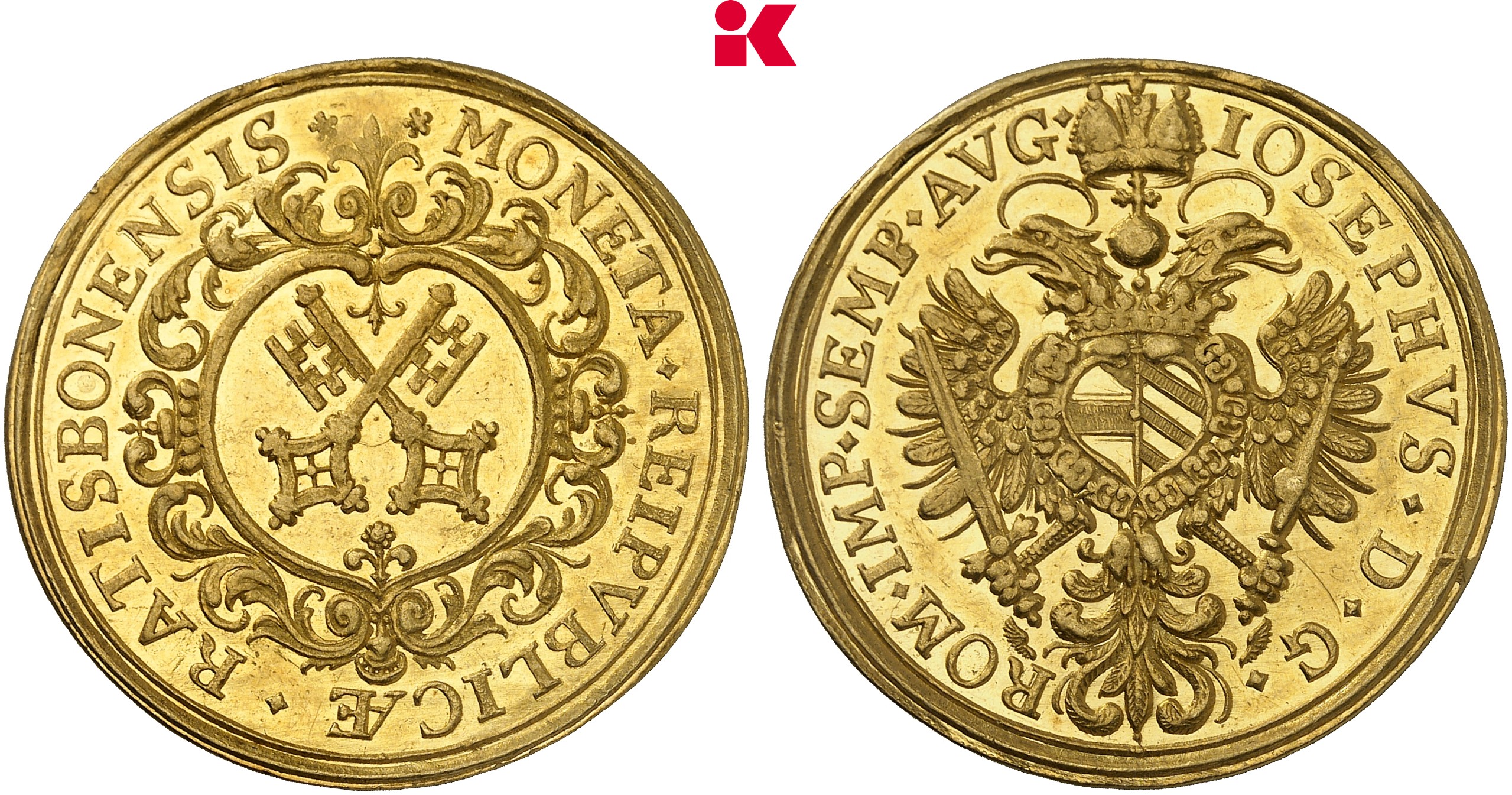
5 ducats, n. d. (1708–1710),
with the title of Joseph I. NGC MS 64.
Extremely rare. According to mint records,
only 7 copies struck.
A magnificent piece.
Archive: People and Markets
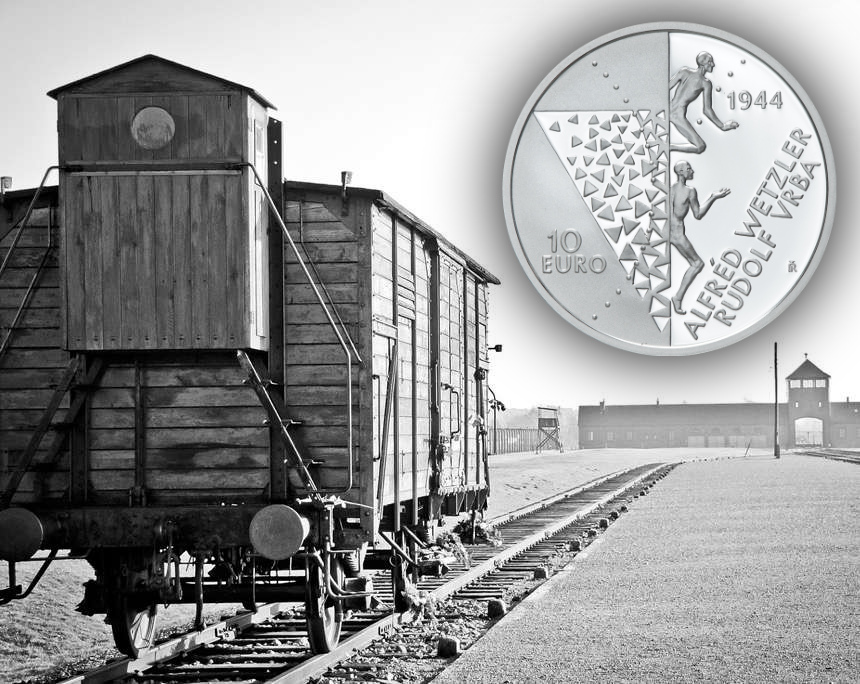
New Coin From Slovakia: 80th Anniversary of the Vrba-Wetzler Report
In the summer of 1944, the world became aware of the Holocaust thanks to two young Slovaks: Rudolf Vrba and Alfréd Wetzler. The National Bank of Slovakia honors them with €10 collector coin, produced by the Kremnica Mint. The coin represents many things – bravery, moral courage, responsibility and the power of public opinion.

Between Tradition and the Demands of a New Economic World
The 32nd Mint Directors Conference took place in Cape Town from April 27th to 29th, 2025. It was the highlight of my numismatic journey through South Africa. In an international context, South Africa presented itself as a promising country of (numismatic) opportunities.
Archive: Coins, Medals and more
 https://new.coinsweekly.com/wp-content/uploads/2025/02/2025KW09HA02_00.jpg
684
860
Lucie Loechel
https://new.coinsweekly.com/wp-content/uploads/2023/01/logo-coinsweekly_590x204.png
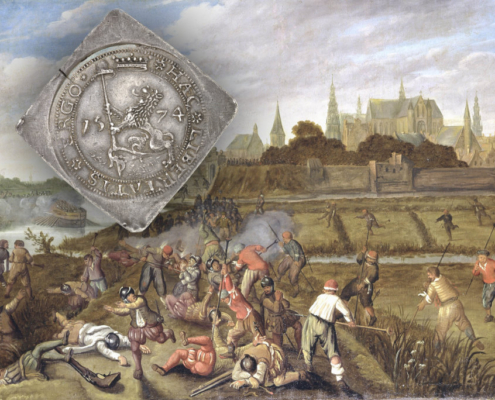
Lucie Loechel2025-02-27 10:19:482025-02-27 10:25:36The Suffering of Leiden – A Siege During the Dutch Revolt
https://new.coinsweekly.com/wp-content/uploads/2025/02/2025KW09HA02_00.jpg
684
860
Lucie Loechel
https://new.coinsweekly.com/wp-content/uploads/2023/01/logo-coinsweekly_590x204.png
Lucie Loechel2025-02-27 10:19:482025-02-27 10:25:36The Suffering of Leiden – A Siege During the Dutch Revolt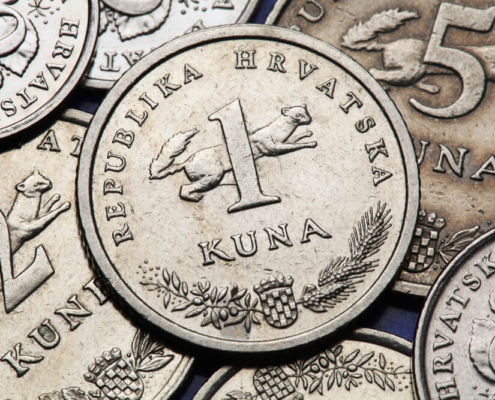 https://new.coinsweekly.com/wp-content/uploads/2023/06/CoCo03_09.jpg
667
1000
Ursula Kampmann
https://new.coinsweekly.com/wp-content/uploads/2023/01/logo-coinsweekly_590x204.png
Ursula Kampmann2022-06-13 10:37:152023-06-27 10:39:21What Will Be Depicted on Croatia’s Euro Coins?
https://new.coinsweekly.com/wp-content/uploads/2023/06/CoCo03_09.jpg
667
1000
Ursula Kampmann
https://new.coinsweekly.com/wp-content/uploads/2023/01/logo-coinsweekly_590x204.png
Ursula Kampmann2022-06-13 10:37:152023-06-27 10:39:21What Will Be Depicted on Croatia’s Euro Coins?
After 100 Years: The Bruun Collection Comes Under the Hammer
The Bruun Collection has been held by Denmark’s National Museum in Copenhagen for 100 years. Now Stack’s Bowers Galleries has been commissioned with the sale of the collection, which Stacks refers to as “the most valuable collection of World Coins to ever come to market”.
Next Week, It’s Time for the Coin Conference 2024!
From 28 to 30 October, the central banks and mints will meet in Lisbon to discuss the challenges the coin sector faces today. Ursula Kampmann will also be there. She’s responsible for a workshop on “Commemorative Coins for an International and a Domestic Market.”