154Prussia. Frederick William IV, 1840–1861.
Gold medal in the weight of 50 ducats
commemorating the publication of the second volume
of Alexander von Humboldt’s *Kosmos*.
NGC MS 65 PL.
From the estate of Emperor William I.
Estimate: 40.000 Euro

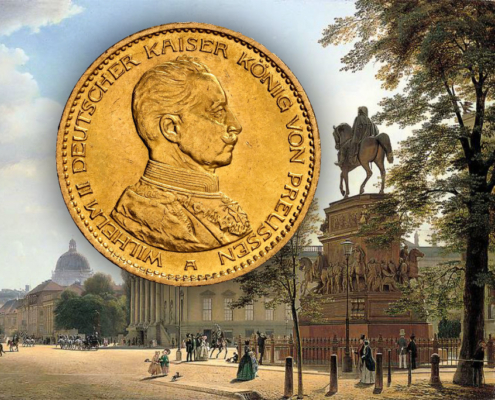
166Prussia. Frederick William IV, 1840–1861.
Gold medal in the weight of 50 ducats commemorating
the unveiling of the equestrian statue of
Frederick the Great on Unter den Linden in Berlin in 1851.
NGC MS 63 PL.
From the estate of Emperor William I.
Estimate: 25.000 Euro

191Prussia. William I, 1861–1888.
General’s Medal in the weight of 120 ducats, 1871,
commemorating the victory over France.
A magnificent specimen.
From the estate of Emperor William I.
Estimate: 75.000 Euro

297Russia. Nicholas I, 1825–1855. Family ruble.
1 1/2 rubles (10 zlotys), 1835, St. Petersburg.
NGC MS 64 (Top Pop).
Only 36 examples struck.
A cabinet piece from polished dies.
From the estate of King Frederick William IV.
Estimate: 250.000 Euro

1098Holland. Province.
5 ducats, 1681.
Struck with the dies of a guilder.
NGC PF 64 Cameo.
Proof.
Estimate: 40.000 Euro

1192HRE. Ferdinand II, 1592–1618–1637.
5 ducats, 1634, Vienna.
Extremely rare.
Extremely fine-uncirculated.
Estimate: 10.000 Euro

1266HRE. Vienna.
Salvator Medal in the weight of 12 ducats,
n. d.(around 1840).
NGC PF 61 CAMEO.
Proof.
Estimate: 15.000 Euro

1334City of Regensburg.
5 ducats, n. d. (1708–1710),
with the title of Joseph I. NGC MS 64.
Extremely rare. According to mint records,
only 7 copies struck.
A magnificent piece.
Estimate: 25.000 Euro

1602German New Guinea.
10 New Guinea Marks, 1895 A.
NGC MS 65.
A magnificent piece.
Estimate: 50.000 Euro

2757Saxony.
John Frederick the Magnanimous and
Maurice, 1541–1547.
Trinity Medal, 1544.
A masterpiece of German medal art. Magnificent,
excellent craftsmanship.
Estimate: 75.000 Euro

Archive: People and Markets
CoinsWeekly Special Issue for the Evento Numismático International Madrid 2024

On the occasion of the new Evento Numismático International in Madrid, we are once again publishing one of our printed CoinsWeekly Special Issues, this time in Spanish. Read about the history of the taler, the protection of cultural assets and much more!

Caribbean Guilder: Joint Currency Introduced for Curaçao and Sint Maarten

The new currency replaces the Antillean Guilder, retains its value, and is pegged to the US dollar – with fresh designs inspired by the sea and local culture.

Die Unterwasserarchäologen bei der Arbeit. Foto: Ufficio Stampa e Communicazione MiC

Archaeologists in Awe at the Sight of Sardinia’s Folles Hoard

Italian archaeologists are calling it one of the most important finds in recent years: up to 50,000 bronze coins dating from the 4th century have been discovered off the Sardinian coast. Apart from the outstanding size of this hoard, the coins’ condition is also astonishing.

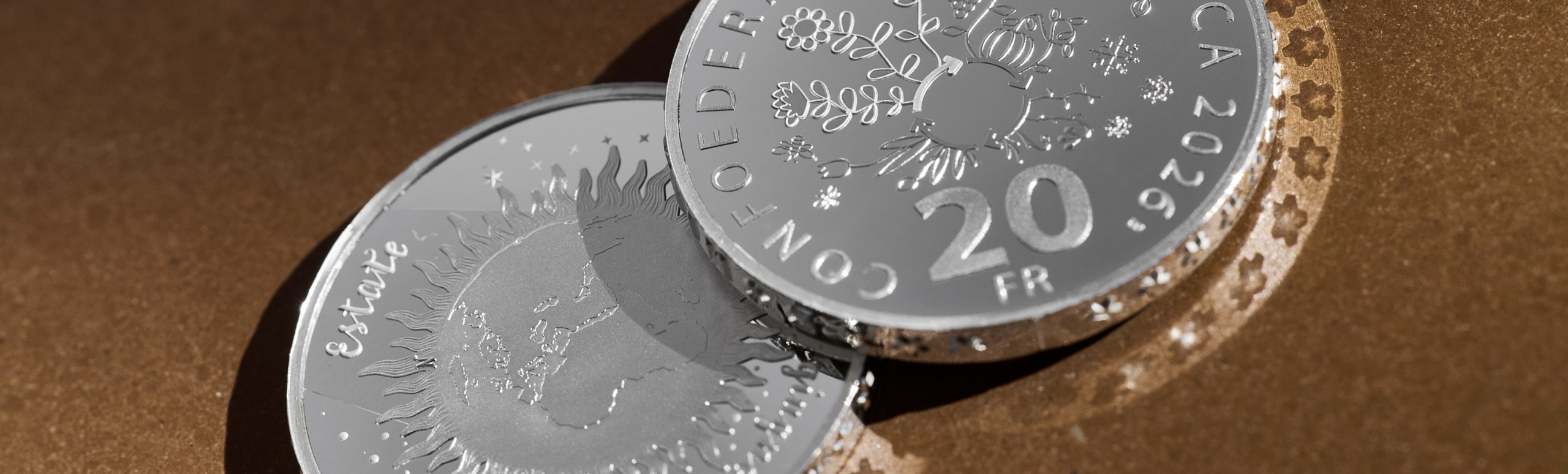
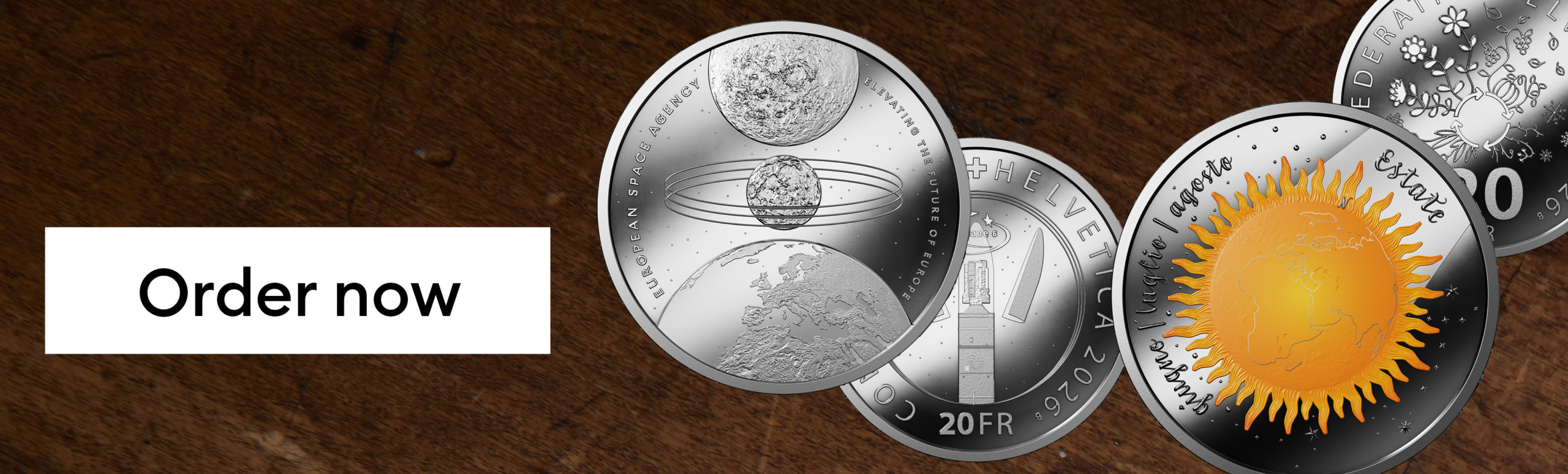
New Swiss Silver Coin “Switzerland”

On 12 September 2024, the Federal Mint Swissmint will launch the 20-franc silver coin entitled “Switzerland” in honour of the country becoming a federal state in 1848. The limited-edition special coin will go on sale on Switzerland’s unofficial birthday.

Archive: Coins, Medals and more

Record! South African Rarity Leaves All Previous Top Prices Far Behind

Recently, a South African coin was auctioned at Heritage for $1.8 million (excluding premium) – exceeding the previously highest known auction results for South African coins by a remarkable $1.5 million. What makes the “Single 9” such a rarity?
Gaius Iulius Vindex. Denar, zwischen März und Mai 68, Vienne(?). Äußerst selten. Vorzüglich. Taxe: 1.500 Euro. Aus Auktion Heidelberger Münzhandlung 89 (12. November 2024), Nr. 113. Hintergrund: Büste Neros, im Kapitolnischen Museum in Rom (cjh1452000 - CC BY-SA 3.0) und Büste Galbas im Stockholmer Schloss (Wolfgang Sauber / CC BY-SA 3.0).

The Roman Civil War of 68/9: The Prelude to the Year of the Four Emperors

Heidelberger Münzhandlung will offer a series of coins of impeccable quality struck during the Roman Civil War at its auction on 12 and 13 November 2024. We take advantage of this opportunity to examine the historical background of these issues, going back to a time when counter-emperors did not (yet) dare to put their portrait on coins.
Search Search