






Archive: People and Markets
Beware of This Scam! These Euro Error Coins Are Not Error Coins
The Internet is currently full of so-called “error coins” – and many collectors fall victim to fraudulent offers. Our author numiscontrol explains what you need to know about the minting process to easily notice when something is off.

Ruth Pliego Receives the 2023 Huntington Award
The Trustees of the American Numismatic Society (ANS) have named Dr. Ruth Pliego as the recipient of the 2023 Archer M. Huntington Medal Award for Excellence in Numismatic Scholarship. If you are interested in Visigothic coins, be sure to watch the lecture the honoree gave on this occasion.
Archive: Coins, Medals and more
 https://new.coinsweekly.com/wp-content/uploads/2025/02/2025KW07HA01_00.jpg
684
860
Lucie Loechel
https://new.coinsweekly.com/wp-content/uploads/2023/01/logo-coinsweekly_590x204.png
Lucie Loechel2025-02-13 09:44:362025-02-13 10:00:07Marcus Antonius: The Loser Who Did Not Write History
https://new.coinsweekly.com/wp-content/uploads/2025/02/2025KW07HA01_00.jpg
684
860
Lucie Loechel
https://new.coinsweekly.com/wp-content/uploads/2023/01/logo-coinsweekly_590x204.png
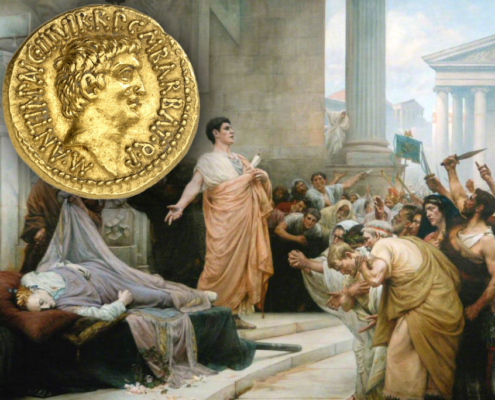
Lucie Loechel2025-02-13 09:44:362025-02-13 10:00:07Marcus Antonius: The Loser Who Did Not Write History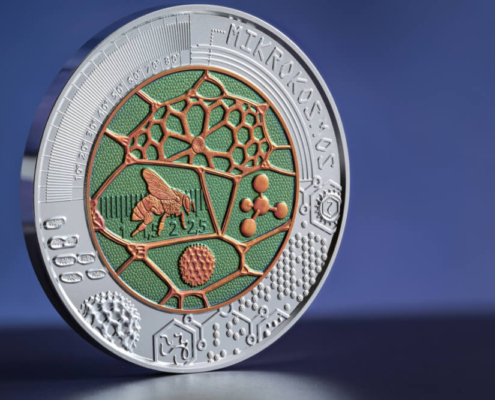 https://new.coinsweekly.com/wp-content/uploads/2023/06/00_shutterstock_1926678794-Kopie.jpg
667
1000
Bruno
https://new.coinsweekly.com/wp-content/uploads/2023/01/logo-coinsweekly_590x204.png
Bruno2022-06-13 11:36:162023-07-03 12:01:36Coloured Metal from Austria: Niobium Coins
https://new.coinsweekly.com/wp-content/uploads/2023/06/00_shutterstock_1926678794-Kopie.jpg
667
1000
Bruno
https://new.coinsweekly.com/wp-content/uploads/2023/01/logo-coinsweekly_590x204.png
Bruno2022-06-13 11:36:162023-07-03 12:01:36Coloured Metal from Austria: Niobium Coins
New Exhibition at the British Museum Presents Recovered Gems
A new exhibition at the British Museum showcases some of the finest ancient gems in the museum’s collection. They include some of the pieces that were recently stolen and could be recovered thanks to the cooperation of coin dealers.
Will the Online Platform “Discord” Become the Coin Club of the Future?
Young collectors are embracing technology from the world of computer games to pursue their hobby. Thousands of coin enthusiasts discuss, trade and compete on gaming servers – and from time to time they meet in European capitals to hunt for rarities.