







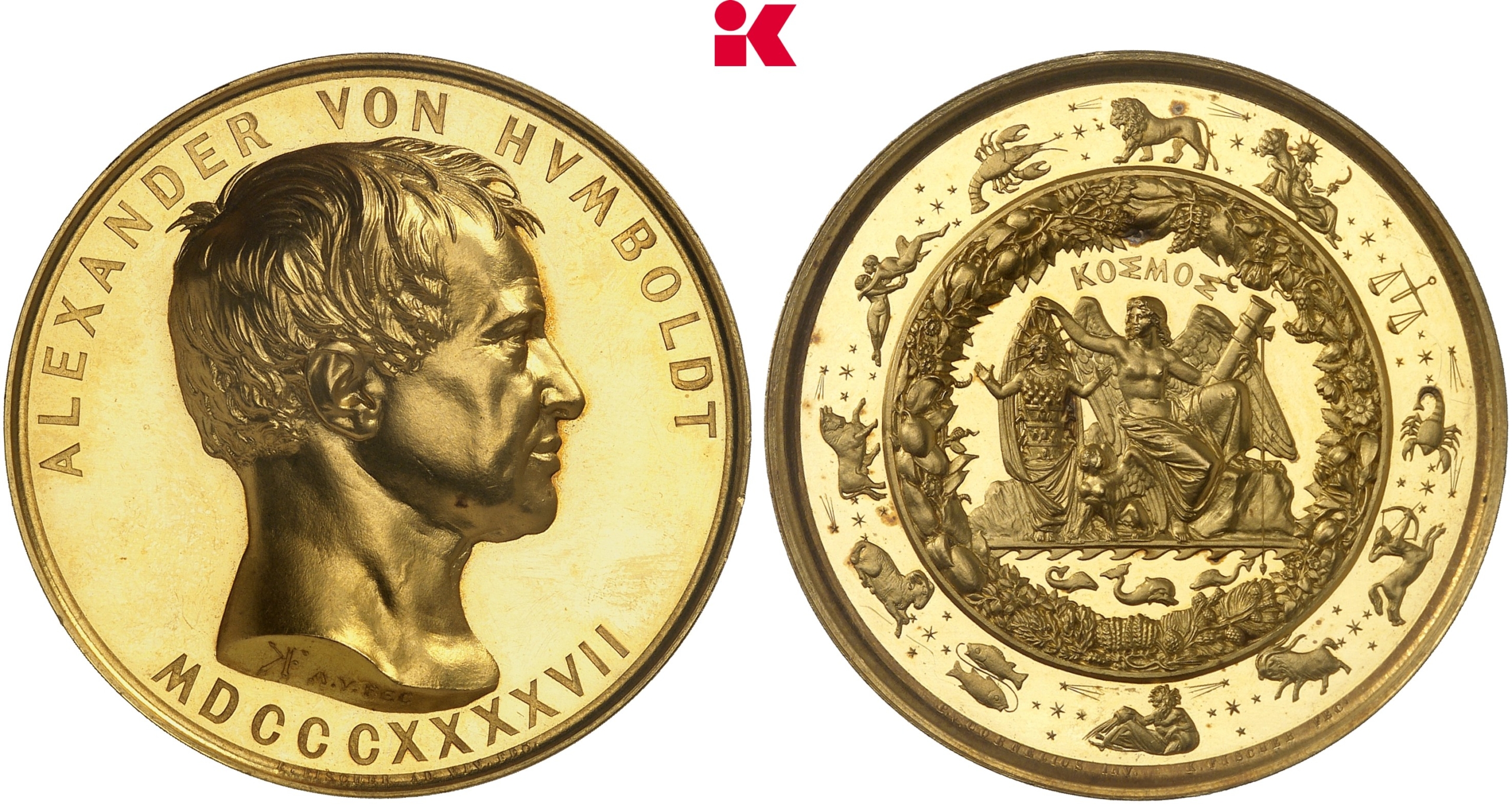
Gold medal in the weight of 50 ducats
commemorating the publication of the second volume
of Alexander von Humboldt’s *Kosmos*.
NGC MS 65 PL.
From the estate of Emperor William I.
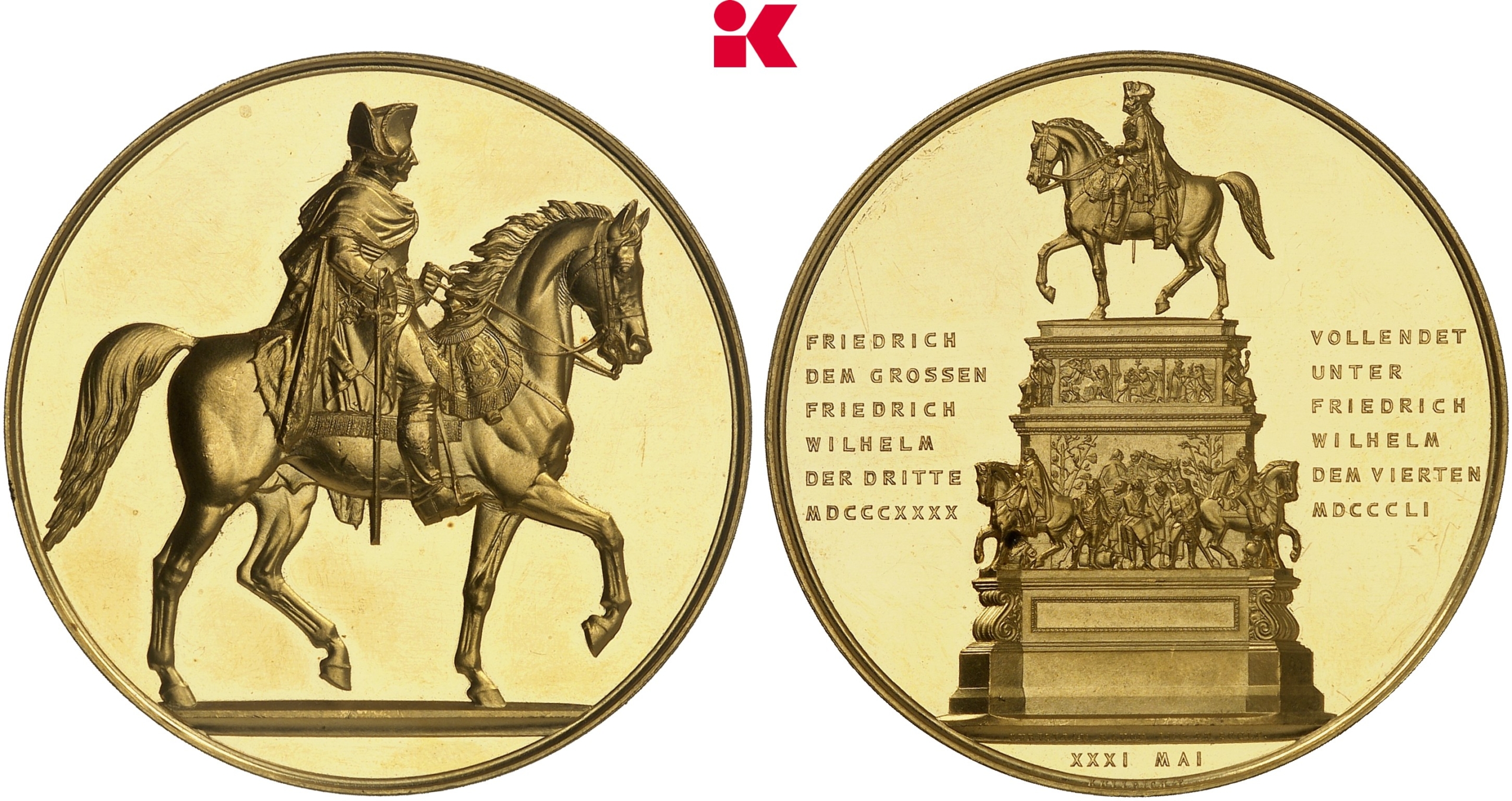
Gold medal in the weight of 50 ducats commemorating
the unveiling of the equestrian statue of
Frederick the Great on Unter den Linden in Berlin in 1851.
NGC MS 63 PL.
From the estate of Emperor William I.
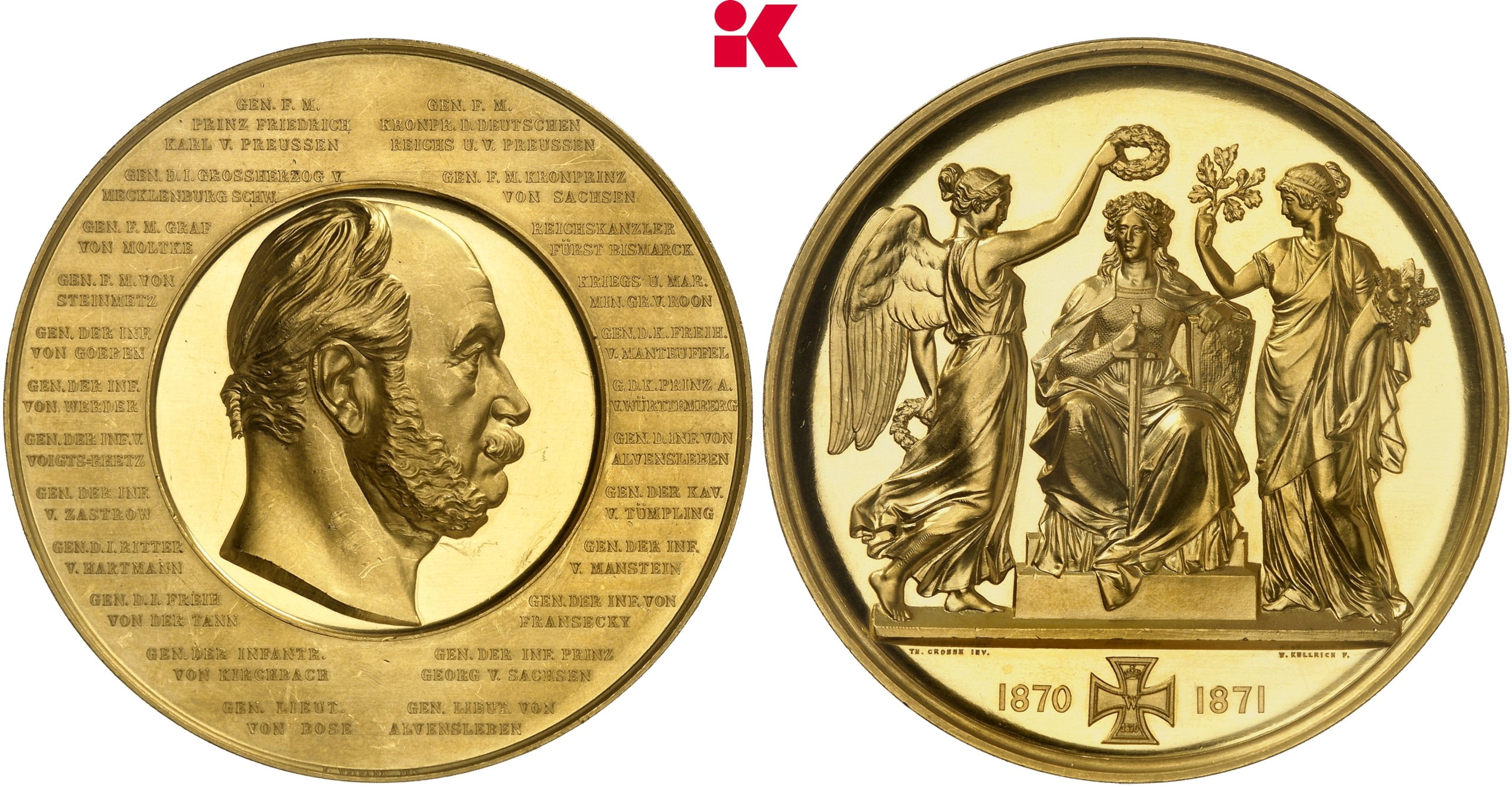
General’s Medal in the weight of 120 ducats, 1871,
commemorating the victory over France.
A magnificent specimen.
From the estate of Emperor William I.
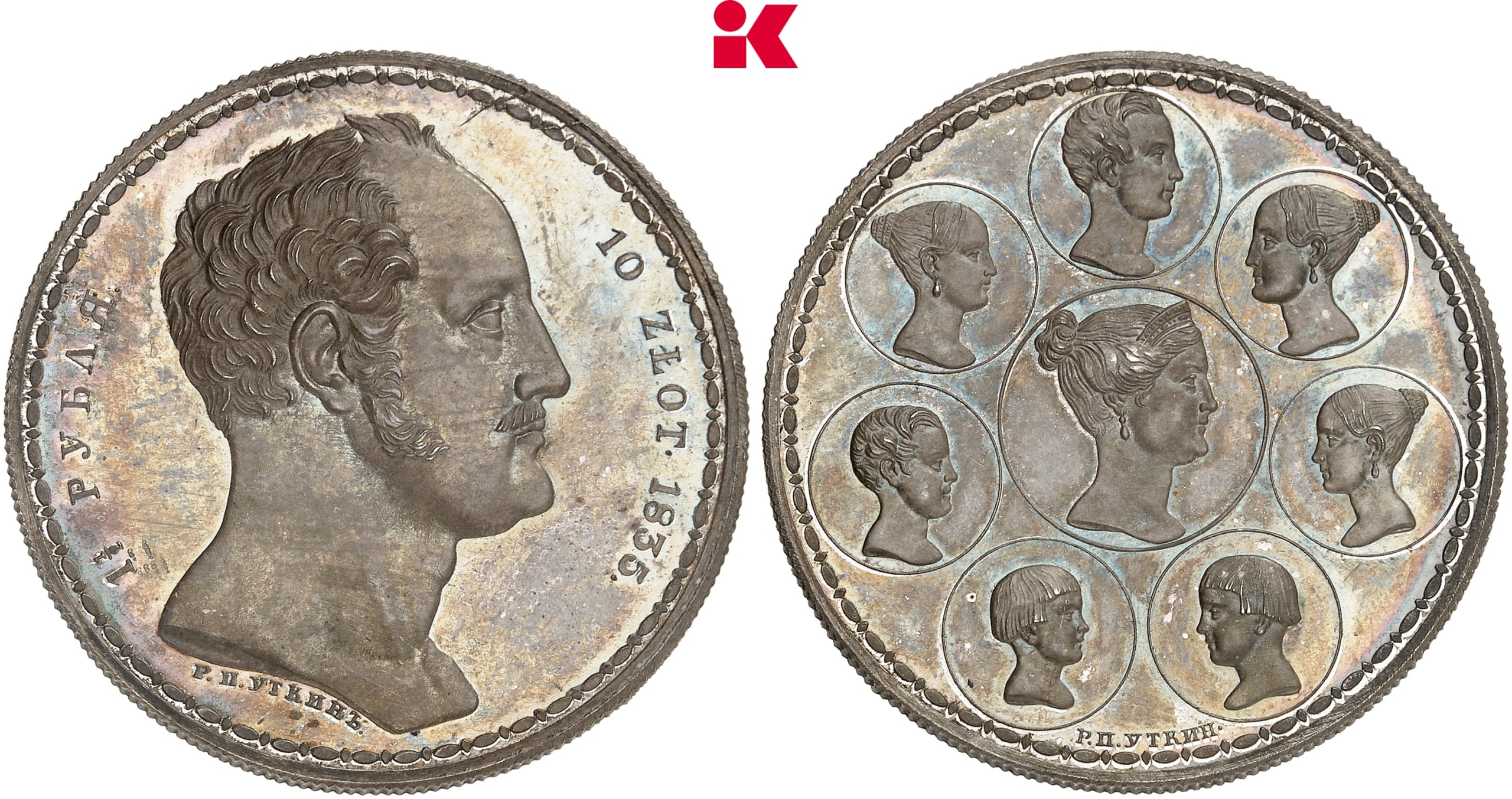
1 1/2 rubles (10 zlotys), 1835, St. Petersburg.
NGC MS 64 (Top Pop).
Only 36 examples struck.
A cabinet piece from polished dies.
From the estate of King Frederick William IV.
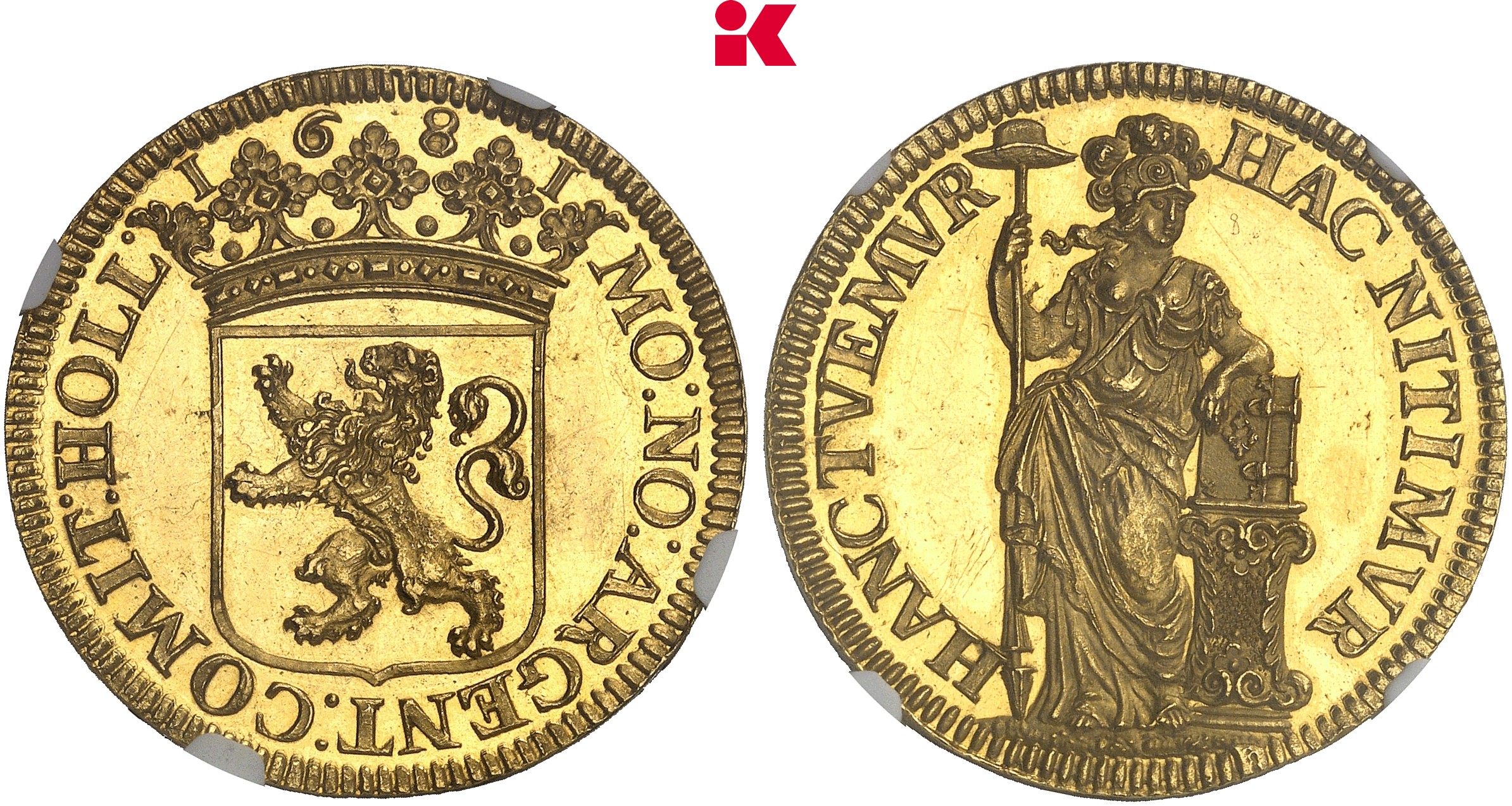
5 ducats, 1681.
Struck with the dies of a guilder.
NGC PF 64 Cameo.
Proof.
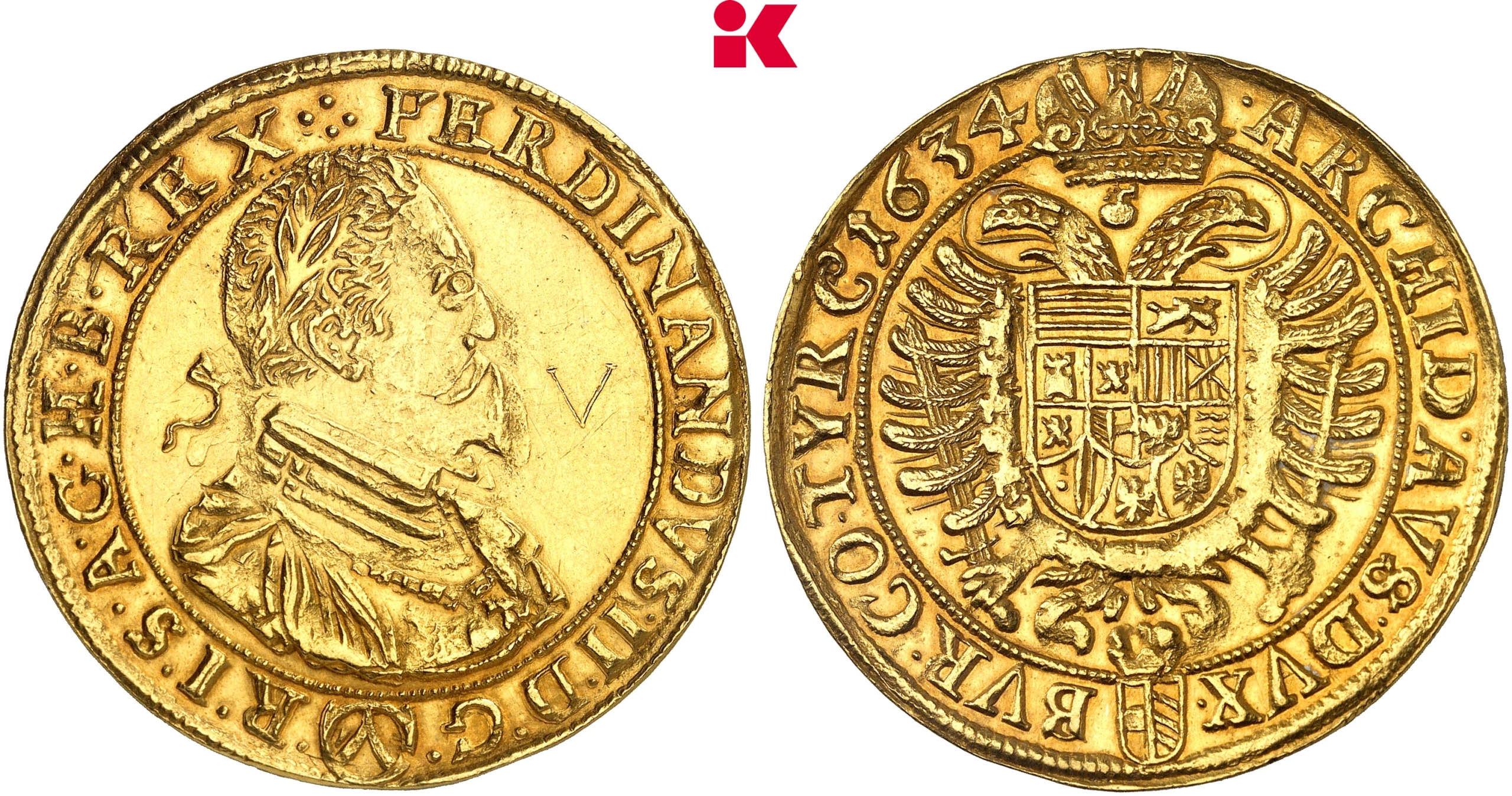
5 ducats, 1634, Vienna.
Extremely rare.
Extremely fine-uncirculated.
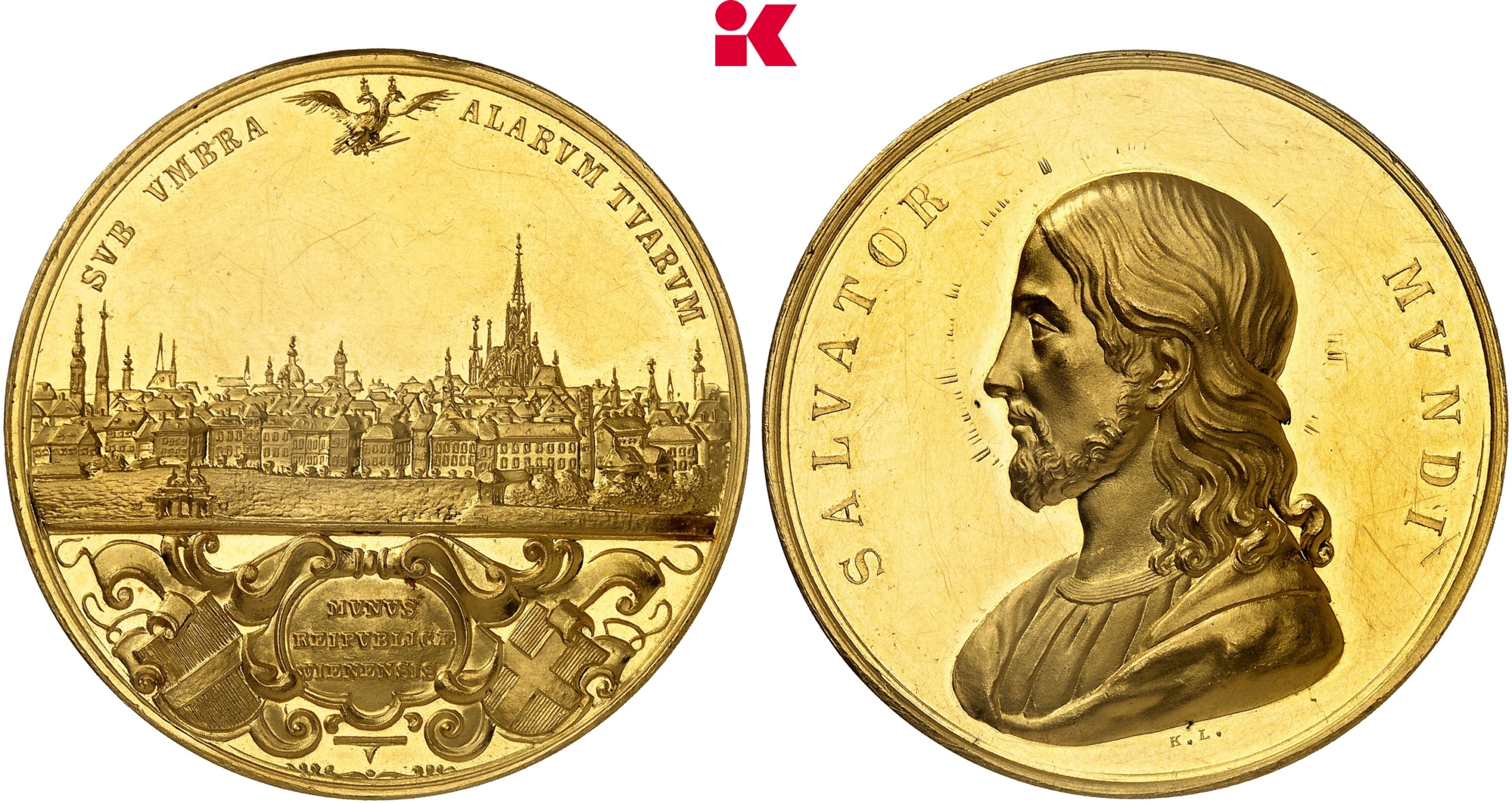
Salvator Medal in the weight of 12 ducats,
n. d.(around 1840).
NGC PF 61 CAMEO.
Proof.
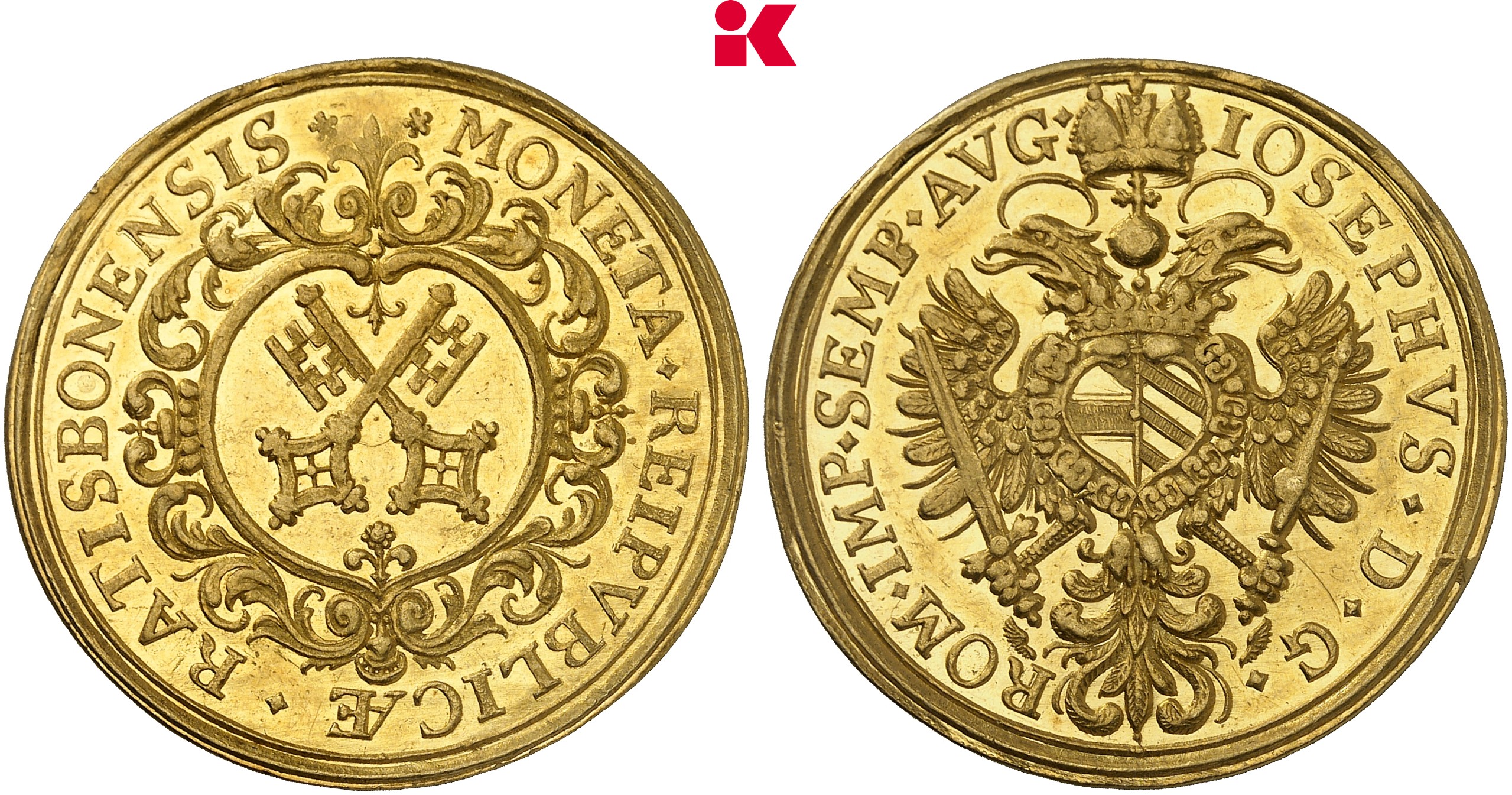
5 ducats, n. d. (1708–1710),
with the title of Joseph I. NGC MS 64.
Extremely rare. According to mint records,
only 7 copies struck.
A magnificent piece.
Archive: People and Markets
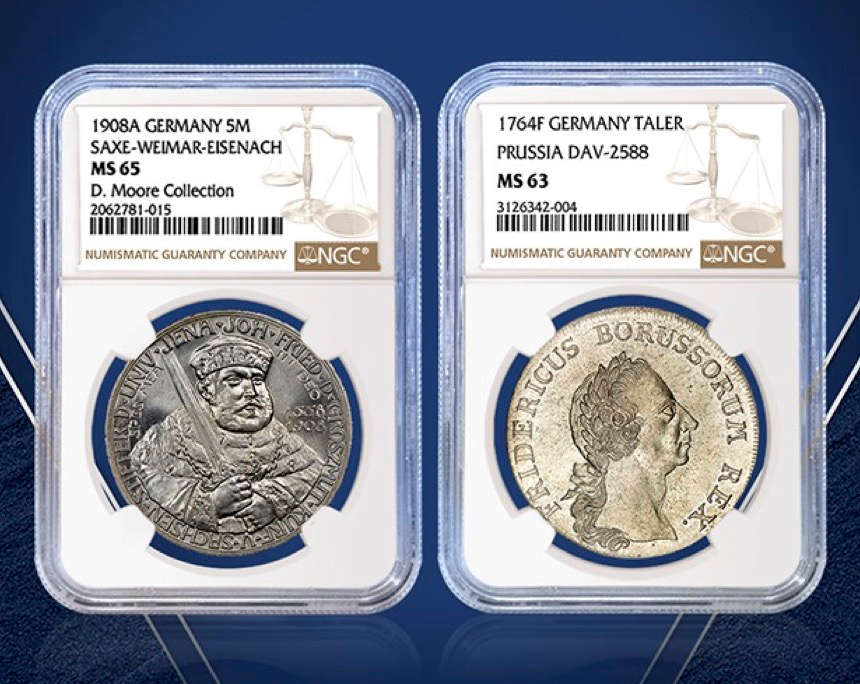
NGC Grading Coins On-site in Munich in November 2024
NGC will once again offer its popular on-site grading service of pre-1965 coins and medals at its office in Munich, Germany, from November 11-16, 2024.
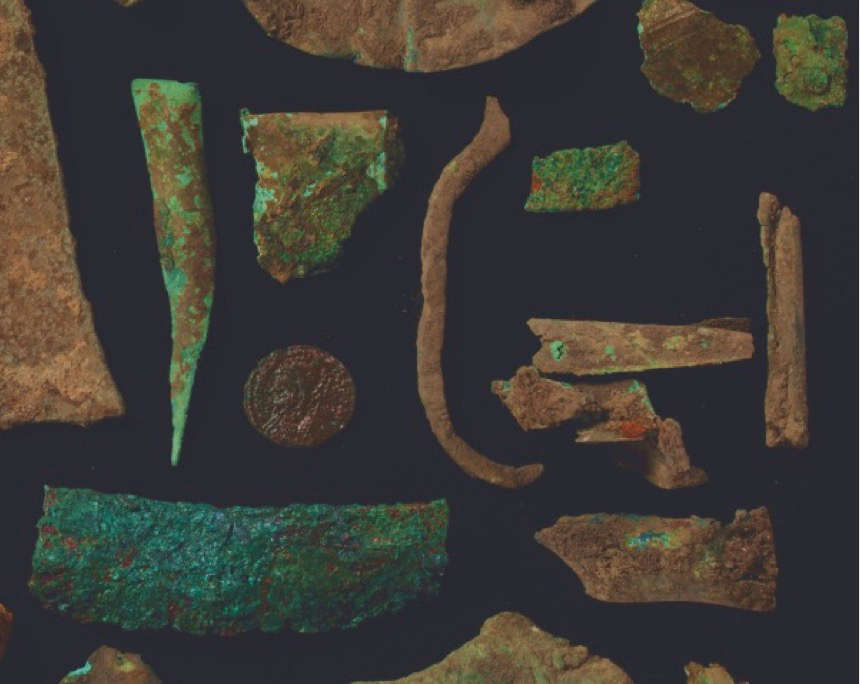
Conference Report: Coining Values: Bronze between Money and Scrap
A conference in Bonn recently dealt with archaeological bronze finds on the outer borders of the Roman Empire. There is a lack of clarity as to how exactly they are to be understood: were the bronze pieces stashes of value or just waste metal rendered useless? Claire Franklin Werz reports.
Archive: Coins, Medals and more
 https://new.coinsweekly.com/wp-content/uploads/2023/06/CoCo03_09.jpg
667
1000
Ursula Kampmann
https://new.coinsweekly.com/wp-content/uploads/2023/01/logo-coinsweekly_590x204.png
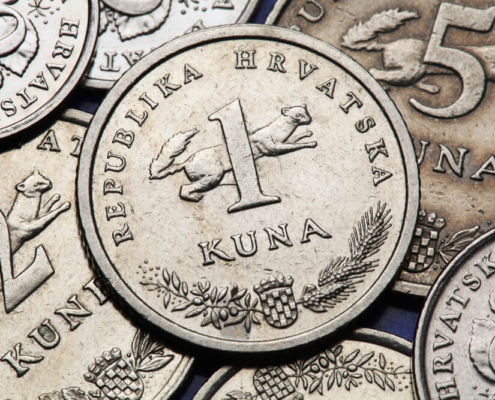
Ursula Kampmann2022-06-13 10:37:152023-06-27 10:39:21What Will Be Depicted on Croatia’s Euro Coins?
https://new.coinsweekly.com/wp-content/uploads/2023/06/CoCo03_09.jpg
667
1000
Ursula Kampmann
https://new.coinsweekly.com/wp-content/uploads/2023/01/logo-coinsweekly_590x204.png
Ursula Kampmann2022-06-13 10:37:152023-06-27 10:39:21What Will Be Depicted on Croatia’s Euro Coins?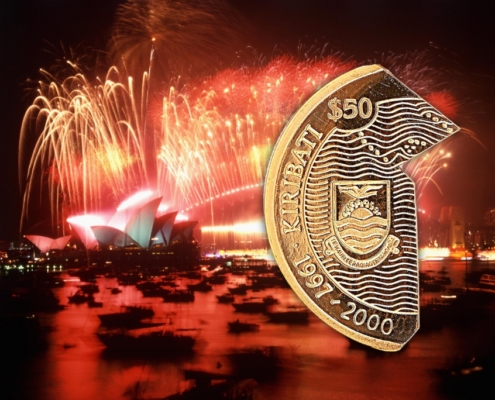 https://new.coinsweekly.com/wp-content/uploads/2025/01/2025KW03HA_00.jpg
684
860
Sebastian Wieschowski
https://new.coinsweekly.com/wp-content/uploads/2023/01/logo-coinsweekly_590x204.png
Sebastian Wieschowski2025-01-16 07:00:032025-01-16 16:55:4925 Years Ago: Millennium Coins and the Dawn of a New Era
https://new.coinsweekly.com/wp-content/uploads/2025/01/2025KW03HA_00.jpg
684
860
Sebastian Wieschowski
https://new.coinsweekly.com/wp-content/uploads/2023/01/logo-coinsweekly_590x204.png
Sebastian Wieschowski2025-01-16 07:00:032025-01-16 16:55:4925 Years Ago: Millennium Coins and the Dawn of a New Era
Greek Museums Between Commercialisation and Modernisation
Five of Greece’s most important museums are to become more autonomous and operate independently of state funding. A bill of the Greek government to this effect has been hotly debated and led to strikes.
Call for Paper: Explain How Money Helped Building National Identity
How have coinage or paper currency been used to create or modify national identity in history? That is the topic of the Sundman Lecture Symposium at the 2023 ANA’s World’s Fair of Money. Any ideas? Submit your summary!