






Archive: People and Markets

On Our Own Account: CoinsWeekly Takes a Moment to Reflect
CoinsWeekly will be taking a break from July 4 to September 15, 2025, to perfect and implement its new concept. Look forward to opinionated commentary and in-depth numismatic information, when CoinsWeekly is back again after September 15!

Study on Investment Behaviour of Women: Gold – Low Risk but High Returns?
The Royal Mint reports a significant rise in female investors, as more women seem to be turning to the gold and silver markets to safeguard their investment portfolios from risks.
Archive: Coins, Medals and more
 https://new.coinsweekly.com/wp-content/uploads/2024/04/00-2024KW17aHauptartikel.jpeg
684
860
Sebastian Wieschowski
https://new.coinsweekly.com/wp-content/uploads/2023/01/logo-coinsweekly_590x204.png
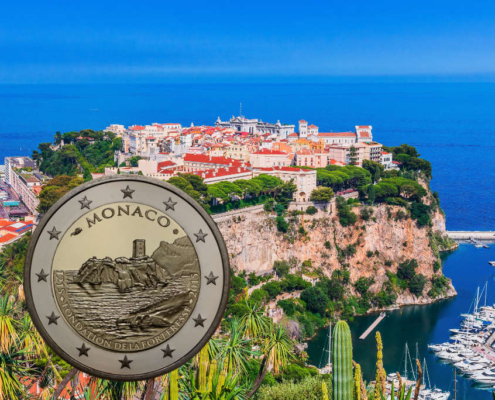
Sebastian Wieschowski2024-04-25 07:00:362024-04-25 07:52:37A Numismatic Journey Through the Principality of Monaco
https://new.coinsweekly.com/wp-content/uploads/2024/04/00-2024KW17aHauptartikel.jpeg
684
860
Sebastian Wieschowski
https://new.coinsweekly.com/wp-content/uploads/2023/01/logo-coinsweekly_590x204.png
Sebastian Wieschowski2024-04-25 07:00:362024-04-25 07:52:37A Numismatic Journey Through the Principality of Monaco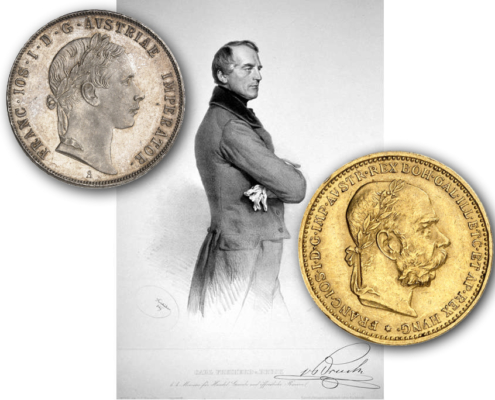 https://new.coinsweekly.com/wp-content/uploads/2024/03/2024KW12bHA_00.jpg
684
860
Ursula Kampmann
https://new.coinsweekly.com/wp-content/uploads/2023/01/logo-coinsweekly_590x204.png
Ursula Kampmann2024-03-21 08:00:102024-03-21 08:09:54A War Fought with Unusual Weapons: How Prussia Used Finance and Politics to Force the Habsburg Hereditary Lands Out of the German Confederation
https://new.coinsweekly.com/wp-content/uploads/2024/03/2024KW12bHA_00.jpg
684
860
Ursula Kampmann
https://new.coinsweekly.com/wp-content/uploads/2023/01/logo-coinsweekly_590x204.png
Ursula Kampmann2024-03-21 08:00:102024-03-21 08:09:54A War Fought with Unusual Weapons: How Prussia Used Finance and Politics to Force the Habsburg Hereditary Lands Out of the German Confederation
Spectacular Coin Hoard Discovered in the Province of Utrecht
A hoard of 404 coins has been unearthed in the province of Utrecht. It is probably the first find on the European mainland to include both Roman and British Celtic coins. The coin find underlines the importance of the Lower Germanic Limes for the Roman invasions of Britain.
The UK’s Highest Value Treasure Find Ever Discovered
All a group of friends really wanted to do was enjoy a relaxing weekend away and try out a new metal detector. The unexpected result of this trip is the highest value treasure find ever discovered in Great Britain. The coins will soon be on display at the British Museum.