






Archive: People and Markets

Reischauer Becomes Part of the Heimerle + Meule Group
With the acquisition of Reischauer GmbH, the Heimerle + Meule Group is expanding its already strong position in the European precious metals market. In the previous year, Heimerle + Meule was already able to substantially enlarge its expertise in precious metal coins and medals by acquiring a majority stake in the Commonwealth Mint.
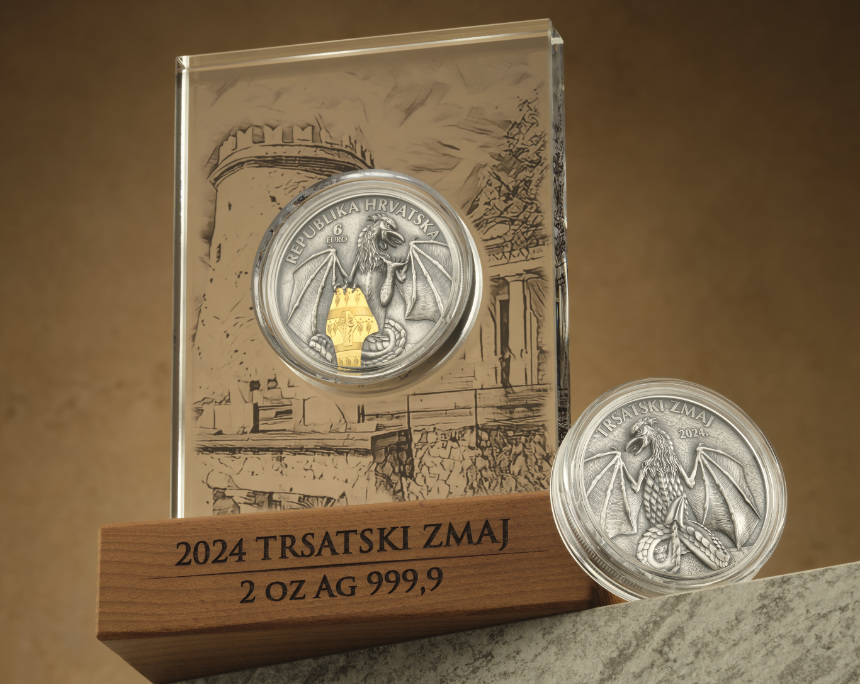
The First Ultra High Relief Coin with Partial Gilding of the Croatian Mint
On 24 January 2024, two “Trsat Dragon” collector coins were released. A new issue featuring the same motif has been added to the successful series on 14 November: the Croatian Mint presents its first coin with ultra high relief and with partial gilding.
Archive: Coins, Medals and more
 https://new.coinsweekly.com/wp-content/uploads/2023/08/2023KW35HA_00.jpg
684
860
Ursula Kampmann
https://new.coinsweekly.com/wp-content/uploads/2023/01/logo-coinsweekly_590x204.png
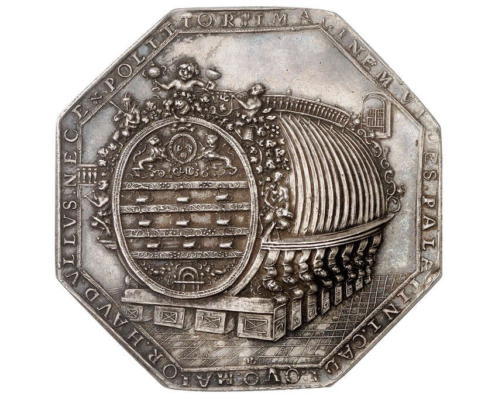
Ursula Kampmann2023-08-31 08:53:232023-08-31 11:47:37The Heidelberg Tun and Early Modern Winemaking
https://new.coinsweekly.com/wp-content/uploads/2023/08/2023KW35HA_00.jpg
684
860
Ursula Kampmann
https://new.coinsweekly.com/wp-content/uploads/2023/01/logo-coinsweekly_590x204.png
Ursula Kampmann2023-08-31 08:53:232023-08-31 11:47:37The Heidelberg Tun and Early Modern Winemaking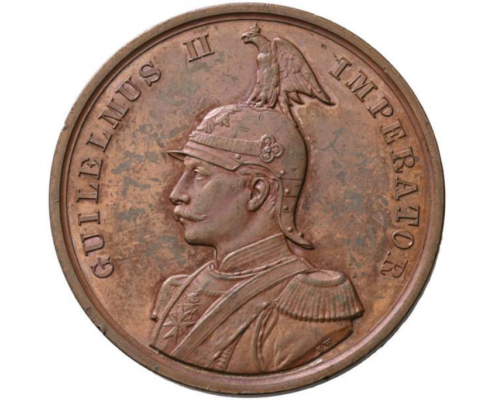 https://new.coinsweekly.com/wp-content/uploads/2025/05/2025KW19HA02_00.jpg
684
860
Lucie Loechel
https://new.coinsweekly.com/wp-content/uploads/2023/01/logo-coinsweekly_590x204.png
Lucie Loechel2025-05-08 08:00:522025-05-13 09:38:02Pattern of the First-Class Warrior Medal – A Previously Unknown Relic of German Colonial History
https://new.coinsweekly.com/wp-content/uploads/2025/05/2025KW19HA02_00.jpg
684
860
Lucie Loechel
https://new.coinsweekly.com/wp-content/uploads/2023/01/logo-coinsweekly_590x204.png
Lucie Loechel2025-05-08 08:00:522025-05-13 09:38:02Pattern of the First-Class Warrior Medal – A Previously Unknown Relic of German Colonial History
CIT’s Wild Mongolia – Snow Leopard
Wild Mongolia is the series with which CIT first introduced the new possibilities of smartminting® 2.0. By now, CIT has once again expanded the possibilities of smartminting® with the launch of smartminting® 4.0, and this is already the fifth issue of the Wild Mongolia series. It is dedicated to the snow leopard and features yet another innovation.
Pobjoy’s Newest Egyptian Gods Coin Features Anubis
On the occasion of the 250th birthday of British Egyptologist Dr Thomas Young, Pobjoy released a brand-new silver coin featuring one of the most iconic gods of ancient Egypt: Anubis.