








Archive: People and Markets

Legal Statement Issued on Italy’s Import Requirements for Coins
Italy requires such extensive documentation for the import of coins that many dealers prefer to avoid the country. But now, the Ministry of Culture in Rome has issued a legal statement that deserves some attention.
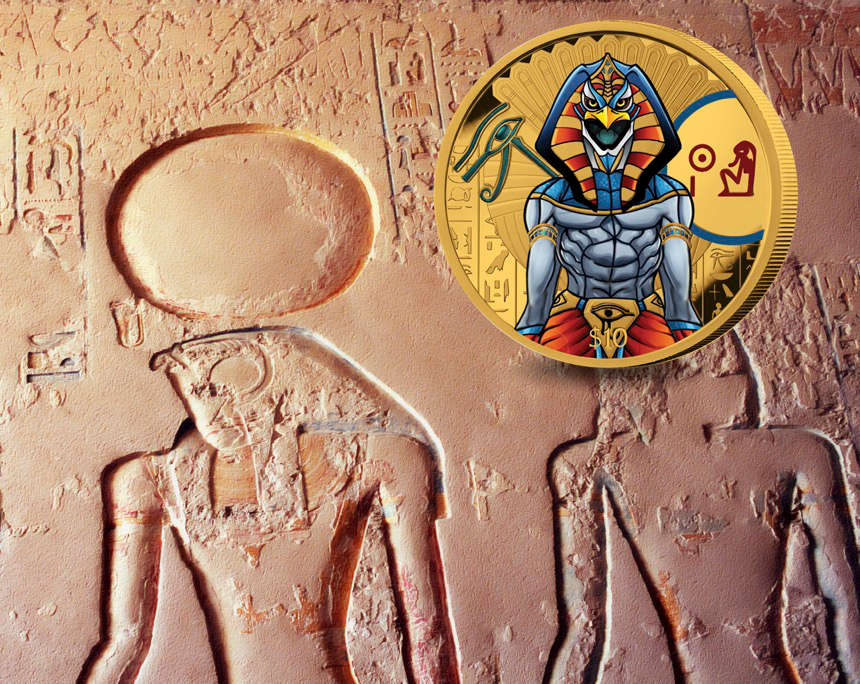
Pobjoy Mint Features Egyptian God Ra
The Egyptologist Thomas Young made significant contributions to the decipherment of Egyptian hieroglyphics. On the occasion of his 250th birthday, Pobjoy’s releases its 2023 Egyptian Gods Series. The third coin in the series features the God Ra.
Archive: Coins, Medals and more
 https://new.coinsweekly.com/wp-content/uploads/2025/02/2025KW08HA01_00.jpg
684
860
Lucie Loechel
https://new.coinsweekly.com/wp-content/uploads/2023/01/logo-coinsweekly_590x204.png
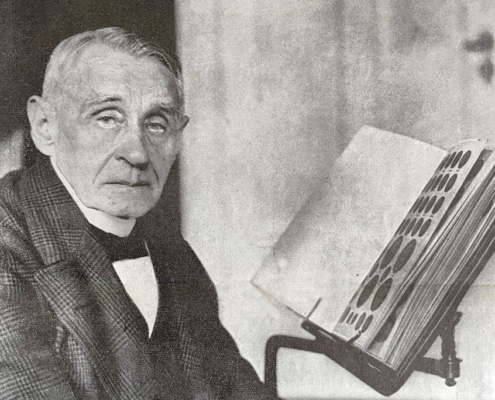
Lucie Loechel2025-02-20 09:21:132025-02-20 09:49:19L. E. Bruun: A Collector in His Time
https://new.coinsweekly.com/wp-content/uploads/2025/02/2025KW08HA01_00.jpg
684
860
Lucie Loechel
https://new.coinsweekly.com/wp-content/uploads/2023/01/logo-coinsweekly_590x204.png
Lucie Loechel2025-02-20 09:21:132025-02-20 09:49:19L. E. Bruun: A Collector in His Time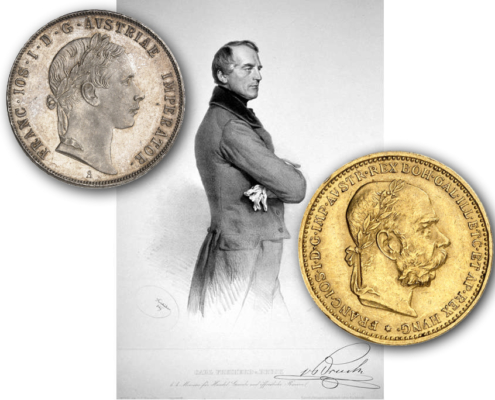 https://new.coinsweekly.com/wp-content/uploads/2024/03/2024KW12bHA_00.jpg
684
860
Ursula Kampmann
https://new.coinsweekly.com/wp-content/uploads/2023/01/logo-coinsweekly_590x204.png
Ursula Kampmann2024-03-21 08:00:102024-03-21 08:09:54A War Fought with Unusual Weapons: How Prussia Used Finance and Politics to Force the Habsburg Hereditary Lands Out of the German Confederation
https://new.coinsweekly.com/wp-content/uploads/2024/03/2024KW12bHA_00.jpg
684
860
Ursula Kampmann
https://new.coinsweekly.com/wp-content/uploads/2023/01/logo-coinsweekly_590x204.png
Ursula Kampmann2024-03-21 08:00:102024-03-21 08:09:54A War Fought with Unusual Weapons: How Prussia Used Finance and Politics to Force the Habsburg Hereditary Lands Out of the German Confederation
Space Premiere – Mint of Poland Created the World’s First Flying Coin
The Mint of Poland presented the UFO MP-1766 at the World Money Fair 2024, which is said to be the first flying coin in the World. The coin is lifted by an internal motor and, upon interaction with a specially designed base, it levitates due to the magnetic field generated between them.
Legal Statement Issued on Italy’s Import Requirements for Coins
Italy requires such extensive documentation for the import of coins that many dealers prefer to avoid the country. But now, the Ministry of Culture in Rome has issued a legal statement that deserves some attention.