






Archive: People and Markets
ANS awards Collier Prize to Moneda Ibérica
For the second time, the American Numismatic Society awarded the Collier Prize to an outstanding book, catalog, or digital work in the field of ancient numismatics. This year, the honor went to Moneda Ibérica, a digital catalog for ancient coins of the Iberian Peninsula.

Coin Shop Looted in Michigan
The Numismatic Crime Information Center notifies the numismatic community about a burglary at a coin shop in South Eastern Michigan on 16 December.
Archive: Coins, Medals and more
 https://new.coinsweekly.com/wp-content/uploads/2024/09/2024KW38HA_00.jpg
684
860
Ursula Kampmann
https://new.coinsweekly.com/wp-content/uploads/2023/01/logo-coinsweekly_590x204.png
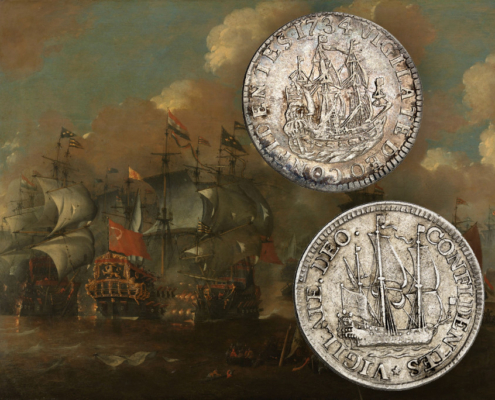
Ursula Kampmann2024-09-19 10:16:302024-09-19 11:07:49Bloody Flag and Scheepjesschelling
https://new.coinsweekly.com/wp-content/uploads/2024/09/2024KW38HA_00.jpg
684
860
Ursula Kampmann
https://new.coinsweekly.com/wp-content/uploads/2023/01/logo-coinsweekly_590x204.png
Ursula Kampmann2024-09-19 10:16:302024-09-19 11:07:49Bloody Flag and Scheepjesschelling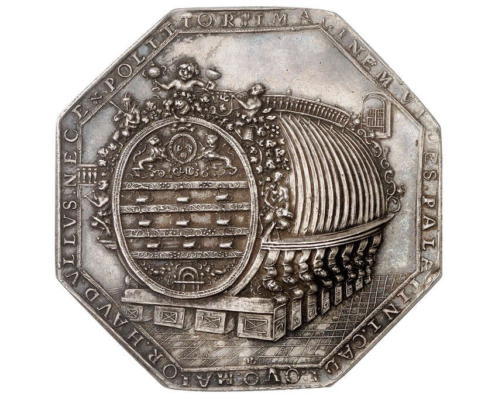 https://new.coinsweekly.com/wp-content/uploads/2023/08/2023KW35HA_00.jpg
684
860
Ursula Kampmann
https://new.coinsweekly.com/wp-content/uploads/2023/01/logo-coinsweekly_590x204.png
Ursula Kampmann2023-08-31 08:53:232023-08-31 11:47:37The Heidelberg Tun and Early Modern Winemaking
https://new.coinsweekly.com/wp-content/uploads/2023/08/2023KW35HA_00.jpg
684
860
Ursula Kampmann
https://new.coinsweekly.com/wp-content/uploads/2023/01/logo-coinsweekly_590x204.png
Ursula Kampmann2023-08-31 08:53:232023-08-31 11:47:37The Heidelberg Tun and Early Modern Winemaking
2022 Huntington Medal Award Goes to Wolfgang Fischer-Bossert
Dr. Wolfgang Fischer-Bossert is the recipient for the 2022 Huntington Medal in recognition of his outstanding contributions to numismatic scholarship.
Panticapaeum Stater Most Expensive Ancient Coin
A gold stater from the city of Panticapaeum is currently the most expensive ancient coin ever sold at auction. In May 2023, it was sold by Numismatica Ars Classica in Switzerland for the record sum of 5,390,000 CHF or ca. $6 million.