





The Augustean Denarius Find From Brohl-Lützing Offered at Auction
by Robert Stark
In the current auction 124 by Solidus, the treasure find from Brohl-Lützing, among others, is offered as one lot in its entirety. The treasure find was discovered by Daniel Zuther in the course of authorized research on a slope above the Rhine. It consists of a total of 18 denarii of the late Republic and imperatorial coinage from the time of the civil wars as well as coins of the Augustan period.

The find was recently presented in the Numismatisches Nachrichtenblatt (1/2021, page 6 – 13) by Sven Günther. The paper can be downloaded from the Solidus Numismatik website (but also elsewhere, e.g. academia.edu).

Denarius in the name of Gaius Julius Caesar, 49-48 BC, Mobile mint in Hispania Citerior or Gallia Narbonensis.
As the author rightly points out, regardless of its historical significance, the treasure charmingly illustrates the period of the civil wars into the early principate, e.g. through interesting motifs such as elephants on denarii of Caesar and Scipio Metellus and beautiful portraits of Pompeius Magnus, Marcus Antonius and Octavian.

Denarius of Octavian and Marc Antony, 41 BC Ephesus?
The two final coins of the find from the years 15 – 13 BC suggest the interpretation that the treasure find was concealed as part of the redeployment of troops to the Rhine. The gathering of extensive army contingents to the Rhine border took place following the defeat of Marcus Lollius in 16 BC on Gallic soil until the beginning of the campaigns of Drusus on the right bank of the Rhine in 12 BC.

Legionary denarius of Marc Antony, 32-31 v. Chr. LEG VI. Patrae?
I would like to contradict the commendable presentation of the treasure find by Sven Günther only at one point. The pieces are by no means all intensely worn. This is more the case, as one would expect, with the early pieces. However, the imperatorial coinage and the specimens of Augustus are mostly extremely find or about extremely fine. Their appearance is slightly impaired on individual specimens by weaknesses in the minting or slight corrosion. The preservation of the legionary denarii of Marcus Antonius in particular is of above-average quality and flat areas in the relief on two specimens are due to weaknesses in the minting, not to intensive circulation.

Denarius of Augustus, 19 v. BC. Spain, Colonia Patricia?
In keeping with its significance as a closed complex, the small treasure find is naturally only offered in its entirety, which should also be preserved. It would be nice if a sponsor could be found as a buyer who would make the find available to a local museum on loan or even as a donation. Measured by the value of the individual coins, their partly very good condition, especially as concerns the rarer and historically particularly attractive pieces, the estimated price is quite moderate.

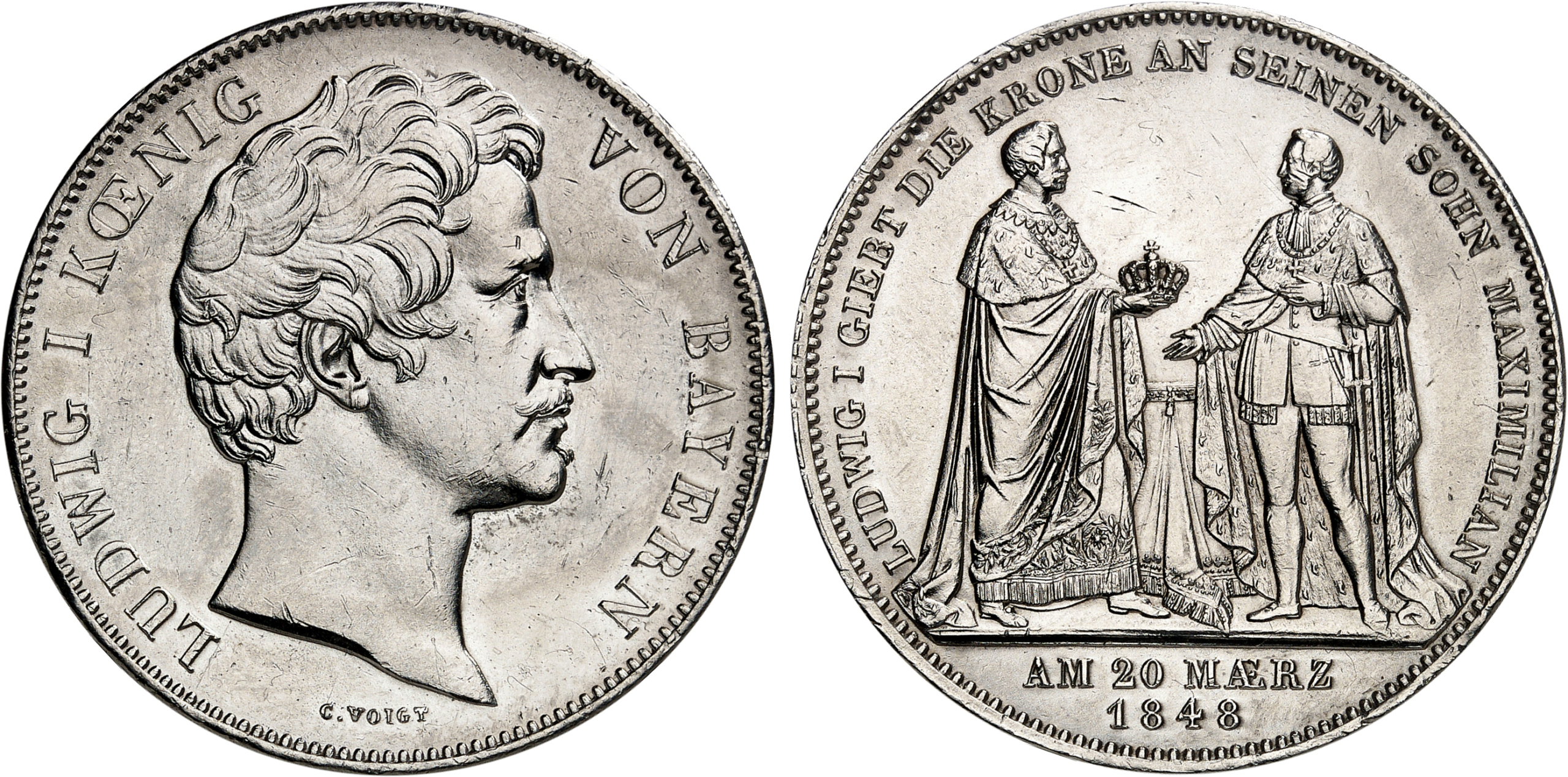
Bavaria.
Double history taler, 1848
“ÜBERGABE DER KRONE” (transfer of the crown).
Very rare. Extremely fine
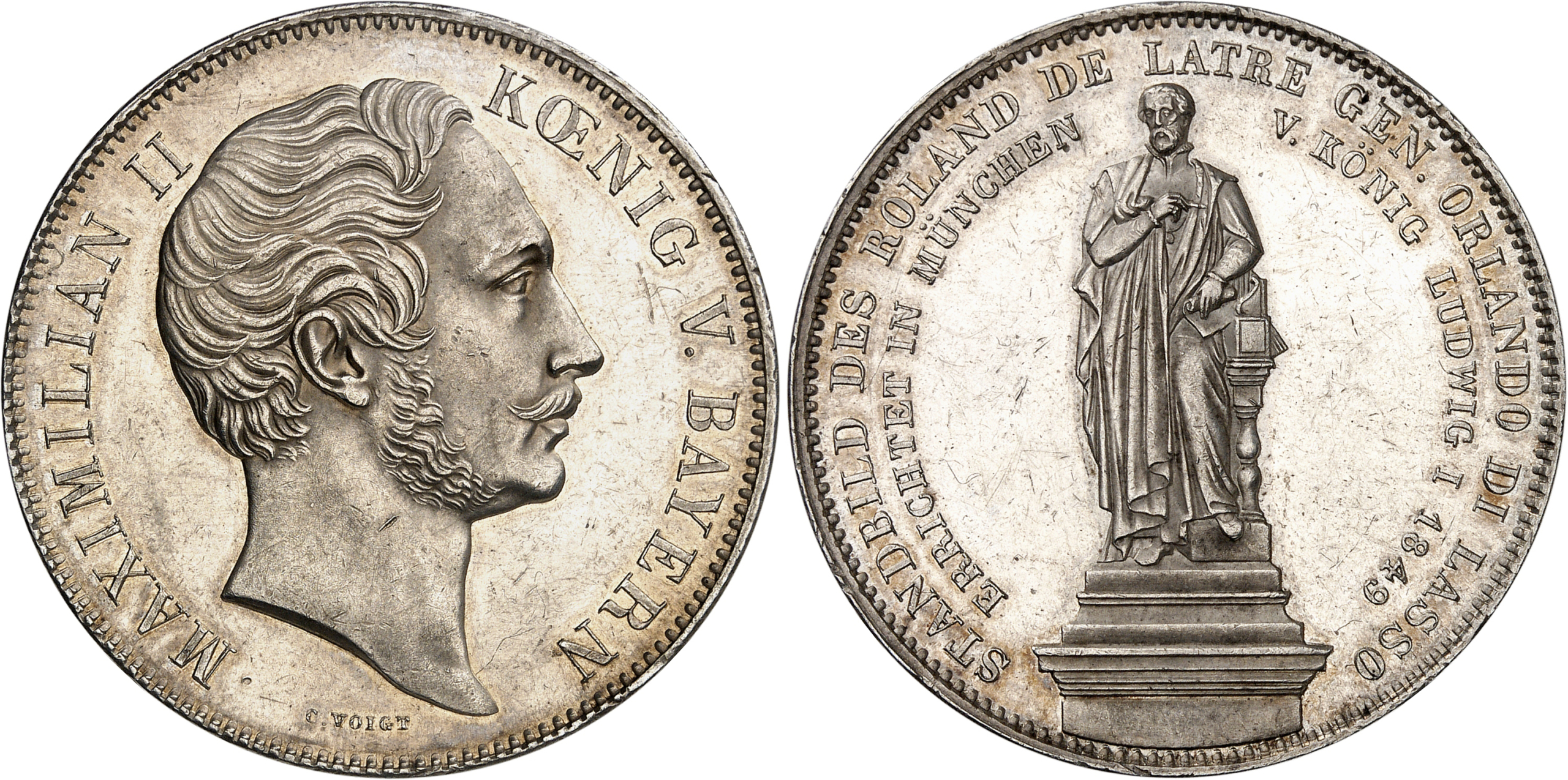
Double history taler, 1849,
“STANDBILD ORLANDO DI LASSO”
(statue of Orlando di Lasso).
Extremely fine to FDC.
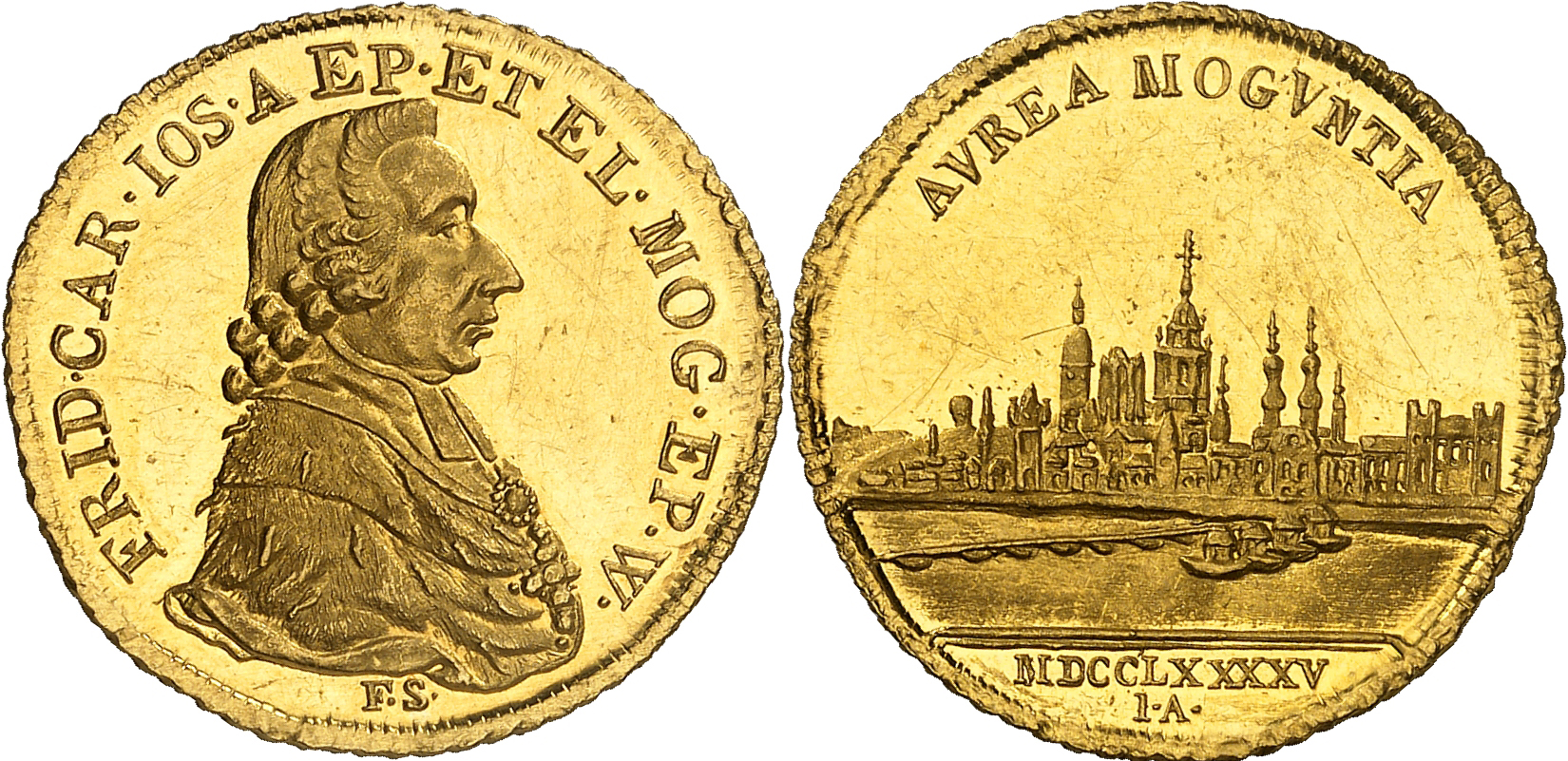
Mainz.
Ducat, 1795.
Extremely fine to FDC.
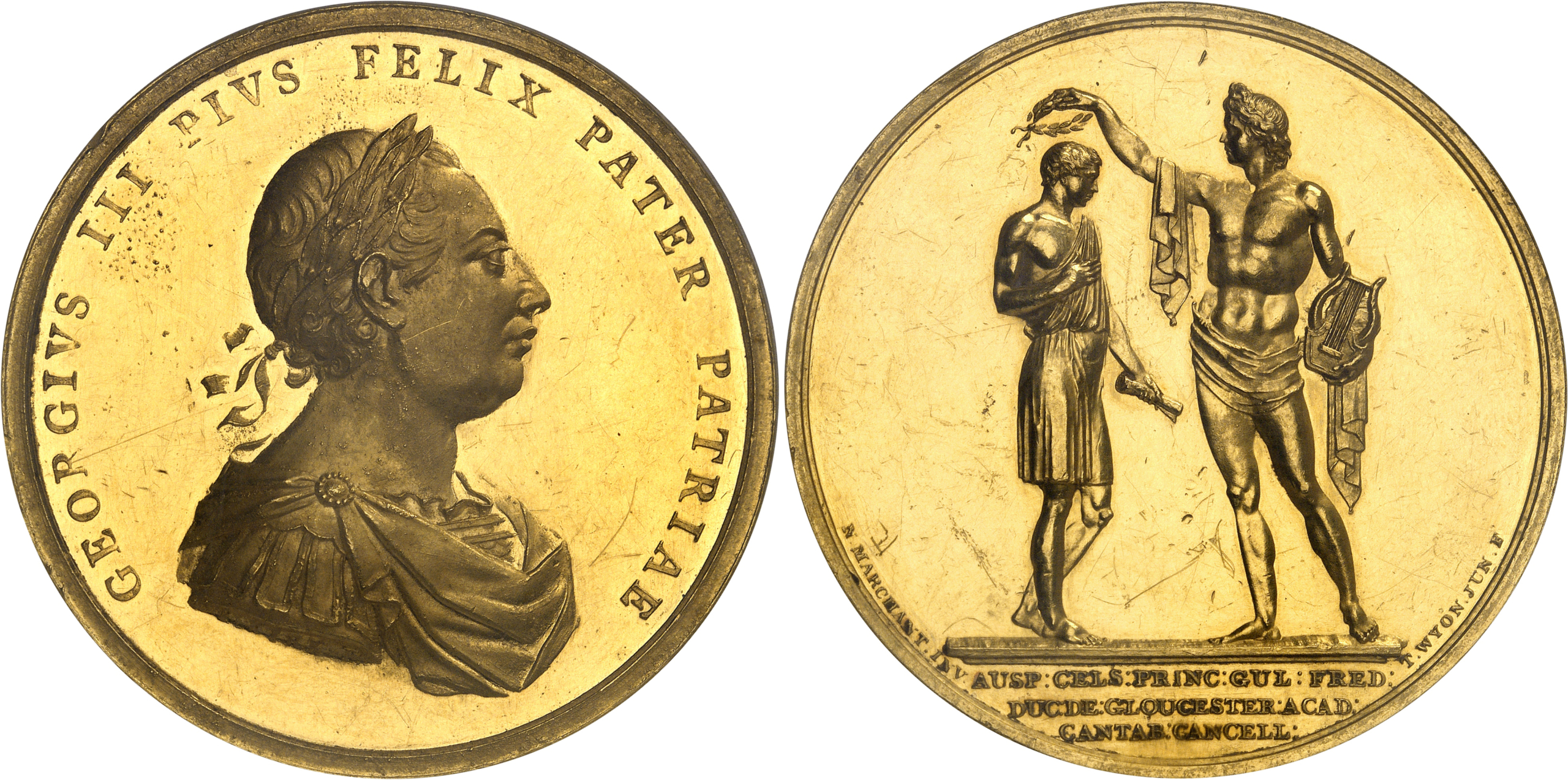
Gold medal n.d. (1768), by J. Kirk and T. Wyon jun.
Commemorating the appointment of
Duke William Frederick of Gloucester as
Chancellor of the University of Cambridge.
Extremely rare. NGS MS60, about FDC.
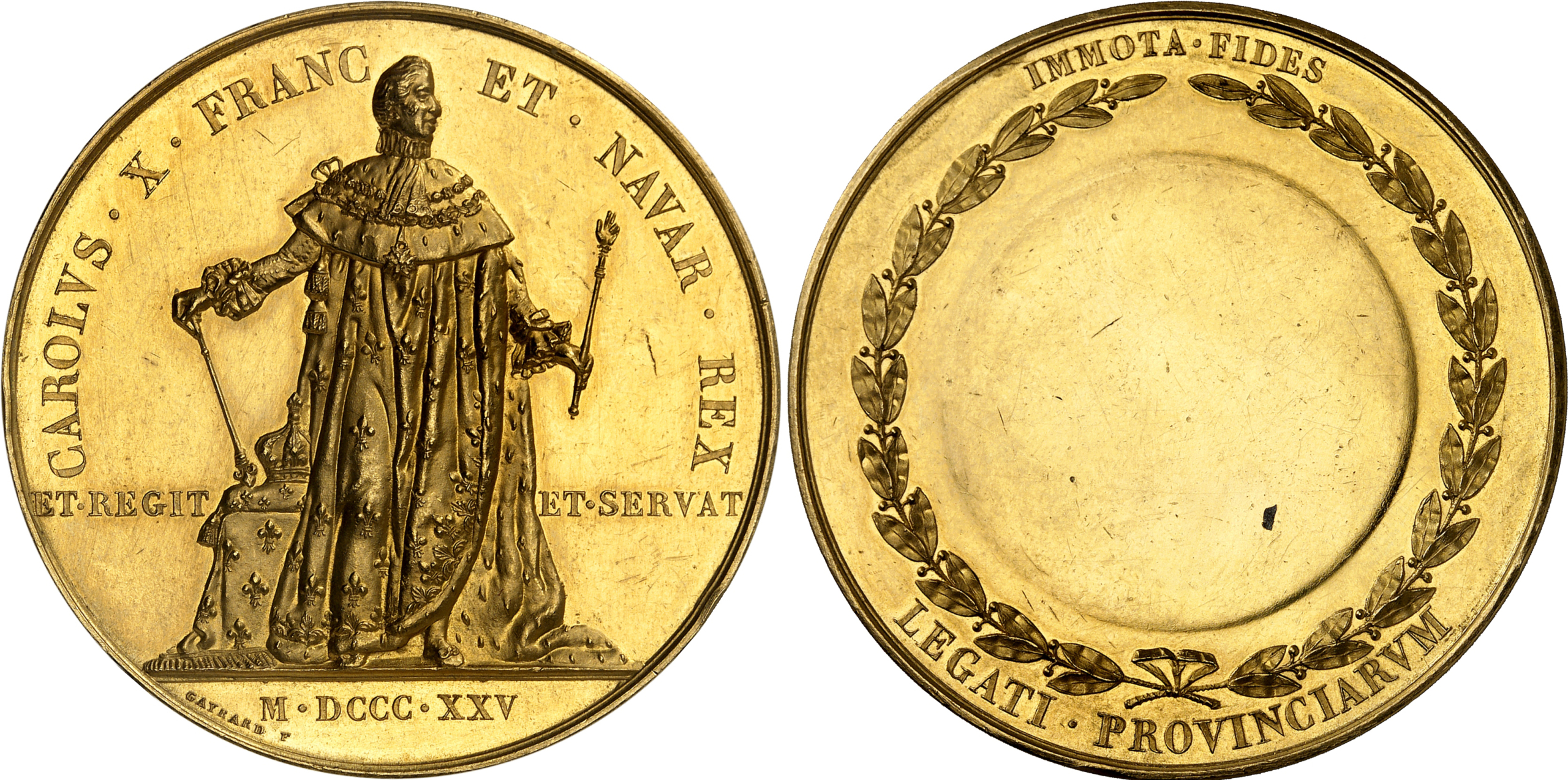
Charles X. 1825 gold medal, by F. Gayrard.
Commemorating the coronation of Charles X.
Extremely rare.
Minor rim error and scratch, extremely fine to FDC.
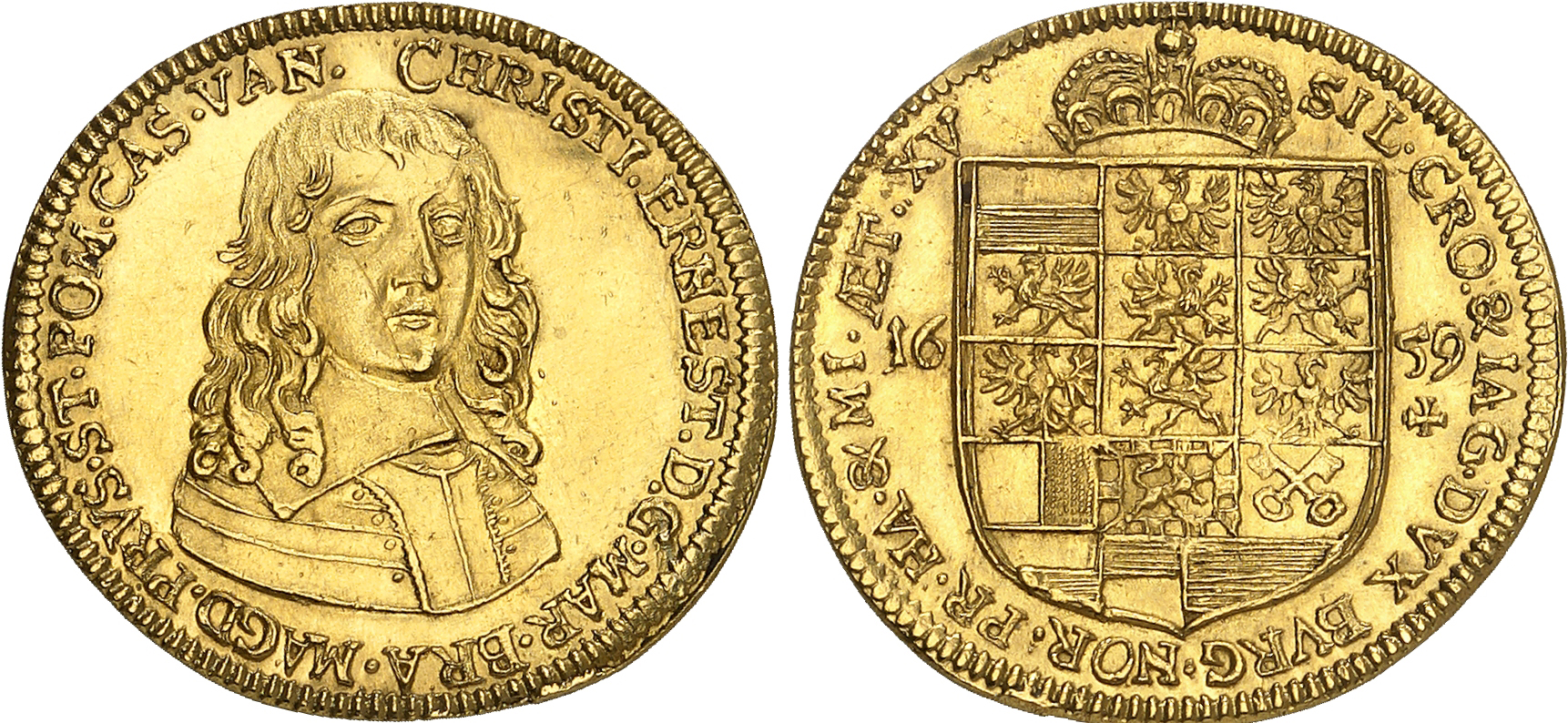
1659 ducat, Nuremberg.
Very rare.
Extremely fine to FDC.