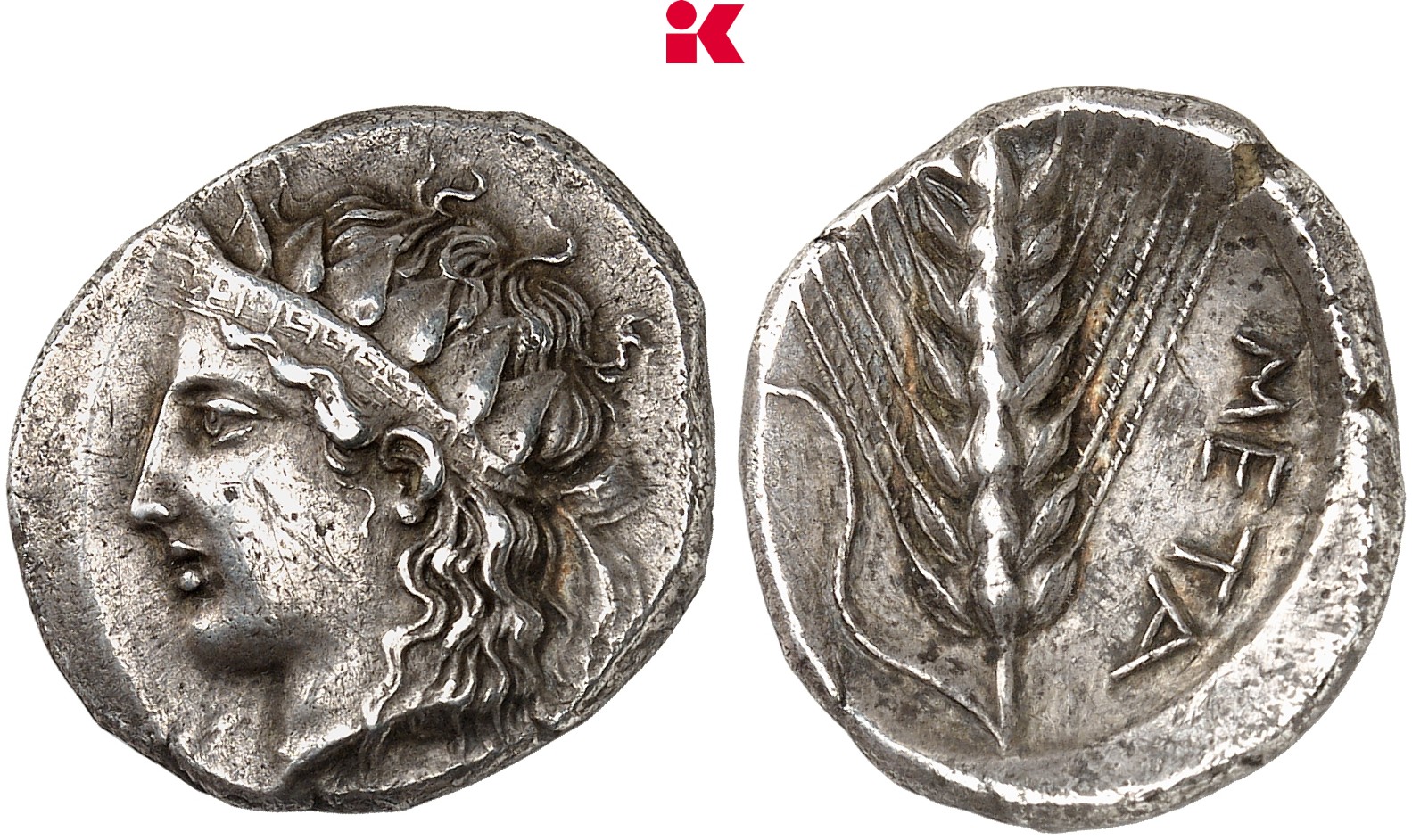
Didrachm, 400/340 BC. Attractive piece.
Very rare, particularly in this condition.
Dionysus head of the finest style.
Ex Hirsch VIII, München 1903, no. 792.
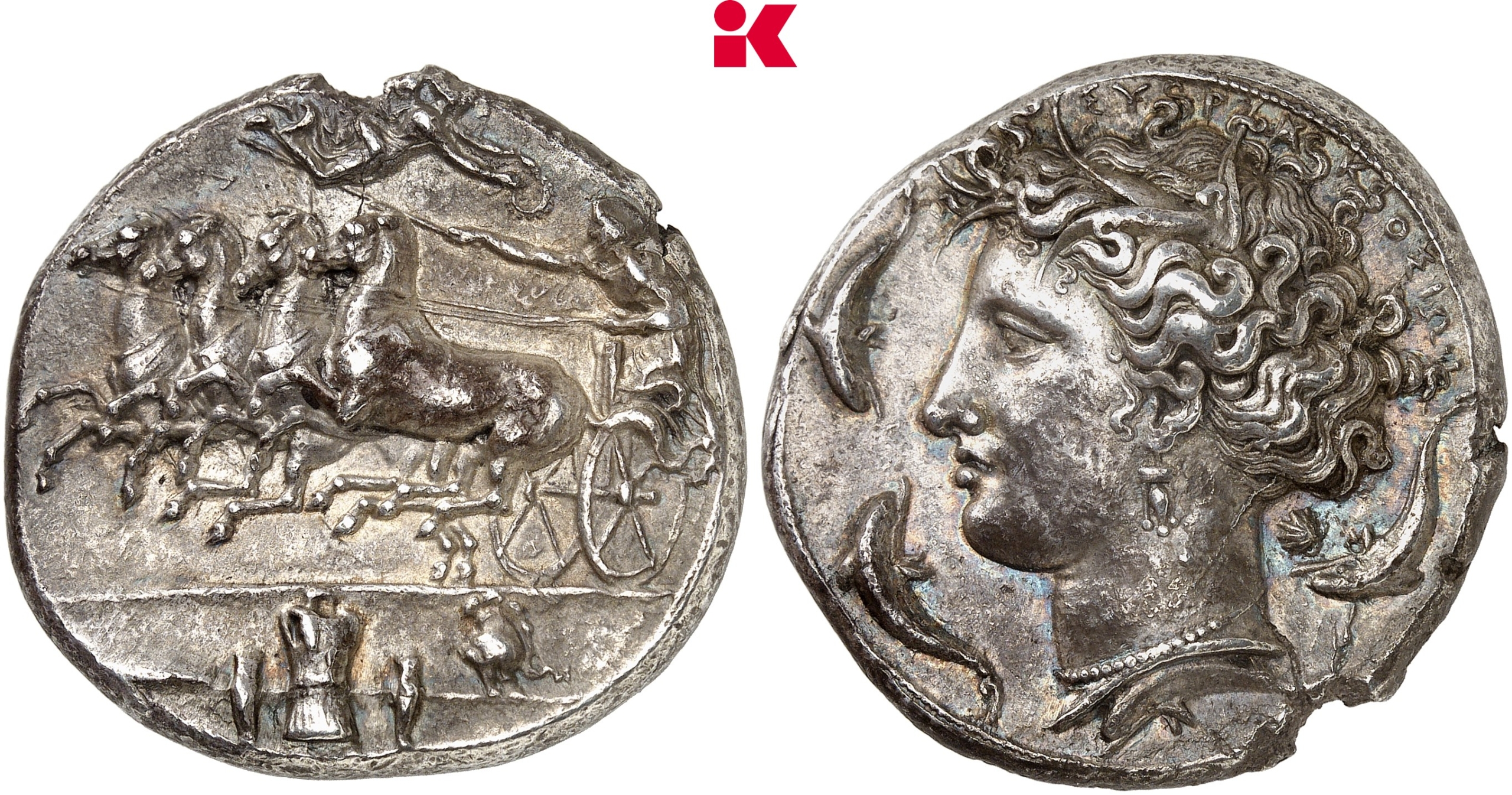
Decadrachm around 400/390 BC, unsigned.
Splendid patina, extremely fine.
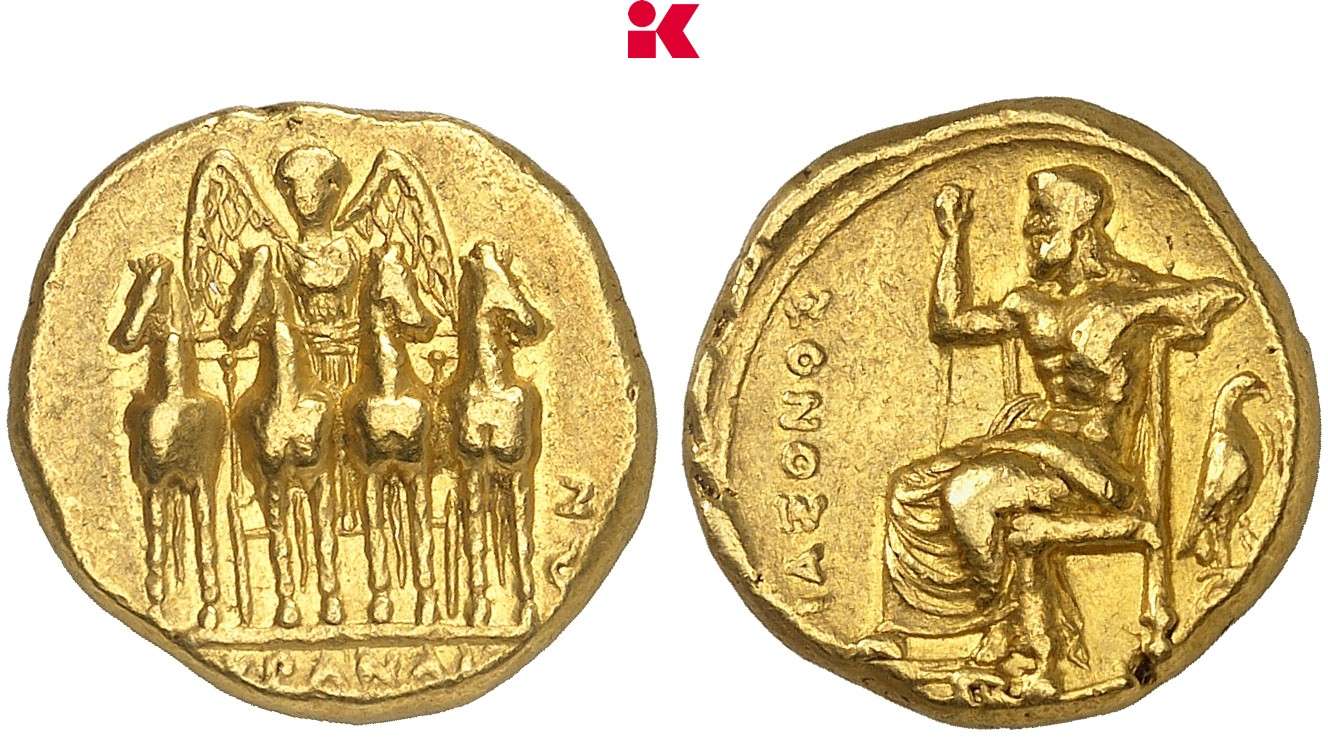
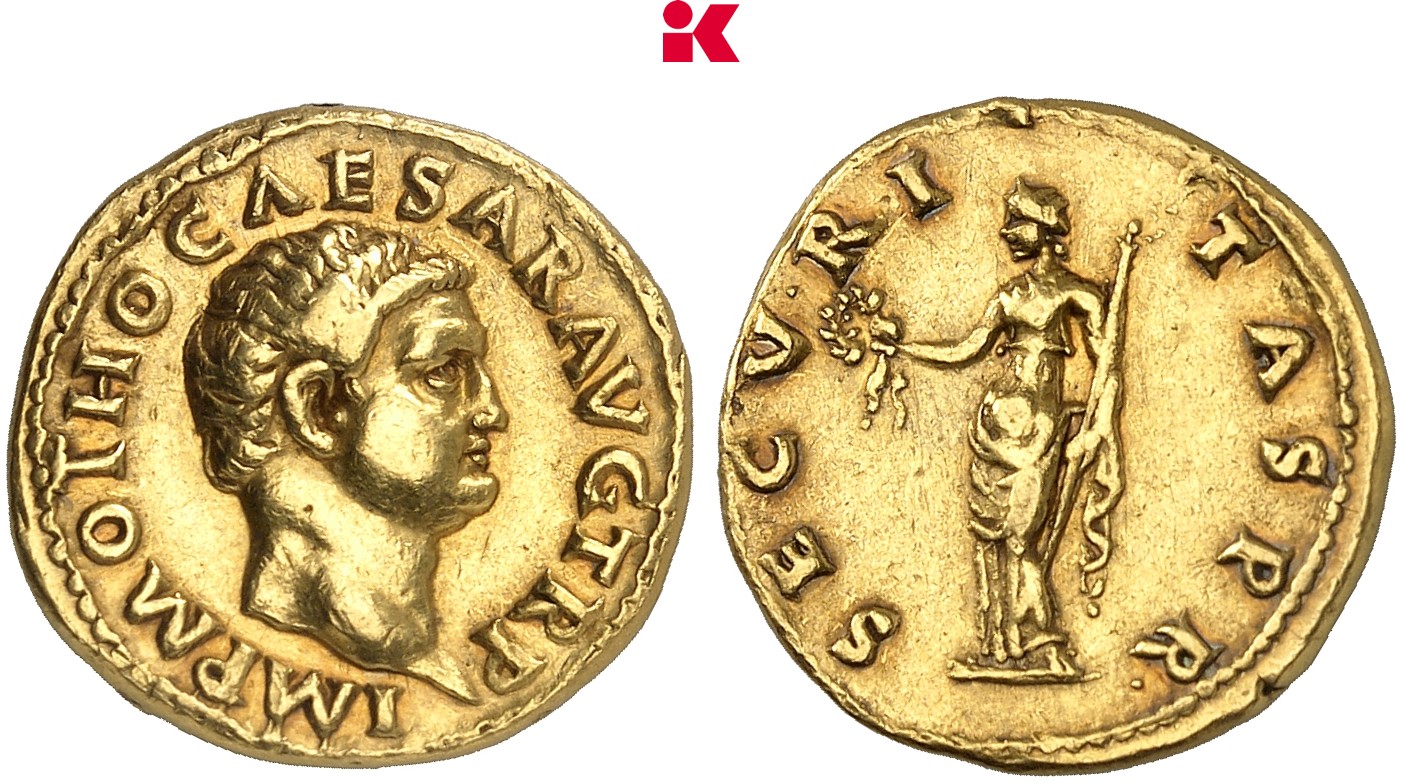
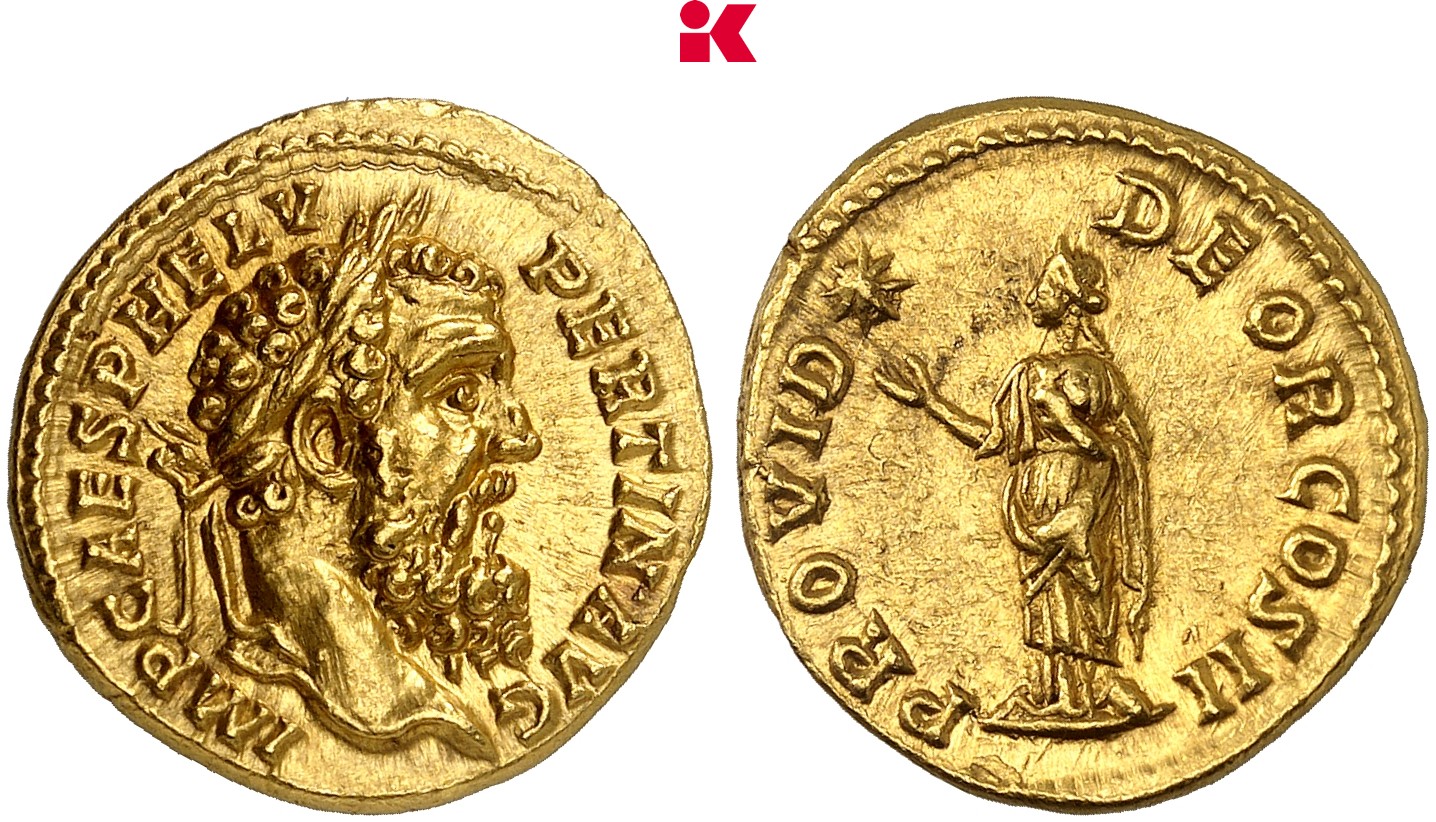
Aureus, Rome.
Very rare.
Attractive piece.
Ex Huntington (Inventar-no. ANS 1001.1.30032).
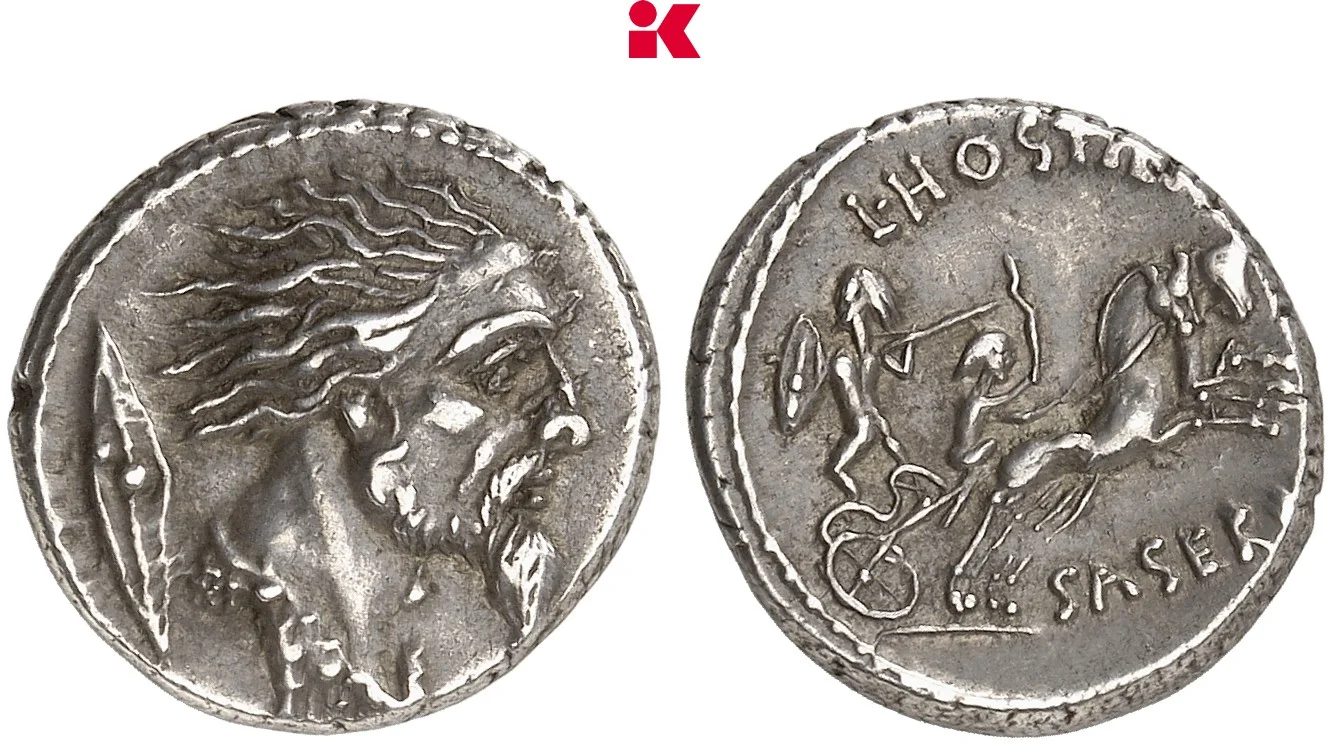
Denarius, 48 B.C., Rome.
L. Hostilius Saserna.
Very rare.
Attractive toning, extremely fine.
Ex Sternberg VI, Zürich 1976, no. 758.
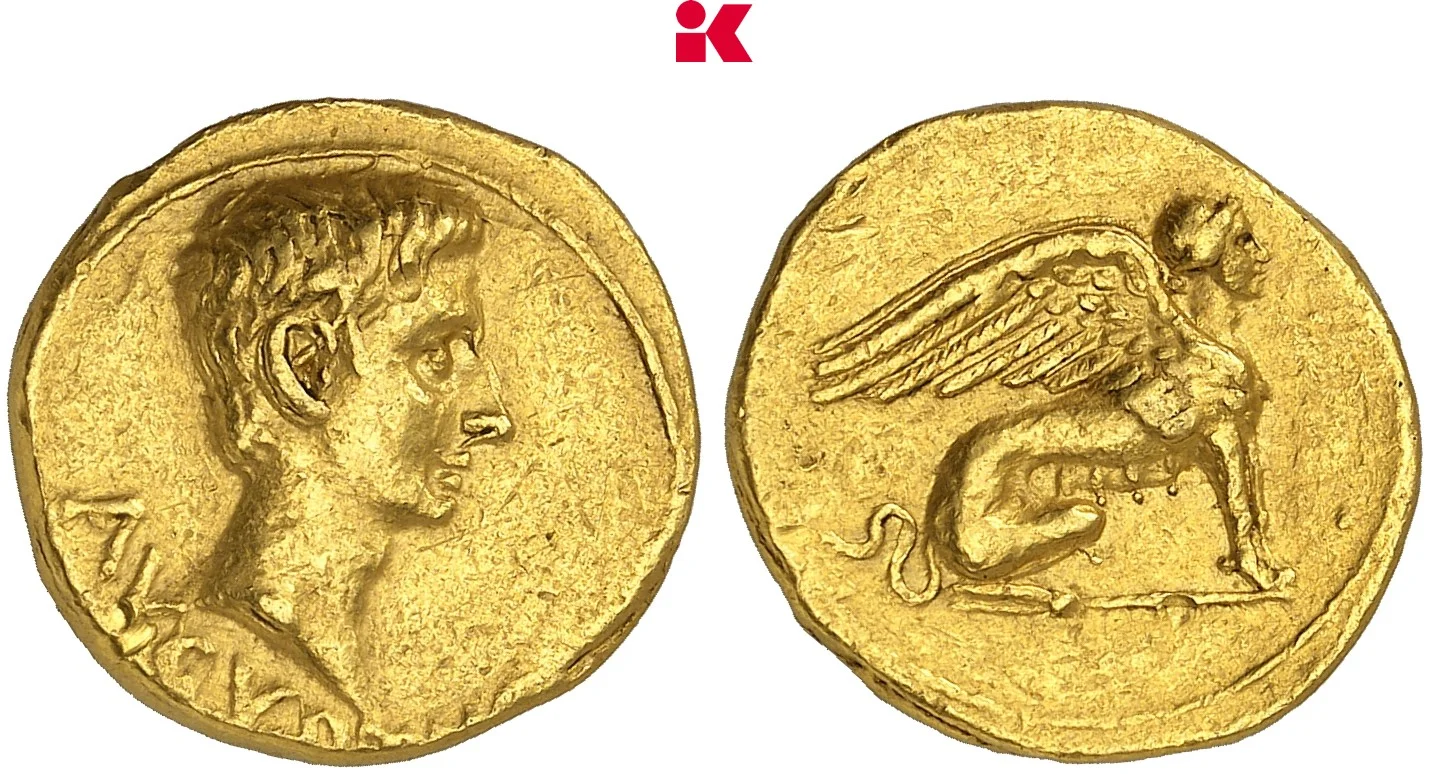
Augustus, 30 BCE–14 CE.
Aureus, 19/18 BCE, Ephesus (Ionia).
Very rare.
Min. Very fine.
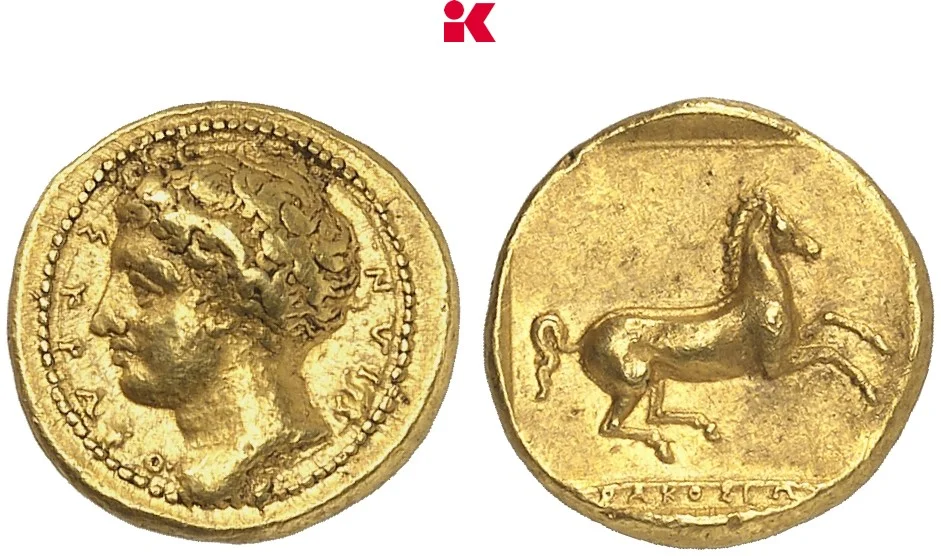
50 litren, 405/400 B.C.
Struck with a slightly rusty obverse die,
very fine-extremely fine/extremely fine.
The St. Croix Collection of Baktrian Seals
Beginning with Electronic Auction 555, Classical Numismatic Group will be offering a fabulous and highly important collection of Baktrian seals from the St. Croix Collection. This collection, formed over a lifetime, includes more than 130 seals with a wide variety of types cataloged by Sarianidi number. The CNG cataloger, Phil Jones, commented that this is “the finest collection of this material to appear on the market in many years.”
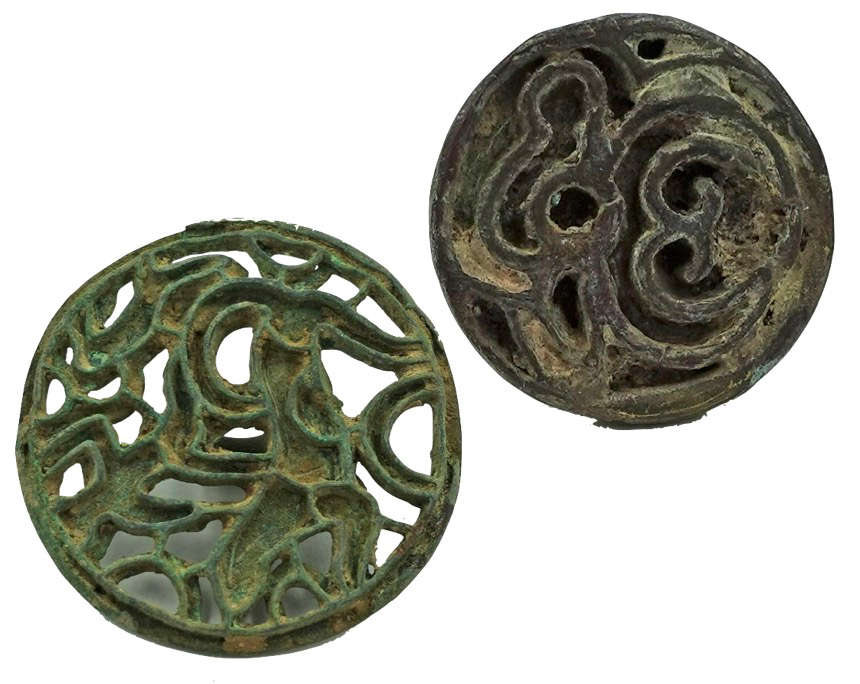
The seals were primarily created by casting copper and consist of open form and closed form geometric and human/animal designs.
Baktrian seals were produced and/or used in the part of the world that included Baktria, Margiana, and points north into modern Tajikistan, and south to the Indus Valley. These were produced in the middle bronze age and are generally dated to the second half of the third millennium BC. CNG’s cataloging, in accordance with the work done by the Russian archaeologist Viktor Sarianidi, dates the material to 2,400–2,100 BC.
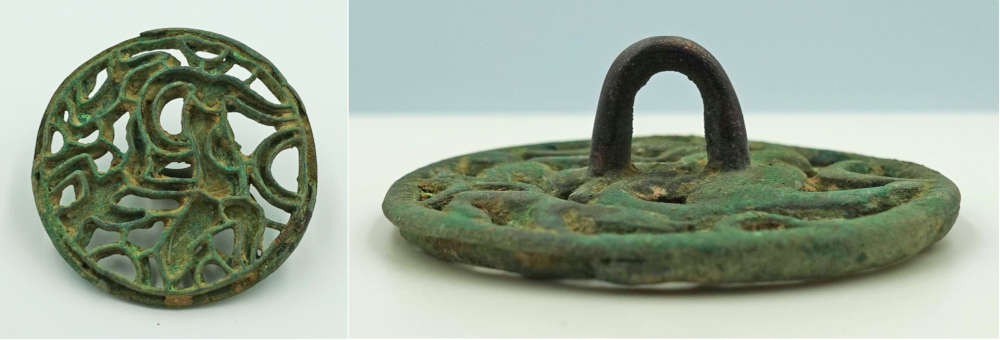
Bronze Seal. Baktrian. 2400-2100 BC. Impressive “Hunter with Dogs” Seal. A large diameter seal. Estimate: $300. CNG Electronic Auction 555 (7th February 2024), Lot 983.
The seals were primarily created by casting copper and consist of open form and closed form geometric and human/animal designs. There are several theories as to the use of these seals including: stamped on bullae and pottery to denote ownership; worn as amulets for religious protection or for identification of family groups. All seals have a central loop on the reverse for suspension. The variety of design is extensive, however, the commonality of known pieces indicates these items were used by extended groups, either families or business associates. The consistency of types may also indicate a religious tie which is not fully understood. This part of the world is where Zoroastrian religion would develop.
These pieces were important enough that they are often found in burials with the deceased. They were, at one time, also known from extensive surface finds, indicating that they were likely worn by the owner, suspended from a string or sewn into clothing.
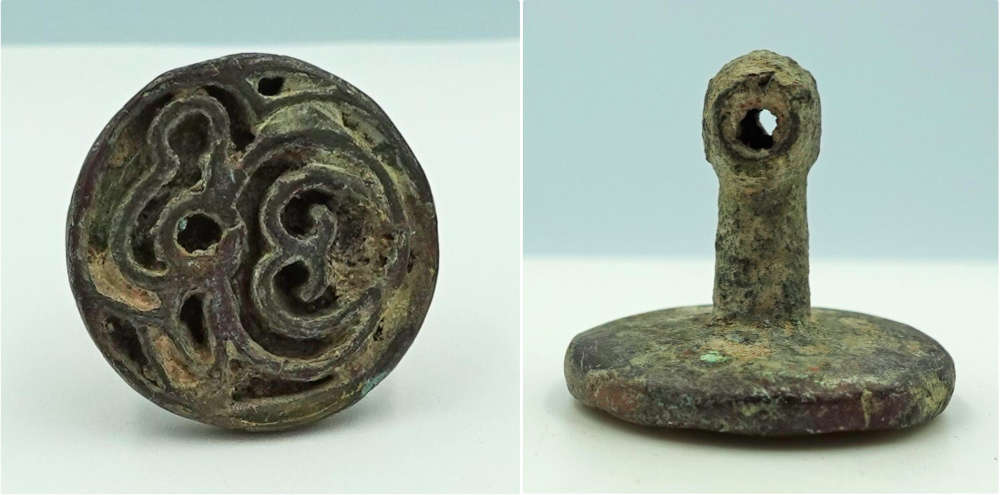
Bronze Seal. Baktrian. 2400-2100 BC. An attractive “Bulls Head” Type. From the St. Croix Collection. Estimate: $150. CNG Electronic Auction 555 (7th February 2024), Lot 986.
These seals are among the few types of relics that can be collected from the middle bronze age. Their construction, whether open form or closed form, is a glimpse into the manufacturing capability of civilization during a time period when the first communities would develop around walled fortresses. These seals would have surely been created in workshops devoted to the task. The skill level to produce these must have been greatly admired at the time.