







A New Era for the Caribbean: The Caribbean Guilder is Coming
By Sebastian Wieschowski
In March 2025, a new currency will be born – along with it, collectors can expect new coins featuring elaborately designed motifs. The Caribbean Guilder will replace the currently used Netherlands Antillean Guilder and unite the countries of Curaçao and Sint Maarten in a shared monetary union. Following the dissolution of the Netherlands Antilles in 2010 and the granting of full autonomy to Curaçao and Sint Maarten, the plan was made to introduce a new currency that would strengthen the economic stability and integration of both islands.
Content
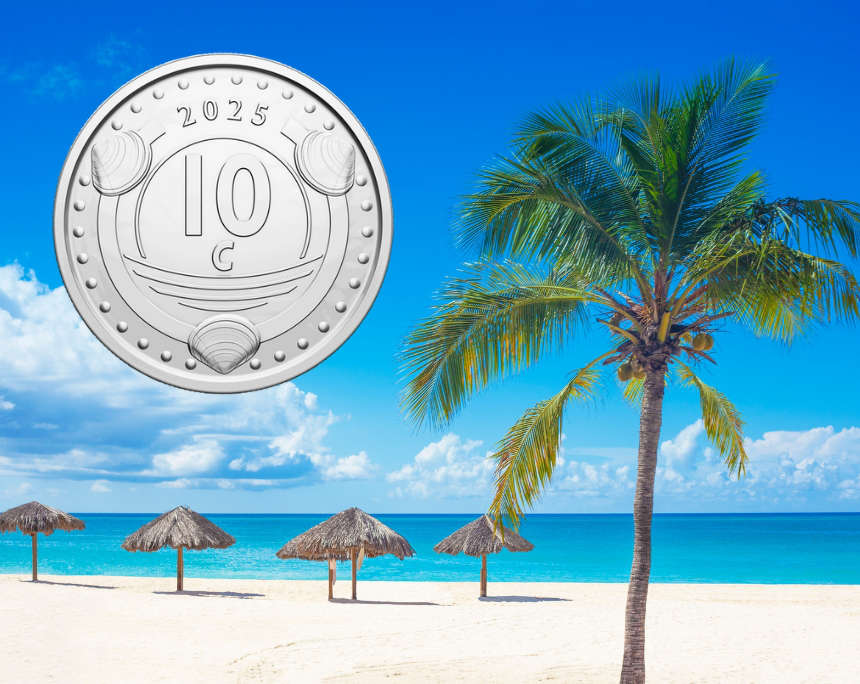
Curaçao is getting a new currency – and with it, new coins. Photo: LPETTET via Getty Images.
Transition Phase and Exchange Regulations
The Caribbean Guilder will officially be introduced on 31st March 2025, and it will be on par with the Netherlands Antillean Guilder at a 1:1 ratio. Additionally, the new currency will be pegged to the US Dollar, with an exchange rate of 1 US Dollar to 1.79 Caribbean Guilders. This is intended to facilitate international trade and ensure economic security.
For the first three months after the introduction of the Caribbean Guilder, both the old Netherlands Antillean Guilder and the new Caribbean Guilder will circulate in parallel. However, after 30th June 2025, the Netherlands Antillean Guilder will no longer be accepted for cash payments. Nevertheless, the old guilders can still be exchanged at banks for Caribbean Guilders until the end of March 2026. After this, exchange will remain possible, but only directly at the central bank, and this will be available until the year 2055.
Artistic Design: Coins and Banknotes as Collectors’ Items
The design of the new Caribbean Guilder coins and banknotes is particularly striking: the coins feature maritime themes, such as shells, sea turtles, and wave motifs, reflecting the islands’ close connection to the sea. Interestingly, Curaçao and Sint Maarten each have slightly different coin designs, emphasising the cultural individuality of both countries.
The Caribbean Guilder banknotes are also expected to delight collectors: the front of the notes depicts the vibrant underwater world of the Caribbean, while the reverse side features important historical and cultural landmarks from Curaçao and Sint Maarten. This makes the unique identity of the islands visible through everyday currency.
Modern Technologies to Support the Transition
To ease the transition to the new currency, the central bank of both countries has launched a mobile app called “My Caribbean Guilder.” With this app, citizens can virtually explore the new coins and banknotes even before their physical introduction. Additionally, the app provides useful background information on the design motifs and security features of the new currency.
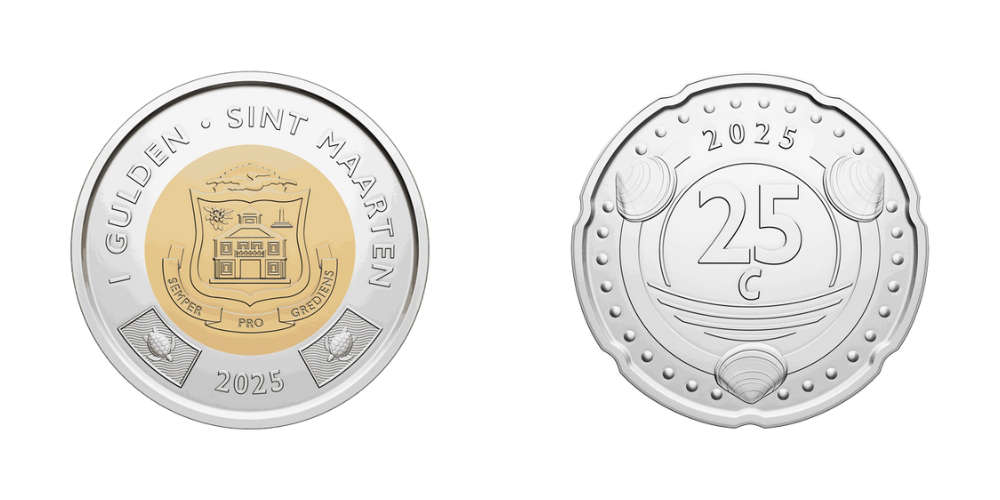
The new coins in cents and guilders will be issued in March 2025. Photo: Centrale Bank van Curaçao en Sint Maarten.
Denominations and Special Features of the Caribbean Guilder
The new currency will be issued in various denominations: coins will be available in values of 1, 5, 10, 25, and 50 cents, as well as 1 and 5 guilders. Banknotes will be issued in denominations of 10, 20, 50, 100, and 200 guilders. Notably, the decision to introduce a 200-guilder banknote, replacing the previous 250-guilder note, aligns with international standards.
The choice of the name “Caribbean Guilder” was the result of careful consideration. Initially, the name “Netherlands Caribbean Guilder” was proposed, but since the so-called BES islands (Bonaire, Sint Eustatius, and Saba) as well as Aruba are also geographically part of the Netherlands Caribbean islands, the simpler name “Caribbean Guilder” was chosen to avoid confusion.
