








Hidden Coins Indicate the Destruction of a City
In Lod, Israel, archaeologists have reported a significant find. In the ruins of a large Jewish building, which was apparently destroyed in the 4th century AD, 94 coins were found. The silver and bronze pieces date back to 221–354 AD and were hidden in the floor of the building. The most recent coin from the hidden hoard and the destroyed building date this find to the time of the Gallus Revolt, the last Jewish resistance against Roman rule from 351–354 AD. According to archaeologists, the find shows that the revolt was put down with great violence. It is the first archeological evidence for the destruction of Lod during the revolt.
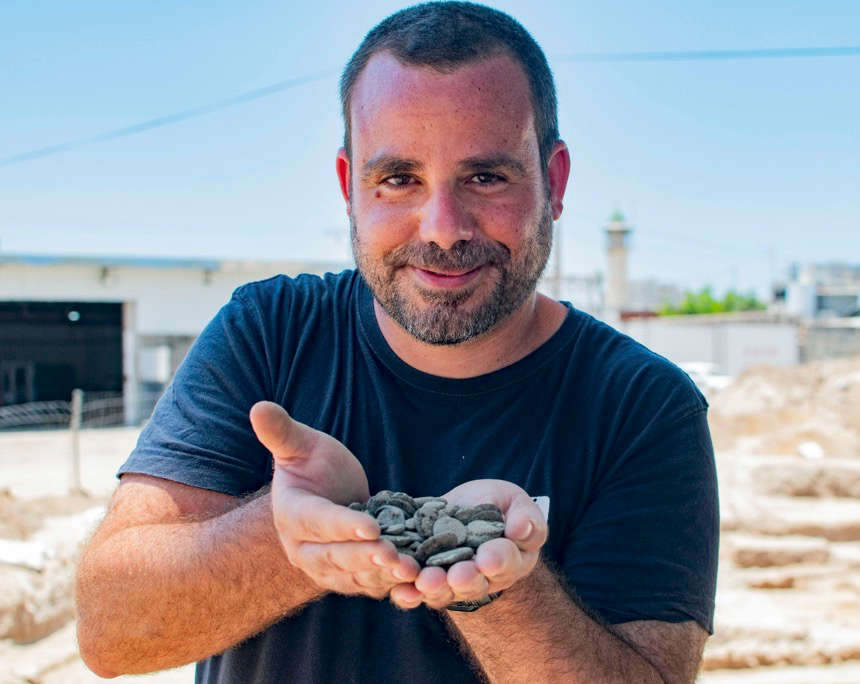
Archaeologist Shahar Krispin holds the coin hoard after its discovery. Photography: Yoli Schwartz, Israel Antiquities Authority.
For the very first time, evidence has been found in Lod from the Gallus Revolt, the last Jewish resistance against Roman rule. The dramatic discovery – a large public building, in whose foundations a 1650-year-old hoard was hidden, will be publicized in a new book commensurate with the annual Central Israel Region Archaeological Conference. The conference was held in the Eretz Yisrael Museum in Tel Aviv and was jointly hosted by Tel Aviv University, Bar Ilan University, and the Israel Antiquities Authority.
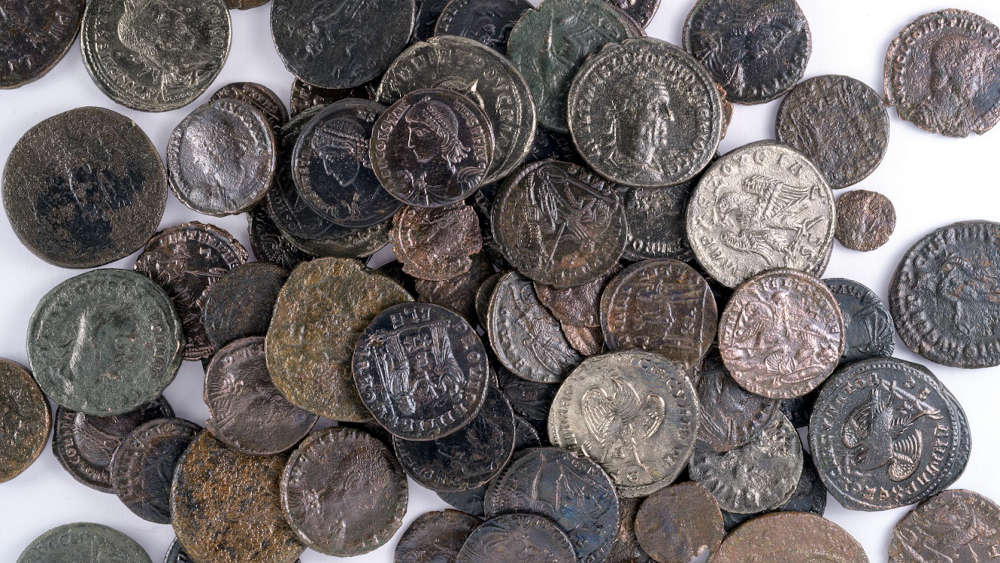
The hoard found in the building foundations. They hoped to return to collect it when the threat passed. Photography: Dafna Gazit, Israel Antiquities Authority.
An excavation on Nordau Street in Lod, led by the Israel Antiquities Authority and funded by the Lod Municipality, uncovered a public building from the Late Roman–Early Byzantine period that suffered violent destruction. Its foundations held 94 silver and bronze coins dating between 221–354 CE, which were deliberately placed there – in the hopes of returning to collect them when the situation would calm. The latest coins are dated from the time of the Gallus Revolt (351-354 CE). Though written evidence is sparse regarding this revolt, there are texts reporting that major Jewish communities such as Lod, Zipori and Tiberias were destroyed by the forces of Roman Caesar Flavius Constantius Gallus.
Among the various finds in the building were impressive stone and marble artifacts; Greek, Hebrew and Latin inscriptions, and one inscription bearing the name of a Jewish man from a priestly family, which is still being studied.
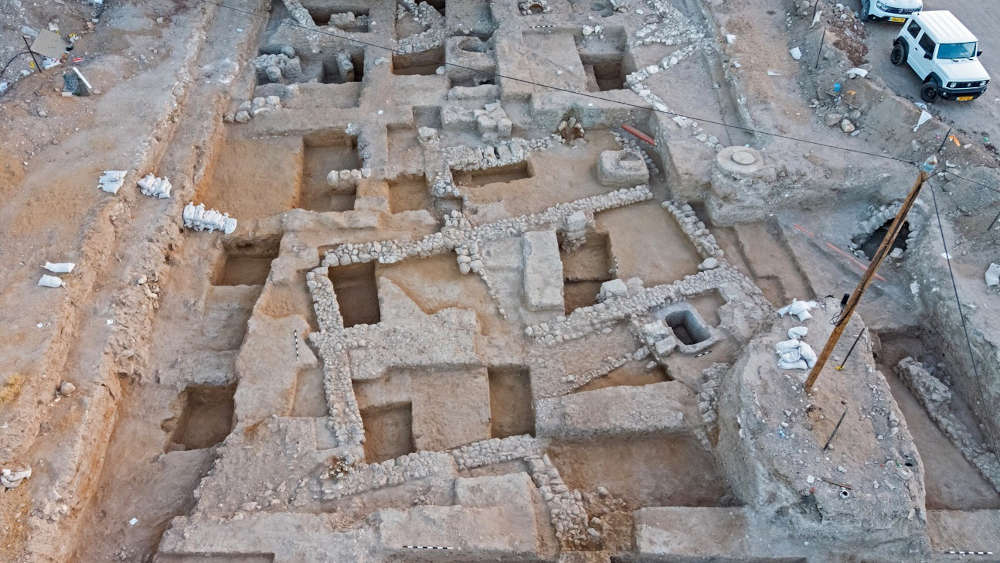
The Jewish public building discovered in Lod. Aerial Photography: Assaf Peretz, Israel Antiquities Authority.
According to the site excavators, Shahar Krispin and Mor Viezel of the Israel Antiquities Authority, “In all likelihood this is a magnificent Jewish building that housed the city’s elders. From Talmudic writings we know that Lod was a most significant Jews center in the aftermath of the Second Temple’s destruction in Jerusalem. Sone of the renowned “Sages of Lod” are Rabbi Eliezer ben Horkanos, Rabbi Tarfon, Rabbi Akiva, Rabbi Yosi HaGalili and many more. This building, destroyed down to its very foundation, is a clear indication that the revolt was forcefully put down with violence and cruelty, and was not simply a local uprising event, as some earlier studies contended. This is the singular witness, thus far, to the extent and power of this revolt in Lod, located in the country’s center.”

Archaeologist Mor Viezel of the Israel Antiquities Authority. Photography: Yoli Schwartz, Israel Antiquities Authority.
Professor Joshua Schwartz, Israel Antiquities Authority Council Head, who studies Talmudic period Lod, notes that “It is difficult to determine if this magnificent building served as synagogue, study hall, meeting hall of the elders, or all three of these functions as one. But what is clear is that the building’s size, the coin hoard, and the assemblage of archaeological finds produced by the excavation, fit well Lod/Diospolis’ description in both Jewish and non-Jewish sources as a center of Torah-true Jewish life in the Mishna and Talmud periods. Lod’s role as a leading community with elders continued from after the destruction though to this moment when it was cruelly cut down in the Gallus Revolt.”
Israel Antiquities Authority Director Eli Escusido says, “The impressive finds uncovered here reinforce our responsibility to investigate and to conserve Lod’s history and rich heritage. Along with the city’s new exhibition center of the beautiful Lod mosaic, we now bring this building to the awareness of the general public.”

Lod Mayor Yair Revivo with a coin excavated from the building. Photography: Yoli Schwartz, Israel Antiquities Authority.
Mayor of Lod Yair Revivo: “This is an exciting and very emotionally moving find, another link in the chain of Lod’s Tannaitic period heritage as host to the authors of the Mishna, and to Lod’s Jewish history. The finds in the area proves that Lod is the one of the oldest cities in the world. We wish to thank the Israel Antiquities Authority for revealing our city’s past glory. I believe that now that it is uncovered, this site will bring many tourists and visitors to the city: Lod is connecting to its past and is looking forward to a bright future.”
