








Royal Mint Discontinues Rose Gold Alloy for Sovereign Coins
By Sebastian Wieschowski
From 2026, the Sovereign will return to yellow gold, moving away from its rose gold alloy. The precise composition for the future coins, which previously included a copper content making them more scratch-resistant and durable than modern bullion coins, has yet to be confirmed.
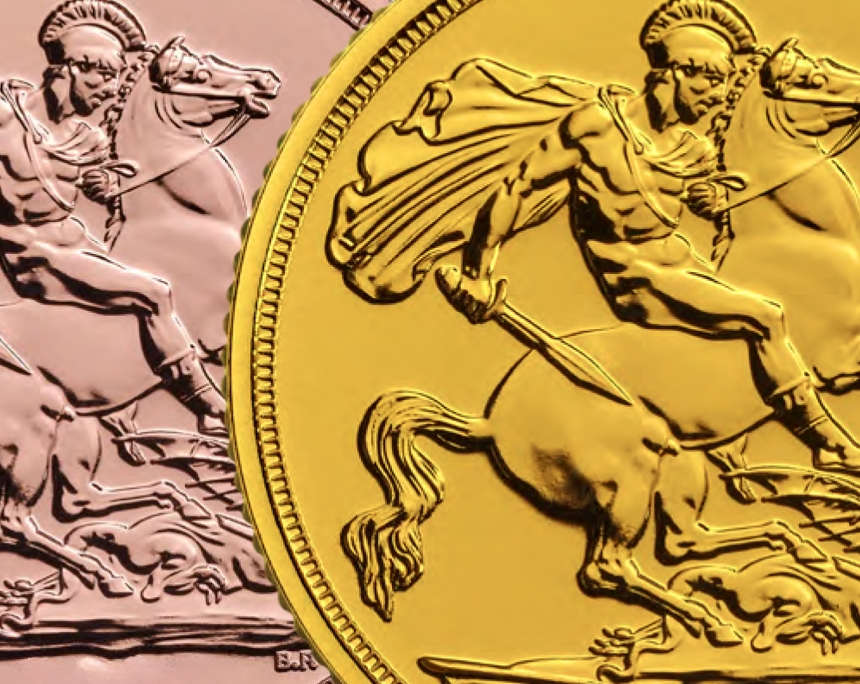
Will the Sovereign look like this from 2026 onward (right in the image)? The current rose gold tone is shown on the left. Photo: Royal Mint / Montage: MünzenWoche.
Investment Sovereigns will still be minted in 22-karat gold, as confirmed by the Royal Mint to MünzenWoche, in line with the Coinage Act of 1971. This precludes a switch to a fine gold alloy, as used in standard bullion coins. Thus, from 2026, the Sovereign will maintain its 916/1000 gold purity but will be alloyed with one or more additional metals, likely white metals, to give the coin a yellowish hue.
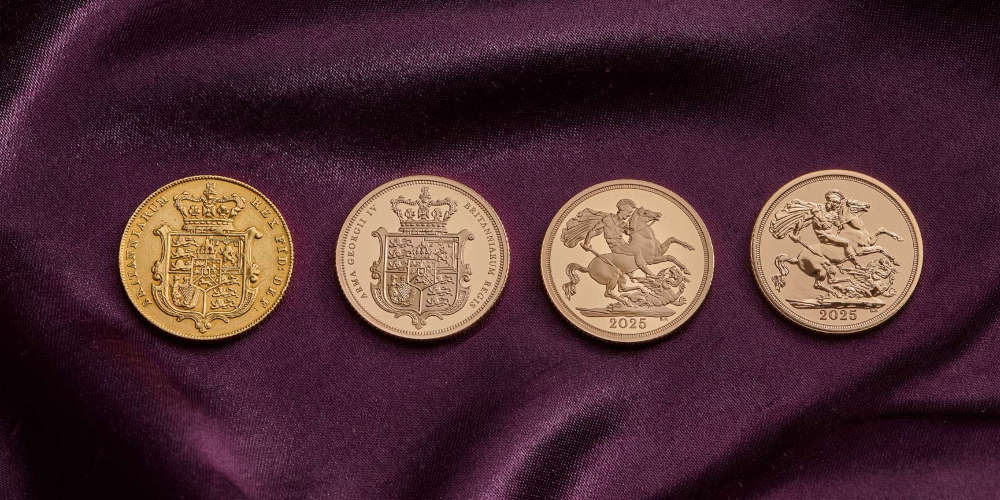
The beginning of a new era: The final rose gold Sovereign will be minted in 2025. Photo: Royal Mint.
The composition of the Sovereign, first minted in 1489, has undergone several changes over the centuries. Early Sovereigns under Henry VII were minted in 23-karat gold, while coins from Elizabeth I’s reign were known as ‘fine gold’ Sovereigns. From the reigns of Henry VIII and Edward VI onward, they have been made in 22-karat gold. In unveiling its plans, the Royal Mint noted that the Sovereign is returning to its over 500-year-old origins.
Interestingly, the composition of Sovereigns appears to have been modified even in the current minting period since 1817. Research by British bullion dealer ‘Chards’ found that early Sovereigns contained nearly equal parts copper and silver. The silver content has gradually decreased and is absent in modern coins.
