







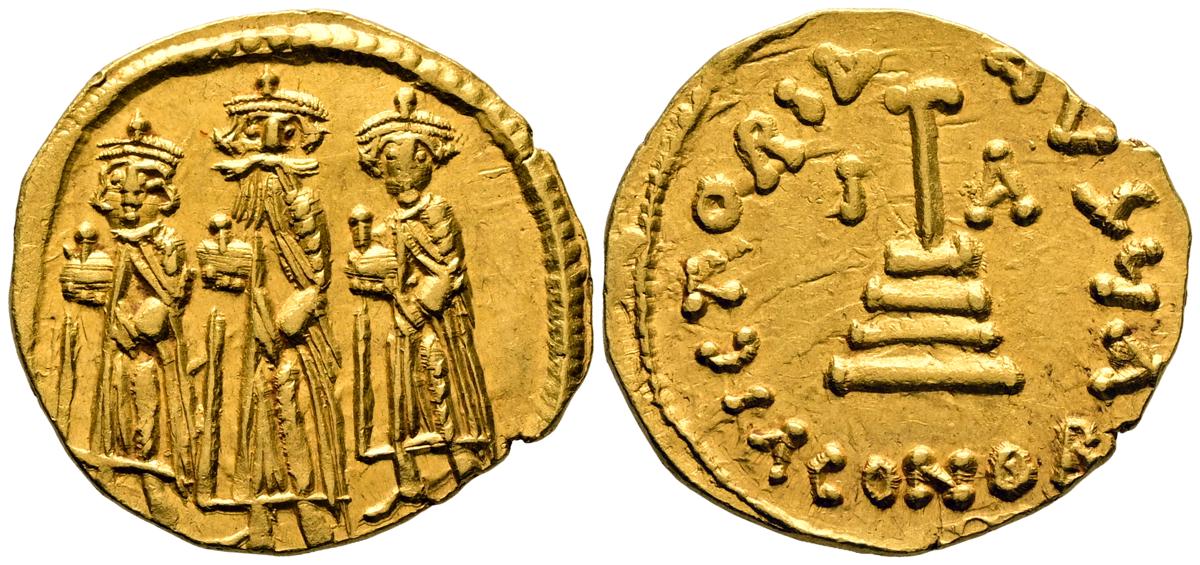
Striking Designs – Exhibition at the Dumbarton Oaks
by Jonathan Shea
A new special exhibition is on view at the Dumbarton Oaks Museum in Washington D.C. “Striking Designs: Communicating Through Coins” explores what the images on coins can tell us about the late Roman and Byzantine empire. The exhibition is open until January 12, 2025.
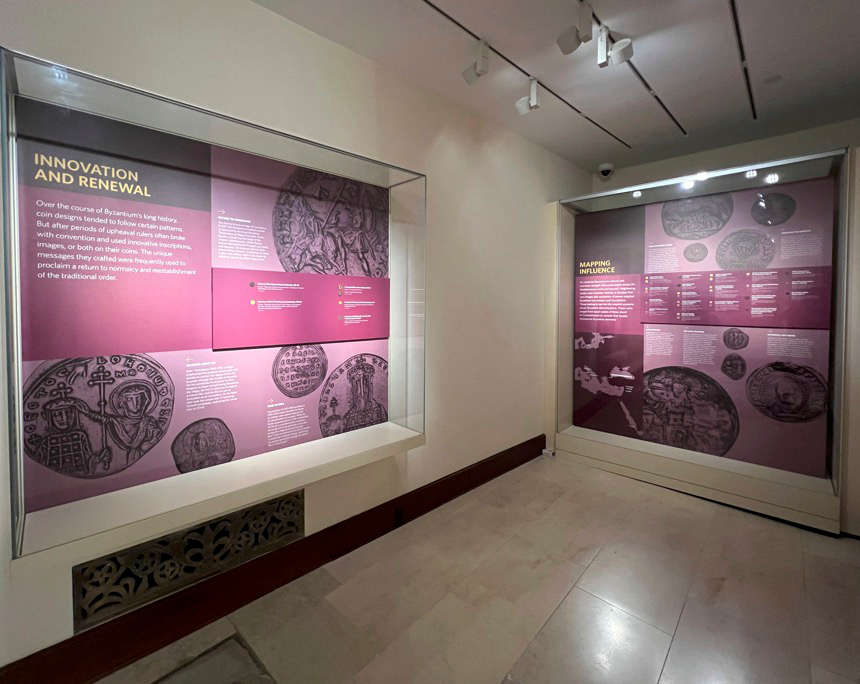
A view of the exhibition. Image: Ellen Richardson/Dumbarton Oaks.
The Dumbarton Oaks temporary exhibition Striking Designs: Communicating Through Coins explores what the images on coins can tell us about the late Roman and Byzantine empire. Taking as its starting point the idea that coin designs were intended to spread the messages of the imperial government to its people and neighboring cultures the exhibition presents five examples of this numismatic communication in practice.
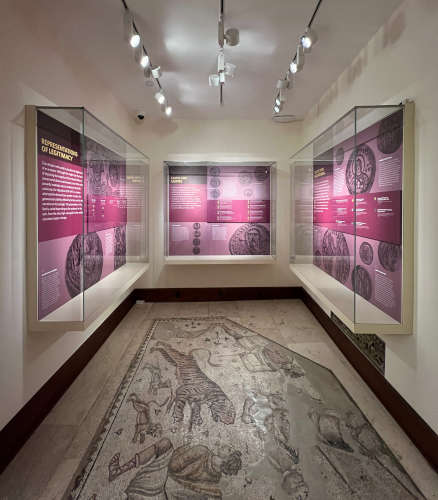
A view of the exhibition. Image: Ellen Richardson/Dumbarton Oaks.
“Faith and Empire” presents the gradual Christianization of coin design and the imperial image from the fourth to seventh century. “Representations of Legitimacy” focuses in on the reign of Heraclius to investigate how he used his coins to present himself and his family as legitimate rulers of the empire. Novel or unique coin designs are discussed in “Innovation and Renewal” through the lens of the usually unsettled times, ranging from the fourth-early eleventh century, in which they were created. How the emperors deployed holy figures on their coins to invoke their protection or add divine luster to their rule is considered in “Protector and Patrons.”
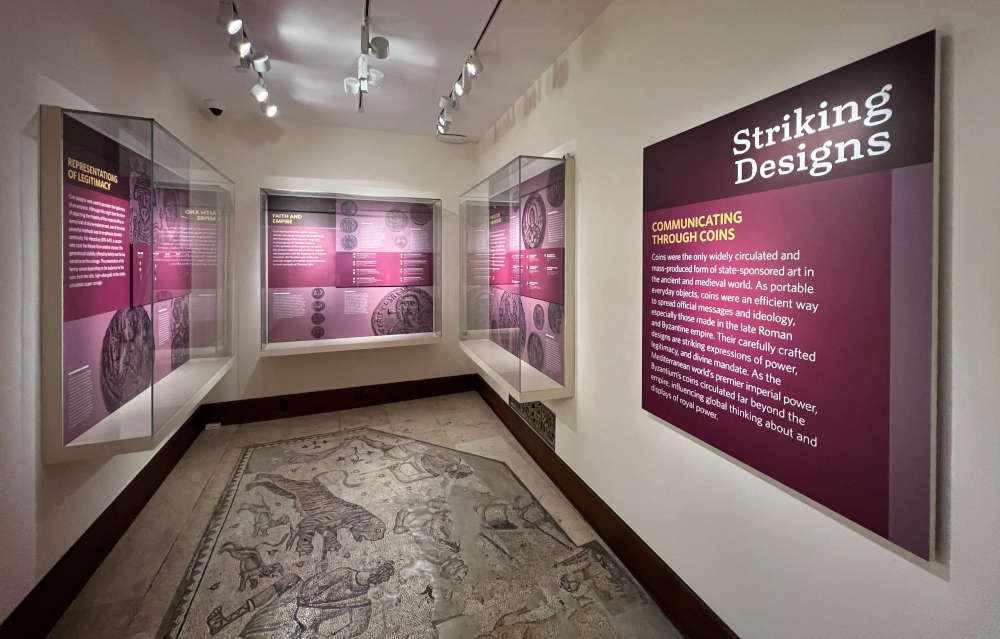
A view of the exhibition. Image: Ellen Richardson/Dumbarton Oaks.
Finally, in “Mapping Influence” the exhibition looks outside of the empire at the coinages of neighboring states from Axum to Denmark and Lombard Benevento to the early caliphate to explore how they coopted and adapted imperial imagery, practice, and ideology. Visitors will see rarely exhibited pieces from the Dumbarton Oaks collection including a nomisma of Alexander (912–13), a solidus of Grimuald Prince of Benevento (792–806), and a nomisma histamenon of Michael IV from Thessaloniki (1034–41).
