







The Eggenberg Family and the Power of Money
In 1625, Emperor Ferdinand II. granted Hans Ulrich von Eggenberg and his descendants the privilege of minting gold and silver coins with their own portraits and names. For just over 60 years, the Eggenbergs made use of their minting rights and produced ducats, thalers, florins and groschen. Today, these coins are unique rarities. The Coin Cabinet has outstanding evidence of the minting activities of the Eggenbergs thanks to its collection history dating far back into the 19th century.
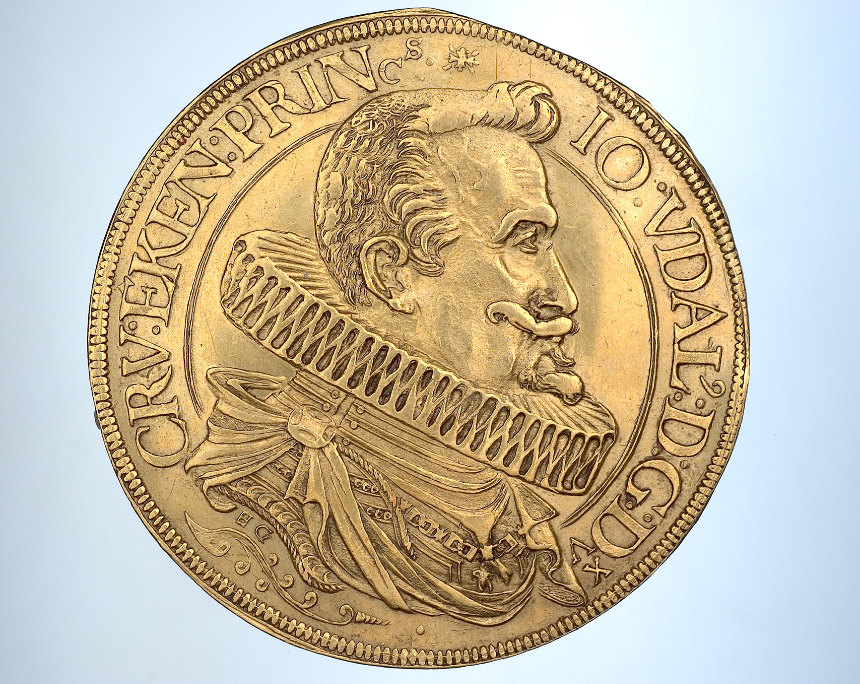
In 1625, Emperor Ferdinand II. granted Hans Ulrich von Eggenberg and his descendants the privilege of minting gold and silver coins with their own portraits and names. For just over 60 years, the Eggenbergs made use of their minting rights and produced ducats, thalers, florins and groschen. Today, these coins are unique rarities. The Coin Cabinet has outstanding evidence of the minting activities of the Eggenbergs thanks to its collection history dating far back into the 19th century.
In the exhibition at SHOWING STYRIA 2025, the rise, splendour and decline of the Eggenberg dynasty are presented using these coins. In addition, examples of the diversity of coinage in the Holy Roman Empire in the 17th century are presented.
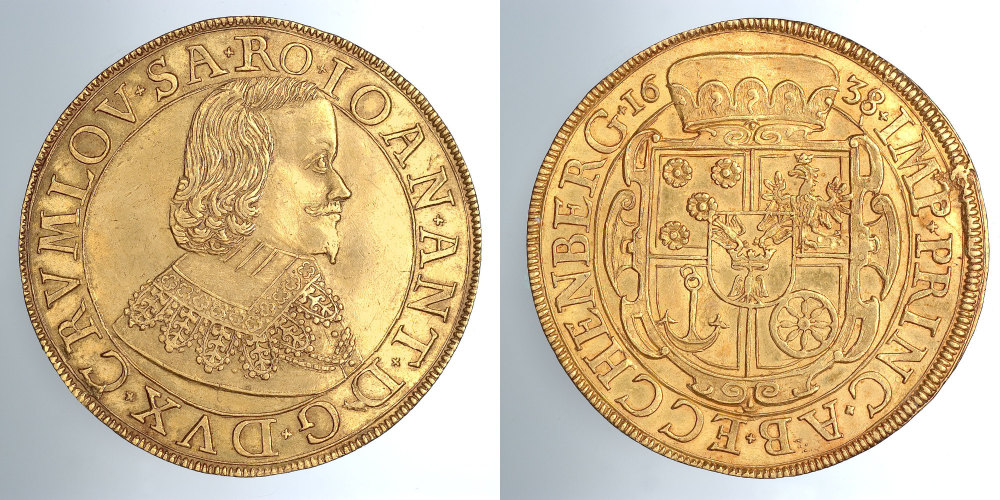
Johann Anton von Eggenberg, fivefold ducat, 1638, Photo: Universalmuseum Joanneum/N.Lackner.
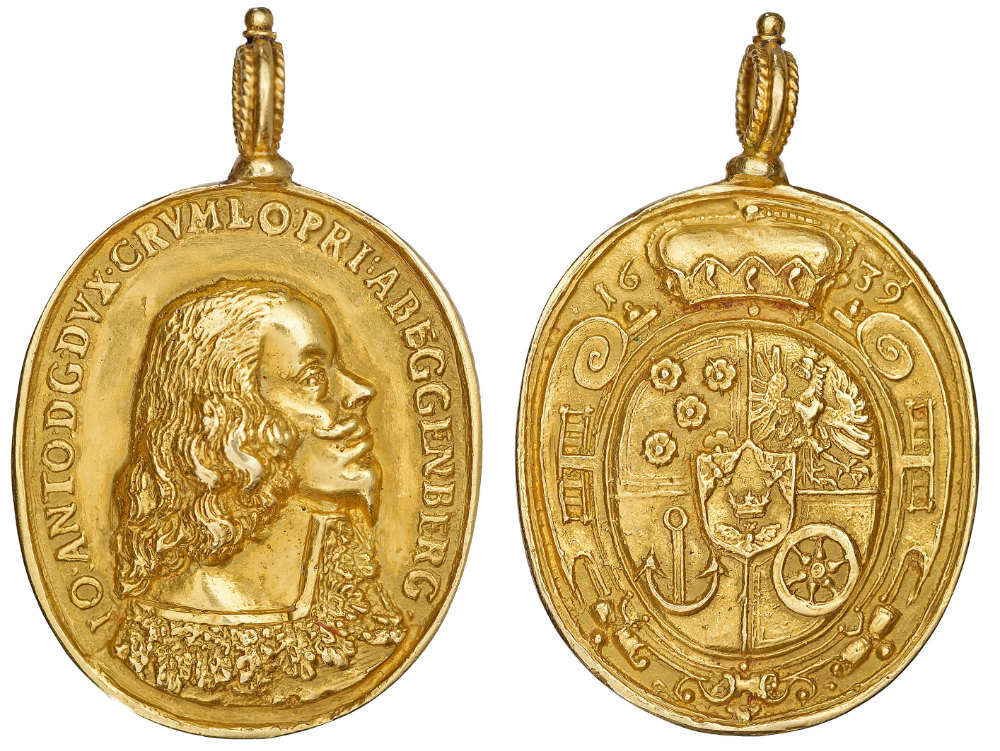
Johann Anton von Eggenberg, Gnadenpfennig, 1639. Photo: Universalmuseum Joanneum/N.Lackner
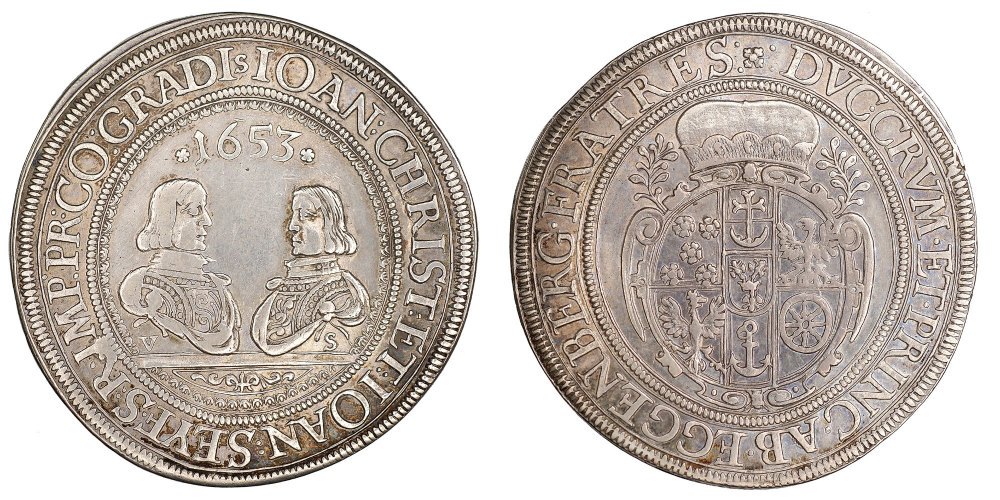
Johann Christian and Johann Seyfried von Eggenberg, taler 1653. Photo: Universalmuseum Joanneum/N.Lackner.
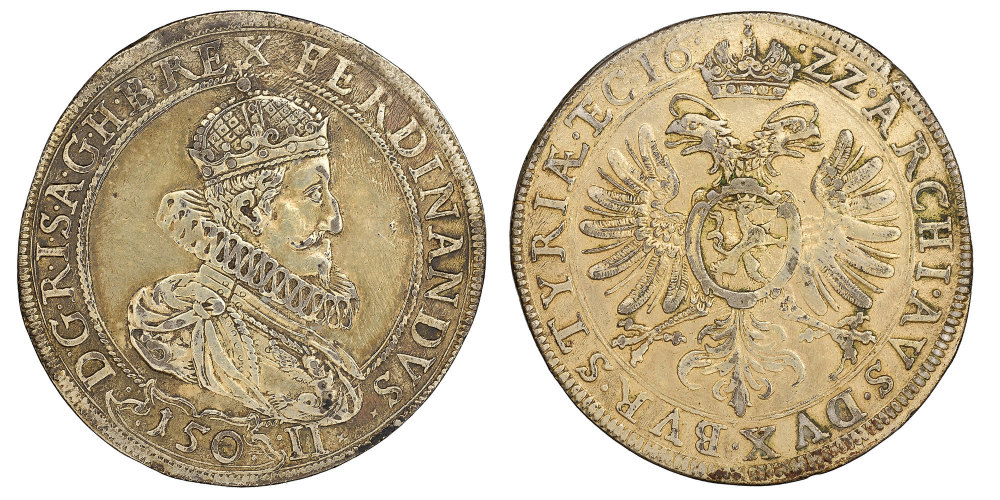
Emperor Ferdinand II, Kippertaler, 1622. Photo: Universalmuseum Joanneum/N.Lackner.
The special exhibition also sheds light on the monetary history behind the collapse of the coinage system at the beginning of the Thirty Years’ War, forcing Emperor Ferdinand II to declare state bankruptcy. The exhibition also focuses on Hans Ulrich von Eggenberg’s connection to the network of a consortium to which the Emperor leased the coinage in Bohemia, Moravia and Austria and which made high profits by producing bad coins.
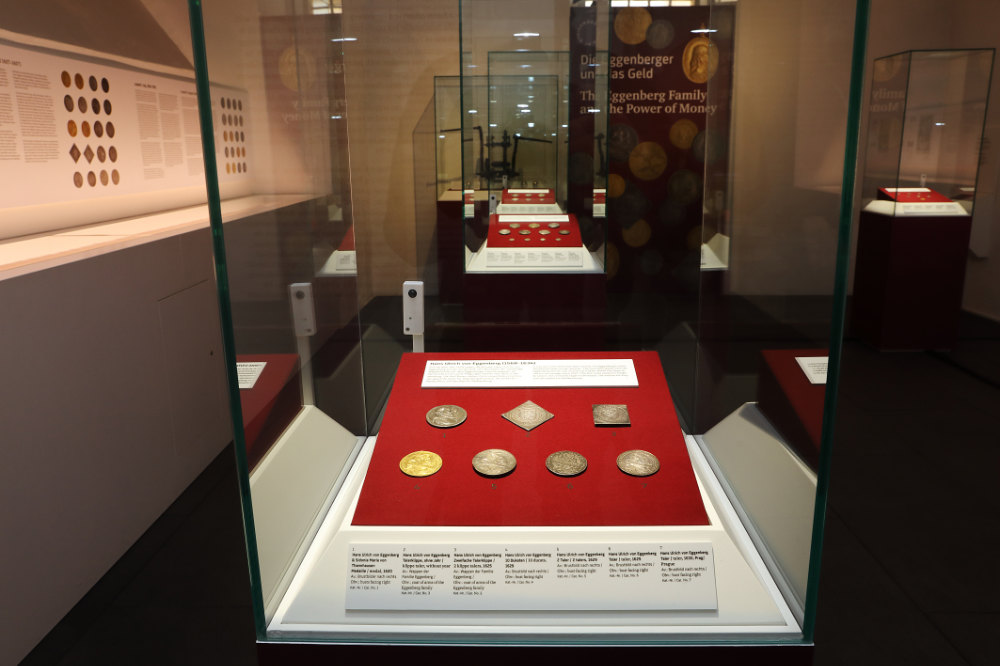
Exhibition view “The Eggenberg Family and the Power of Money”, SHOWING STYRIA 2025. Photo: Universalmuseum Joanneum/J.J. Kucek.
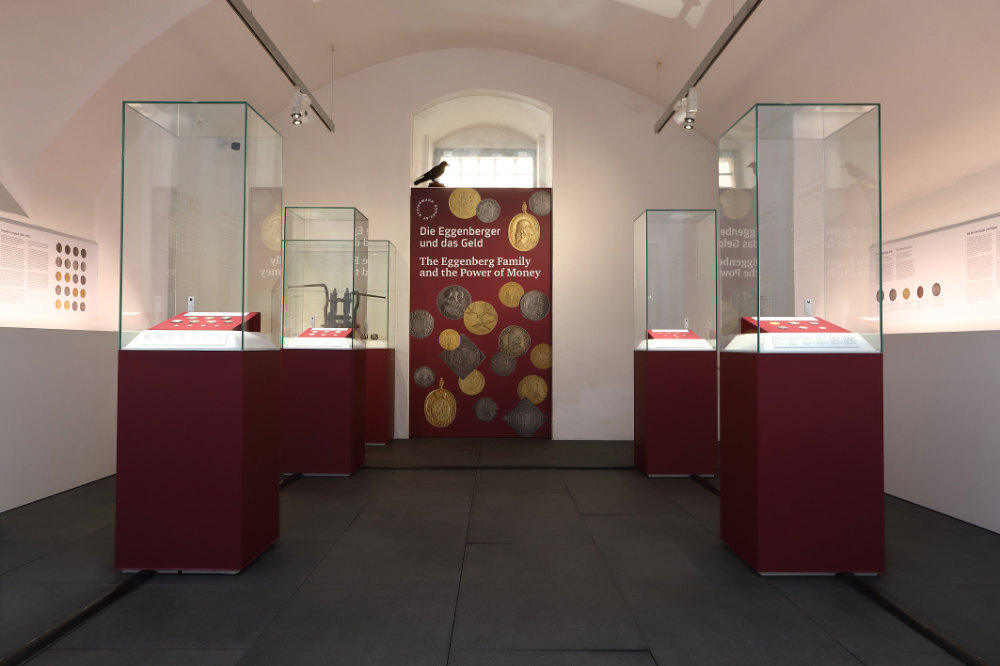
Exhibition view “The Eggenberg Family and the Power of Money”, SHOWING STYRIA 2025. Photo: Universalmuseum Joanneum/J.J. Kucek.
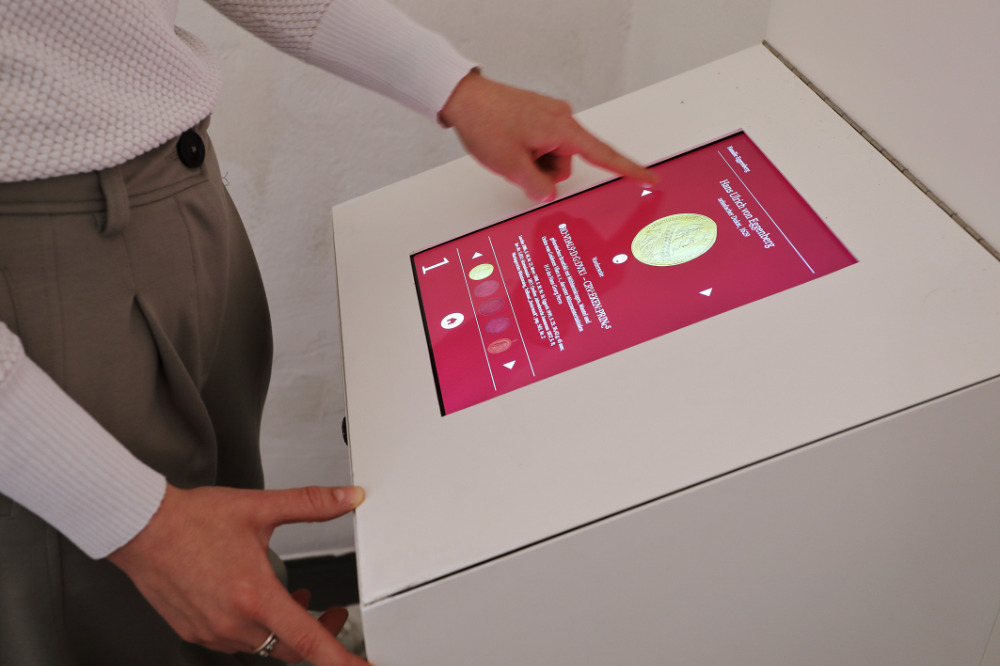
Exhibition view “The Eggenberg Family and the Power of Money”, SHOWING STYRIA 2025. Photo: Universalmuseum Joanneum/J.J. Kucek.
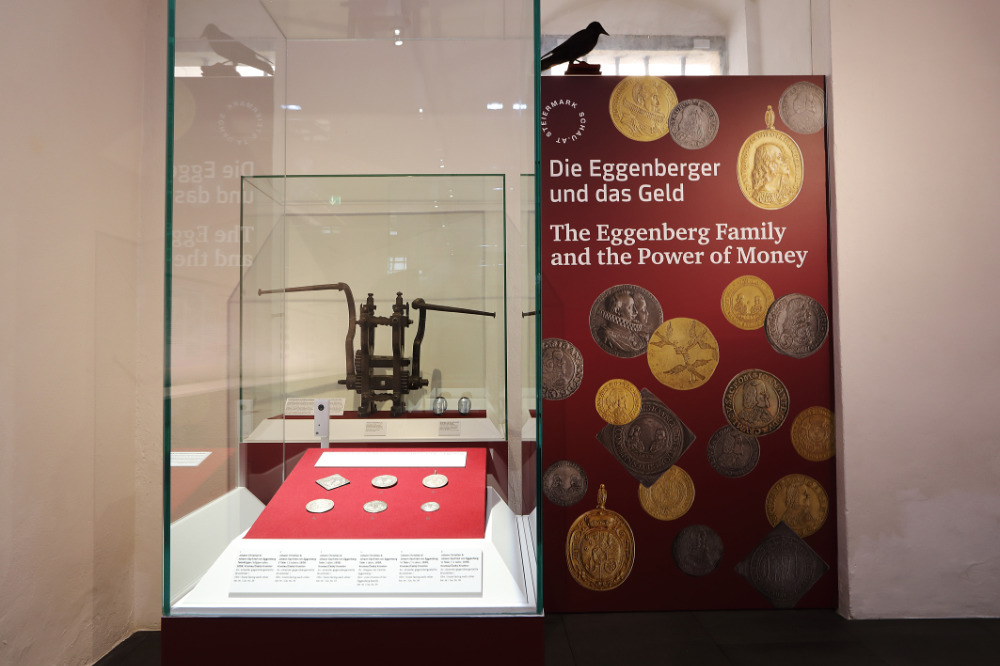
Exhibition view “The Eggenberg Family and the Power of Money”, SHOWING STYRIA 2025. Photo: Universalmuseum Joanneum/J.J. Kucek.
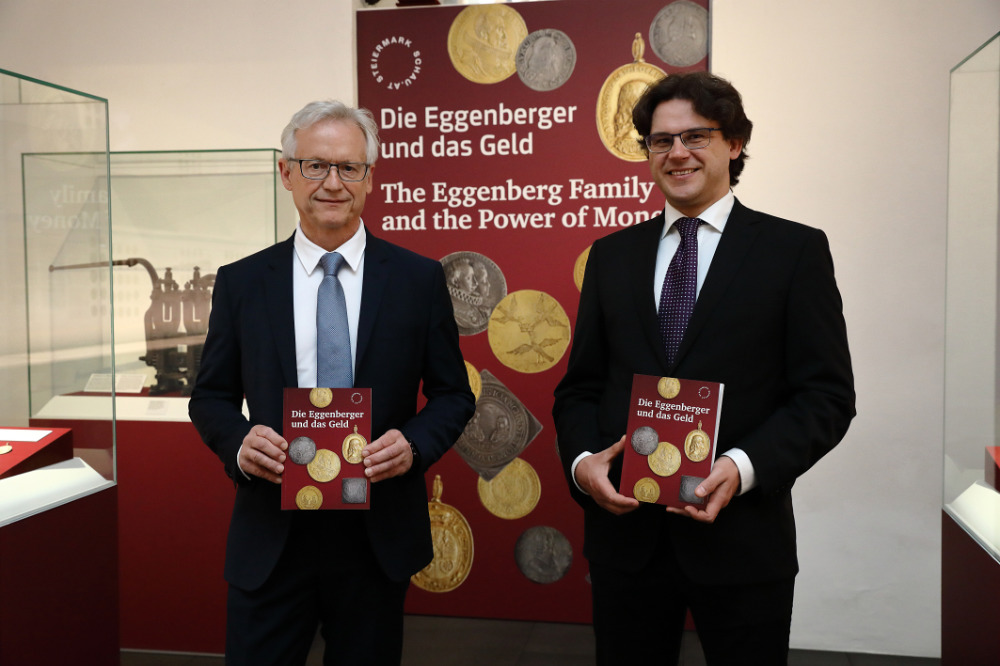
The curators of the exhibition “The Eggenberg Family and the Power of Money” Karl Peitler and Marc Philipp Wahl. Photo: Universalmuseum Joanneum/J.J. Kucek.
The exhibition curated by Karl Peitler and Marc Philipp Wahl will be on view at the Coin Cabinet of Eggenberg Palace until November 2, 2025. The texts in the exhibition are provided in German and English. An accompanying volume featuring essays on the coins and medals of the Eggenberg family, as well as on the Kipper coins in the Coin Cabinet, along with a detailed catalogue section, is available at the Eggenberg Palace museum shop.
