Tag Archive for: Antiquity

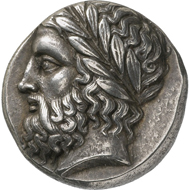
Human Faces Part 1: The Father of the Gods, Zeus, in Olympia

Why is it that for centuries – or rather thousands of years – the head has served as the motif for the side of a coin? And why has this changed in the last 200 years? Ursula Kampmann poses these questions in her book ‘MenschenGesichter,’” from which the texts for our new series are taken.
Agrippa’s Meeting of Kings at Tiberias

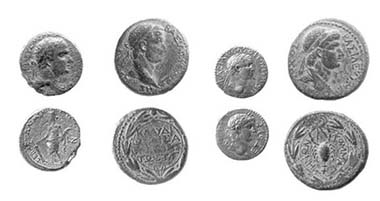
Josephus tells us of a most interesting meeting in Tiberias, apparently convened by Agrippa I (37-44 CE), grandson of Herod the Great, probably around 42 CE…

The courtesan Laïs in Corinth

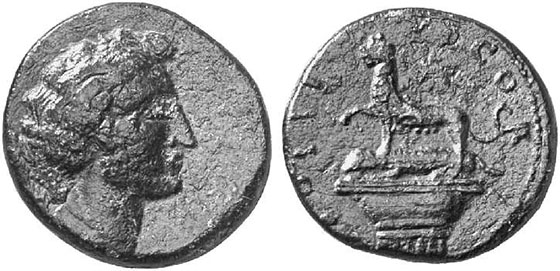
Sex sells. That is common knowledge to the yellow press and tour guides alike, as early as ancient times. Already the Corinthians cashed in on that and promoted a tourist attraction of a particular kind: the tomb of the famous courtesan Laïs…

Manual to identify Roman coins

England’s Portable Antiquities Scheme is the most successful program on coin finds world-wide. No other country has won so many supporters to …

How to detect forgeries

Part 3: Electrotypes
The last two parts on news from the forgery front have dealt with fakes that have been produced by newly cut dies and with cast fakes. This part is dedicated to a third kind of fakes: the electrotypes.
You will surely recognize …

The Colts of Corinth

This beautiful early stater of Corinth bears Pegasus on its obverse. The winged horse was the symbol of Corinth and each citizen of this important seaport felt the whole city and himself connected with this winged horse. Why did he do so and how did this connection come into being?

The sacrilege of Tarpeia – or propaganda under Augustus

Augustus’ reign went down in history as a Golden Age even though hardly any other emperor had more lives on his conscience. How did the “Prince of Peace” who continuously fought wars make his citizens believe that they lived in the happiest of all worlds?

Shipping and superstition in antiquity

Sailors faced many dangers. But the superstitious people found a way to deal with that, and many deities and animals assisted the humans on the sea. A coin from Kyzikos tells of all this, a coin minted on the visit of Emperor Marcus Aurelius.

Human Faces Part 9: The Battle of Macedonia against Rome

Why is it that for centuries – or rather thousands of years – the head has served as the motif for the side of a coin? And why has this changed in the last 200 years? This chapter of the series ‘Human Faces’ looks at the battle between Macedonia and Rome.

Postumus – The creator of the Gallic Empire

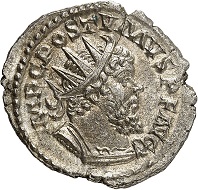
Alemanni, Juthungi, Franks, and Sassanians attack the Roman world. Postumus seizes the moment and establishes the Gallic Empire. We will tell the story of his coins on the basis of a comprehensive special collection which will be sold at the upcoming Jacquier Auction.