






Archive: People and Markets

Highlights from Shanghai Mint Museum to be Showcased in London
For the first time, highlights from the collection of the Shanghai Mint Museum will be showcased in London at the former Royal Mint. The temporary exhibition titled COINect will be open from 8 to 14 June.
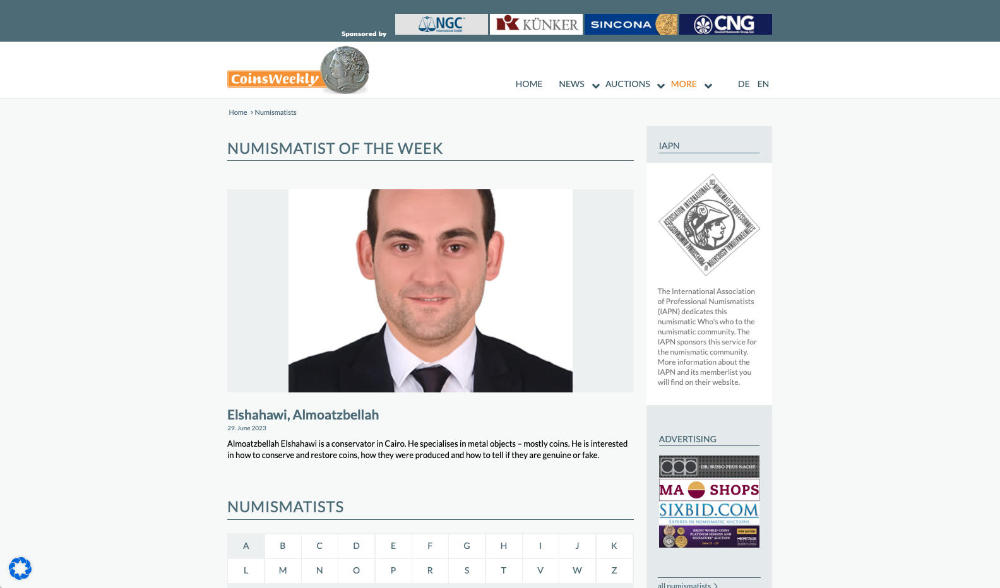
Our Who’s Who Is Here!
Our entire Who’s Who for numismatists and collectors is now available on our new website. This is another important step on our path towards transitioning from our old to the new site. And there is more!
Archive: Coins, Medals and more
 https://new.coinsweekly.com/wp-content/uploads/2025/03/2025KW11HA01_00.jpg
684
860
Lucie Loechel
https://new.coinsweekly.com/wp-content/uploads/2023/01/logo-coinsweekly_590x204.png
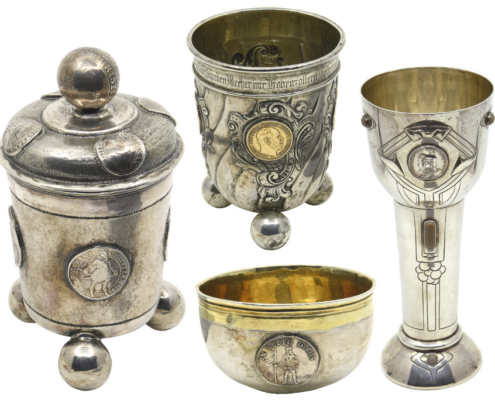
Lucie Loechel2025-03-13 10:11:402025-03-13 10:11:40Coin-Embedded Tableware as Part of European Dining Culture
https://new.coinsweekly.com/wp-content/uploads/2025/03/2025KW11HA01_00.jpg
684
860
Lucie Loechel
https://new.coinsweekly.com/wp-content/uploads/2023/01/logo-coinsweekly_590x204.png
Lucie Loechel2025-03-13 10:11:402025-03-13 10:11:40Coin-Embedded Tableware as Part of European Dining Culture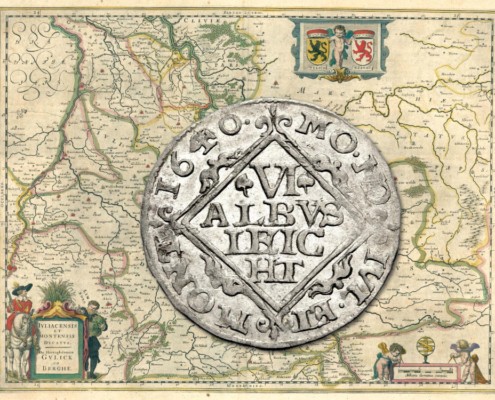 https://new.coinsweekly.com/wp-content/uploads/2023/06/2023KW25HA01_00.jpg
750
1000
Ursula Kampmann
https://new.coinsweekly.com/wp-content/uploads/2023/01/logo-coinsweekly_590x204.png
Ursula Kampmann2023-06-21 17:00:302023-06-27 11:18:18A Discovery From Jülich-Berg
https://new.coinsweekly.com/wp-content/uploads/2023/06/2023KW25HA01_00.jpg
750
1000
Ursula Kampmann
https://new.coinsweekly.com/wp-content/uploads/2023/01/logo-coinsweekly_590x204.png
Ursula Kampmann2023-06-21 17:00:302023-06-27 11:18:18A Discovery From Jülich-Berg
World Money Fair ‘Minting Experience Centre’: Minting up Close!
The organizers of the World Money Fair have come up with something special for the upcoming event. The new Minting Experience Center that spans over 100 square meters showcases the production steps involved in minting coins. Guests will even have the chance to mint their own World Money Fair collector’s medal.
Silk, Silver, and Spice: Money Museum’s New Exhibit Explores Treasures of Trade
Today, the Edward C. Rochette Money Museum in Colorado Springs opens its newest exhibition. “The Silk Road(s): A Numismatic Travelogue” will take observers on a journey of commerce, culture, and connections made possible through coinage.