






Archive: People and Markets

Poetic Machines: Swissmint Honors Jean Tinguely
Steel, wheels, movement, order and chaos – Swiss artist Jean Tinguely was fascinated by the poetry of machines, which he captured in his kinetic machine sculptures. To mark what would have been his 100th birthday, Swissmint is honoring the exceptional artist with a silver coin.
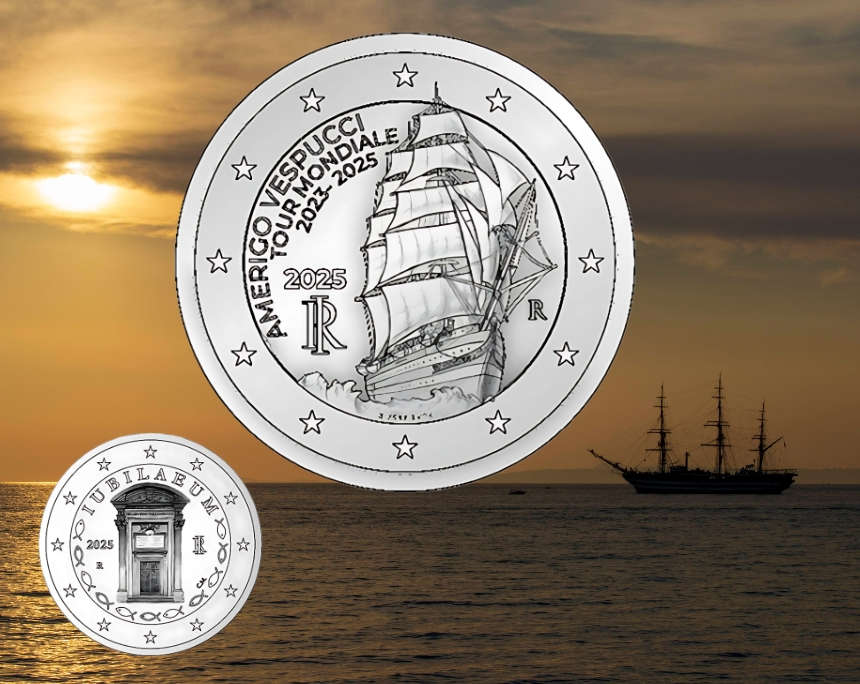
Two-Euro Ticker: A Look Ahead at the €2 Coins of 2025 (and 2026)
After a relatively quiet end to 2024 in the world of €2 coins, the start of the new year finally brings fresh energy to this collecting field.
Archive: Coins, Medals and more
 https://new.coinsweekly.com/wp-content/uploads/2023/06/00_Value_of_coins.jpg
750
1000
Bruno
https://new.coinsweekly.com/wp-content/uploads/2023/01/logo-coinsweekly_590x204.png
Bruno2022-06-13 10:56:082023-06-27 11:29:37Planchet Error, Overstrike, Double-Strike, Etc.: Which Errors Affect the Price of a Coin? – Part 1
https://new.coinsweekly.com/wp-content/uploads/2023/06/00_Value_of_coins.jpg
750
1000
Bruno
https://new.coinsweekly.com/wp-content/uploads/2023/01/logo-coinsweekly_590x204.png
Bruno2022-06-13 10:56:082023-06-27 11:29:37Planchet Error, Overstrike, Double-Strike, Etc.: Which Errors Affect the Price of a Coin? – Part 1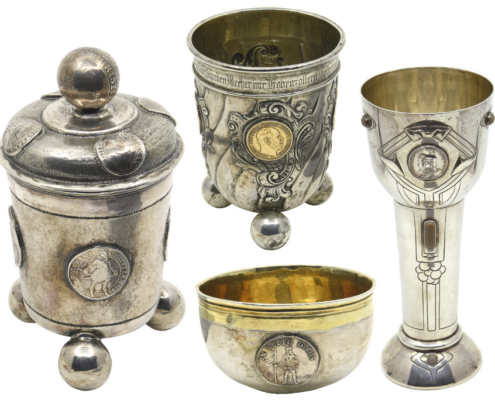 https://new.coinsweekly.com/wp-content/uploads/2025/03/2025KW11HA01_00.jpg
684
860
Lucie Loechel
https://new.coinsweekly.com/wp-content/uploads/2023/01/logo-coinsweekly_590x204.png
Lucie Loechel2025-03-13 10:11:402025-03-13 10:11:40Coin-Embedded Tableware as Part of European Dining Culture
https://new.coinsweekly.com/wp-content/uploads/2025/03/2025KW11HA01_00.jpg
684
860
Lucie Loechel
https://new.coinsweekly.com/wp-content/uploads/2023/01/logo-coinsweekly_590x204.png
Lucie Loechel2025-03-13 10:11:402025-03-13 10:11:40Coin-Embedded Tableware as Part of European Dining Culture
Report of the 30th ICOMON Annual Conference in Stockholm
The International Committee of Money and Banking Museums (ICOMON) held its 30th Annual Conference in Stockholm from 25 to 28 September 2024. The Economy Museum, as host institution, welcomed over 110 participants and 42 speakers from over 30 countries across the globe.
France is the Guest of Honor at the World Money Fair 2024
In 2024, the World Money Fair will feature a country as guest of honor again: The Monnaie de Paris represents France at the world’s largest coin fair, taking place from February 2 to 4 at the Estrel Congress Center in Berlin.