








Archive: People and Markets

A Military Motif in Circulation – Or: How Political Should 2-Euro Coins Be?
Lithuania is planning to design a 2-euro commemorative coin for defense “against foreign armed forces”. Critics fear a numismatic mobilization – and are eagerly awaiting a possible veto from other euro countries. But have there ever been comparable cases?

The South African Mint: Africa’s Largest Mint
At the end of my trip to South Africa, I have the unique opportunity to visit the South African Mint. I’m taking you along on my visit, and that’s something very special: normally, taking photos inside the South African Mint isn’t permitted!
Archive: Coins, Medals and more
 https://new.coinsweekly.com/wp-content/uploads/2025/02/2025KW08HA01_00.jpg
684
860
Lucie Loechel
https://new.coinsweekly.com/wp-content/uploads/2023/01/logo-coinsweekly_590x204.png
Lucie Loechel2025-02-20 09:21:132025-02-20 09:49:19L. E. Bruun: A Collector in His Time
https://new.coinsweekly.com/wp-content/uploads/2025/02/2025KW08HA01_00.jpg
684
860
Lucie Loechel
https://new.coinsweekly.com/wp-content/uploads/2023/01/logo-coinsweekly_590x204.png
Lucie Loechel2025-02-20 09:21:132025-02-20 09:49:19L. E. Bruun: A Collector in His Time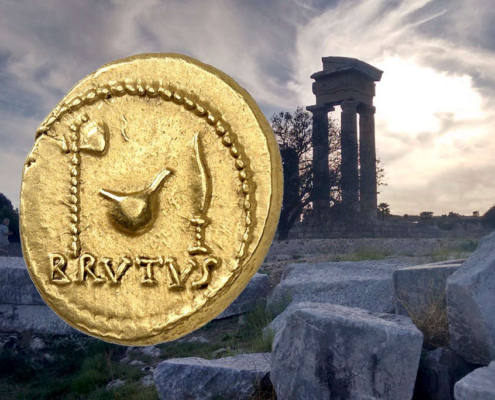 https://new.coinsweekly.com/wp-content/uploads/2024/10/2024KW40HA2_00.jpg
684
860
Bruno
https://new.coinsweekly.com/wp-content/uploads/2023/01/logo-coinsweekly_590x204.png
Bruno2024-10-02 13:24:392024-10-15 09:16:49Gold from Rhodes for the Battle for Rome
https://new.coinsweekly.com/wp-content/uploads/2024/10/2024KW40HA2_00.jpg
684
860
Bruno
https://new.coinsweekly.com/wp-content/uploads/2023/01/logo-coinsweekly_590x204.png
Bruno2024-10-02 13:24:392024-10-15 09:16:49Gold from Rhodes for the Battle for Rome
Coin Dealer Richard Beale Pleads Guilty
Richard Beale has pleaded guilty to a number of charges. At a court hearing in New York in August 2023, the British coin dealer admitted, among other things, to falsifying the provenance of an EID MAR aureus.
Over 3,200 Visitors at the 2025 National Money Show in Atlanta
The 2025 National Money Show featured an exciting mix of family fun, rare exhibits, and exclusive numismatic opportunities, making it a must-attend event for collectors, dealers, and history enthusiasts alike.