











Archive: People and Markets

Will the Online Platform “Discord” Become the Coin Club of the Future?
Young collectors are embracing technology from the world of computer games to pursue their hobby. Thousands of coin enthusiasts discuss, trade and compete on gaming servers – and from time to time they meet in European capitals to hunt for rarities.
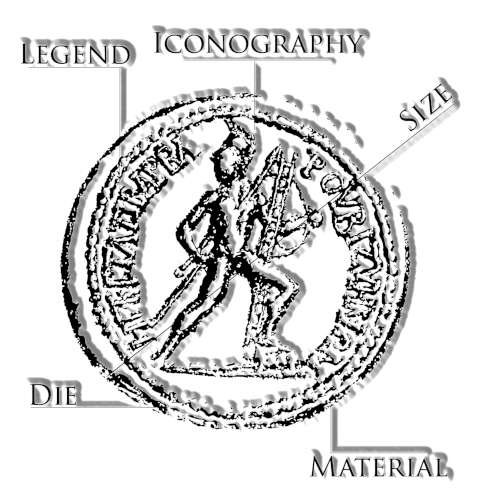
Sofia Numismatic School 2023
The Sofia Numismatic School 2023 discusses ancient numismatics. A focus will be on the implementation of innovative digital methodology and the concept of Digital Numismatics. Graduate and postgraduate students can still apply!
Archive: Coins, Medals and more
 https://new.coinsweekly.com/wp-content/uploads/2024/05/2024KW20HA_00.jpg
684
860
Ursula Kampmann
https://new.coinsweekly.com/wp-content/uploads/2023/01/logo-coinsweekly_590x204.png
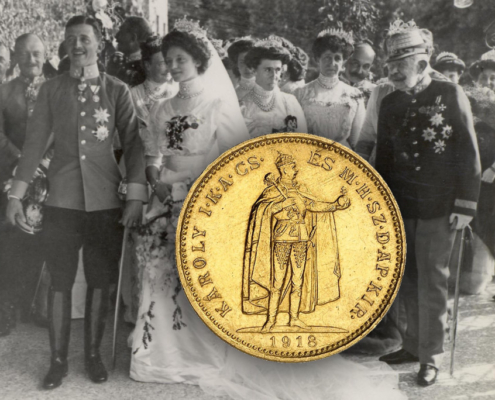
Ursula Kampmann2024-05-16 10:22:052024-05-16 10:35:23Charles I of Austria-Hungary: A Hapless Emperor Who Was Beatified
https://new.coinsweekly.com/wp-content/uploads/2024/05/2024KW20HA_00.jpg
684
860
Ursula Kampmann
https://new.coinsweekly.com/wp-content/uploads/2023/01/logo-coinsweekly_590x204.png
Ursula Kampmann2024-05-16 10:22:052024-05-16 10:35:23Charles I of Austria-Hungary: A Hapless Emperor Who Was Beatified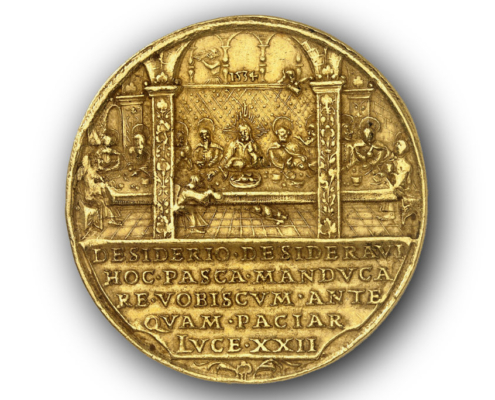 https://new.coinsweekly.com/wp-content/uploads/2025/01/2025KW02HA_00.jpg
684
860
Lucie Loechel
https://new.coinsweekly.com/wp-content/uploads/2023/01/logo-coinsweekly_590x204.png
Lucie Loechel2025-01-09 10:35:332025-01-09 14:45:59Joachimsthal and the Reformation
https://new.coinsweekly.com/wp-content/uploads/2025/01/2025KW02HA_00.jpg
684
860
Lucie Loechel
https://new.coinsweekly.com/wp-content/uploads/2023/01/logo-coinsweekly_590x204.png
Lucie Loechel2025-01-09 10:35:332025-01-09 14:45:59Joachimsthal and the Reformation
A Holey Dollar Returns to Toruń – An Update on the Torún Coin Theft
The Australian Federal Police have announced that they have helped return a Holey Dollar from the Toruń theft to the city’s regional museum. Here is the latest news on the theft of at least 194 coins, which is currently being tried in court.
CIT’s Wild Mongolia – Snow Leopard
Wild Mongolia is the series with which CIT first introduced the new possibilities of smartminting® 2.0. By now, CIT has once again expanded the possibilities of smartminting® with the launch of smartminting® 4.0, and this is already the fifth issue of the Wild Mongolia series. It is dedicated to the snow leopard and features yet another innovation.