







Archive: People and Markets

Benin Bronzes Lawsuit Against Smithsonian
Shall all Benin bronzes be repatriated? The Restitution Study Group says no. They argue for the rights of descendants of slaves trafficked by the Benin Kingdom as you can learn from this interview by Kate Fitz Gibbon.

Stack’s Bowers Galleries Opening New Office in Copenhagen
Stack’s Bowers Galleries have opened their newest office in the heart of Copenhagen, Denmark. The team consists of the experienced numismatists Michael Fornitz, Henrik Berndt and Peter Bjørnstrup.
Archive: Coins, Medals and more
 https://new.coinsweekly.com/wp-content/uploads/2023/06/00_DSC04222.png
506
500
Bruno
https://new.coinsweekly.com/wp-content/uploads/2023/01/logo-coinsweekly_590x204.png
Bruno2022-06-13 12:00:452023-07-03 12:18:15The National Identity of Modern Ukraine on its Commemorative Coins
https://new.coinsweekly.com/wp-content/uploads/2023/06/00_DSC04222.png
506
500
Bruno
https://new.coinsweekly.com/wp-content/uploads/2023/01/logo-coinsweekly_590x204.png
Bruno2022-06-13 12:00:452023-07-03 12:18:15The National Identity of Modern Ukraine on its Commemorative Coins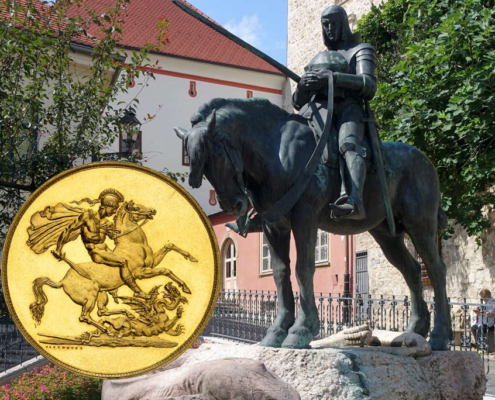 https://new.coinsweekly.com/wp-content/uploads/2024/01/2023KW03HA_00.jpg
684
860
Ursula Kampmann
https://new.coinsweekly.com/wp-content/uploads/2023/01/logo-coinsweekly_590x204.png
Ursula Kampmann2024-01-18 08:00:542024-01-18 10:35:27Why Are There So Many Coins Depicting Saint George?
https://new.coinsweekly.com/wp-content/uploads/2024/01/2023KW03HA_00.jpg
684
860
Ursula Kampmann
https://new.coinsweekly.com/wp-content/uploads/2023/01/logo-coinsweekly_590x204.png
Ursula Kampmann2024-01-18 08:00:542024-01-18 10:35:27Why Are There So Many Coins Depicting Saint George?
Putting Survival Ratios of Ancient Coinages Into Perspective – Call for Papers
The 7th International Numismatic Conference of the Coin Cabinet of the Royal Library of Belgium takes place on 5 October 2024 and will focus on survival ratios of ancient coinages. Proposals for submissions are expected by 1 December 2023.
The FBI Warns: Fraudsters Have Their Sights Set on Coin Collectors
The FBI has published a new warning that scammers are trying to trick older people in particular out of their coins. Find out which scams are common and how you can protect yourself against them.