







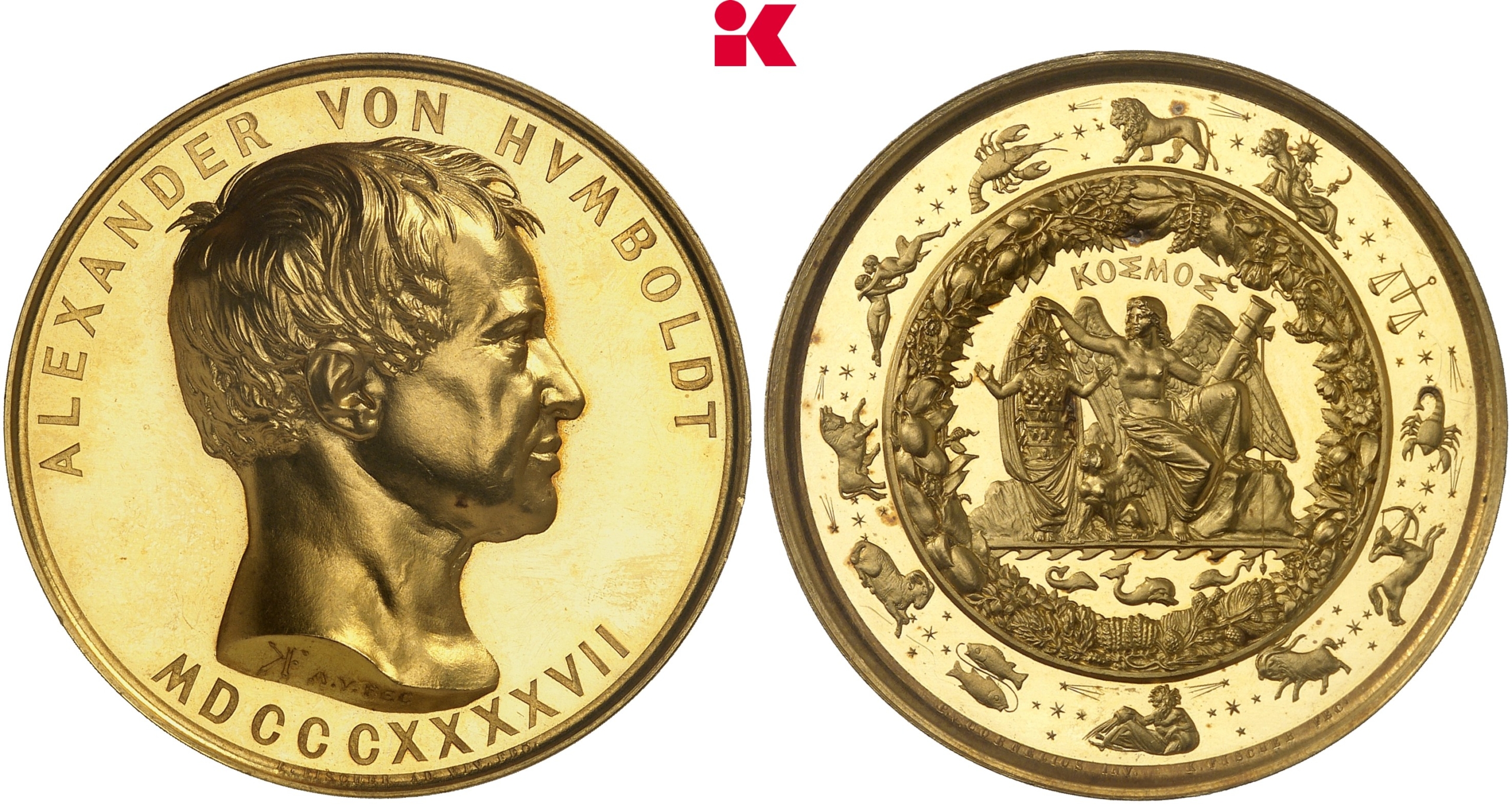
Gold medal in the weight of 50 ducats
commemorating the publication of the second volume
of Alexander von Humboldt’s *Kosmos*.
NGC MS 65 PL.
From the estate of Emperor William I.
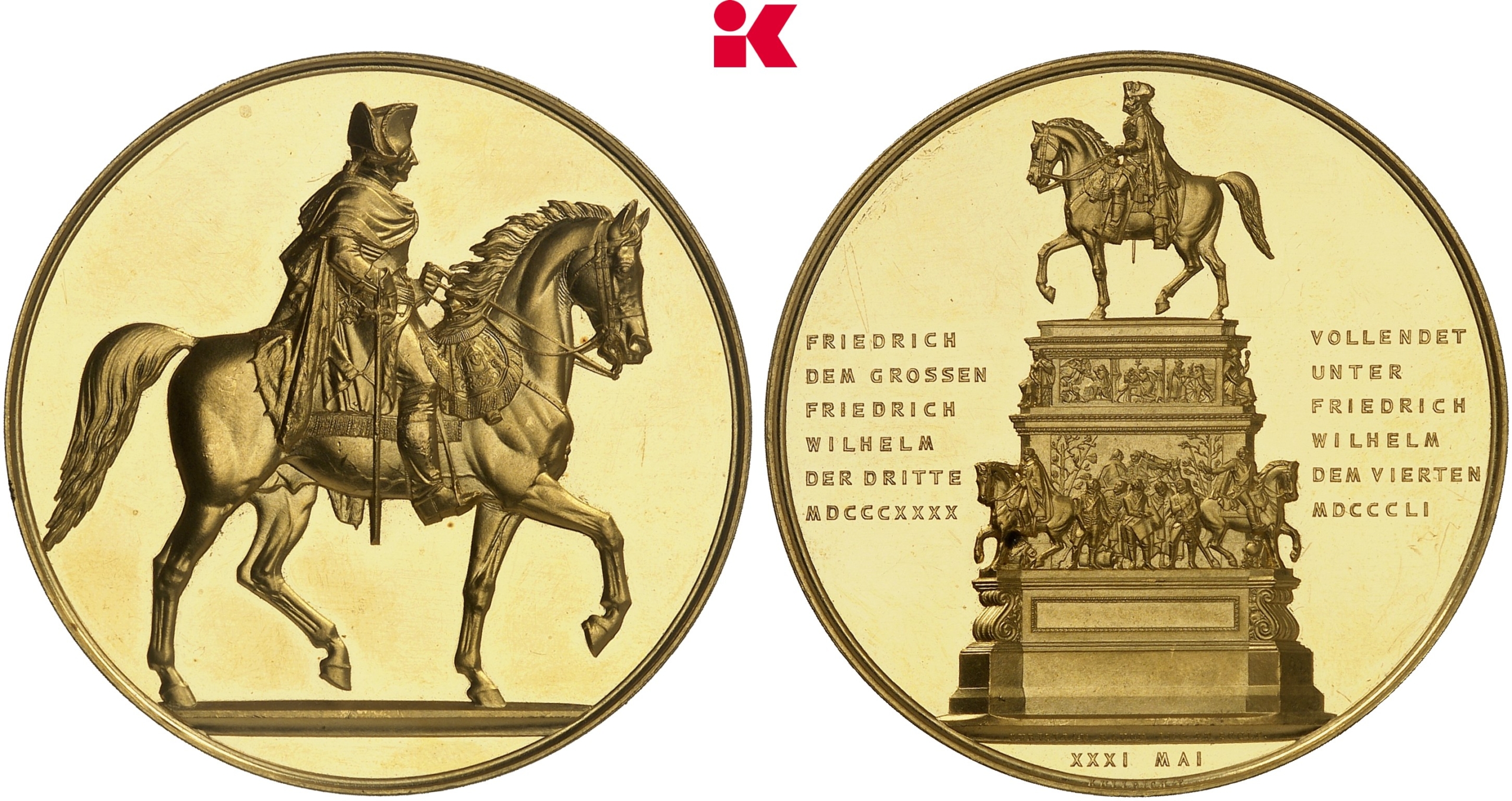
Gold medal in the weight of 50 ducats commemorating
the unveiling of the equestrian statue of
Frederick the Great on Unter den Linden in Berlin in 1851.
NGC MS 63 PL.
From the estate of Emperor William I.
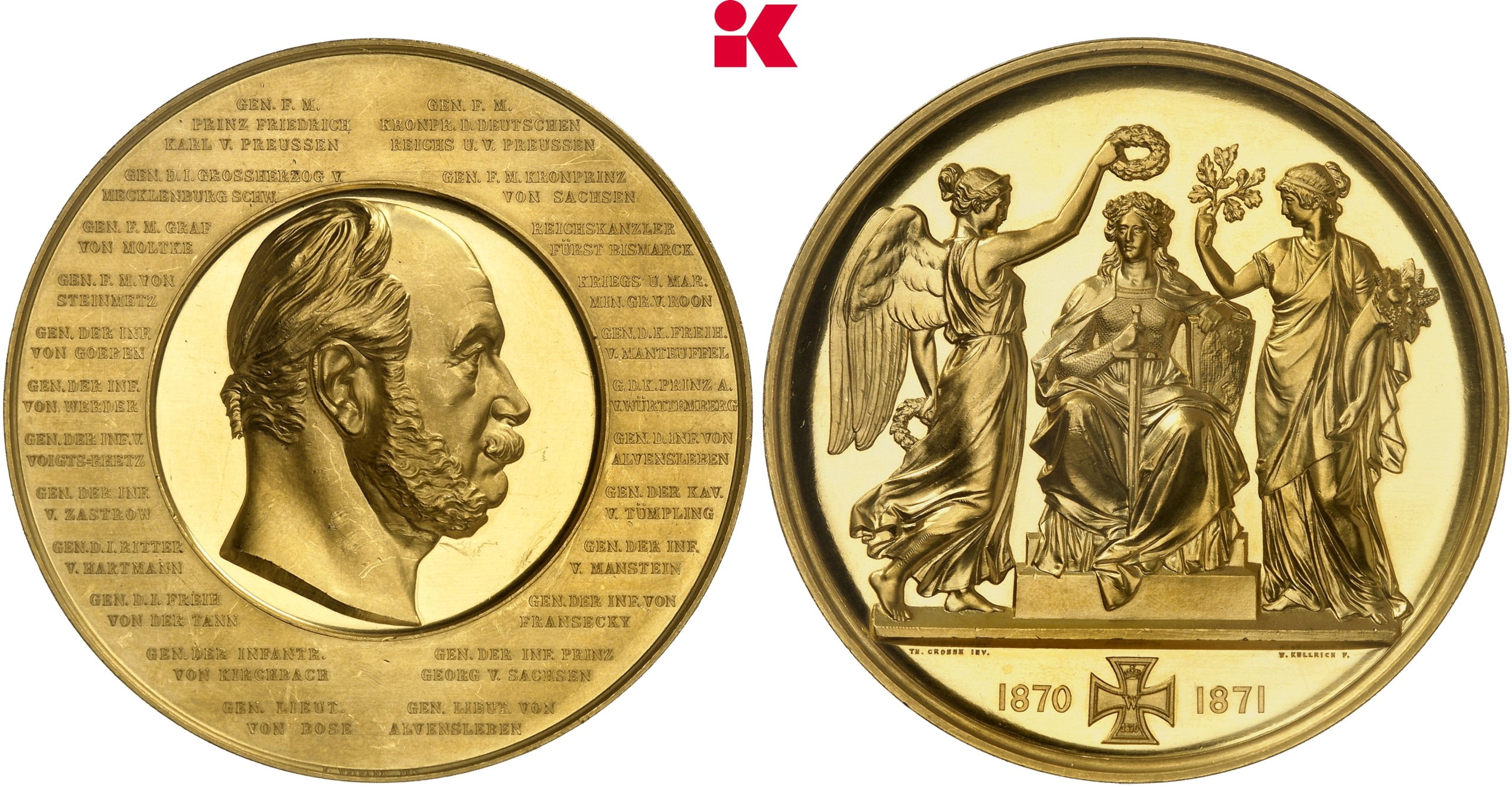
General’s Medal in the weight of 120 ducats, 1871,
commemorating the victory over France.
A magnificent specimen.
From the estate of Emperor William I.
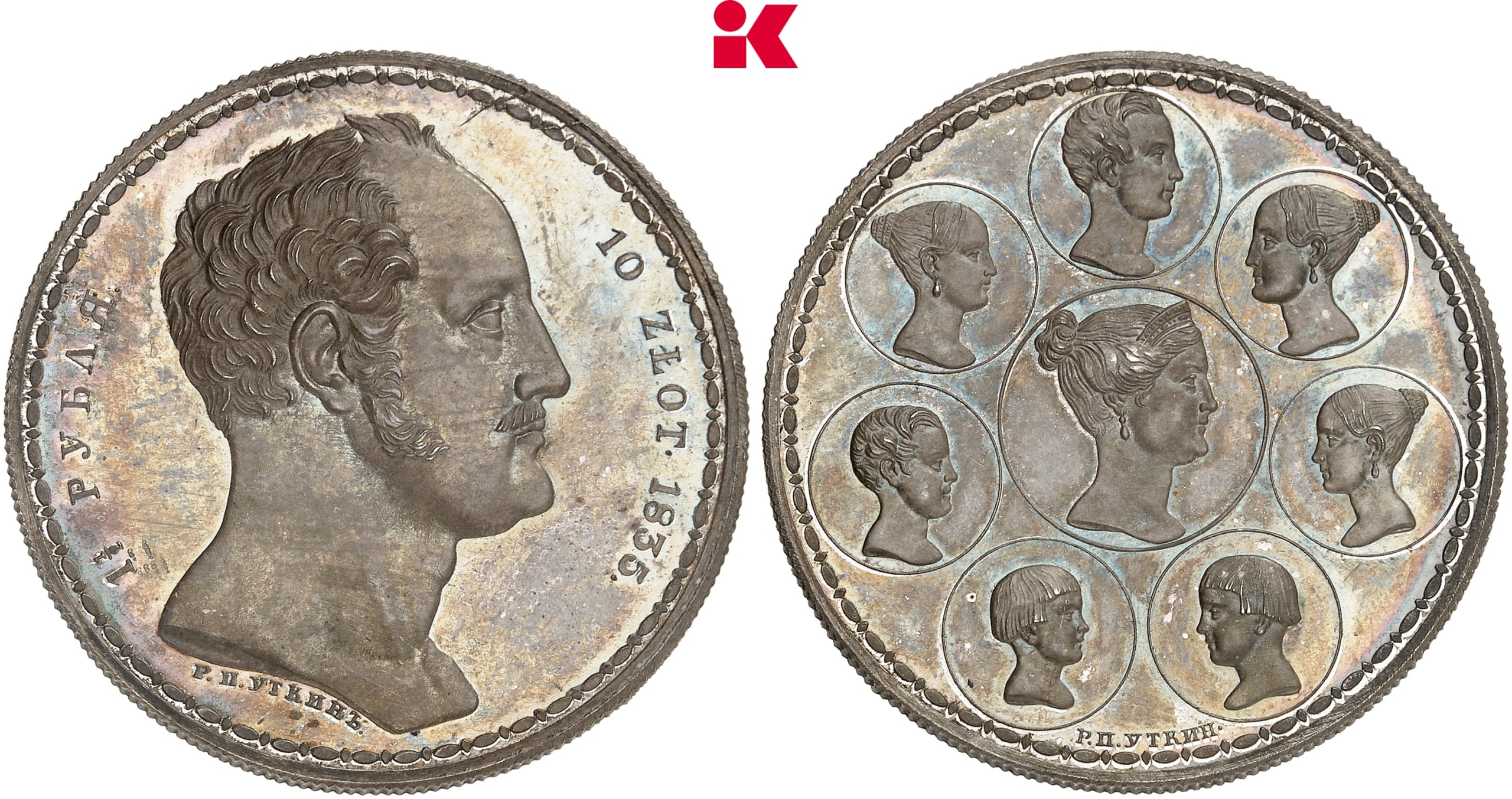
1 1/2 rubles (10 zlotys), 1835, St. Petersburg.
NGC MS 64 (Top Pop).
Only 36 examples struck.
A cabinet piece from polished dies.
From the estate of King Frederick William IV.
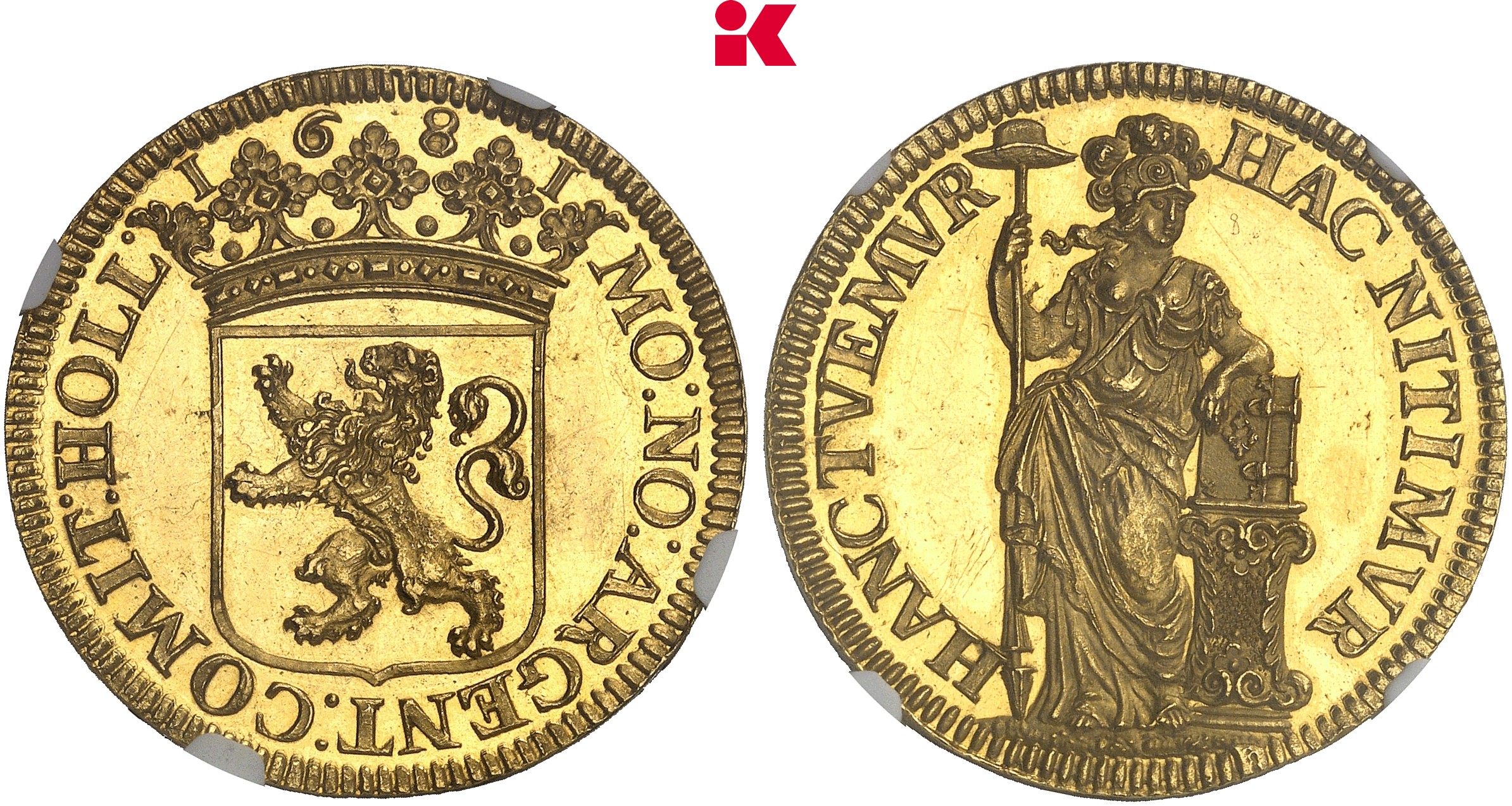
5 ducats, 1681.
Struck with the dies of a guilder.
NGC PF 64 Cameo.
Proof.
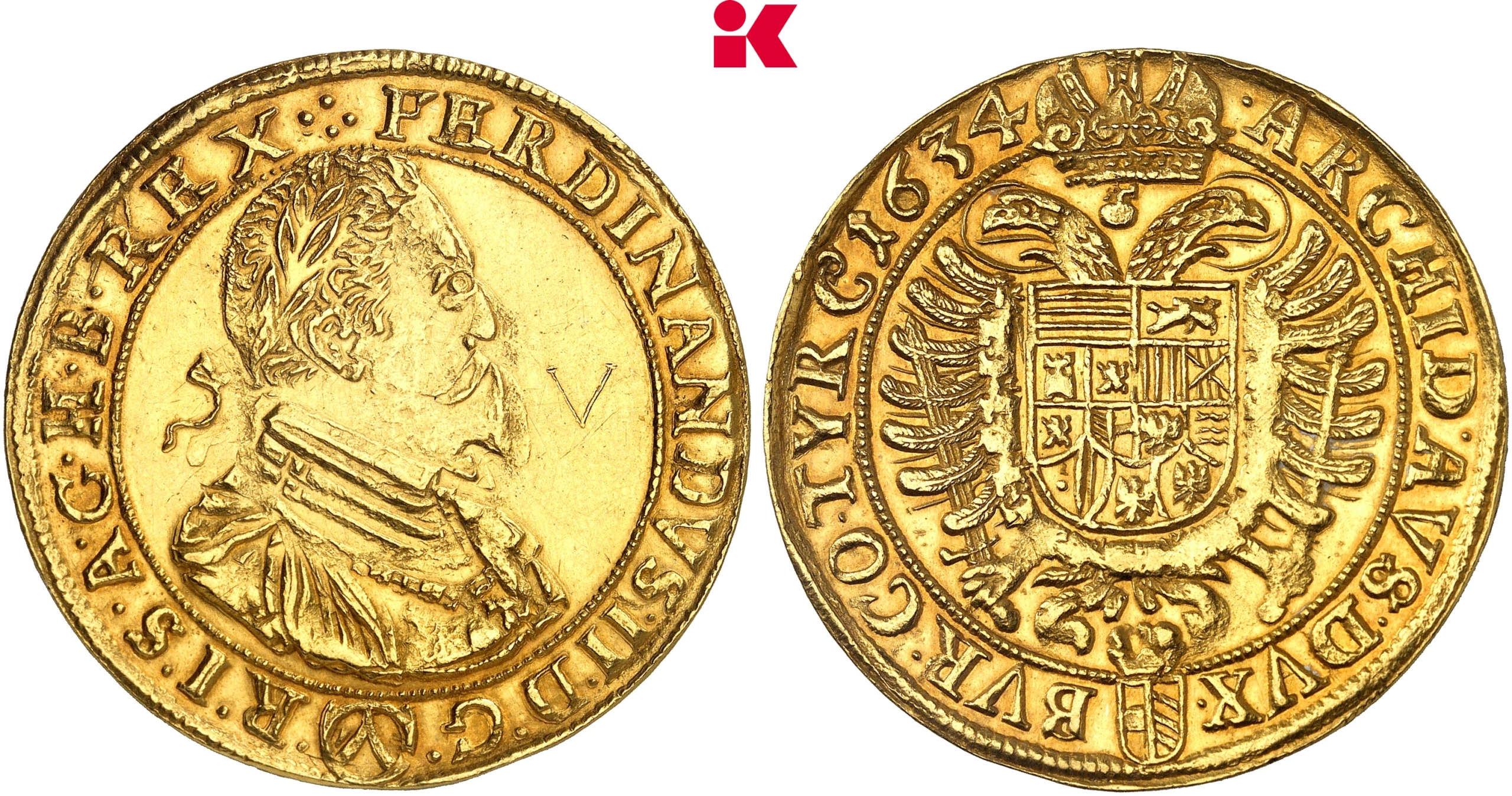
5 ducats, 1634, Vienna.
Extremely rare.
Extremely fine-uncirculated.
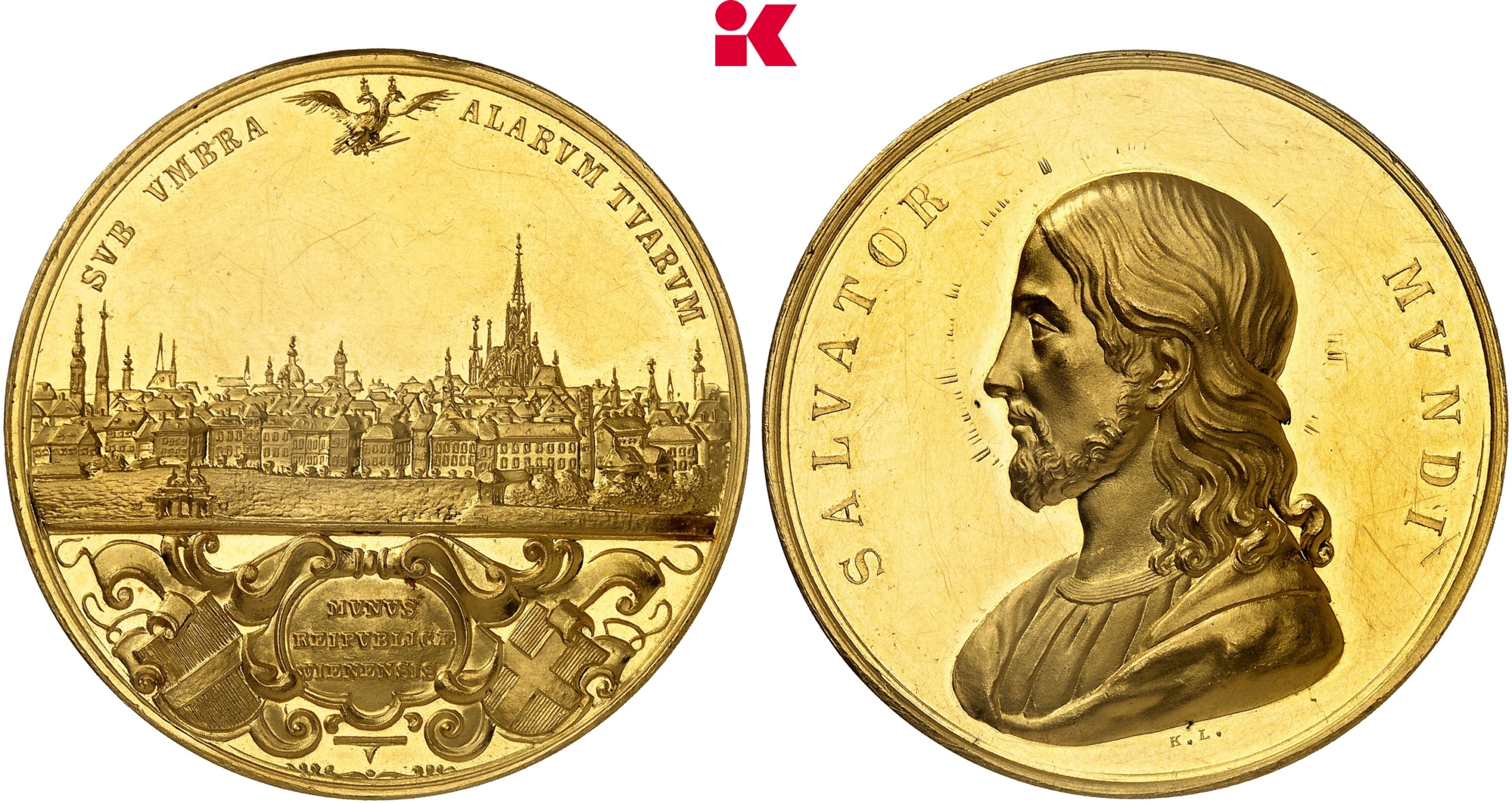
Salvator Medal in the weight of 12 ducats,
n. d.(around 1840).
NGC PF 61 CAMEO.
Proof.
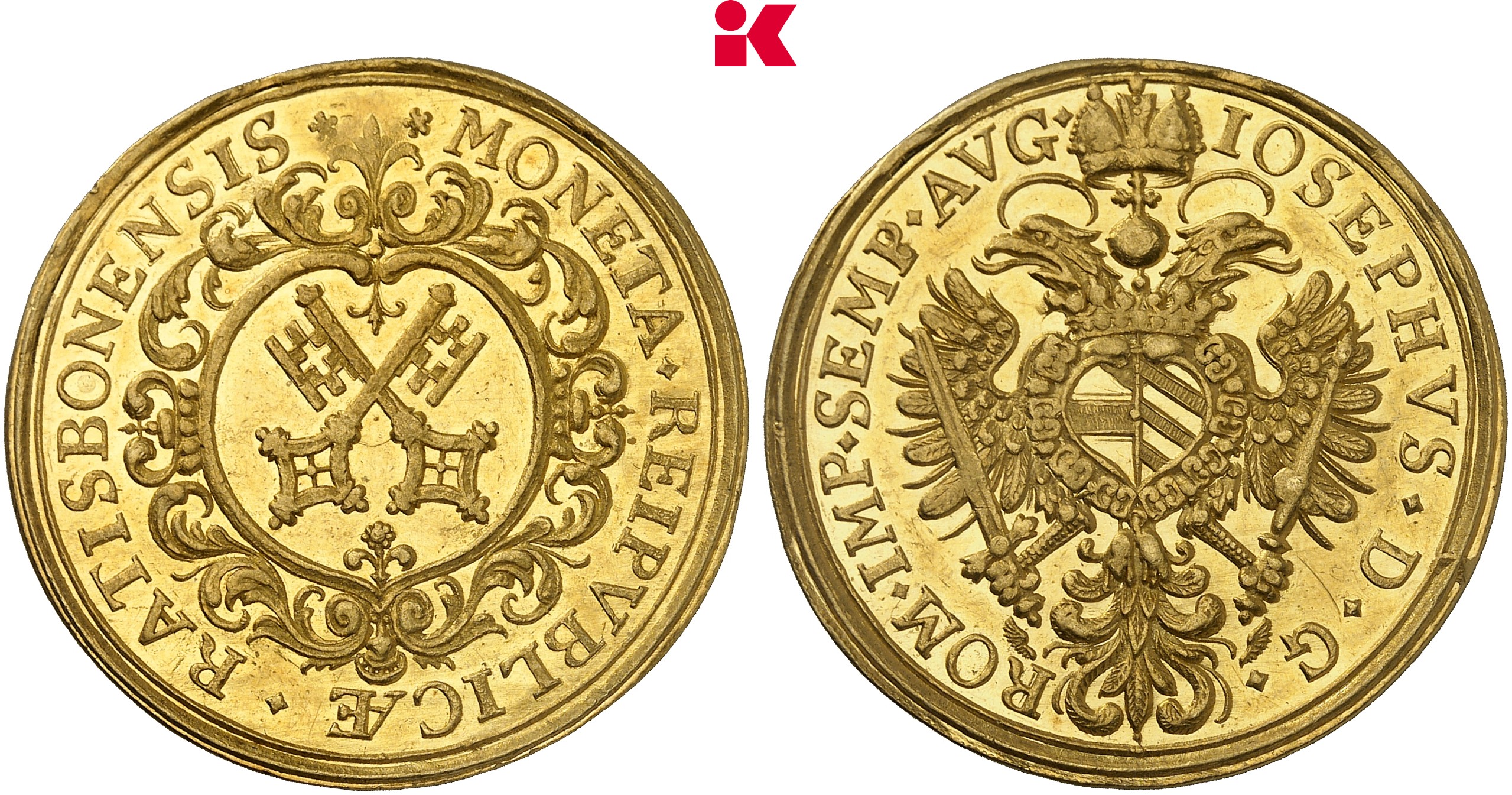
5 ducats, n. d. (1708–1710),
with the title of Joseph I. NGC MS 64.
Extremely rare. According to mint records,
only 7 copies struck.
A magnificent piece.
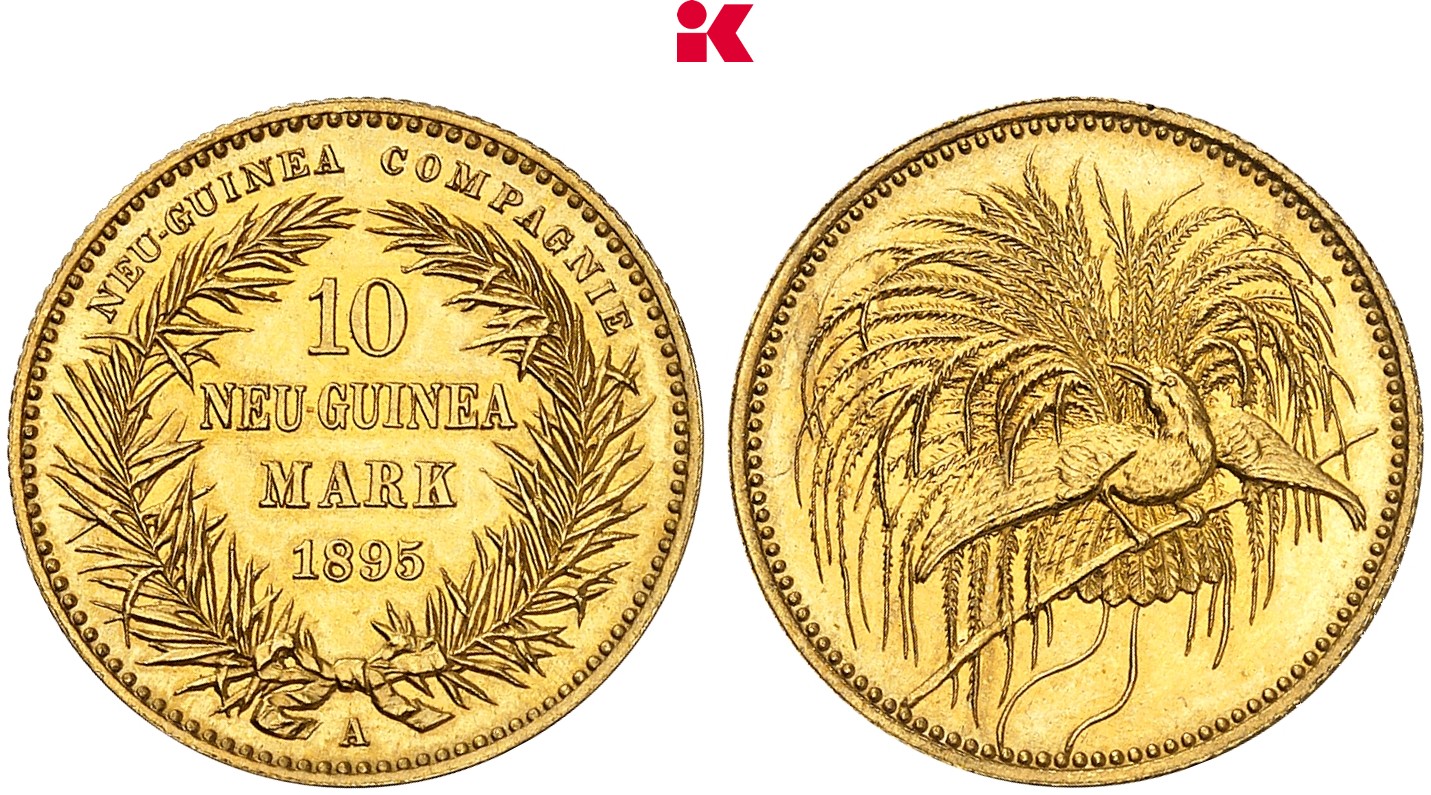
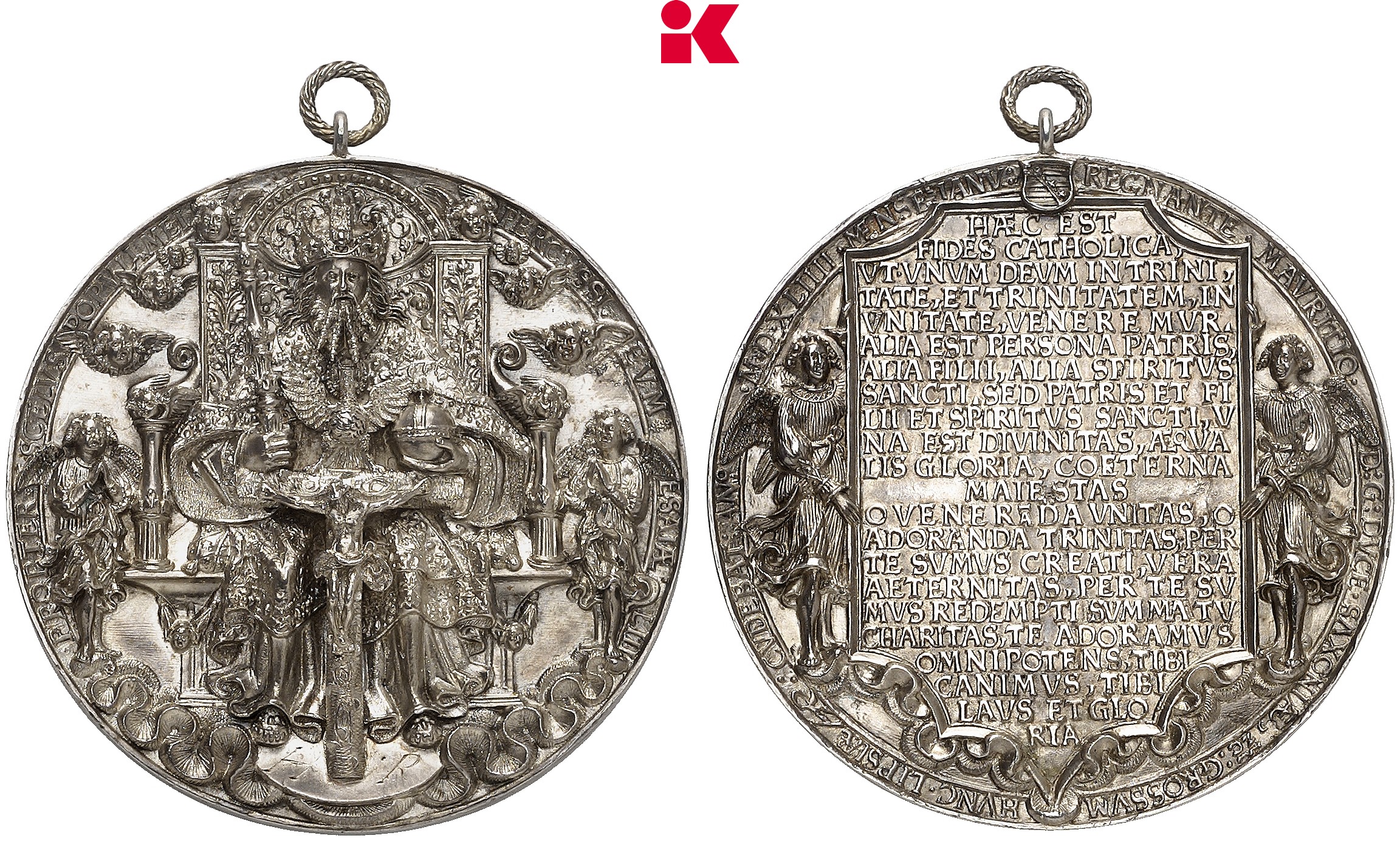
Archive: People and Markets
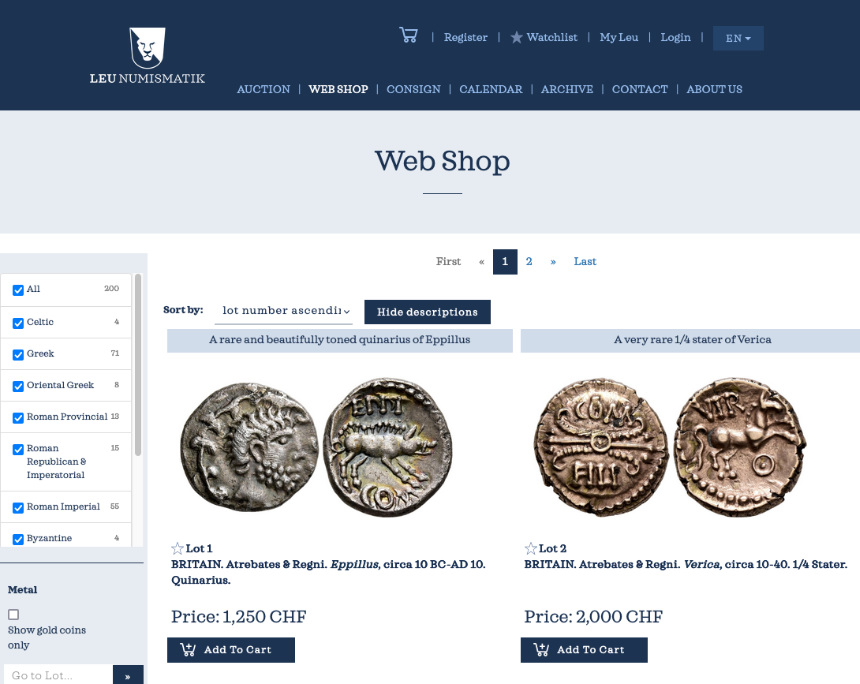
Leu Numismatik Launches Its Own Web Shop
The new Leu Numismatik Web Shop allows you to purchase selected pieces directly at any time. The inaugural selection features 200 exceptional coins spanning antiquity, the Middle Ages, and modern times.
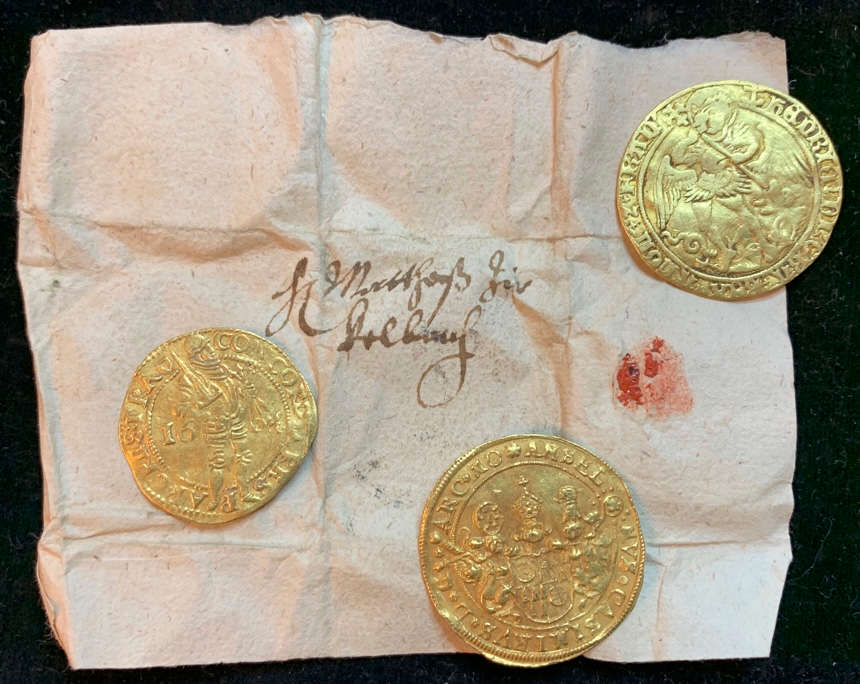
Eisleben, Germany: Church Treasure Recovered After Almost 400 Years
What a find: last year, a hoard of 864 coins was discovered in a sandstone figure in a church in Eisleben, Germany. The coins were hidden there during the Thirty Years’ War and provide a rare insight into the currency in circulation at that time. A coin expert from the region tells us more about it.
Archive: Coins, Medals and more
 https://new.coinsweekly.com/wp-content/uploads/2023/06/2023KW23HA00.jpg
500
1000
Bruno
https://new.coinsweekly.com/wp-content/uploads/2023/01/logo-coinsweekly_590x204.png
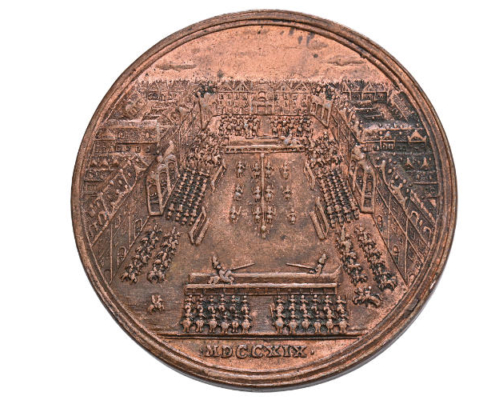
Bruno2023-06-07 10:29:512023-06-27 11:22:29The Wedding of a Century in Saxony
https://new.coinsweekly.com/wp-content/uploads/2023/06/2023KW23HA00.jpg
500
1000
Bruno
https://new.coinsweekly.com/wp-content/uploads/2023/01/logo-coinsweekly_590x204.png
Bruno2023-06-07 10:29:512023-06-27 11:22:29The Wedding of a Century in Saxony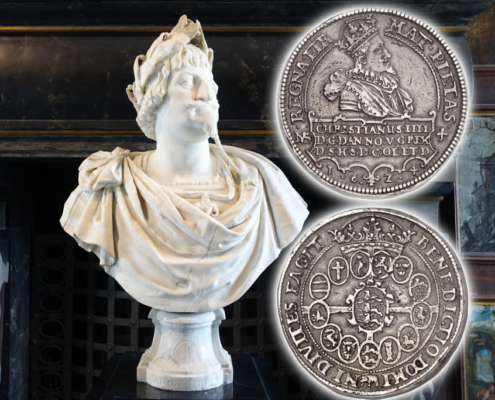 https://new.coinsweekly.com/wp-content/uploads/2024/06/2024KW24HA_00.jpg
684
860
Ursula Kampmann
https://new.coinsweekly.com/wp-content/uploads/2023/01/logo-coinsweekly_590x204.png
Ursula Kampmann2024-06-13 10:48:452024-06-13 11:10:58400 Years Ago – The Founding of Kongsberg
https://new.coinsweekly.com/wp-content/uploads/2024/06/2024KW24HA_00.jpg
684
860
Ursula Kampmann
https://new.coinsweekly.com/wp-content/uploads/2023/01/logo-coinsweekly_590x204.png
Ursula Kampmann2024-06-13 10:48:452024-06-13 11:10:58400 Years Ago – The Founding of Kongsberg
Hobby Detectorists Find Viking Treasures
Two coin hoards from Viking times were found by detectorists in Denmark at once. The coins by Harald Bluetooth tell of a dramatic period and led researchers to the sensational find of a settlement area.
Dr. Albert J. Beck (1935-2024)
Dr. Albert (“Al”) J. Beck passed on Wednesday, June 12, 2024. Our friends from Stephen Album Rare Coins shared this obituary for their colleague with us.