






Archive: People and Markets

Heimerle + Meule Group becomes HM Precious Metals
Following a number of major acquisitions in recent months, the Heimerle + Meule Group is now adapting its name – not least to make it easier to pronounce internationally.

Training Exercise for Cultural Heritage Response Unit
The German Archaeological Institute (DAI), in cooperation with the German Federal Agency for Technical Relief (THW), is building an emergency response unit to provide rapid assistance in the event of disasters around the world. In a fictious earthquake scenario, experts were recently trained in how to protect and preserve cultural heritage.
Archive: Coins, Medals and more
 https://new.coinsweekly.com/wp-content/uploads/2025/01/2025KW02HA_00.jpg
684
860
Lucie Loechel
https://new.coinsweekly.com/wp-content/uploads/2023/01/logo-coinsweekly_590x204.png
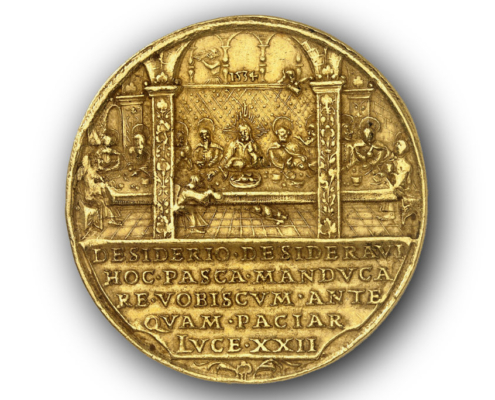
Lucie Loechel2025-01-09 10:35:332025-01-09 14:45:59Joachimsthal and the Reformation
https://new.coinsweekly.com/wp-content/uploads/2025/01/2025KW02HA_00.jpg
684
860
Lucie Loechel
https://new.coinsweekly.com/wp-content/uploads/2023/01/logo-coinsweekly_590x204.png
Lucie Loechel2025-01-09 10:35:332025-01-09 14:45:59Joachimsthal and the Reformation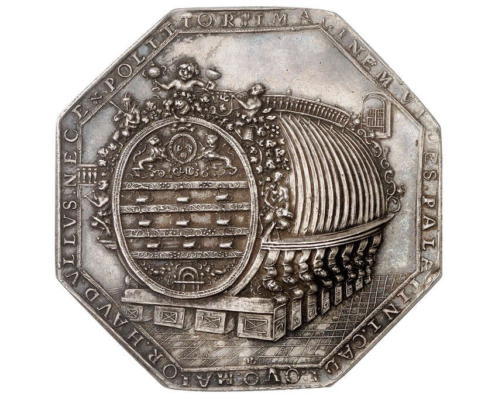 https://new.coinsweekly.com/wp-content/uploads/2023/08/2023KW35HA_00.jpg
684
860
Ursula Kampmann
https://new.coinsweekly.com/wp-content/uploads/2023/01/logo-coinsweekly_590x204.png
Ursula Kampmann2023-08-31 08:53:232023-08-31 11:47:37The Heidelberg Tun and Early Modern Winemaking
https://new.coinsweekly.com/wp-content/uploads/2023/08/2023KW35HA_00.jpg
684
860
Ursula Kampmann
https://new.coinsweekly.com/wp-content/uploads/2023/01/logo-coinsweekly_590x204.png
Ursula Kampmann2023-08-31 08:53:232023-08-31 11:47:37The Heidelberg Tun and Early Modern Winemaking
In Love With Japan
This year, Andrea Pancheri attended the Tokyo International Coin Convention for the first time on our behalf – and was absolutely thrilled by both the country and the event! Find out why here.
The Numismatic Index on 25 June 2023
The numismatic index numindex transparently shows how the prices of selected coins change over time. In the style of a stock index, it was designed for collectors who consider their collection an investment. Find out about the current state of the index.