






Archive: People and Markets
PMG Now Grading Banknotes Year-round in Munich
The introduction of full-time PMG grading services in Munich, initially available for the Bulk and Modern tiers, marks a new expansion of the company’s services for the paper money collecting community in Europe.
Germany’s New Platform Tax Transparency Act: A Problem for eBay Coin Dealers?
Germany’s new Platform Tax Transparency Act has caused great concern among German coin collectors. Will they have to explain themselves to the tax authorities whenever they sell pieces of their collection? In most cases, the answer is no. Unless their hobby turns into a regular side-line.
Archive: Coins, Medals and more
 https://new.coinsweekly.com/wp-content/uploads/2024/05/2024KW18HA_00.jpg
684
860
Ursula Kampmann
https://new.coinsweekly.com/wp-content/uploads/2023/01/logo-coinsweekly_590x204.png
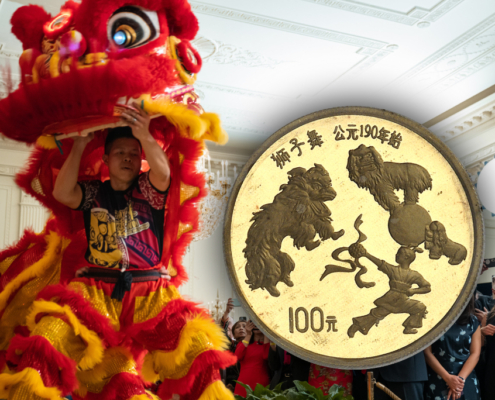
Ursula Kampmann2024-05-02 10:35:242024-05-02 10:35:24100 Yuan Lion Dance 1995: One of the Rarest Chinese Coins of Our Age
https://new.coinsweekly.com/wp-content/uploads/2024/05/2024KW18HA_00.jpg
684
860
Ursula Kampmann
https://new.coinsweekly.com/wp-content/uploads/2023/01/logo-coinsweekly_590x204.png
Ursula Kampmann2024-05-02 10:35:242024-05-02 10:35:24100 Yuan Lion Dance 1995: One of the Rarest Chinese Coins of Our Age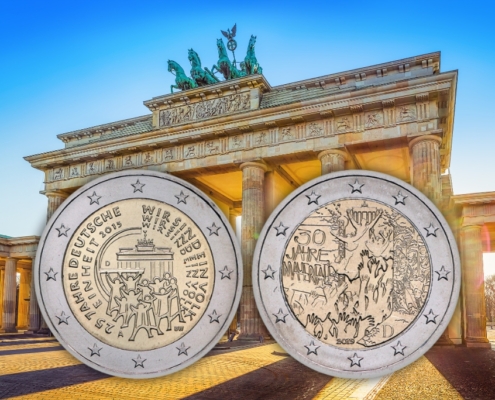 https://new.coinsweekly.com/wp-content/uploads/2024/09/2024KW39HA_00.jpg
684
860
Sebastian Wieschowski
https://new.coinsweekly.com/wp-content/uploads/2023/01/logo-coinsweekly_590x204.png
Sebastian Wieschowski2024-09-26 06:00:552024-09-26 09:25:24Unity Coin Sows Discord: More Than Just a Matter of Taste?
https://new.coinsweekly.com/wp-content/uploads/2024/09/2024KW39HA_00.jpg
684
860
Sebastian Wieschowski
https://new.coinsweekly.com/wp-content/uploads/2023/01/logo-coinsweekly_590x204.png
Sebastian Wieschowski2024-09-26 06:00:552024-09-26 09:25:24Unity Coin Sows Discord: More Than Just a Matter of Taste?
ANS Announces Recipient of Chairman’s Fellowship in Numismatic Research
The American Numismatic Society has chosen the inaugural recipient for the Chairman’s Fellowship for Numismatic Research. The fellowship will fund a dissertation research and a planned book project.
Our Who’s Who Is Here!
Our entire Who’s Who for numismatists and collectors is now available on our new website. This is another important step on our path towards transitioning from our old to the new site. And there is more!