






Archive: People and Markets

Poetic Machines: Swissmint Honors Jean Tinguely
Steel, wheels, movement, order and chaos – Swiss artist Jean Tinguely was fascinated by the poetry of machines, which he captured in his kinetic machine sculptures. To mark what would have been his 100th birthday, Swissmint is honoring the exceptional artist with a silver coin.

Royal Canadian Mint Unveils New Effigy of Charles III
The Royal Canadian Mint have unveiled the new effigy which will be seen on Canadian circulation, collector and bullion coinage. The new likeness was revealed on the 75th birthday of His Majesty. Michael Alexander takes a closer look.
Archive: Coins, Medals and more
 https://new.coinsweekly.com/wp-content/uploads/2023/06/CoCo06_09c.jpg
1369
1331
Ursula Kampmann
https://new.coinsweekly.com/wp-content/uploads/2023/01/logo-coinsweekly_590x204.png
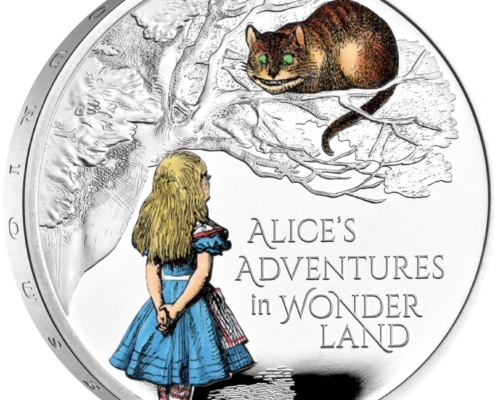
Ursula Kampmann2022-06-13 10:49:272023-06-29 10:51:03Courageous Girls in the Coin Wonderland
https://new.coinsweekly.com/wp-content/uploads/2023/06/CoCo06_09c.jpg
1369
1331
Ursula Kampmann
https://new.coinsweekly.com/wp-content/uploads/2023/01/logo-coinsweekly_590x204.png
Ursula Kampmann2022-06-13 10:49:272023-06-29 10:51:03Courageous Girls in the Coin Wonderland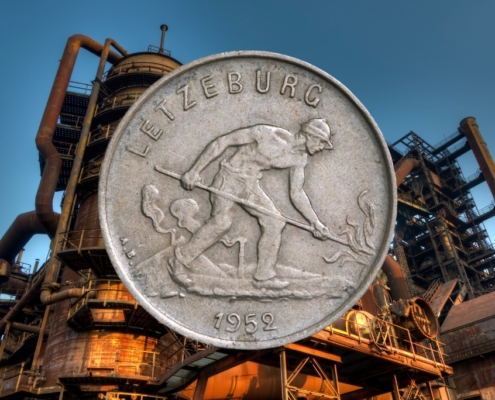 https://new.coinsweekly.com/wp-content/uploads/2024/02/2024KW09aHauptartikel_00.jpg
684
860
Ursula Kampmann
https://new.coinsweekly.com/wp-content/uploads/2023/01/logo-coinsweekly_590x204.png
Ursula Kampmann2024-02-29 09:19:272024-02-29 14:11:43A Coin on a Coin: Luxembourg to Resurrect the “Feierstëppler”
https://new.coinsweekly.com/wp-content/uploads/2024/02/2024KW09aHauptartikel_00.jpg
684
860
Ursula Kampmann
https://new.coinsweekly.com/wp-content/uploads/2023/01/logo-coinsweekly_590x204.png
Ursula Kampmann2024-02-29 09:19:272024-02-29 14:11:43A Coin on a Coin: Luxembourg to Resurrect the “Feierstëppler”
Royal Dutch Mint and Osborne Coinage Join the Heimerle + Meule Group
It was only recently that we posted about the acquisition of Reischauer by the Heimerle + Meule Group – but the next big announcement follows right away: the company acquired all shares in the Royal United Mint, who is the parent company of well-known businesses like the Royal Dutch Mint and Osborne Coinage.
2024 Huntington Award Presented to William E. Metcalf
At the 167th Annual Meeting of the American Numismatic Society, the Archer M. Huntington Award was presented to Dr. William E. Metcalf, honoring his tremendous contributions to Roman and Byzantine numismatics.