154Prussia. Frederick William IV, 1840–1861.
Gold medal in the weight of 50 ducats
commemorating the publication of the second volume
of Alexander von Humboldt’s *Kosmos*.
NGC MS 65 PL.
From the estate of Emperor William I.
Estimate: 40.000 Euro

166Prussia. Frederick William IV, 1840–1861.
Gold medal in the weight of 50 ducats commemorating
the unveiling of the equestrian statue of
Frederick the Great on Unter den Linden in Berlin in 1851.
NGC MS 63 PL.
From the estate of Emperor William I.
Estimate: 25.000 Euro

191Prussia. William I, 1861–1888.
General’s Medal in the weight of 120 ducats, 1871,
commemorating the victory over France.
A magnificent specimen.
From the estate of Emperor William I.
Estimate: 75.000 Euro

297Russia. Nicholas I, 1825–1855. Family ruble.
1 1/2 rubles (10 zlotys), 1835, St. Petersburg.
NGC MS 64 (Top Pop).
Only 36 examples struck.
A cabinet piece from polished dies.
From the estate of King Frederick William IV.
Estimate: 250.000 Euro

1098Holland. Province.
5 ducats, 1681.
Struck with the dies of a guilder.
NGC PF 64 Cameo.
Proof.
Estimate: 40.000 Euro

1192HRE. Ferdinand II, 1592–1618–1637.
5 ducats, 1634, Vienna.
Extremely rare.
Extremely fine-uncirculated.
Estimate: 10.000 Euro

1266HRE. Vienna.
Salvator Medal in the weight of 12 ducats,
n. d.(around 1840).
NGC PF 61 CAMEO.
Proof.
Estimate: 15.000 Euro

1334City of Regensburg.
5 ducats, n. d. (1708–1710),
with the title of Joseph I. NGC MS 64.
Extremely rare. According to mint records,
only 7 copies struck.
A magnificent piece.
Estimate: 25.000 Euro

1602German New Guinea.
10 New Guinea Marks, 1895 A.
NGC MS 65.
A magnificent piece.
Estimate: 50.000 Euro

2757Saxony.
John Frederick the Magnanimous and
Maurice, 1541–1547.
Trinity Medal, 1544.
A masterpiece of German medal art. Magnificent,
excellent craftsmanship.
Estimate: 75.000 Euro

Archive: People and Markets
What the Second Trump Administration Might Mean for Collectors

What does Donald Trump’s return to the White House mean for collectors in the USA? Will the new Administration help “Make Collecting Great Again” or will it be anti-collecting business as usual at the State Department and other government agencies? Predictions are always perilous to make, but Peter Tompa has dared to make some nonetheless.

British Celtic Coins: Art or Imitation?

The peoples of pre-Roman Britain remain an enigma, and the same is true for their coins. Tim Wright wrote a new book on British Celtic Coins which will soon be published by Spink Books. Read his introduction on the topic here.

CoinsWeekly News in the Coiniverse App

The Coiniverse app helps its users identify coins and manage their own collections, while CoinsWeekly provides in-depth information on numismatic topics from around the world. As a new feature, Coiniverse users can now access CoinsWeekly articles directly in the app.

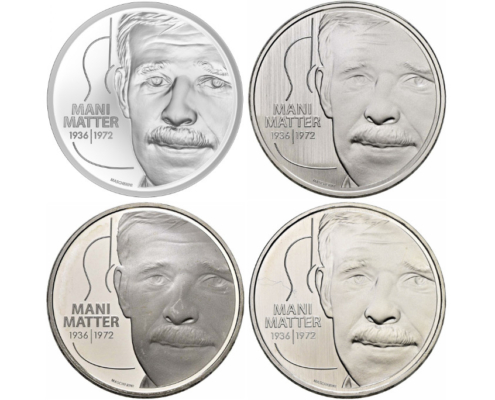
New Collector Coin by Swissmint: St. Nicholas

Christmas spirit at the Swissmint: on 27 November 2024, the latest swiss silver coin, St. Nicholas, was issued in honor of the traditional St. Nicholas processions on 6 December.

Archive: Coins, Medals and more

Karl Ludwig von Bruck, the mastermind behind the Vienna Coinage Treaty. We chose not to depict Emperor Franz Josef I at this point, who is shown on the coins, but the liberal politician Karl Ludwig von Bruck. Born into the family of a bookbinder in Elberfeld (now Wuppertal, Germany), he worked his way up from a merchant’s position to become Austria’s finance minister. He could almost be described as a beacon of hope for Austrian economic policy. It was tragic – and not just for him personally – that Franz Josef “ungraciously” dismissed him in April 1860 on false suspicions. The then 61-year-old took his own life. This deprived Austria of an imaginative politician who might have prevented its economic marginalization by Prussia.

A War Fought with Unusual Weapons: How Prussia Used Finance and Politics to Force the Habsburg Hereditary Lands Out of the German Confederation

On 26 March 2024, the Künker auction house will offer the Tursky Collection with coins of Emperor Franz Joseph I. We use specimens from this collection to tell the story of how Prussia used its economic sway to become the sole hegemonic power in Germany.
Einer der Höhepunkte von Künker Auktion 395 ist eine spektakuläre Goldmedaille zu 110 Dukaten, die aus dem persönlichen Besitz von Fürst Ferdinand I. von Bulgarien stammt. Diese Medaille führt uns mitten hinein in eine Zeit, in der Bulgarien seine Wirtschaft modernisierte. Der Fürst packte dabei tatkräftig mit an. Und die Eisenbahn spielte dabei eine zentrale Rolle.

Bulgaria, Prince Ferdinand I and the Railroad

One of the highlights of Künker’s auction 395 is a spectacular gold medal with a weight of 110 ductats. It was the personal property of Prince Ferdinand I. of Bulgaria. This medal takes us back into a period when Bulgaria modernized its economy. And the railroad system played a major role in this.
Search Search