








Archive: People and Markets

Bookophile in New Splendour – the Redesigned Website for Book Lovers
Bookophile, the Zurich MoneyMuseum’s website for book enthusiasts, has been relaunched and spruced up with a fresh look and new features. One thing, however, stays the same: it is all about the love of old books. A major emphasis – how could it be otherwise for a MoneyMuseum – is on the subject of money and society.

Swissmint Celebrates 200 Years “Swiss Shooting Sports Federation”
In June, Swissmint has issued a new collector coin, “Swiss Shooting Sports Federation”. This is the start of the numismatic celebration that mark the 200th anniversary of the organization which will go on until 2024.
Archive: Coins, Medals and more
 https://new.coinsweekly.com/wp-content/uploads/2024/07/2024KW30HA02_00.jpg
684
860
Ursula Kampmann
https://new.coinsweekly.com/wp-content/uploads/2023/01/logo-coinsweekly_590x204.png
Ursula Kampmann2024-07-25 09:30:322024-07-25 14:12:39Switzerland’s Special Coin 200 Years Swiss Shooting Sport Federation Hits the Bull’s Eye
https://new.coinsweekly.com/wp-content/uploads/2024/07/2024KW30HA02_00.jpg
684
860
Ursula Kampmann
https://new.coinsweekly.com/wp-content/uploads/2023/01/logo-coinsweekly_590x204.png
Ursula Kampmann2024-07-25 09:30:322024-07-25 14:12:39Switzerland’s Special Coin 200 Years Swiss Shooting Sport Federation Hits the Bull’s Eye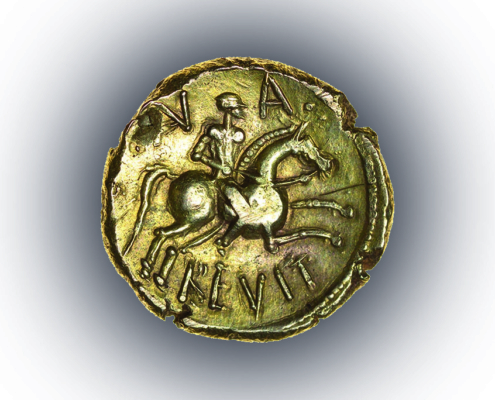 https://new.coinsweekly.com/wp-content/uploads/2024/11/2024KW45HA2_00.jpg
684
860
Bruno
https://new.coinsweekly.com/wp-content/uploads/2023/01/logo-coinsweekly_590x204.png
Bruno2024-11-07 07:54:412024-11-07 13:16:47Was Anarevito a Slave Trader?
https://new.coinsweekly.com/wp-content/uploads/2024/11/2024KW45HA2_00.jpg
684
860
Bruno
https://new.coinsweekly.com/wp-content/uploads/2023/01/logo-coinsweekly_590x204.png
Bruno2024-11-07 07:54:412024-11-07 13:16:47Was Anarevito a Slave Trader?
New Permanent Coin Exhibition at the Ducal Palace of Mantua
The most comprehensive collection of Mantua and Gonzaga coins and medals is now on long-term display at the Ducal Palace of Mantua. The exhibition is curated by numismatist Massimo Rossi.
New Coin Sets Mark 70th Anniversary of the Godzilla Series
To commemorate the 70th anniversary of the Godzilla series, two new coin sets have been released: the 70th Anniversary of GODZILLA Series BU Coin Set and the 70th Anniversary of GODZILLA Series 2024 Proof Coin Set.