







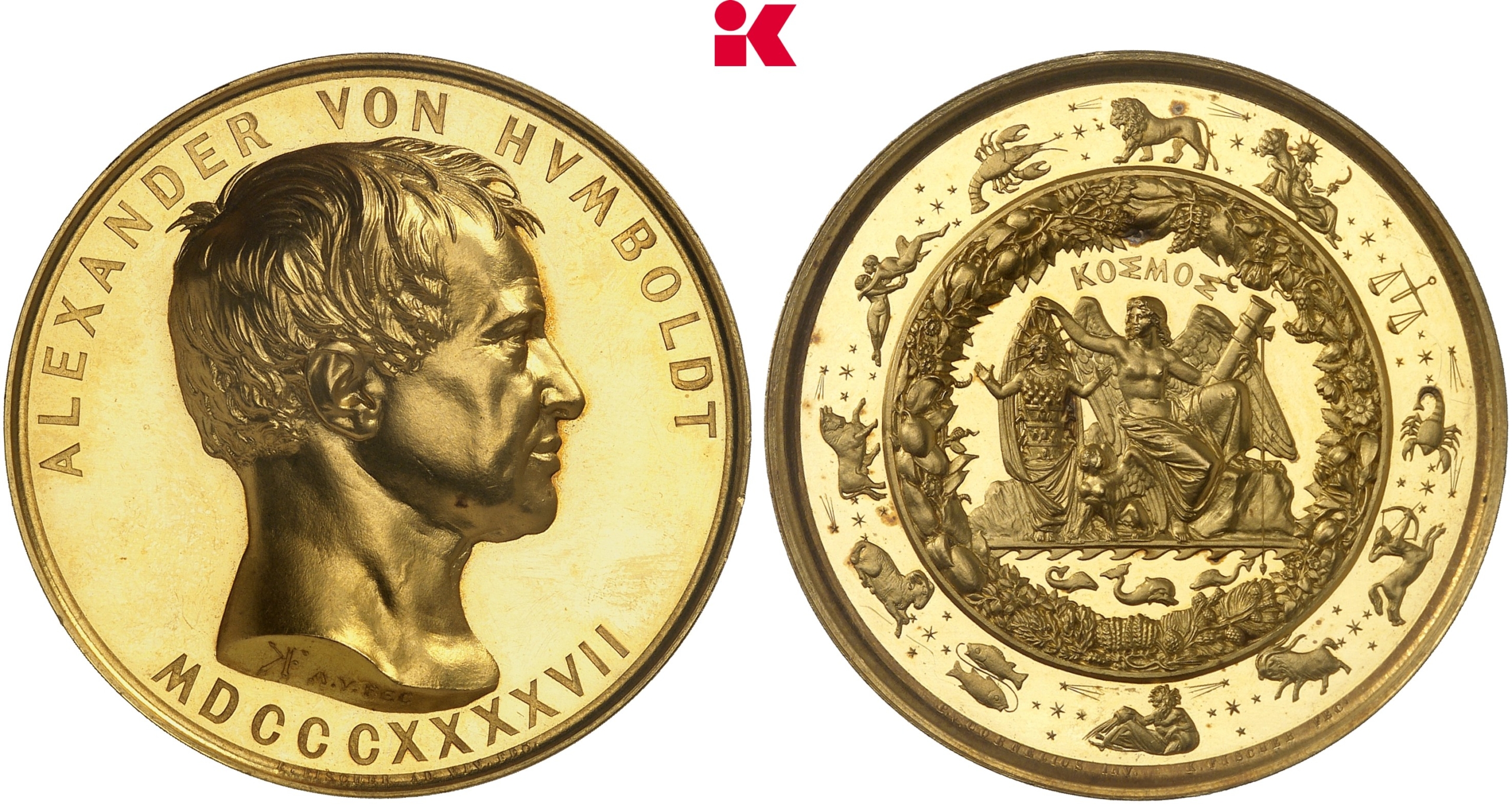
Gold medal in the weight of 50 ducats
commemorating the publication of the second volume
of Alexander von Humboldt’s *Kosmos*.
NGC MS 65 PL.
From the estate of Emperor William I.
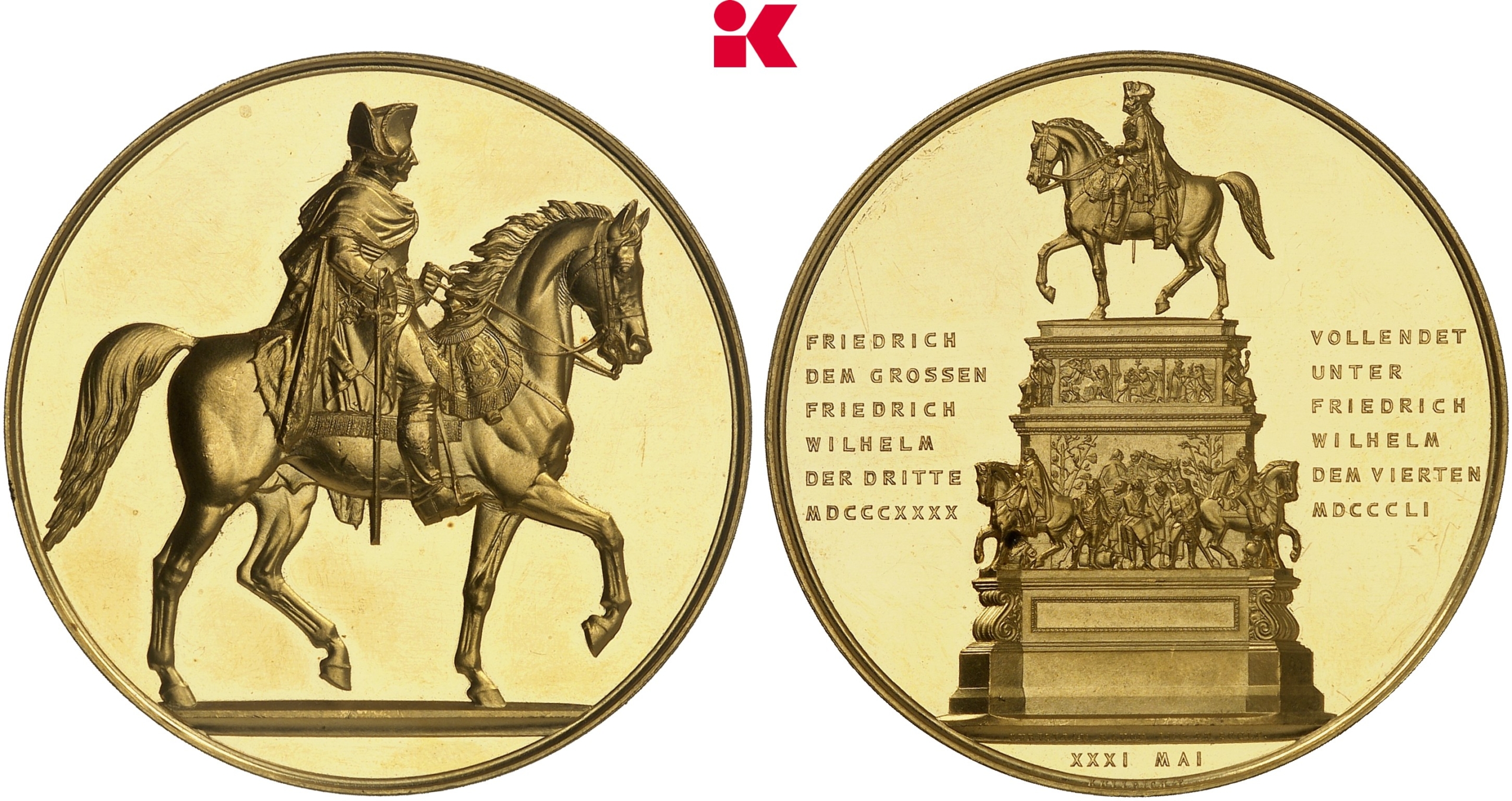
Gold medal in the weight of 50 ducats commemorating
the unveiling of the equestrian statue of
Frederick the Great on Unter den Linden in Berlin in 1851.
NGC MS 63 PL.
From the estate of Emperor William I.
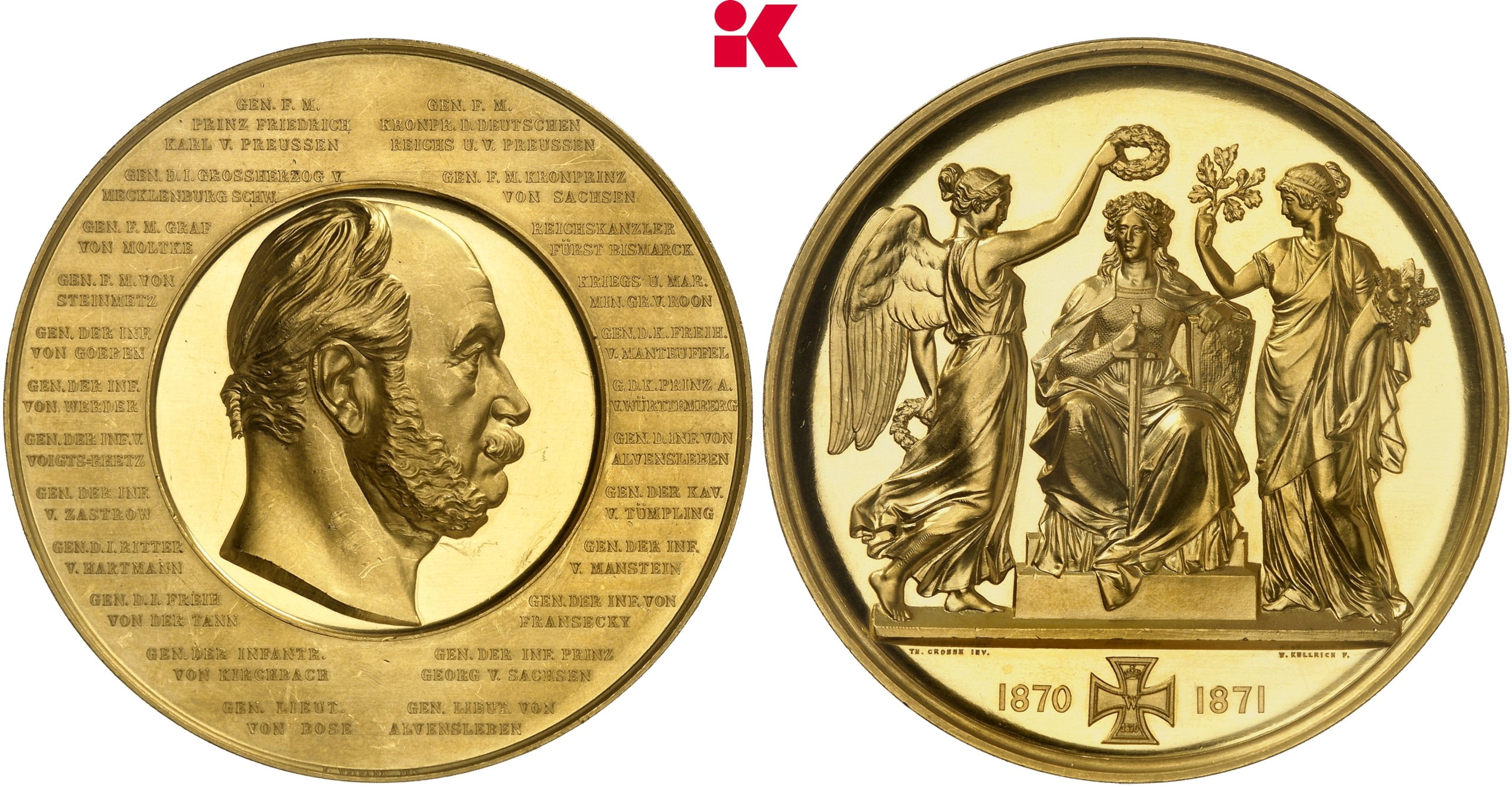
General’s Medal in the weight of 120 ducats, 1871,
commemorating the victory over France.
A magnificent specimen.
From the estate of Emperor William I.
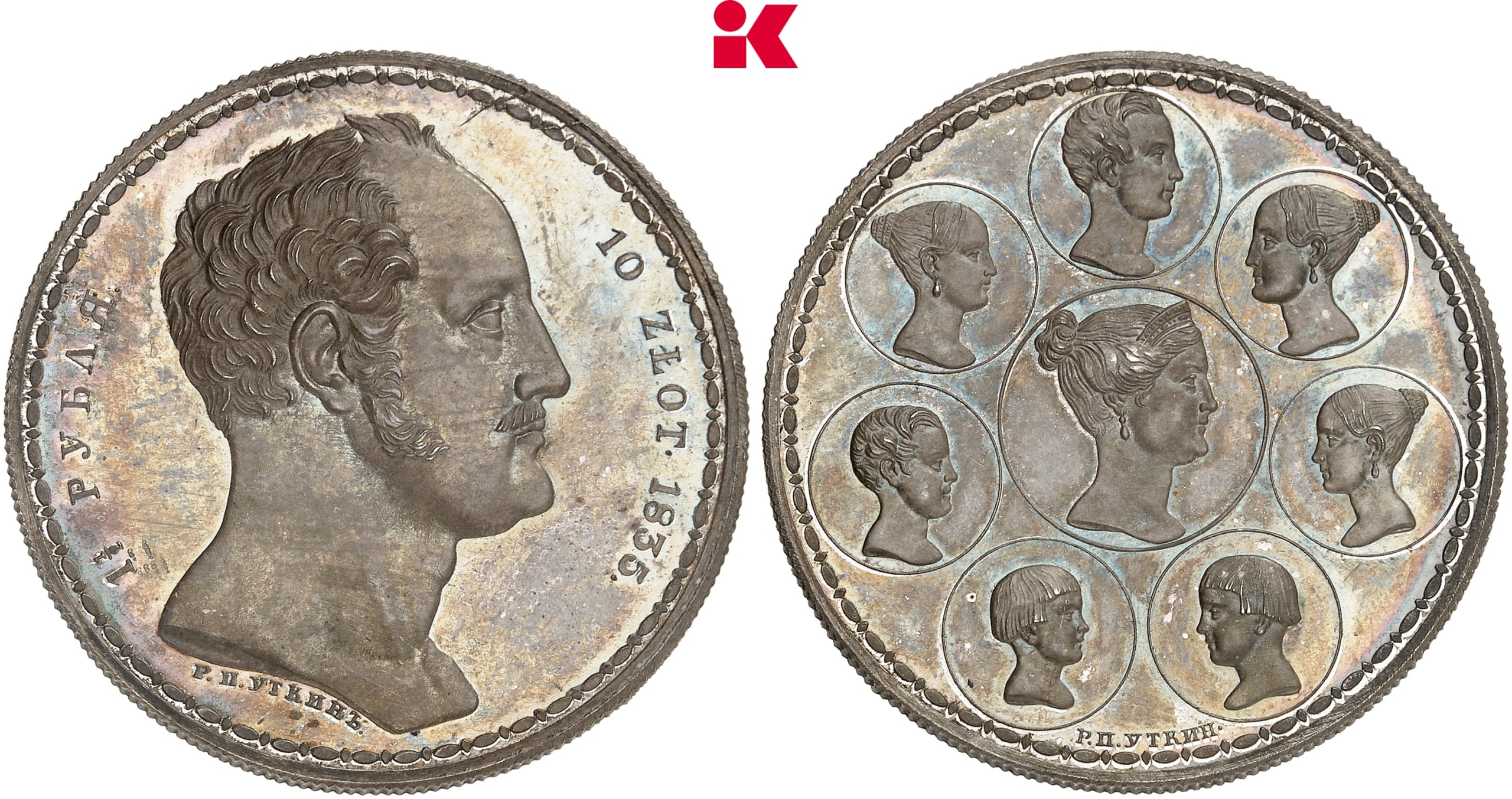
1 1/2 rubles (10 zlotys), 1835, St. Petersburg.
NGC MS 64 (Top Pop).
Only 36 examples struck.
A cabinet piece from polished dies.
From the estate of King Frederick William IV.
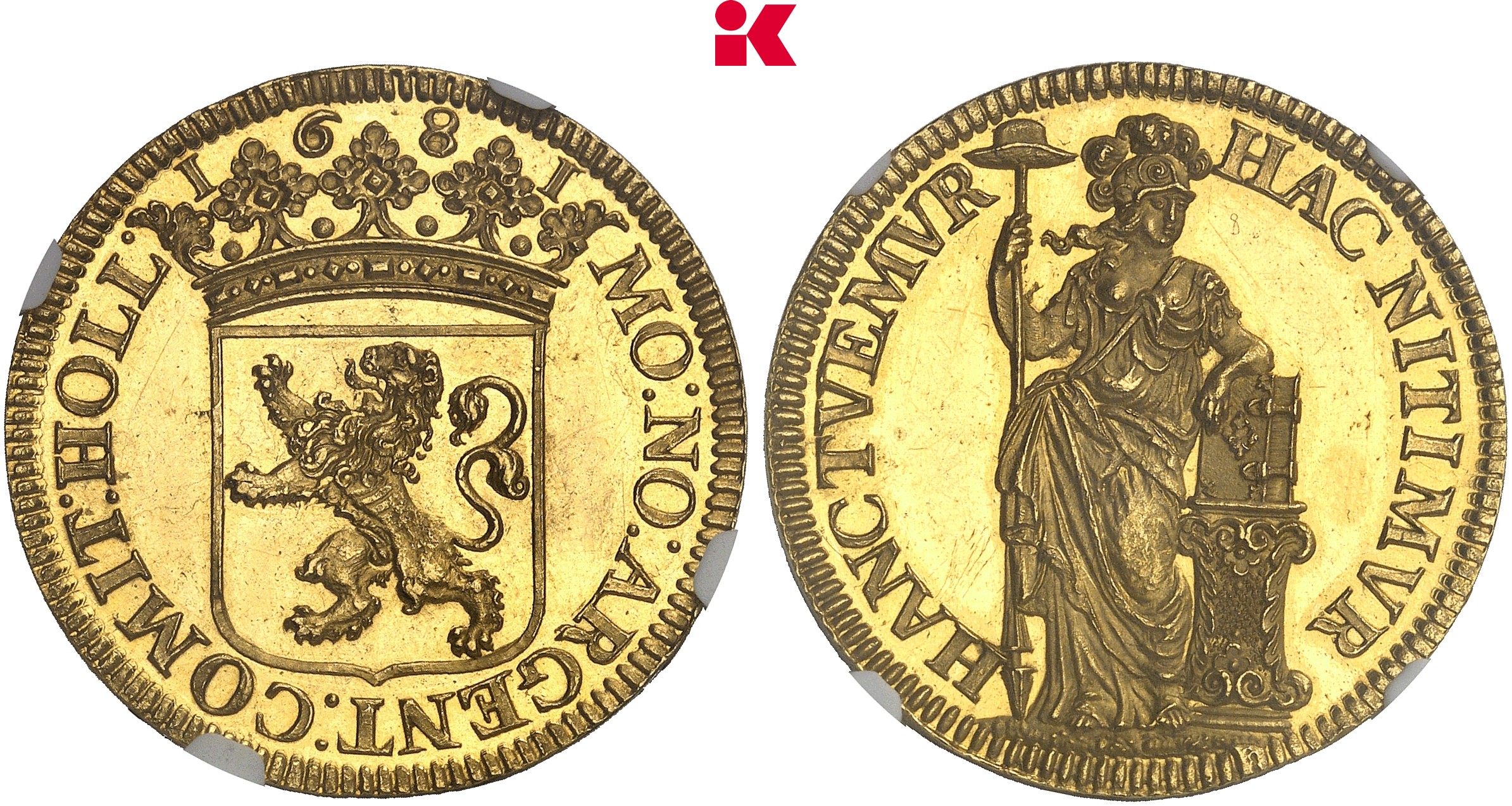
5 ducats, 1681.
Struck with the dies of a guilder.
NGC PF 64 Cameo.
Proof.
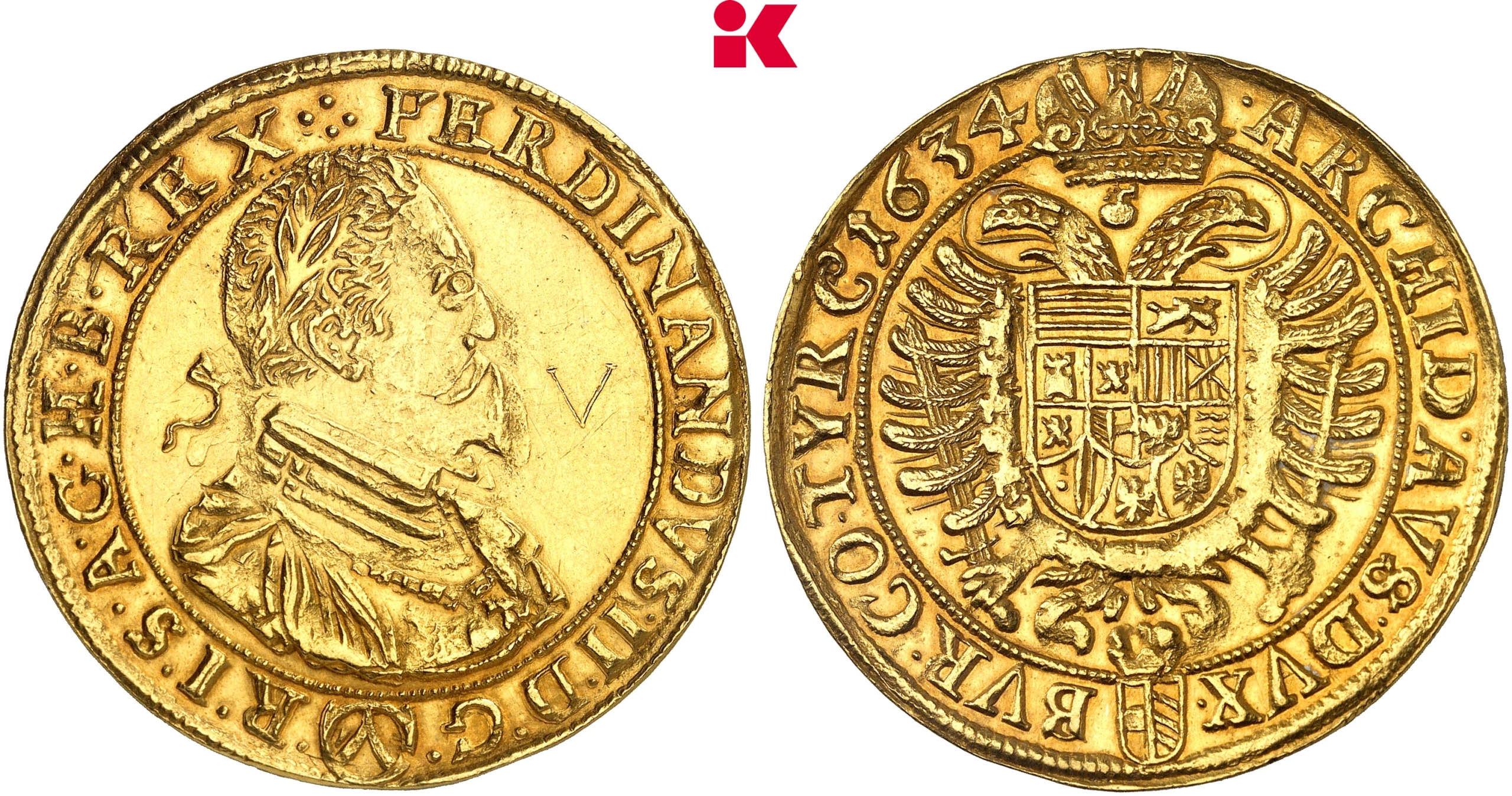
5 ducats, 1634, Vienna.
Extremely rare.
Extremely fine-uncirculated.
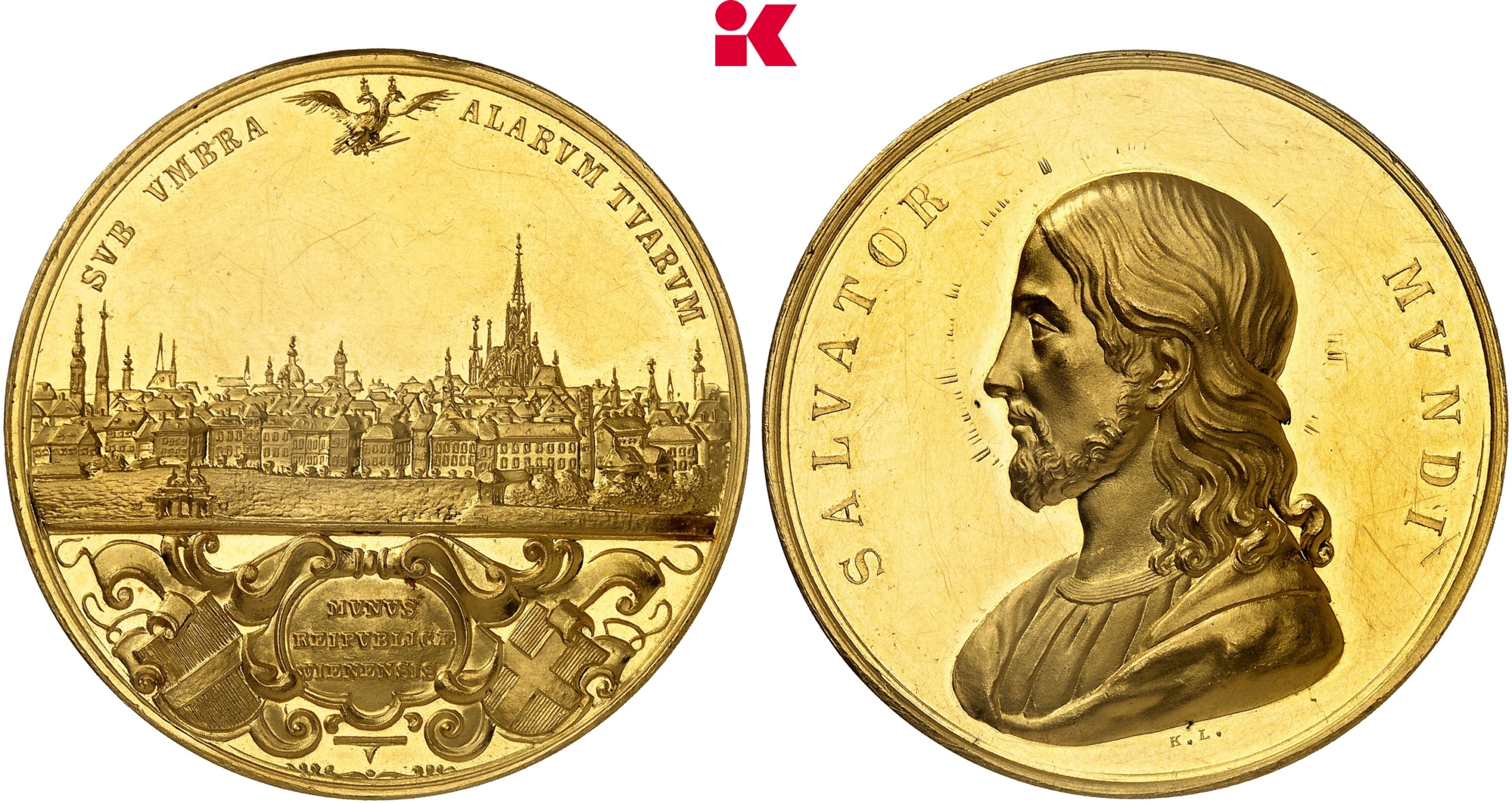
Salvator Medal in the weight of 12 ducats,
n. d.(around 1840).
NGC PF 61 CAMEO.
Proof.
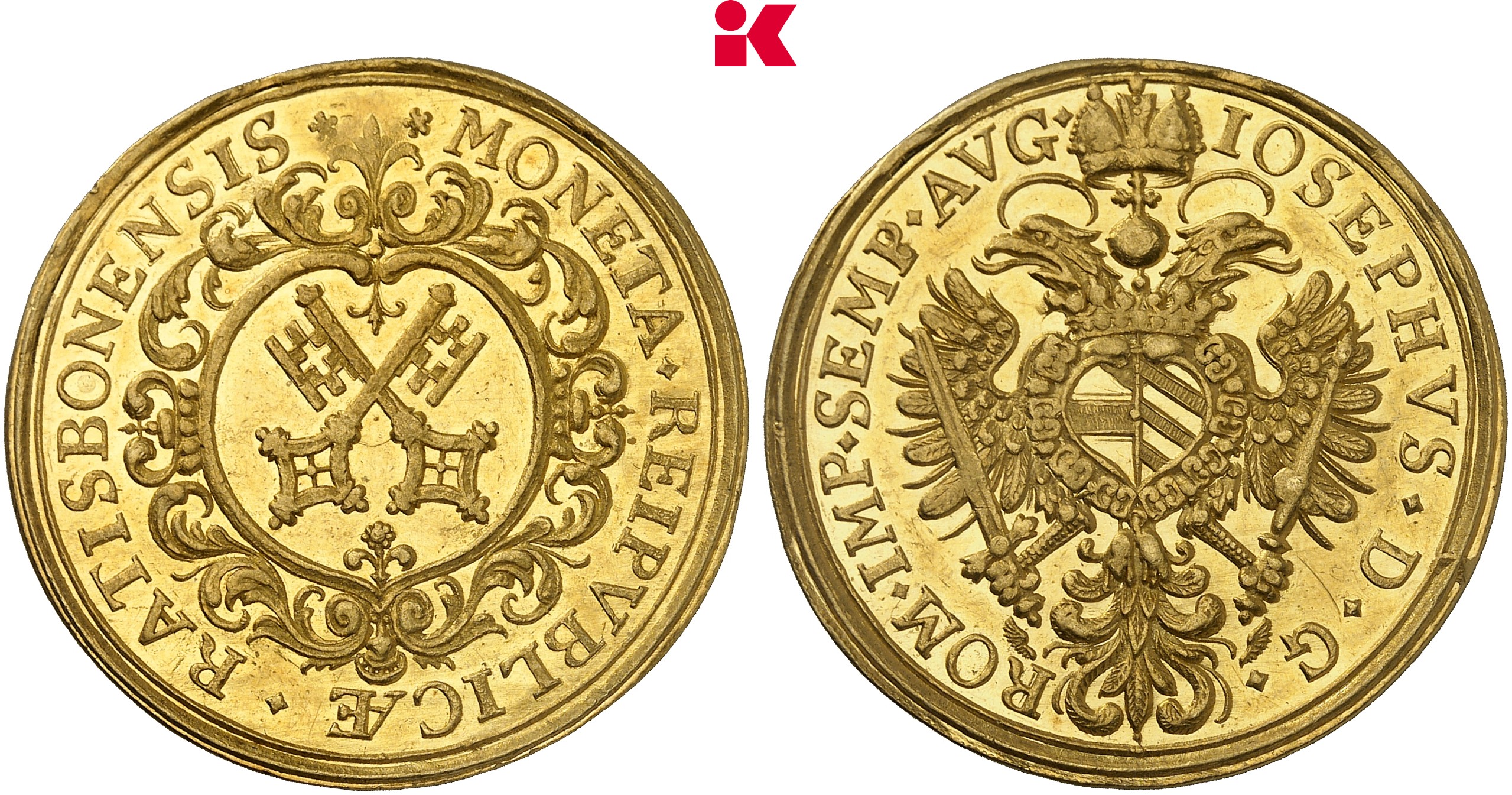
5 ducats, n. d. (1708–1710),
with the title of Joseph I. NGC MS 64.
Extremely rare. According to mint records,
only 7 copies struck.
A magnificent piece.
Archive: People and Markets
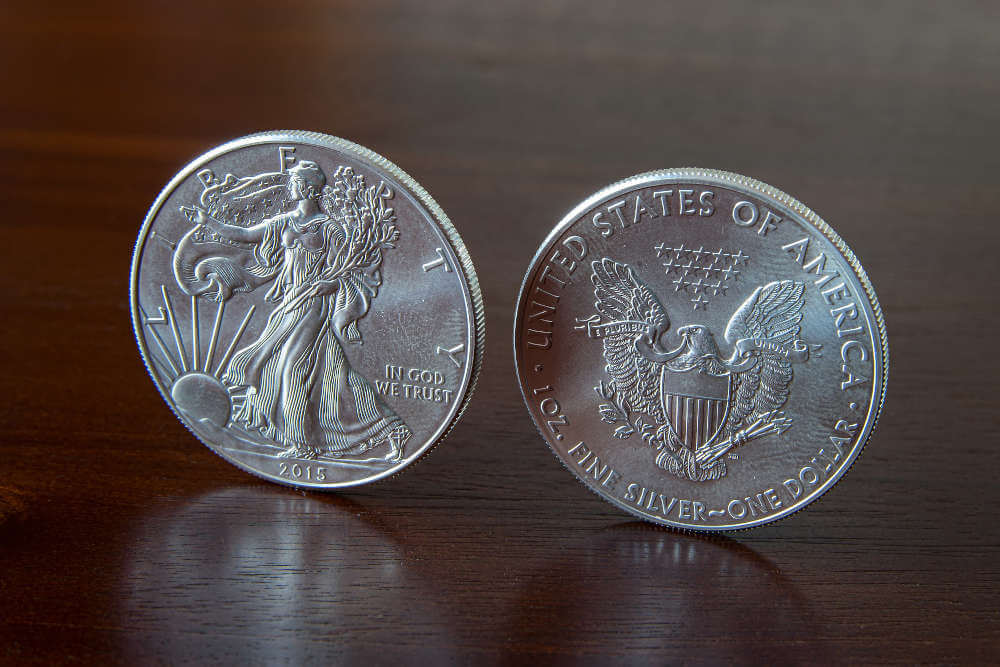
Call for Paper: Explain How Money Helped Building National Identity
How have coinage or paper currency been used to create or modify national identity in history? That is the topic of the Sundman Lecture Symposium at the 2023 ANA’s World’s Fair of Money. Any ideas? Submit your summary!
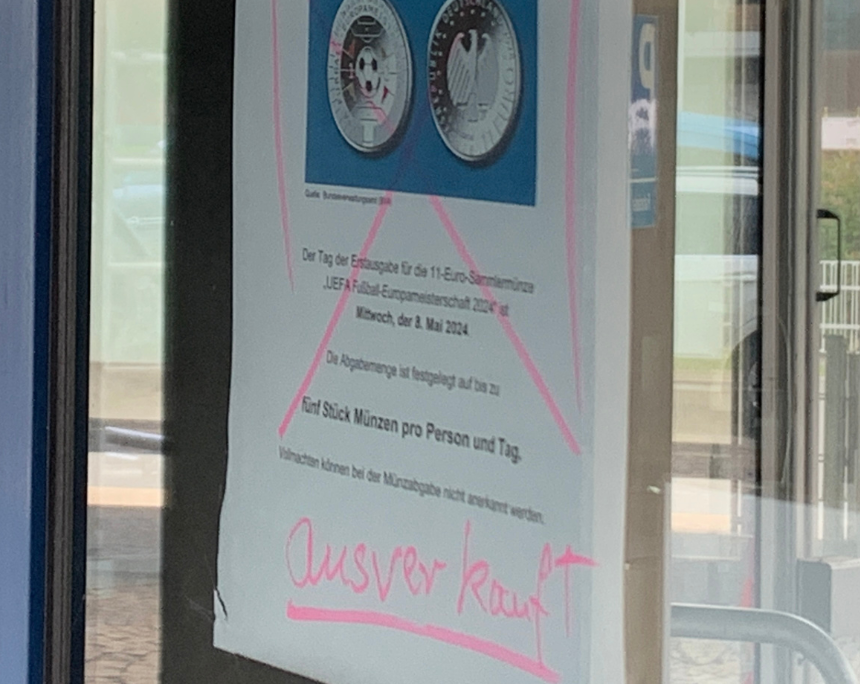
Successful Launch of the 11-Euro Football Coin for the 2024 European Championship
The large crowds and the fact that the 11-euro coin sold out quickly show how popular it is with the general public. The unusual collector issue fascinates football fans and numismatists alike and could become a popular souvenir across Europe.
Archive: Coins, Medals and more
 https://new.coinsweekly.com/wp-content/uploads/2025/04/2025KW16HA03_00.jpg
684
860
Lucie Loechel
https://new.coinsweekly.com/wp-content/uploads/2023/01/logo-coinsweekly_590x204.png
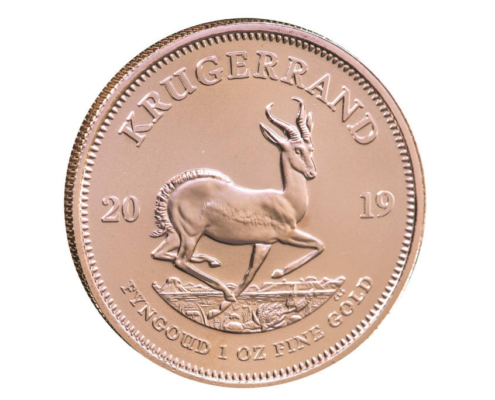
Lucie Loechel2025-04-17 08:26:292025-04-17 11:49:37The Birth of the Krugerrand
https://new.coinsweekly.com/wp-content/uploads/2025/04/2025KW16HA03_00.jpg
684
860
Lucie Loechel
https://new.coinsweekly.com/wp-content/uploads/2023/01/logo-coinsweekly_590x204.png
Lucie Loechel2025-04-17 08:26:292025-04-17 11:49:37The Birth of the Krugerrand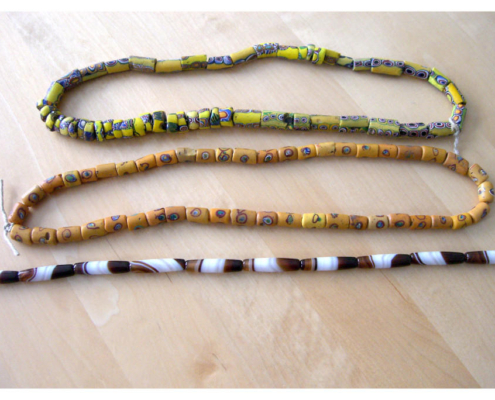 https://new.coinsweekly.com/wp-content/uploads/2025/04/2025KW16HA01_00.jpg
684
860
Lucie Loechel
https://new.coinsweekly.com/wp-content/uploads/2023/01/logo-coinsweekly_590x204.png
Lucie Loechel2025-04-17 08:34:042025-04-17 14:10:25What People Used to Pay With in South Africa
https://new.coinsweekly.com/wp-content/uploads/2025/04/2025KW16HA01_00.jpg
684
860
Lucie Loechel
https://new.coinsweekly.com/wp-content/uploads/2023/01/logo-coinsweekly_590x204.png
Lucie Loechel2025-04-17 08:34:042025-04-17 14:10:25What People Used to Pay With in South Africa
Beware of This Scam! These Euro Error Coins Are Not Error Coins
The Internet is currently full of so-called “error coins” – and many collectors fall victim to fraudulent offers. Our author numiscontrol explains what you need to know about the minting process to easily notice when something is off.
CIT’s Wild Mongolia – Snow Leopard
Wild Mongolia is the series with which CIT first introduced the new possibilities of smartminting® 2.0. By now, CIT has once again expanded the possibilities of smartminting® with the launch of smartminting® 4.0, and this is already the fifth issue of the Wild Mongolia series. It is dedicated to the snow leopard and features yet another innovation.