







Medieval Coin Hoard Found in the Black Forest
We owe the discovery of one of the most extensive medieval coin hoards of recent decades to the diligence of a citizen of the Glotteral Valley. The discovery is said to be the largest coin hoard found in South Baden in 75 years.
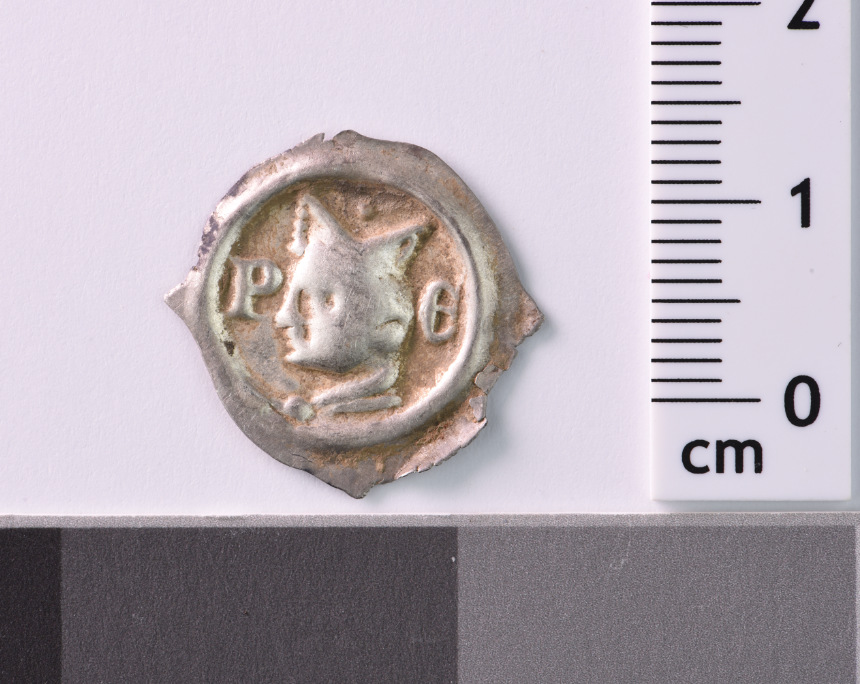
One of the discovered coins, Breisach type. Photo: State Office for the Preservation of Historical Monuments of the Stuttgart Regional Council.
At the request of an employee of the Landesamt für Denkmalpflege (LAD, State Office for the Preservation of Historical Monuments) at the Regierungspräsidium (Regional Council) in Stuttgart, this citizen, who is very interested in archaeology, observed the work that was carried out at the beginning of May 2024 to lay a pipeline near a local swimming pool. He noticed “small metal plates” during the excavation. When inspecting the pipeline trench, further discoveries were made and immediately reported to the LAD. Together with a representative of the authority, the site was inspected on the very same day and the finds (about 1000 coins) recovered. At the same time, three LAD-certified detectorists searched the site on behalf of the LAD. Even the sometimes adverse conditions – rain covered the excavation site in knee-deep mud – could not discourage them. Their perseverance was rewarded with the discovery of another about 600 coins.
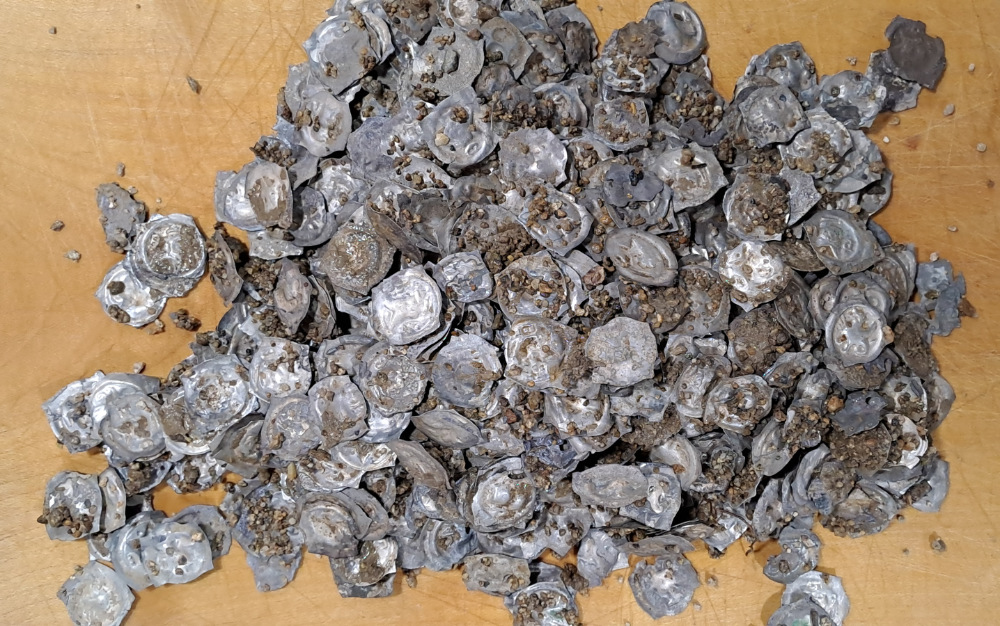
The Glottertal coin hoard. Photo: State Office for the Preservation of Historical Monuments of the Stuttgart Regional Council.
After the coins were somewhat clean, a first identification attempt was made: “They are mainly coins from the mints of Breisach, Zofingen and Freiburg, minted in the period around 1320. In addition, there are some coins from Basel, St. Gallen, Zurich, Laufenburg and Colmar,” says Andreas Haasis-Berner, archaeologist at the LAD.
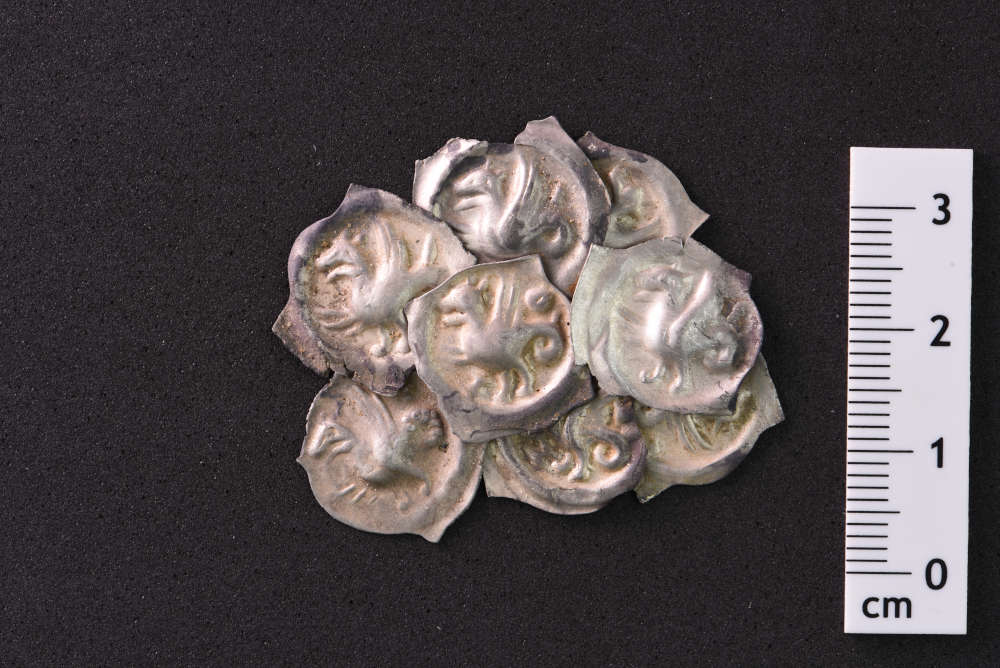
Coins of the Zofingen type. Photo: State Office for the Preservation of Historical Monuments of the Stuttgart Regional Council.
Commenting on the significance of the find, he said: “The analysis of this coin hoard will provide information on coin circulation in Breisgau, the activities of the mints, on the silver trade but also on mining in the Glottertal valley.” Asked if the treasure was valuable at the time, the archaeologist replied: “You could have bought about 150 sheep with these coins.”
