







154Prussia. Frederick William IV, 1840–1861.
Gold medal in the weight of 50 ducats
commemorating the publication of the second volume
of Alexander von Humboldt’s *Kosmos*.
NGC MS 65 PL.
From the estate of Emperor William I.
Estimate: 40.000 Euro

166Prussia. Frederick William IV, 1840–1861.
Gold medal in the weight of 50 ducats commemorating
the unveiling of the equestrian statue of
Frederick the Great on Unter den Linden in Berlin in 1851.
NGC MS 63 PL.
From the estate of Emperor William I.
Estimate: 25.000 Euro

191Prussia. William I, 1861–1888.
General’s Medal in the weight of 120 ducats, 1871,
commemorating the victory over France.
A magnificent specimen.
From the estate of Emperor William I.
Estimate: 75.000 Euro

297Russia. Nicholas I, 1825–1855. Family ruble.
1 1/2 rubles (10 zlotys), 1835, St. Petersburg.
NGC MS 64 (Top Pop).
Only 36 examples struck.
A cabinet piece from polished dies.
From the estate of King Frederick William IV.
Estimate: 250.000 Euro

1098Holland. Province.
5 ducats, 1681.
Struck with the dies of a guilder.
NGC PF 64 Cameo.
Proof.
Estimate: 40.000 Euro

1192HRE. Ferdinand II, 1592–1618–1637.
5 ducats, 1634, Vienna.
Extremely rare.
Extremely fine-uncirculated.
Estimate: 10.000 Euro

1266HRE. Vienna.
Salvator Medal in the weight of 12 ducats,
n. d.(around 1840).
NGC PF 61 CAMEO.
Proof.
Estimate: 15.000 Euro

1334City of Regensburg.
5 ducats, n. d. (1708–1710),
with the title of Joseph I. NGC MS 64.
Extremely rare. According to mint records,
only 7 copies struck.
A magnificent piece.
Estimate: 25.000 Euro

1602German New Guinea.
10 New Guinea Marks, 1895 A.
NGC MS 65.
A magnificent piece.
Estimate: 50.000 Euro

2757Saxony.
John Frederick the Magnanimous and
Maurice, 1541–1547.
Trinity Medal, 1544.
A masterpiece of German medal art. Magnificent,
excellent craftsmanship.
Estimate: 75.000 Euro
Archive: People and Markets

RPC Volumes V.2 and V.3 Now Available Online

The Roman Provincial Coinage project now published RPC volume V.2 and V.3 online. They cover all Roman provincial coinage issues from Pertinax to the death of Macrinus (AD 193-218) in all the Eastern provinces of the Roman Empire.
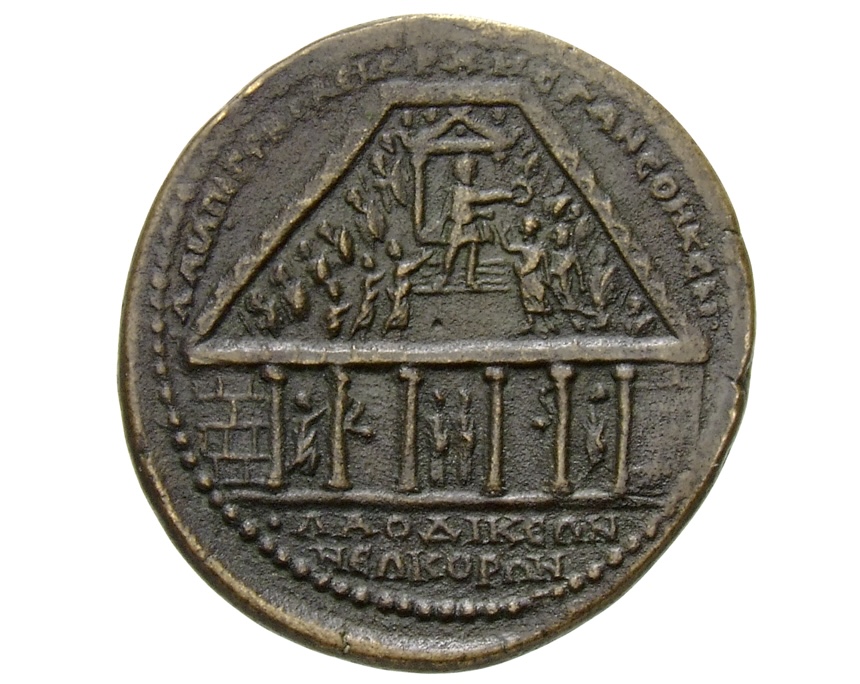
Caracalla from Laodicea ad Lycum: Berlin, Münzkabinett der Staatlichen Museen, 18202093. Photo by Reinhard Saczewski.

Caracalla from Laodicea ad Lycum: Berlin, Münzkabinett der Staatlichen Museen, 18202093. Photo by Reinhard Saczewski.

The aim of the Roman Provincial Coinage project is to produce a standard typology of the provincial coinage of the Roman Empire. This represents the first systematic treatment of the civic coinage at the height of the Roman empire, and will have great importance for the study of cultural, religious, political, economic, and administrative history at both a local and an imperial level.

The new parts include over 11,000 type descriptions and over 45,000 coins from 317 cities. The geography extends from Bithynia to Egypt. Further additions and corrections will be incorporated into the printed volume. Please submit feedback through RPC online.

  • Volume V.2 will be edited by A. Hostein and J. Mairat, with M. Amandry, F. Delrieux. and P.-O. Hochard.
  • Volume V.3 will by edited A. Burnett, with M. Amandry, L. Bricault, J. Mairat, S. Matthies, and D. Miebach.

Please note that the European provinces will be covered in Volume V.1, which is not yet online. The team kindly ask you to wait until its release before submitting feedback on that part of Volume V.

Don’t miss a thing!

Subscribe to our newsletter here