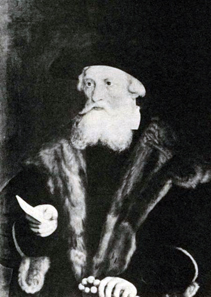
Pilgrim’s Ring and Coin of the Jewish War
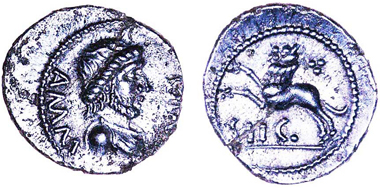
This is the story of a ring, bought from an Arab in Jerusalem, the feasts of Shavout and Sukkot and a coin of the Jewish War…
Richard the Lionheart is known as the epitome of a heroic king. Returning from the Holy Land he was captured in Austria and to be released only for an immense ransom. This incident had devastating repercussions for England.
By examining 12 coins we are going to stroll through Great Britain’s history – this is part 3.
Why is it that for centuries – or rather thousands of years – the head has served as the motif for the side of a coin? And why has this changed in the last 200 years? Ursula Kampmann poses these questions in her book ‘MenschenGesichter,’ from which the texts for our new series are taken.
After the murder of Dion, the ruler of Syracuse, his followers looked for help in Corinth, where the founding settlers of Syracuse had come from many centuries ago. And Timoleon in fact succeeded in stabilizing the Syracusan region.
David Michaels provides an overview of the history and coinage of the Seleukid Empire. The article also includes a rarity guide and a brief bibliography of historical and numismatic references to get any new collector started on the path to a thriving collection.
Why is it that for centuries – or rather thousands of years – the head has served as the motif for the side of a coin? And why has this changed in the last 200 years? This chapter of the series ‘Human Faces’ looks at the reasons why the attempt to establish national economy in ancient Rome failed.
Why does this coin feature both the Pope and the trademark of an influential merchant family? This coin, portraying Julius II and the Fugger family business, illustrates that economy and religion always have and always will go hand in hand.
Why is it that for centuries – or rather thousands of years – the head has served as the motif for the side of a coin? And why has this changed in the last 200 years? This chapter of the series ‘Human Faces’ looks at why Julian was nicknamed ‘The Apostate’.
Why was the human head the motif on coins for centuries, no, for millennia? And why did that change in the last 200 years? In this episode, we will witness how a confident Isabella of Castile takes her rightful place on the throne next to her husband.
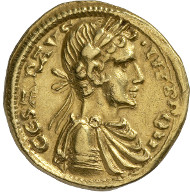
Why is it that for centuries – or rather thousands of years – the head has served as the motif for the side of a coin? And why has this changed in the last 200? In this episode, Frederick II proves that the sword is not the only way to gain a throne.
We are the bridge connecting the international numismatic world. Our readers include collectors, professional coin dealers and researchers, as well as all those involved in coin production. We are read in 170 countries! We provide you with information on everything you want to know about the subject of money – from antiquity to the present day. And much more...
Follow us
You need to load content from reCAPTCHA to submit the form. Please note that doing so will share data with third-party providers.
More InformationYou are currently viewing a placeholder content from Facebook. To access the actual content, click the button below. Please note that doing so will share data with third-party providers.
More InformationYou are currently viewing a placeholder content from Instagram. To access the actual content, click the button below. Please note that doing so will share data with third-party providers.
More InformationYou are currently viewing a placeholder content from X. To access the actual content, click the button below. Please note that doing so will share data with third-party providers.
More Information