





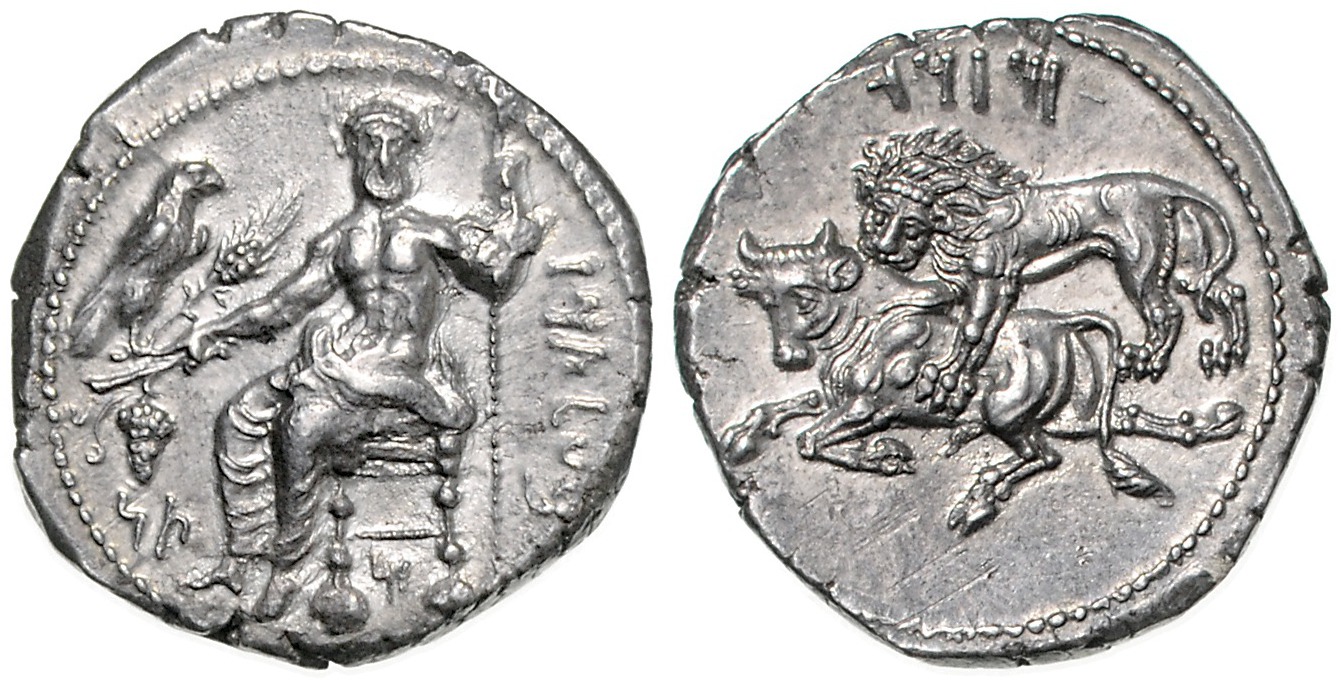
Persian satrap Mazzaios.
AR Stater (361-334 BC)
with Baal of Tarsus.
Condition: ef.
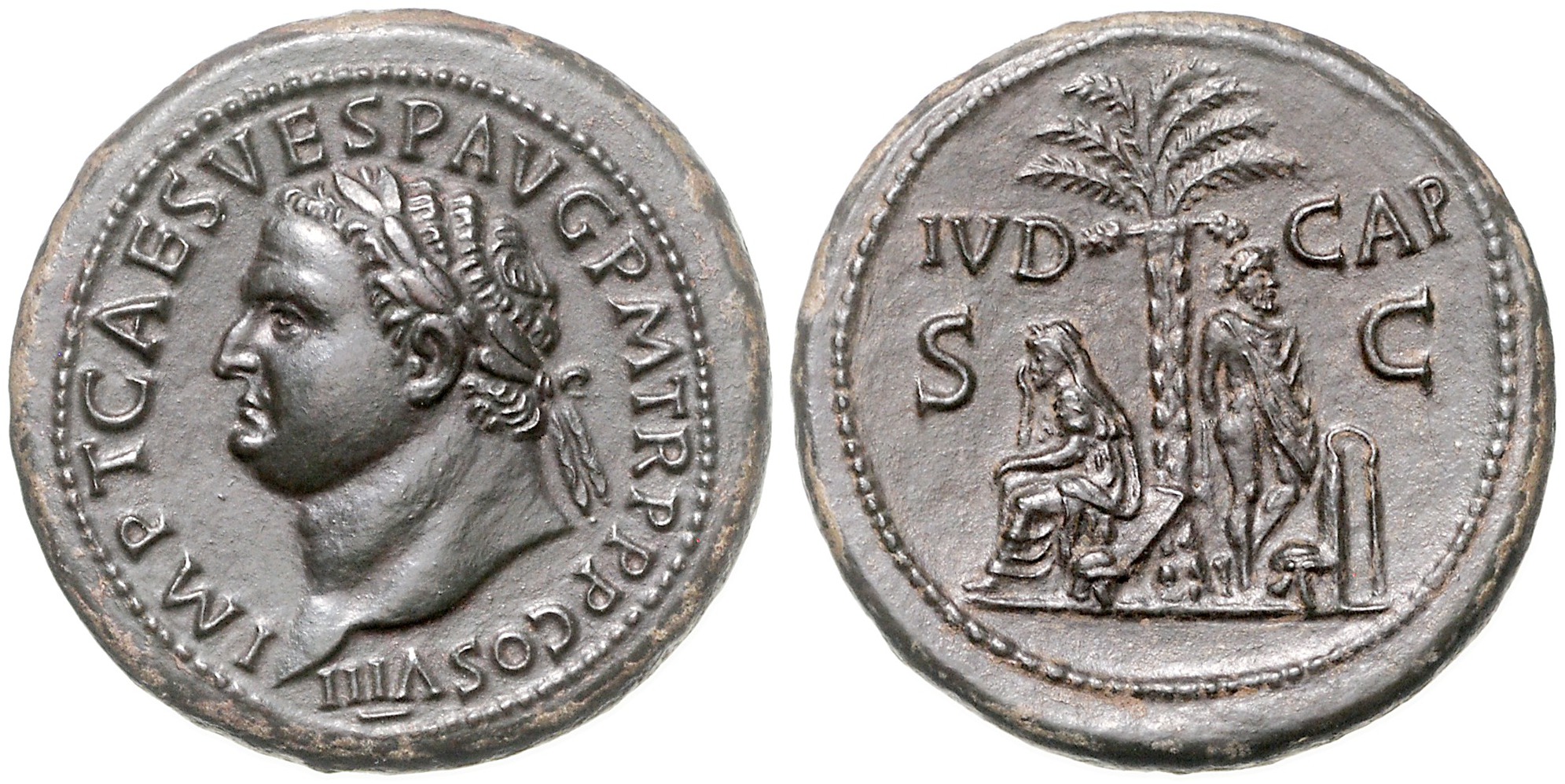
AE Sestertius (AD 80–81), Rome.
"Judaea Capta" type.
Condition: rare, ef.
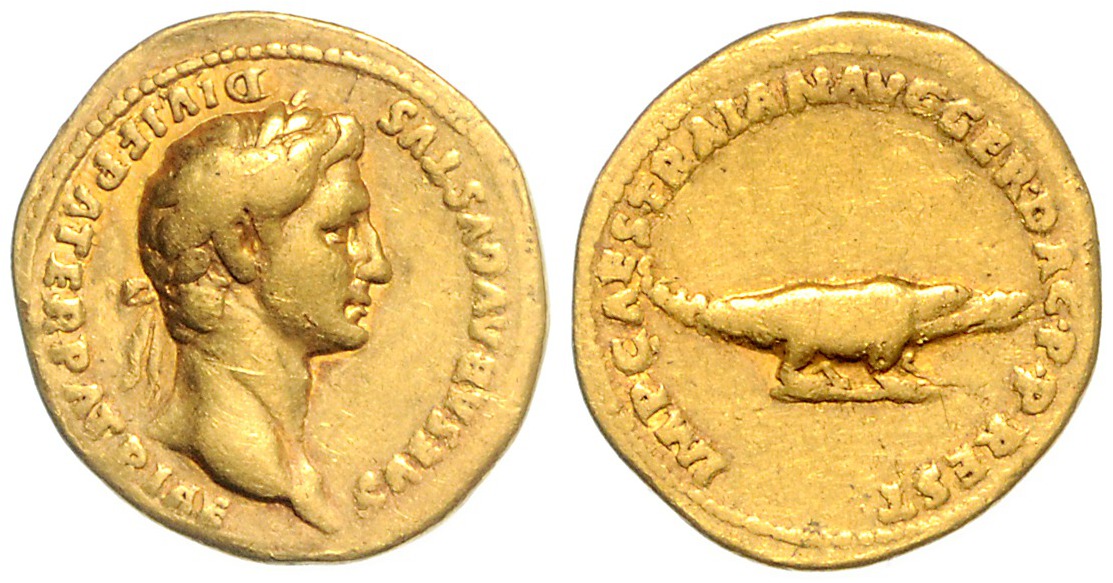
AV Aureus (AD 107–113), Rome.
Restitution issue honoring Augustus.
Condition: extremely rare, near vf.
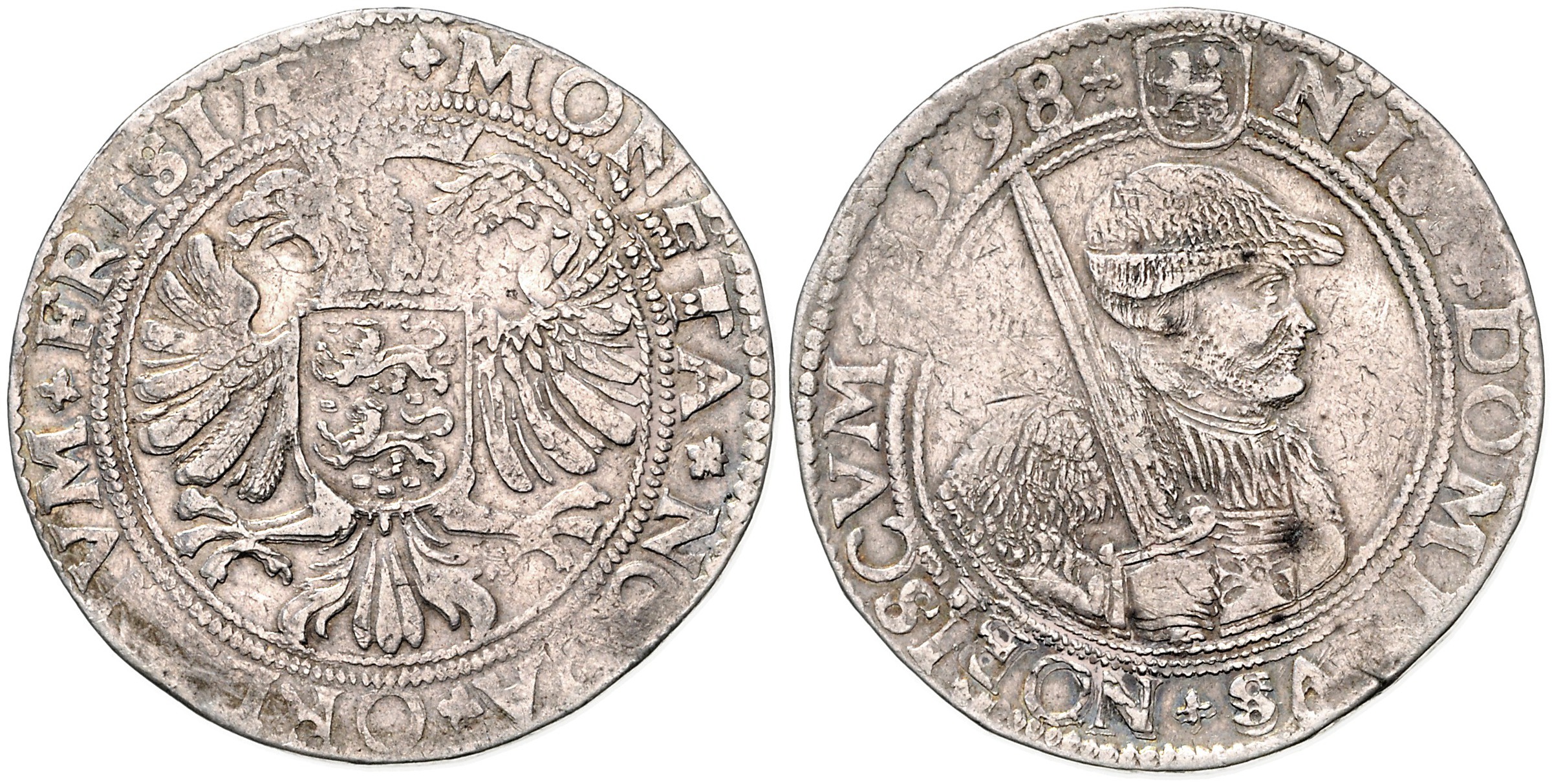
Arendsrijksdaalder (Eagle Rixdollar), 1598.
Condition: very rare, vf.
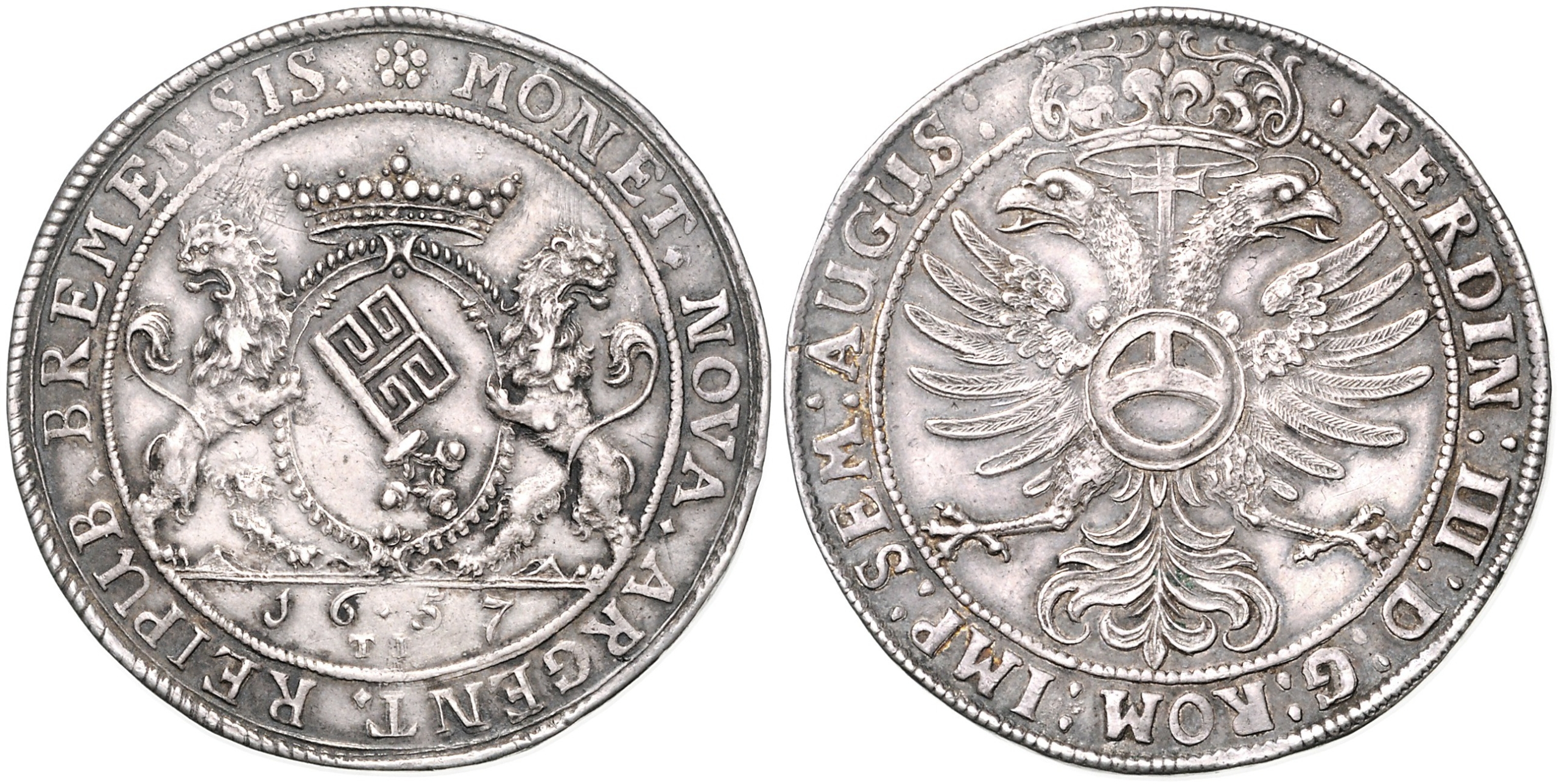
Thaler, 1657.
Bearing the title of Ferdinand III.
Condition: near ef/ef.
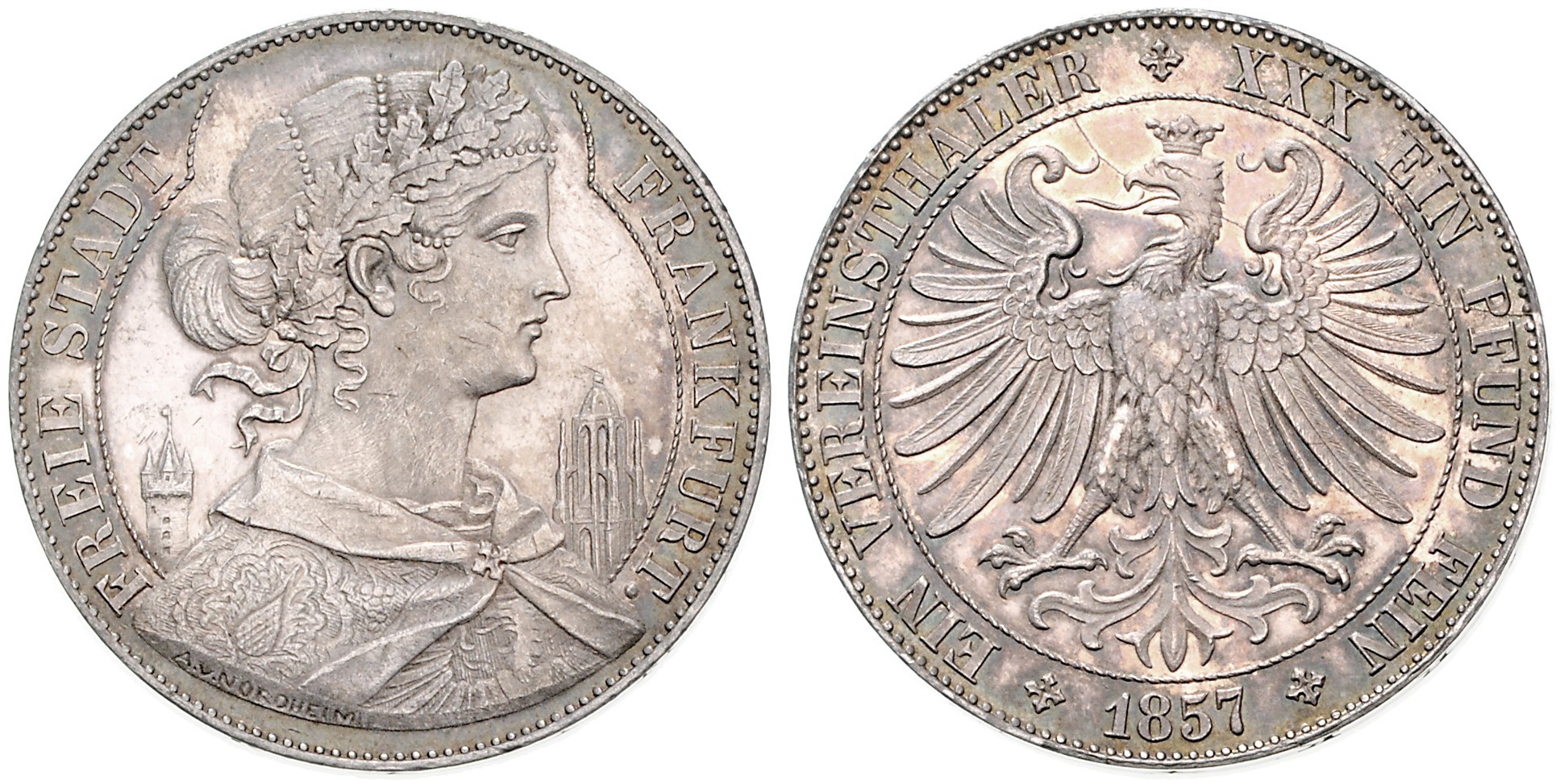
Vereinstaler 1857.
Condition: attr. piece, first strike.
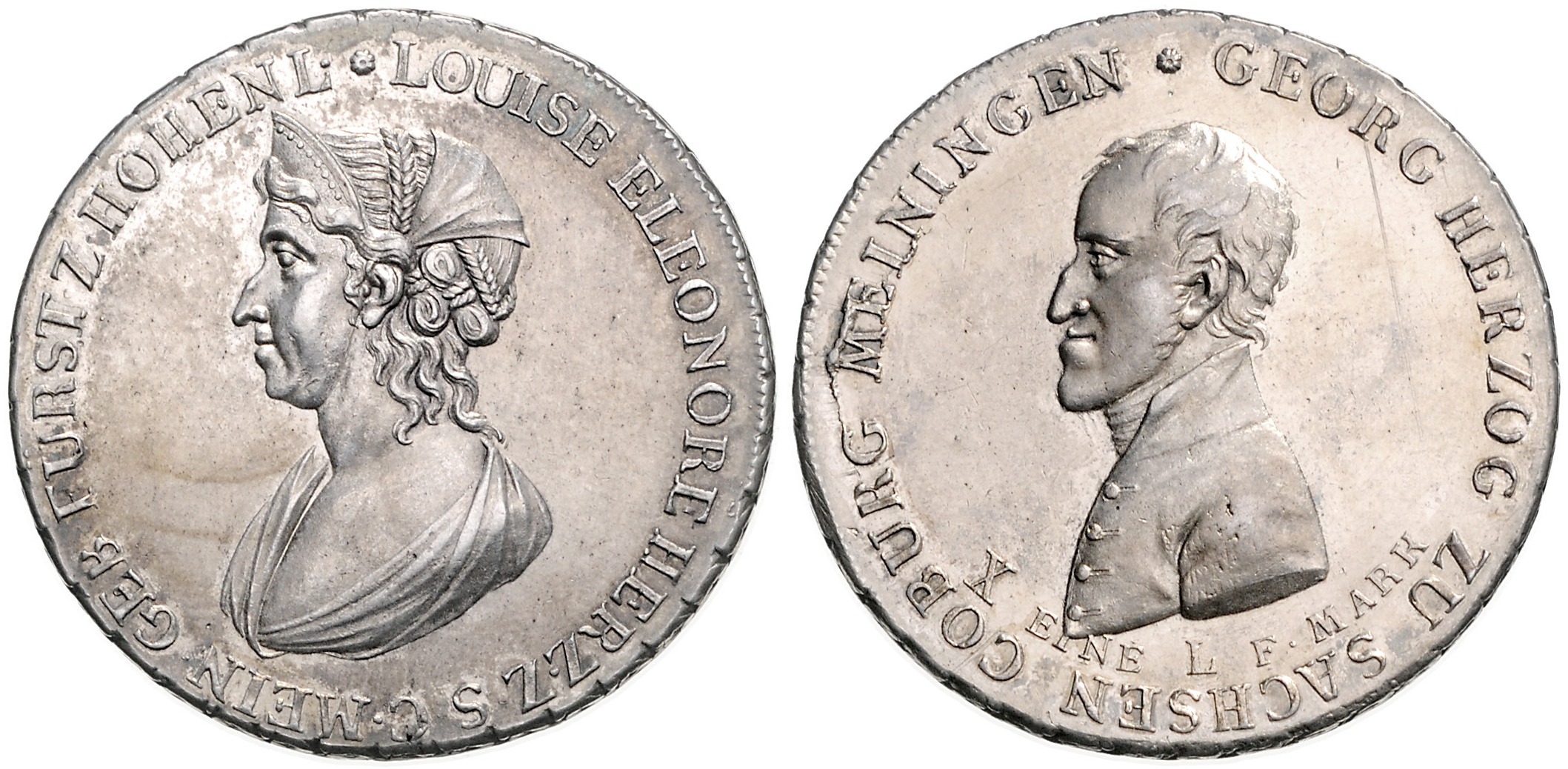
Convention thaler, n.d. (after 1803),
issued on the death of Duke Georg.
Condition: extremely rare, unc.
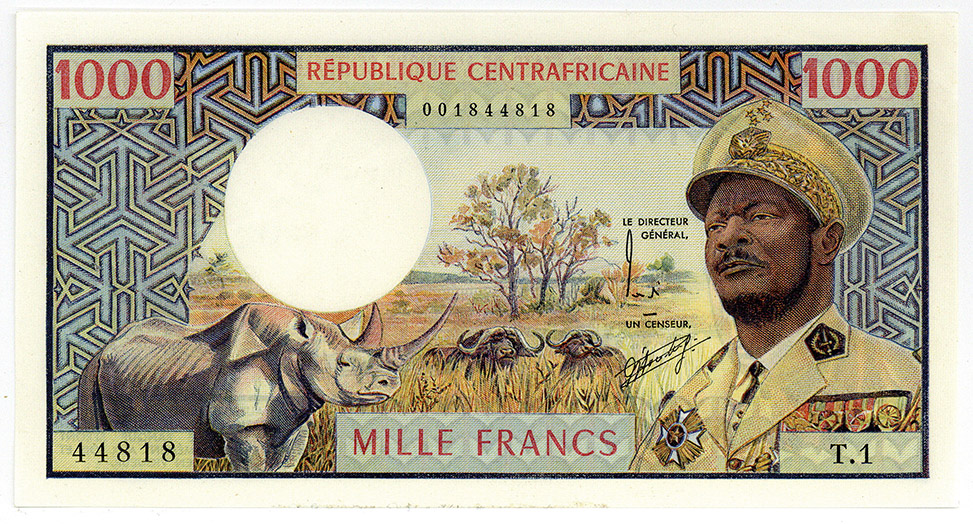
Banque des États de l'Afrique Centrale,
1000 francs 1974.
Condition: I-.
Archive: People and Markets
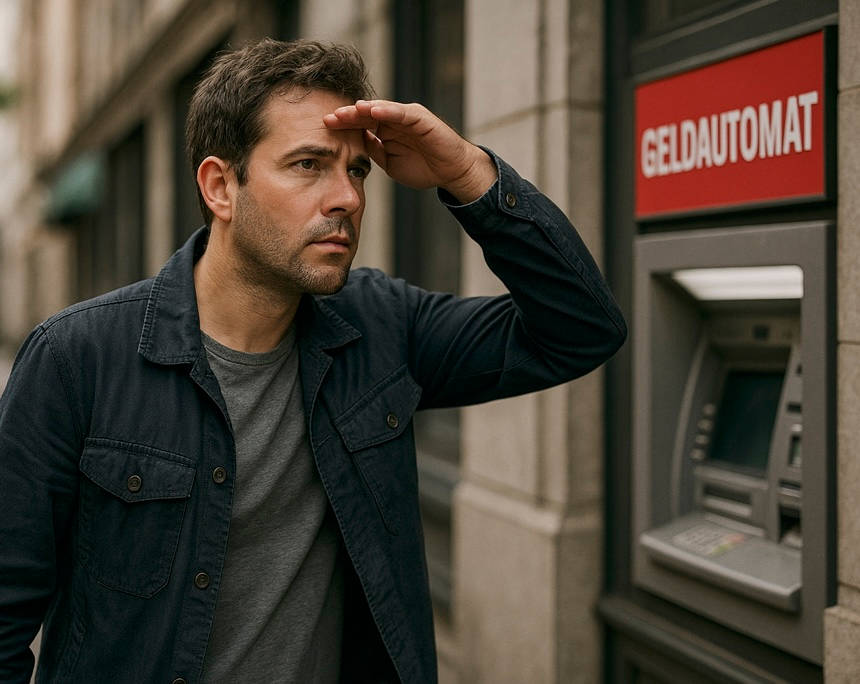
Access to Cash Becoming More Difficult: Bundesbank Sees Growing Challenges
Despite declining numbers of ATMs and bank branches, the Bundesbank currently still considers access to cash in Germany to be secure. However, in its March 2025 monthly report, it warns of clear downward trends.
Numisma – Zoom Seminars of the Australian Centre for Ancient Numismatic Studies
Registration is now open to attend the upcoming zoom seminar series of the Australian Centre for Ancient Numismatic Studies (ACANS). Everyone interested in the study of ancient coins is welcome and encouraged to join the online lecture series. Find the upcoming lectures here.
Archive: Coins, Medals and more
 https://new.coinsweekly.com/wp-content/uploads/2024/03/2024KW12HA_00.jpg
684
860
Ursula Kampmann
https://new.coinsweekly.com/wp-content/uploads/2023/01/logo-coinsweekly_590x204.png
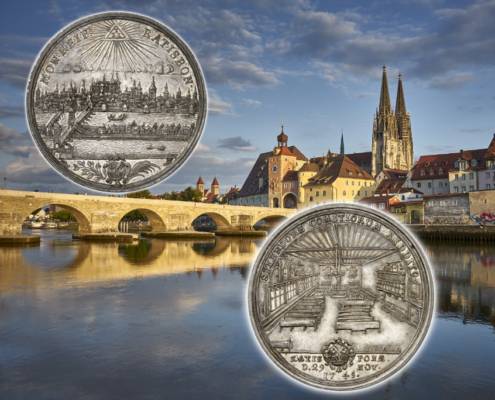
Ursula Kampmann2024-03-14 11:47:492024-03-14 11:57:08Regensburg: Where the Emperor and the Empire Met
 https://new.coinsweekly.com/wp-content/uploads/2024/09/2024KW36HA_00.jpg
684
860
Lucie Loechel
https://new.coinsweekly.com/wp-content/uploads/2023/01/logo-coinsweekly_590x204.png
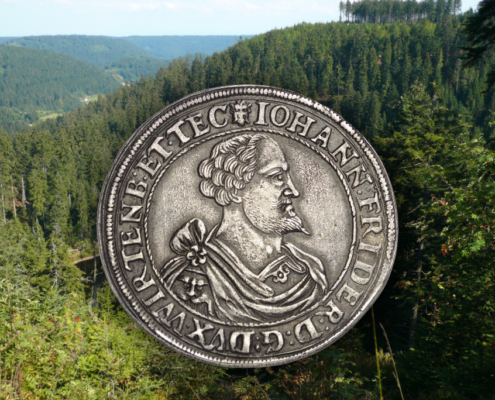
Lucie Loechel2024-09-05 10:46:502024-09-05 13:34:39Silver for Württemberg
Eisleben, Germany: Church Treasure Recovered After Almost 400 Years
What a find: last year, a hoard of 864 coins was discovered in a sandstone figure in a church in Eisleben, Germany. The coins were hidden there during the Thirty Years’ War and provide a rare insight into the currency in circulation at that time. A coin expert from the region tells us more about it.
Major Exhibition on the Iberians in Basel
A major exhibition on the Iberian peoples is currently on display at the Antikenmuseum Basel. In cooperation with the Museu d’Arqueologia de Catalunya, over 260 important exhibits from the European Iron Age are on display.