






Archive: People and Markets
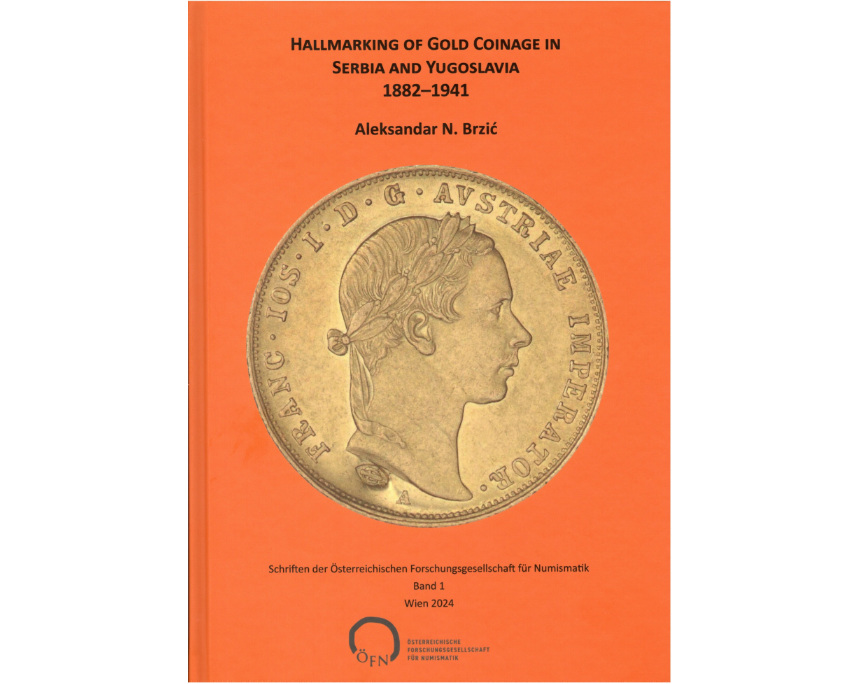
New Publication on Hallmarks of Gold Coinage in Serbia and Yugoslavia
After the work of countless renowned scholars, is it even possible to make new findings in the numismatics of Austria-Hungary and the Balkans? The Austrian Research Society for Numismatics says „yes!“ and proves this with Aleksandar Brzić’s new book on Serbian and Yugoslav hallmarks on gold coins from 1882 to 1941.
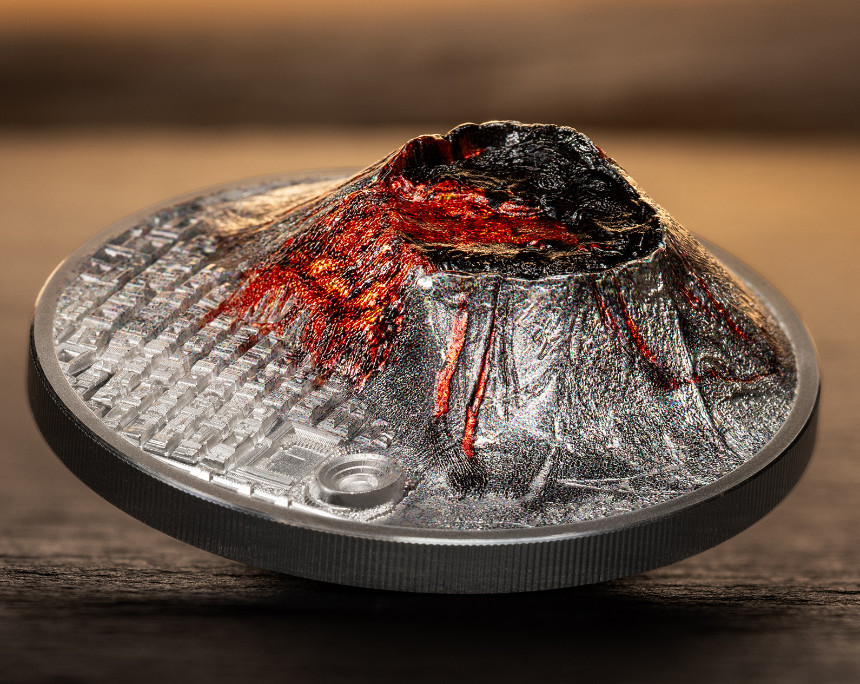
A Force of Nature Embodied in a Coin: CIT’s Lost City – Pompeii
CIT has captured the dramatic eruption of Mount Vesuvius in the year 79 with a three-dimensional representation. True to scale, and thanks to smartminting® in every detail, we see erupting Vesuvius, pouring its lava over the buildings of the city of Pompeii.
Archive: Coins, Medals and more
 https://new.coinsweekly.com/wp-content/uploads/2023/06/2023KW24HA00.jpg
500
497
Bruno
https://new.coinsweekly.com/wp-content/uploads/2023/01/logo-coinsweekly_590x204.png
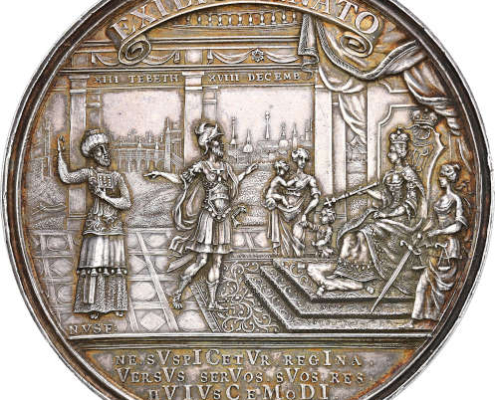
Bruno2023-06-14 09:53:382023-06-27 11:20:26Maria Theresa and Her Persecution of Jews
https://new.coinsweekly.com/wp-content/uploads/2023/06/2023KW24HA00.jpg
500
497
Bruno
https://new.coinsweekly.com/wp-content/uploads/2023/01/logo-coinsweekly_590x204.png
Bruno2023-06-14 09:53:382023-06-27 11:20:26Maria Theresa and Her Persecution of Jews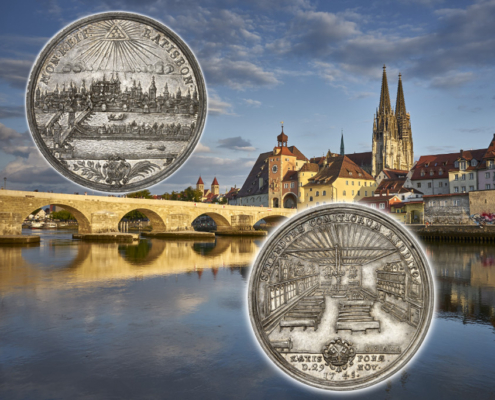 https://new.coinsweekly.com/wp-content/uploads/2024/03/2024KW12HA_00.jpg
684
860
Ursula Kampmann
https://new.coinsweekly.com/wp-content/uploads/2023/01/logo-coinsweekly_590x204.png
Ursula Kampmann2024-03-14 11:47:492024-03-14 11:57:08Regensburg: Where the Emperor and the Empire Met
https://new.coinsweekly.com/wp-content/uploads/2024/03/2024KW12HA_00.jpg
684
860
Ursula Kampmann
https://new.coinsweekly.com/wp-content/uploads/2023/01/logo-coinsweekly_590x204.png
Ursula Kampmann2024-03-14 11:47:492024-03-14 11:57:08Regensburg: Where the Emperor and the Empire Met
Greysheet Launches Red Book Podcast Series
Greysheet launched The Red Book Podcast, a new online series hosted by John Feigenbaum and Jeff Garrett. The podcast delves into the rich history and fascinating stories surrounding the legendary A Guide Book of United States Coins, affectionately known as the “Red Book”.
Leu Numismatik Sponsors the New Friedrich Imhoof-Blumer Fellowship in Winterthur
Leu Numismatik is supporting the new Friedrich Imhoof-Blumer Fellowship at the Coin Cabinet in Winterthur, which will be awarded for the first time in 2025. The fellowship, endowed with CHF 3,000, is aimed at early-career researchers working on a numismatic project. Application deadline: June 30, 2025.