











Archive: People and Markets
9th International Symposium in Early Medieval Coinage 2024
The 9th International Symposium in Early Medieval Coinage will be held in April 2024. The symposium is a great opportunity for specialists, collectors and detectorists to meet – and of course to give a talk.

Vatican Plans a Comeback: New Online Shop Launches in July
This move has nothing to do with the inauguration of Pope Leo XIV but has been in preparation for months: Starting in July 2025, the Vatican will resume sales of its philatelic and numismatic products.
Archive: Coins, Medals and more
 https://new.coinsweekly.com/wp-content/uploads/2025/06/00IMG_0657.jpg
684
860
Ursula Kampmann
https://new.coinsweekly.com/wp-content/uploads/2023/01/logo-coinsweekly_590x204.png
Ursula Kampmann2025-06-12 09:24:042025-06-12 09:38:54In Search of the Big Five
https://new.coinsweekly.com/wp-content/uploads/2025/06/00IMG_0657.jpg
684
860
Ursula Kampmann
https://new.coinsweekly.com/wp-content/uploads/2023/01/logo-coinsweekly_590x204.png
Ursula Kampmann2025-06-12 09:24:042025-06-12 09:38:54In Search of the Big Five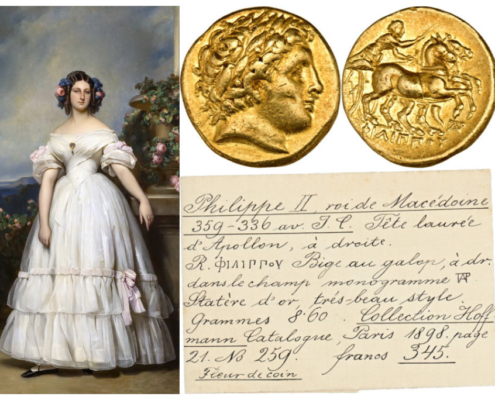 https://new.coinsweekly.com/wp-content/uploads/2024/10/2024KW43HA_00.jpg
684
860
Lucie Loechel
https://new.coinsweekly.com/wp-content/uploads/2023/01/logo-coinsweekly_590x204.png
Lucie Loechel2024-10-24 10:15:002024-10-24 13:59:31Clémentine d’Orléans: Extraordinary Woman and Coin Collector
https://new.coinsweekly.com/wp-content/uploads/2024/10/2024KW43HA_00.jpg
684
860
Lucie Loechel
https://new.coinsweekly.com/wp-content/uploads/2023/01/logo-coinsweekly_590x204.png
Lucie Loechel2024-10-24 10:15:002024-10-24 13:59:31Clémentine d’Orléans: Extraordinary Woman and Coin Collector
Putting Survival Ratios of Ancient Coinages Into Perspective – Call for Papers
The 7th International Numismatic Conference of the Coin Cabinet of the Royal Library of Belgium takes place on 5 October 2024 and will focus on survival ratios of ancient coinages. Proposals for submissions are expected by 1 December 2023.
2022 Biggest Year for Treasure Finds in the UK
Earlier this year, the British Museum launched the latest Portable Antiquities Scheme (PAS) Annual Report. This showed that in 2022, over 50,000 archaeological finds were recorded, including 1,378 Treasure cases – the highest ever reported in a single year. See some of the highlights here.