






Archive: People and Markets
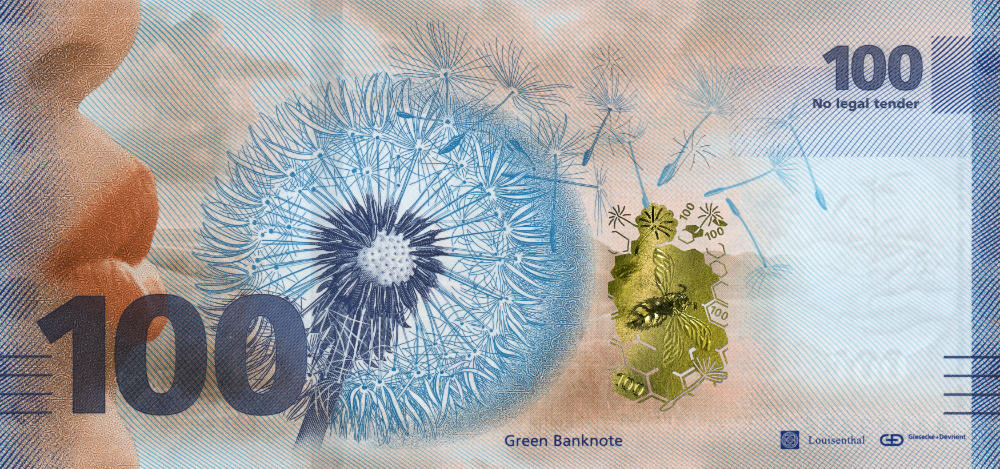
G+D Receives IACA Award for the “Green Banknote”
The “Green Banknote”, developed by Giesecke+Devrient, was awarded by the International Association of Currency Affairs as the new best ecological sustainability project in the banknote sector. Why? Read on.

How Not To Handle a Gold Transport
Nearly a million euros worth of gold coins were transported in a carrier van to a precious metals dealer without any security measures. No prizes for guessing whether or not they actually got there. A lawsuit in Bavaria reveals how this could happen.
Archive: Coins, Medals and more
 https://new.coinsweekly.com/wp-content/uploads/2025/04/2025KW16HA02_00.jpg
684
860
Lucie Loechel
https://new.coinsweekly.com/wp-content/uploads/2023/01/logo-coinsweekly_590x204.png
Lucie Loechel2025-04-17 08:30:092025-04-17 10:43:15Berlin and South Africa – A Time-Honoured Connection
https://new.coinsweekly.com/wp-content/uploads/2025/04/2025KW16HA02_00.jpg
684
860
Lucie Loechel
https://new.coinsweekly.com/wp-content/uploads/2023/01/logo-coinsweekly_590x204.png
Lucie Loechel2025-04-17 08:30:092025-04-17 10:43:15Berlin and South Africa – A Time-Honoured Connection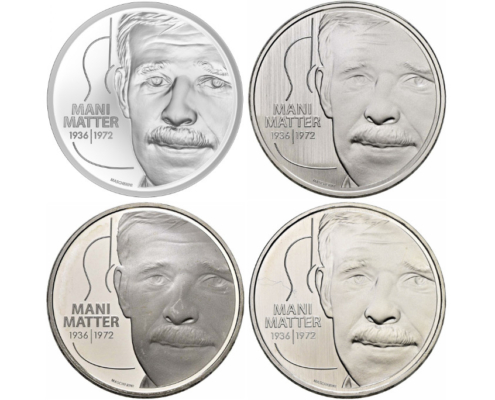 https://new.coinsweekly.com/wp-content/uploads/2023/10/2023KW42HA_00.jpg
684
860
Ursula Kampmann
https://new.coinsweekly.com/wp-content/uploads/2023/01/logo-coinsweekly_590x204.png
Ursula Kampmann2023-10-19 08:00:012023-10-19 11:43:14SINCONA Offers Spectacular Swissmint Patterns
https://new.coinsweekly.com/wp-content/uploads/2023/10/2023KW42HA_00.jpg
684
860
Ursula Kampmann
https://new.coinsweekly.com/wp-content/uploads/2023/01/logo-coinsweekly_590x204.png
Ursula Kampmann2023-10-19 08:00:012023-10-19 11:43:14SINCONA Offers Spectacular Swissmint Patterns
Die Study of the Yehud Coinage
The Israel Numismatic Society published a book on provincial silver coinage of Judah in the late Persian, Macedonian, and early Hellenistic periods. Haim Gitler, Catharine Lorber and Jean-Philippe Fontanille presented their die study recently in Jerusalem.
Will the International Coin Market Be Affected by the New US Tariff Policy?
America’s tariff regime is dominating the headlines. Yesterday morning (CET), when Ursula Kampmann wrote this article, many countries were under the threat of high punitive tariffs. As of yesterday evening (CET), this is no longer the case. But it is still interesting to consider what would happen in the coin market if punitive tariffs were imposed.