






Archive: People and Markets

The End of Mint of Finland
Mint of Finland will close its doors in the spring of 2025. The Board of Directors of Mint of Finland announced this decision on 28 August 2024. Ursula Kampmann sums up the situation.
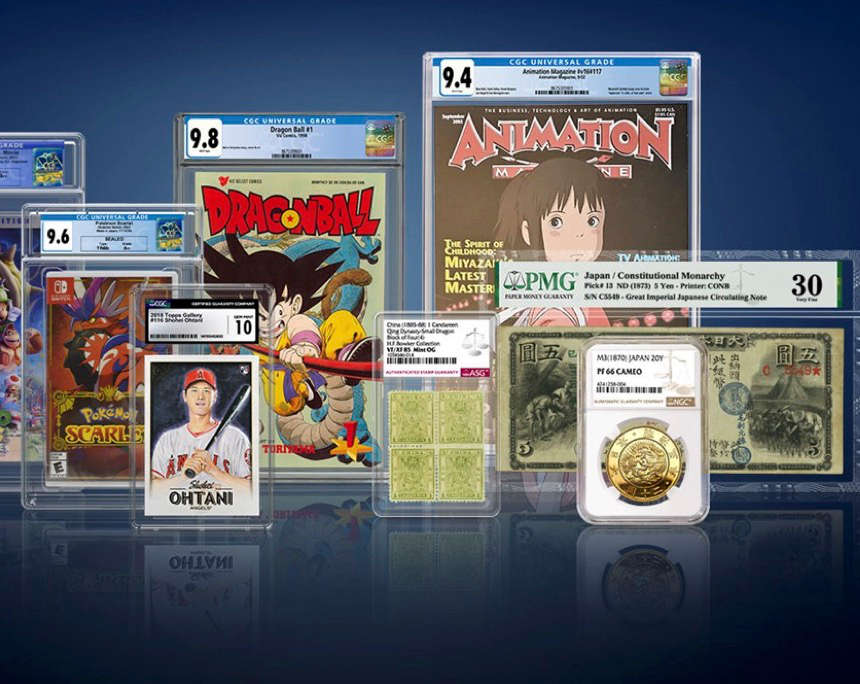
CCG to Open Tokyo Office in 2024
The Certified Collectibles Group® announced that it will open an office in Tokyo, Japan, in 2024. The new CCG office will make it easier for collectors and dealers in Japan and the surrounding region to submit to NGC, PMG and CGC.
Archive: Coins, Medals and more
 https://new.coinsweekly.com/wp-content/uploads/2024/07/2024KW30HA02_00.jpg
684
860
Ursula Kampmann
https://new.coinsweekly.com/wp-content/uploads/2023/01/logo-coinsweekly_590x204.png
Ursula Kampmann2024-07-25 09:30:322024-07-25 14:12:39Switzerland’s Special Coin 200 Years Swiss Shooting Sport Federation Hits the Bull’s Eye
https://new.coinsweekly.com/wp-content/uploads/2024/07/2024KW30HA02_00.jpg
684
860
Ursula Kampmann
https://new.coinsweekly.com/wp-content/uploads/2023/01/logo-coinsweekly_590x204.png
Ursula Kampmann2024-07-25 09:30:322024-07-25 14:12:39Switzerland’s Special Coin 200 Years Swiss Shooting Sport Federation Hits the Bull’s Eye https://new.coinsweekly.com/wp-content/uploads/2025/06/00IMG_0657.jpg
684
860
Ursula Kampmann
https://new.coinsweekly.com/wp-content/uploads/2023/01/logo-coinsweekly_590x204.png
Ursula Kampmann2025-06-12 09:24:042025-06-12 09:38:54In Search of the Big Five
https://new.coinsweekly.com/wp-content/uploads/2025/06/00IMG_0657.jpg
684
860
Ursula Kampmann
https://new.coinsweekly.com/wp-content/uploads/2023/01/logo-coinsweekly_590x204.png
Ursula Kampmann2025-06-12 09:24:042025-06-12 09:38:54In Search of the Big Five
A Force of Nature Embodied in a Coin: CIT’s Lost City – Pompeii
CIT has captured the dramatic eruption of Mount Vesuvius in the year 79 with a three-dimensional representation. True to scale, and thanks to smartminting® in every detail, we see erupting Vesuvius, pouring its lava over the buildings of the city of Pompeii.
The Nasser D. Khalili Collection of Islamic Coins: Now Available Online
The Khalili Collections are in the process of digitizing the Nasser D. Khalili Collection of Islamic coins, one of the largest private collections in this field. Over the next two years, around 13,000 coins will be made available on the official website, which already features 2,280 coins.