






Archive: People and Markets
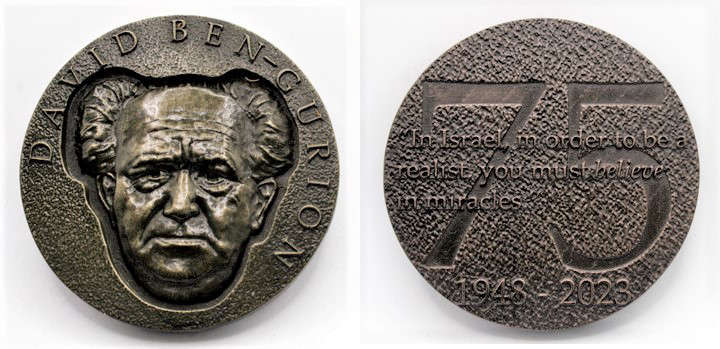
The Jewish-American Hall of Fame Presents a Medal in Honor of David Ben-Gurion
To commemorate Israel’s 75th Anniversary of Independence, the Jewish-American Hall of Fame has issued a medal commemorating featuring a portrait of “The Father of Modern Israel” – David Ben-Gurion.
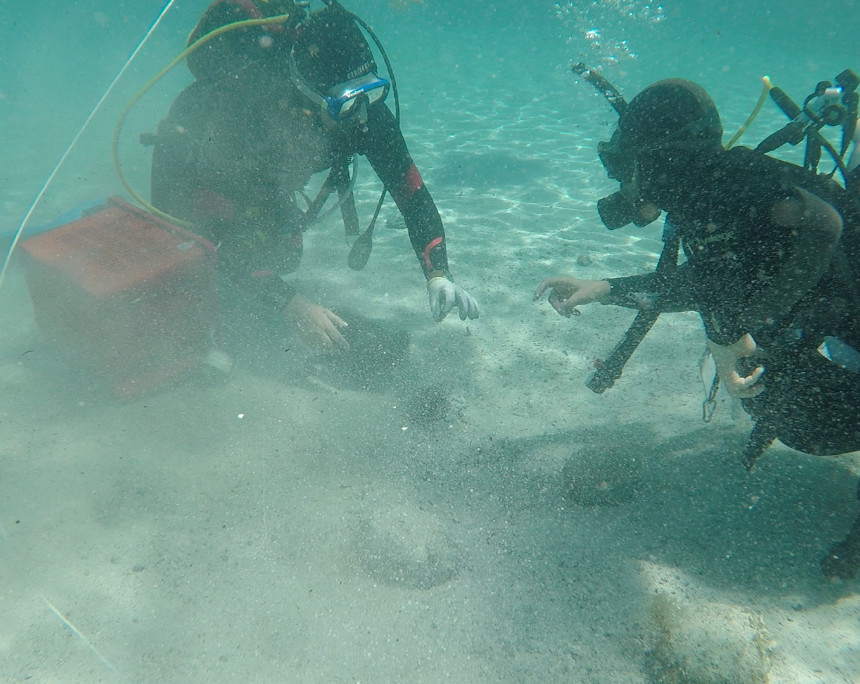
Archaeologists in Awe at the Sight of Sardinia’s Folles Hoard
Italian archaeologists are calling it one of the most important finds in recent years: up to 50,000 bronze coins dating from the 4th century have been discovered off the Sardinian coast. Apart from the outstanding size of this hoard, the coins’ condition is also astonishing.
Archive: Coins, Medals and more
 https://new.coinsweekly.com/wp-content/uploads/2025/01/2025KW03HA_00.jpg
684
860
Sebastian Wieschowski
https://new.coinsweekly.com/wp-content/uploads/2023/01/logo-coinsweekly_590x204.png
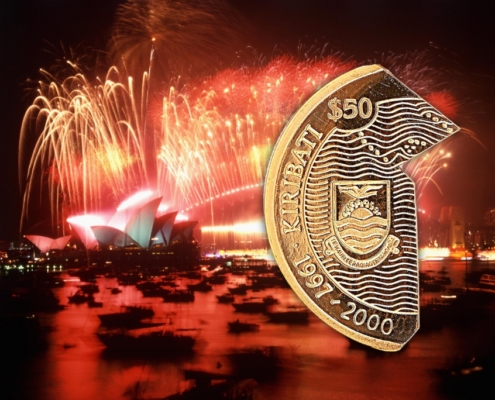
Sebastian Wieschowski2025-01-16 07:00:032025-01-16 16:55:4925 Years Ago: Millennium Coins and the Dawn of a New Era
https://new.coinsweekly.com/wp-content/uploads/2025/01/2025KW03HA_00.jpg
684
860
Sebastian Wieschowski
https://new.coinsweekly.com/wp-content/uploads/2023/01/logo-coinsweekly_590x204.png
Sebastian Wieschowski2025-01-16 07:00:032025-01-16 16:55:4925 Years Ago: Millennium Coins and the Dawn of a New Era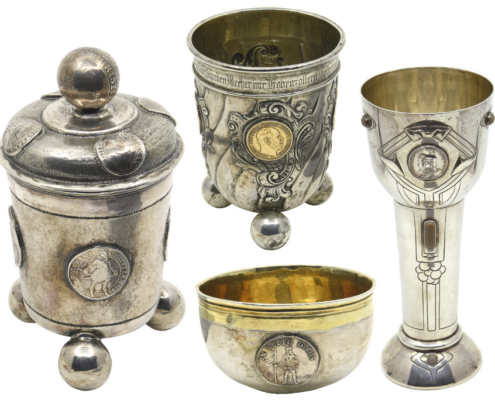 https://new.coinsweekly.com/wp-content/uploads/2025/03/2025KW11HA01_00.jpg
684
860
Lucie Loechel
https://new.coinsweekly.com/wp-content/uploads/2023/01/logo-coinsweekly_590x204.png
Lucie Loechel2025-03-13 10:11:402025-03-13 10:11:40Coin-Embedded Tableware as Part of European Dining Culture
https://new.coinsweekly.com/wp-content/uploads/2025/03/2025KW11HA01_00.jpg
684
860
Lucie Loechel
https://new.coinsweekly.com/wp-content/uploads/2023/01/logo-coinsweekly_590x204.png
Lucie Loechel2025-03-13 10:11:402025-03-13 10:11:40Coin-Embedded Tableware as Part of European Dining Culture
Meeting of the Oriental Numismatic Society 2024 in Tübingen
The annual international conference on Islamic numismatics will take place in Tübingen from May 4 to 5, 2024. The program tempts you to spend the first weekend in May in beautiful Tübingen!
Join the First International Numismatic Alliance Conference!
The first edition of the International Numismatic Alliance Conference (INAC) will be held on May 26th. This free and open for everyone online event wants to offer a new unique opportunity for everyone to delve into the fascinating world of numismatics.