Tag Archive for: History

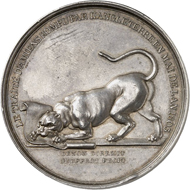
The sad fate of Wilhelmine Amalia

Recte et constanter – uprightly and firmly, this is the motto under which empress Wilhelmine Amalia had taken up the reign. And uprightly and firmly did she act after her husband’s death as well. That is what is presented on an impressive medal offered at Künker.

The Coronation Regalia of the Holy Roman Empire

Since 1424, the so-called Heiltumsweisung (Festival of Relics) was held each year in Nuremberg. On that occasion, the Imperial Regalia were taken out of the treasure chamber and presented to …

German oaks and national sentiments

It is rather unspectacular what can be seen on German 1, 2 and 5 Cent coins: a simple oak branch – boring, one might say. However, the oak symbol is very old and closely connected with Germany, its national identity and its democracy for nearly 300 years…

And this is where Aristotle was wrong…

Aristotle, in his work on the structure of the Tarentine government, likewise described the coins of the city. He remarked that they depicted Taras, son of Poseidon, riding a dolphin. Was he right? Or is there another, more possible, option?

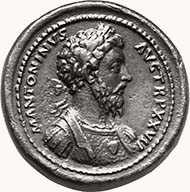
The Son of Divine Caesar

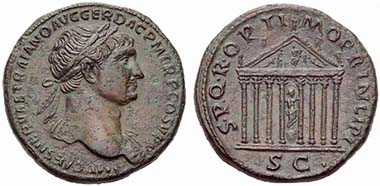
Two rare aurei of the Gorny & Mosch sale from Augustus’ early years obtained impressive prices. Yet as intriguing as the two coins is the history of the man who minted them: Octavian better known as Augustus.

Unique gold coin of Bodvoc found

On 16 April 2012 a 2000-year-old gold quarter stater of the ancient British ruler Bodvoc was discovered near Bristol. It was found by Dennis who has been metal detecting for 33 of his 53 years and it can rightly be described as ‘the find of a lifetime’ because of its numismatic importance.

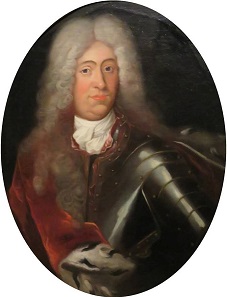
Two Dukes in Pomerania

On January 31, 2013, a Pomerania collection will be coming up for auction at Künkers’. Here, we present two coins from the collection that are as different as the men who had them minted.

Gold rush in California: part I

Countless stories tell of the Californian gold rush which brought thousands of men to America, the Promised Land. But the gold made only very few rich. The majority died as a result of the exertion during the travel, the hard work and the disappointment when they returned back home, poorer than they had come. Their story should be told here.

The Punic Goddess

On Friday, March 13, 2015, Künker auctions off a Siculo-Punic coin with an enigmatic depiction: on the obverse we see a beautiful woman with a Phrygian cap. Is it Dido? Is it Tanit? Or is it perhaps a completely different goddess?

Philip II of Pomerania and his coin dealer Philipp Hainhofer

Around 1600, coin collecting was “the” leisure activity of the intellectual elite. The emperor himself was an avid collector. He was imitated by many noblemen among them Philip II of Pomerania, who put together a great art collection in cooperation with Philipp Hainhofer.