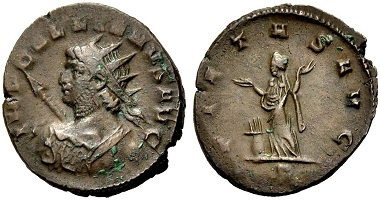
Roman Coins from the Mint of Milan
In Auction 43 of Münzen and Medaillen GmbH a collection of Roman imperial coins minted in Milan will be on offer (Lots 460-529). Here you will learn more about the issues of this mint.







In Auction 43 of Münzen and Medaillen GmbH a collection of Roman imperial coins minted in Milan will be on offer (Lots 460-529). Here you will learn more about the issues of this mint.
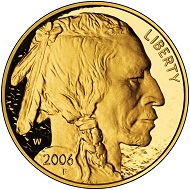
The bullion coin “American Buffalo” is supposed to capture the beauty of the Wild West. In reality though, the models used for the images were anything but wild.
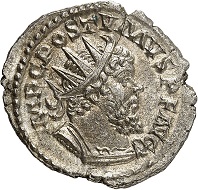
In Jacquier sale 43, to be held on September 15, 2017, a hitherto unknown and unique antoninianus of Postumus will be offered. Both its date and its historical context can be pinpointed due to its special bust.
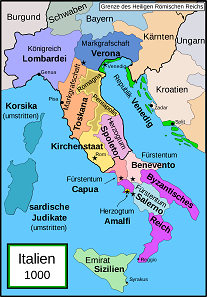
Around AD 1000, Sicily was ruled and shaped by the Arabs, Lower Italy by the Byzantines and the Lombards. Then the Normans came and created a new empire in the South …
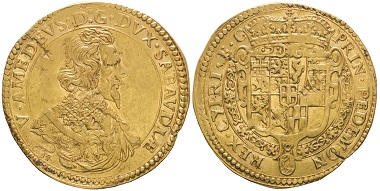
Auction house Gadoury will auction off an extensive collection Casa Savoia originating from the possessions of a gentleman of the royal family. In the second article of the three-part series you will learn more about how the counts of Savoy became kings – and then lost all of their power again.

The date was February 7th, 1496. Columbus hadn’t returned from his second journey yet, in the realm of the Holy Roman Empire everyone was upset about general taxation which had been decided at the diet at Worms one year ago, and the Syphilis which had been introduced from America spread all over Europe. Much happened those days indeed; and in a secluded chamber in the Innsbruck Residence a lonely man laid dying.
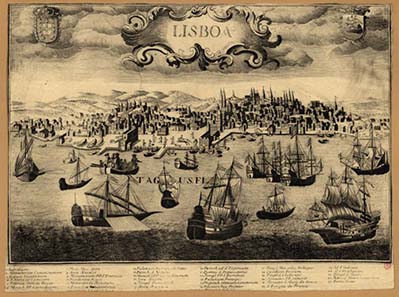
Portugaleser, that is how the magnificent large gold coins are called that were produced in Hamburg. But what do they have to do with Portugal? The answer lies in the route the African gold has taken in the Early Modern Times…
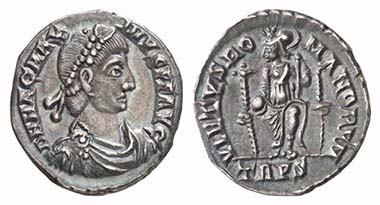
Around 400 AD the Roman Empire was shaken to the core. Britain’s governor claimed himself Roman Emperor, but found his only long-lasting success in the Welsh mythology.
By examining 12 coins we are going to stroll through Great Britain’s history – this is part 1…

In early Modern times the Hesse noble house of Solms faced like many other nobles financial problems. The imperial service and own coin issues were their way of solving that issue. Even though some members of the family had not been granted the minting privilege at all …
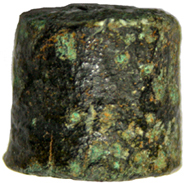
On 5 August 2012 a late iron age coin punch was discovered by a metal detectorist near Andover, north Hampshire. Its function is unclear, it may be a trial or apprentice piece – or even an ancient forgery.

You need to load content from reCAPTCHA to submit the form. Please note that doing so will share data with third-party providers.
More InformationYou are currently viewing a placeholder content from Facebook. To access the actual content, click the button below. Please note that doing so will share data with third-party providers.
More InformationYou are currently viewing a placeholder content from Instagram. To access the actual content, click the button below. Please note that doing so will share data with third-party providers.
More InformationYou are currently viewing a placeholder content from X. To access the actual content, click the button below. Please note that doing so will share data with third-party providers.
More Information