






Archive: People and Markets

The Second Issue on Swiss Cable Cars: The Titlis Cable Car
Attention cable car enthusiasts: Swissmint is launching the second issue in its series on Swiss cable cars. The subject of the third and final coin in the series has also already been announced.
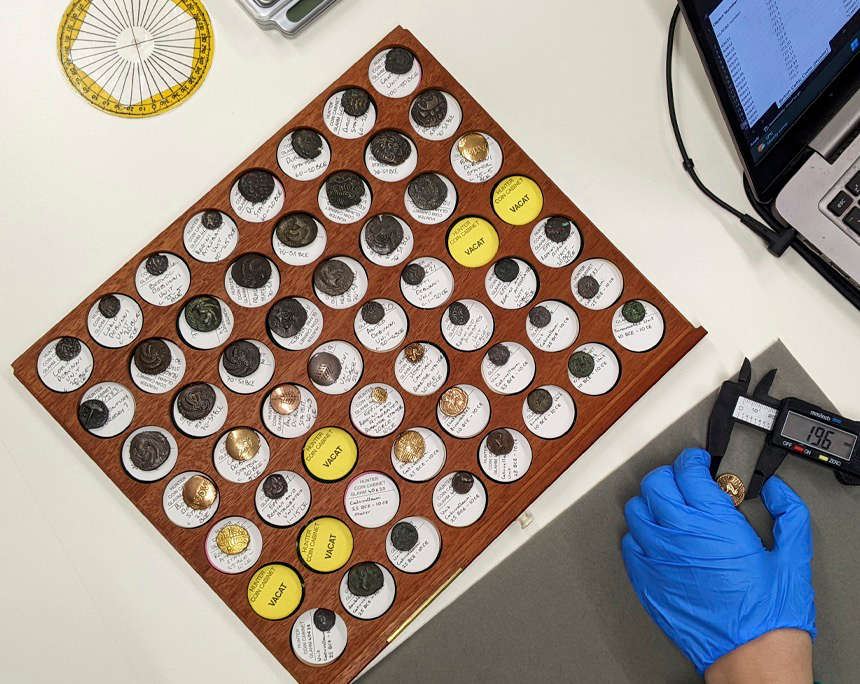
Collection of British Celtic Coins Accessible Online
A collection of Celtic British coins in the possession of The Hunterian Museum in Glasgow is now digitally catalogued and accessible worldwide, thanks to student volunteers from the University of Glasgow.
Archive: Coins, Medals and more
 https://new.coinsweekly.com/wp-content/uploads/2025/02/2025KW09HA01_00.jpg
684
860
Lucie Loechel
https://new.coinsweekly.com/wp-content/uploads/2023/01/logo-coinsweekly_590x204.png
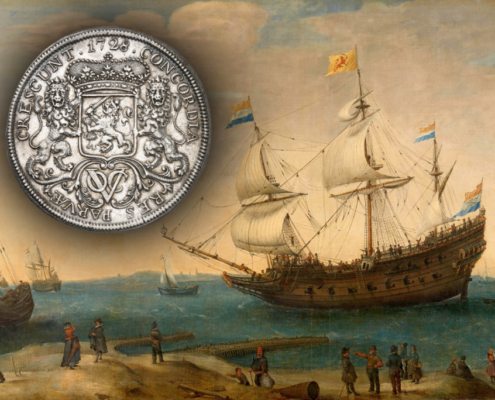
Lucie Loechel2025-02-27 10:27:202025-02-27 12:01:04VOC: The Other Side of the Dutch Golden Age
https://new.coinsweekly.com/wp-content/uploads/2025/02/2025KW09HA01_00.jpg
684
860
Lucie Loechel
https://new.coinsweekly.com/wp-content/uploads/2023/01/logo-coinsweekly_590x204.png
Lucie Loechel2025-02-27 10:27:202025-02-27 12:01:04VOC: The Other Side of the Dutch Golden Age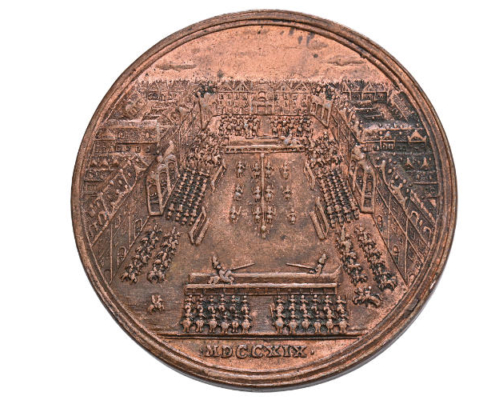 https://new.coinsweekly.com/wp-content/uploads/2023/06/2023KW23HA00.jpg
500
1000
Bruno
https://new.coinsweekly.com/wp-content/uploads/2023/01/logo-coinsweekly_590x204.png
Bruno2023-06-07 10:29:512023-06-27 11:22:29The Wedding of a Century in Saxony
https://new.coinsweekly.com/wp-content/uploads/2023/06/2023KW23HA00.jpg
500
1000
Bruno
https://new.coinsweekly.com/wp-content/uploads/2023/01/logo-coinsweekly_590x204.png
Bruno2023-06-07 10:29:512023-06-27 11:22:29The Wedding of a Century in Saxony
CIT’s Tiffany Art Metropolis – Seoul
CIT dedicates its fourth issue of the Tiffany Art Metropolis series to an Asian city. Following Paris, Rome and London, in 2024 CIT presents the metropolis of Seoul on the Han River.
ACCG Requests Information About Closed Roundtable Regarding Extra-Legal MOU With Yemen
Following a closed roundtable, the US State Department signed an MOU criticized for being completed without input from the Cultural Property Advisory Committee or the opportunity for public comment. Die Ancient Coin Collectors Guild (ACCG) sees an effort to stifle debate and has submitted a Freedom of Information (FOIA) request to the State Department.